Skip to content
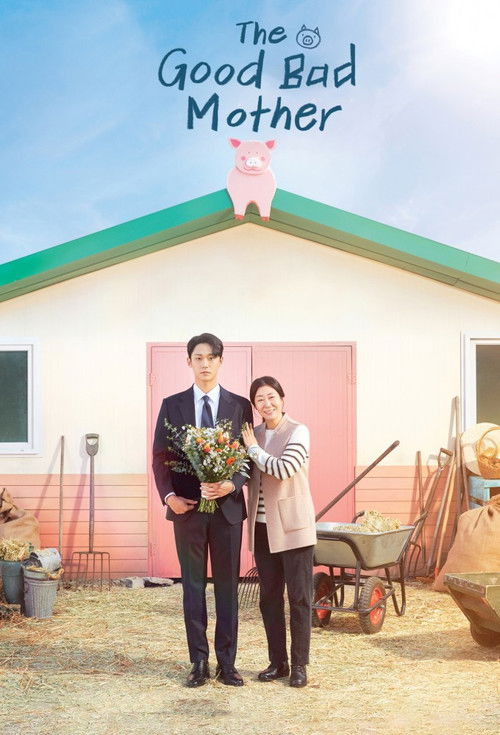
The Good Bad Mother
A bittersweet countryside dramedy cloaked in morning mist and yellow wildflowers, where a lifetime of suffocating parental scars dissolves into the tender second chance of a shared childhood.
The Good Bad Mother

The Good Bad Mother

나쁜 엄마

"All mothers in the world are bad."

26 April 2023 — 08 June 2023 South Korea 1 season 14 episode Ended 8.9 (196)

Cast: Ra Mi-ran, Lee Do-hyun, Ahn Eun-jin, Yoo In-soo, Choi Moo-seong

Drama Comedy Generational Trauma and Imperfect Parenting Redemption, Second Chances, and Rebirth Justice vs. Consuming Vengeance Community, Solidarity, and Chosen Family

Overview

The Good Bad Mother is a 14-episode South Korean television drama created by screenwriter Bae Se-young and director Shim Na-yeon. Set between the rustic fields of Jou-ri Village and the cutthroat legal corridors of Seoul, the story follows Jin Young-soon, a widowed pig farmer who adopts an unforgiving, hyper-strict parenting method to ensure her son, Choi Kang-ho, climbs out of rural poverty and attains power and prestige as a prosecutor. In achieving this goal, however, Kang-ho grows up to become an emotionally detached, ruthless legal operative who ultimately disowns his mother and turns his back on everyone he once loved.

The dramatic fulcrum occurs when a catastrophic car crash leaves the adult Kang-ho paralyzed and cognitively regressed to the developmental age of seven. Forced to take her adult son back into her Jou-ri home, Young-soon is handed an agonizing second chance at motherhood. As she rehabilitates Kang-ho’s mind and body with the same unrelenting yet profoundly loving determination, the quirky, tightly knit villagers rally around them. What unfolds across the series is a poignant examination of maternal guilt, childhood reconciliation, and the slow unearthing of concealed truths behind Kang-ho’s past betrayal.
Core Meaning

The fundamental message of The Good Bad Mother is that parental love, when warped by generational trauma and fear, can inadvertently inflict severe emotional wounds—yet genuine reconciliation and healing remain possible through honest vulnerability, empathy, and forgiveness. The creators explore the philosophical paradox of the "bad mother": a parent who is forced into cruelty by societal injustices and personal terror, contrasted against the liberating realization that a child’s genuine happiness lies not in social conquest or revenge, but in warmth, mutual understanding, and being loved unconditionally.

Thematic DNA

Generational Trauma and Imperfect Parenting 35%
Redemption, Second Chances, and Rebirth 25%
Justice vs. Consuming Vengeance 20%
Community, Solidarity, and Chosen Family 20%

Generational Trauma and Imperfect Parenting

The narrative explores how Young-soon’s early trauma—losing her parents and brother in a car crash, followed by the suspicious murder of her husband Choi Hae-sik—compels her to raise Kang-ho without warmth or slack, instilling the belief that only merciless authority brings safety. This cycle of "tiger parenting" is challenged when Kang-ho's regression exposes the deep psychological scarring he internalized as a boy, forcing Young-soon to confront the destructive nature of her past methods, ultimately transitioning from unyielding discipline to reflective empathy and shared maternal healing.

Redemption, Second Chances, and Rebirth

Kang-ho’s trauma-induced mental regression acts as a literal psychological reset button. Both mother and son are given an impossible second chance: Young-soon learns to experience Kang-ho's childhood with affection rather than ambition, while Kang-ho experiences the innocence and open vulnerability he was denied during his youth, shifting from physical rehabilitation to spiritual and emotional rebirth for both characters.

Justice vs. Consuming Vengeance

Initially presented as a standard K-drama revenge arc where Kang-ho infiltrates the corrupt inner circle of his father's murderers (Song Woo-byeok and Oh Tae-soo), the narrative subverts revenge tropes. True closure is found not in bloody retribution, but in formal legal justice that clears the family name and frees the living from the shackles of the past, moving from dark, self-isolating retaliation to lawful accountability and personal liberation.

Community, Solidarity, and Chosen Family

Jou-ri Village serves as an emotional counterweight to the predatory corruption of Seoul’s elite. The eccentric neighbors, Mi-joo, and her twin children provide an organic web of communal support that sustains Young-soon through terminal illness and helps rehabilitate Kang-ho, highlighting that raising a person and healing a broken family requires the warmth of an entire village.

Character Analysis

Jin Young-soon

Ra Mi-ran

Archetype: Tragic Matriarch / The Strict Mentor Key Trait: Unyielding resilience cloaked in tough love.

Motivation

To make her son invincible against worldly corruption, evolving into ensuring his true happiness.

Character Arc

Begins as a traumatized, overbearing mother who forces her son into legal success; undergoes profound emotional softening during Kang-ho's rehabilitation, making peace with her failings before her passing.

Choi Kang-ho

Lee Do-hyun

Archetype: Fallen Hero / Vengeful Antihero / Innocent Child Key Trait: Meticulous inner resolve and deep vulnerability.

Motivation

To avenge his father's death, evolving into protecting his mother and reuniting with his true family.

Character Arc

Transforms from a cold, corrupted prosecutor who disowned his mother into a helpless seven-year-old child; regains his memories and completes his covert pursuit of legal justice with a healed heart.

All 5 characters and cast

Symbols & Motifs

The Pig and the Pig Farm

Meaning:

Represents misunderstood purity and maternal sacrifice. While conventionally seen as dirty and greedy, pigs are naturally clean and only roll in mud when distressed or hot. Furthermore, sows only spend 28 days weaning their young before parting.

Context:

Serves as the backdrop of Young-soon's livelihood and mirrors her urgent need to prepare Kang-ho for self-sufficiency before her imminent death.

Kimbap (Picnic Rolls)

Meaning:

Symbolizes grief, fatal association, and maternal dread.

Context:

Young-soon forbade Kang-ho from going on school picnics because every time she packed kimbap in the past, tragedy struck—her birth family died in a crash, and her husband died shortly after.

The "Bad Mom" (나쁜 엄마) Note

Meaning:

Represents the silent, unhealed scar of childhood neglect and the emotional chasm between parent and child.

Context:

Written by young Kang-ho on his elementary school excuse form when forced by his mother to skip school picnics, recurring as a defining motif throughout the series.

The Cassette Tape / Lullaby ("I'm Happy" / "나는 행복합니다")

Meaning:

Signifies memory, lingering parental love, and emotional peace.

Context:

Young-soon's singing of simple comforting songs serves as the grounding emotional melody connecting Kang-ho’s fragmented memories back to his mother’s pure intentions.

The Framed Family Portrait

Meaning:

Represents buried truth, secret devotion, and hidden motives.

Context:

Kang-ho hides his critical investigatory files and evidence behind the family photo frame in his mother’s house, proving that his love and devotion to family lay secretly behind his outward hostility all along.

Memorable Quotes

나쁜 엄마.
— Young Choi Kang-ho

Context

Written on an official school slip in Season 1, Episode 1 when Young-soon refused to let him go on a school picnic.

Meaning

It is the defining phrase of the entire series, epitomizing the pain of a child unable to understand the maternal trauma behind his mother's strictness.

배부르면 졸려서 공부 못한다.
— Jin Young-soon (repeated by regressed Kang-ho)

Context

Young-soon’s constant childhood refrain that caused Kang-ho to refuse food after his car crash when paralyzed in Season 1, Episodes 2 and 3.

Meaning

Hearing her own words regurgitated by her traumatized adult son breaks Young-soon's heart, sparking her realization of how deeply her discipline damaged him.

All 4 quotes

Episode Highlights

The Origin of Bitterness

S1E1

Depicts the tragic loss of Hae-sik at the hands of Song Woo-byeok and Oh Tae-soo, setting up Young-soon’s ruthless child-rearing philosophy and the cold adult prosecutor Kang-ho becomes.

Significance:

Establishes the foundational trauma and central conflict driving both Young-soon's parenting and Kang-ho's covert life mission.

The Severing of Ties & The Crash

S1E2

Kang-ho visits Jou-ri to force his mother to sign legal papers disowning him so he can be adopted by Song Woo-byeok, followed immediately by a near-fatal orchestrated car collision.

Significance:

Serves as the narrative catalyst that resets Kang-ho's mental state to age seven and forces mother and son back together.

The Food Refusal & Awakening

S1E4

Young-soon discovers that the regressed Kang-ho is starving himself because he still remembers her childhood rule about not eating to study.

Significance:

Acts as the pivotal turning point where Young-soon commits to nurturing Kang-ho with warmth rather than strict fear.

The Terminal Diagnosis

S1E8

Young-soon is diagnosed with Stage 4 terminal cancer, accelerating her timeline to rehabilitate Kang-ho so he can walk and live independently.

Significance:

Introduces a ticking clock that intensifies the emotional stakes and urgency of reconciliation before her death.

The Hidden Evidence

S1E10

The discovery of Kang-ho’s hidden SD card behind the family picture frame reveals his true motives to his mother.

Significance:

Unveils that Kang-ho's cruelty, disowning of his mother, and abandonment of Mi-joo were all calculated moves to protect them while building a legal case against his father's killers.

The Memory Returns

S1E13

Following another brush with danger, Kang-ho recovers his full adult memories and reconciles his past actions with his recovered childhood innocence.

Significance:

Prepares Kang-ho for his final courtroom counter-offensive and sets the stage for resolving the series' central legal conflict.

The Trial and The Farewell

S1E14

Kang-ho prosecutes Oh Tae-soo and Song Woo-byeok in court to clear his father’s name, followed by Young-soon passing away peacefully in her sleep after her birthday celebration.

Significance:

Concludes the series by delivering legal justice and emotional closure, leaving Kang-ho, Mi-joo, and their twins to build a healed, joyful life.

Philosophical Questions

Can cruel parenting ever be justified by good intentions?

The show questions whether preparing a child for a harsh world justifies robbing them of warmth, self-expression, and joy.

What defines true justice versus hollow retribution?

The series contrasts destroying one’s own life in pursuit of revenge against finding legal closure while protecting the people you love.

Is healing possible when time is finite?

By coupling Kang-ho’s recovery with Young-soon’s terminal diagnosis, the series asks how families navigate the urgency of reconciliation when death is imminent.

Alternative Interpretations

One dominant critical reading explores the subjectivity of the title: to a child, being subjected to forced starvation and isolation is unambiguously abusive and "bad," but to a traumatized, uneducated mother who knows the legal system can crush powerless farmers, her actions were seen as the only viable path to survival. Another interpretation posits that Kang-ho’s mental regression was not merely physical brain trauma, but a psychosomatic escape mechanism allowing him to shed the suffocating burden of his revenge plot and reclaim the lost childhood he had sacrificed.

Full ending explanation

Cultural Impact

The Good Bad Mother tapped deeply into South Korea’s intense cultural dialogue surrounding "Daechi-dong tiger parenting" and the extreme academic pressure placed on children to enter elite professions such as law and medicine. The series resonated across East Asian audiences by offering a poignant critique of parental sacrifice that crosses into emotional neglect and control. Domestically, it solidified JTBC’s Wednesday-Thursday primetime slot, outperforming competing major network series and demonstrating the strong commercial appeal of hybrid genres blending rural comedy, legal thriller, and family melodrama.

Audience Reception

Critics and general viewers widely praised the tour-de-force performances of Ra Mi-ran and Lee Do-hyun, highlighting their chemistry and ability to elicit genuine tears, alongside praise for the eccentric Jou-ri villagers and Ahn Eun-jin’s grounded performance. Some reviewers noted pacing inconsistencies in the second half, arguing that the Woobyeok Group revenge subplot leaned into familiar K-drama melodramatic tropes and courtroom contrivances compared to the grounded family core. Overall, it is regarded as an emotionally compelling, high-tier family drama that successfully navigated difficult themes of trauma, guilt, and maternal devotion.

Interesting Facts

  • Screenwriter Bae Se-young revealed in interviews that the entire concept for the series was conceived after learning that sows only spend 28 days weaning their piglets before forced separation, leading to the question of what mothers must teach their children before parting.
  • Writer Bae Se-young previously penned the box-office smash comedy Extreme Job (2019), explaining the sharp comedic balance infused into the melodrama.
  • Director Shim Na-yeon, known for the psychological thriller Beyond Evil (2021), intentionally framed the village dynamics with fairytale-like warmth to prevent dark revenge elements from overwhelming the human story.
  • Lee Do-hyun extensively researched child behavioral psychology to portray a 30-year-old prosecutor regressed to age seven without turning the performance into a caricature.
  • Starting with modest nationwide ratings of 3.5% in early episodes, word of mouth propelled the drama to a peak finale rating of 12.03%, entering the top 25 highest-rated Korean cable series in history.

Easter Eggs

Cho Jin-woong’s Extended Cameo

Acclaimed film actor Cho Jin-woong made a special appearance in the premiere episodes as Choi Hae-sik (Kang-ho’s father), establishing the emotional and moral foundation of the family.

The Twins' Parallel

The twin children, Ye-jin and Seo-jin, mirror Kang-ho’s own lost childhood, acting as emotional translators between adult Kang-ho and his regressed inner child.

Visual Framing of the Dinner Table

In early episodes, the dining table is depicted as cold, silent, and rigid with Kang-ho eating alone under strict orders, whereas later scenes in Jou-ri Village show a bustling, noisy communal table filled with food and laughter to visually signal emotional recovery.

Frequently Asked Questions

Explore More About This Movie

Dive deeper into specific aspects of the movie with our detailed analysis pages

Comments (0)

Leave a comment

No comments yet. Be the first to share your thoughts!

Similar Movies