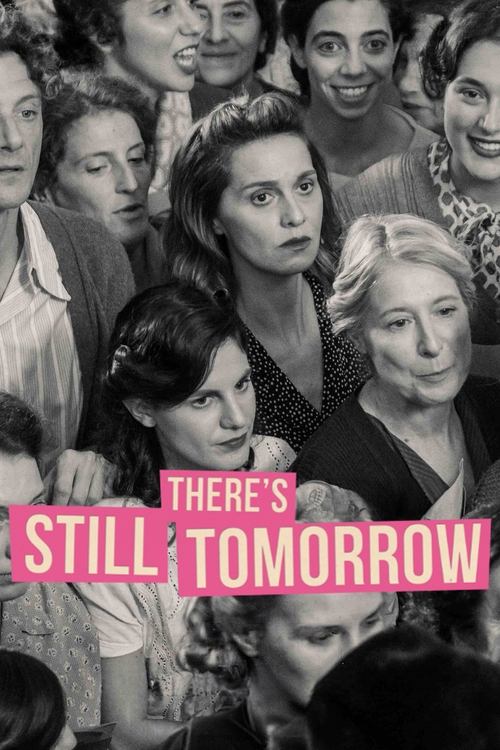
There's Still Tomorrow
A neorealist-inspired dramedy where the quiet desperation of post-war Rome is shattered by a single letter, sparking a woman's defiant dance toward liberation.
There's Still Tomorrow

There's Still Tomorrow

C'è ancora domani

26 October 2023 Italy 118 min ⭐ 8.1 (1,426)
Director: Paola Cortellesi
Cast: Paola Cortellesi, Valerio Mastandrea, Romana Maggiora Vergano, Emanuela Fanelli, Giorgio Colangeli
Drama History Comedy
Patriarchy and Domestic Violence Female Empowerment and Emancipation Generational Cycles and Mother-Daughter Relationships
Budget: $9,000,000
Box Office: $50,121,593

Overview

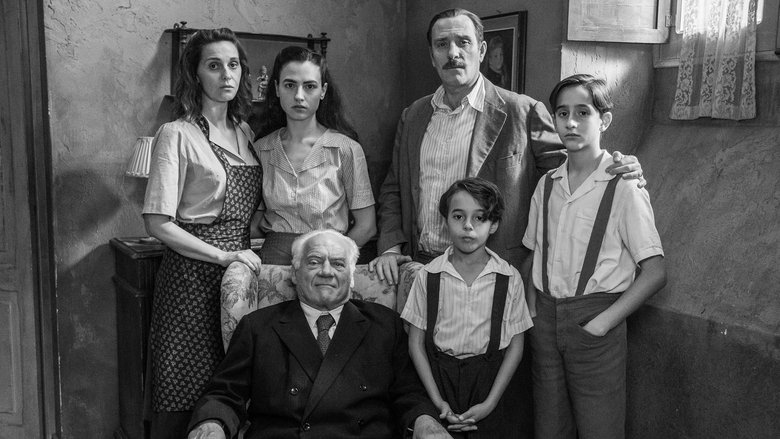
Set in Rome in May 1946, "There's Still Tomorrow" follows Delia, a wife and mother navigating the hardships of post-war life. She is married to the authoritarian and abusive Ivano and is the mother to three children, including the eldest, Marcella. Delia's life is a cycle of domestic chores, caring for her bedridden father-in-law, and various odd jobs to support her family, all while enduring her husband's physical and psychological abuse.

Delia hopes her daughter Marcella can escape a similar fate by marrying Giulio, who comes from a wealthier family. However, Delia's perspective begins to shift when she receives a mysterious letter. This unexpected correspondence ignites a newfound courage within her, pushing her to challenge the patriarchal conventions that bind her and to envision a different future, not just for herself, but for her daughter as well.

Core Meaning

"There's Still Tomorrow" is a powerful feminist statement about emancipation, resilience, and the importance of collective action. Director Paola Cortellesi uses the historical backdrop of post-war Italy—specifically the moment women gained the right to vote—to explore timeless themes of domestic abuse, patriarchal oppression, and the generational transmission of trauma. The film's core message is one of hope, suggesting that even in the most oppressive circumstances, the power for change exists. It argues that liberation isn't necessarily about a grand, romantic escape, but can be found in small, defiant acts of self-worth and in exercising one's civic voice to build a better future for the next generation. The film serves as a poignant reminder that the fight for women's rights is ongoing and that personal struggles are deeply intertwined with political ones.

Thematic DNA

Patriarchy and Domestic Violence 40%
Female Empowerment and Emancipation 35%
Generational Cycles and Mother-Daughter Relationships 25%

Patriarchy and Domestic Violence

This is the central theme, portrayed through Delia's daily life under the control of her abusive husband, Ivano, and lecherous father-in-law, Ottorino. The violence is often stylized, presented as a disturbing dance or ritual rather than in graphic detail, to emphasize its horrifying normality within the family structure. The film critiques a society where male authority is absolute and violence against women is an accepted, almost casual, part of life. Delia's realization that her daughter is entering a similarly controlling relationship is the catalyst for her most decisive actions.

Female Empowerment and Emancipation

Delia's journey from a resigned victim to an agent of change is the film's narrative spine. Her empowerment is not depicted as a single, heroic act but a gradual awakening. The mysterious letter she receives is not a promise of romantic escape, but her voter registration card, symbolizing a different kind of liberation: political and civic. Her ultimate act of defiance is not leaving her husband, but secretly going to vote for the first time, an act that represents her claiming her voice and investing in a future where her daughter might have more rights.

Generational Cycles and Mother-Daughter Relationships

The film explores how patriarchal abuse is passed down through generations. Marcella, horrified by her father's treatment of Delia, initially shows contempt for her mother's perceived weakness. However, Delia's primary motivation is to break this cycle for Marcella. She recognizes the early signs of control in Marcella's fiancé and takes drastic steps to end the engagement, ensuring her daughter doesn't repeat her life. The film ends with a knowing smile between mother and daughter, signifying a shared understanding and the successful severing of this toxic inheritance.

Character Analysis

Delia

Paola Cortellesi

Archetype: The Everywoman/Rebel
Key Trait: Resilience

Motivation

Her primary motivation is to ensure her daughter, Marcella, has a better life and does not end up in an abusive marriage like her own. This maternal drive fuels her to sabotage Marcella's engagement and, ultimately, to exercise her right to vote as an investment in a more equitable future for the next generation of women.

Character Arc

Delia begins as a seemingly resigned and submissive housewife, enduring daily abuse while caring for her family. Her arc is one of quiet, internal transformation. The arrival of her voter registration card, coupled with the fear that her daughter will suffer the same fate, ignites her dormant courage. She moves from a state of passive endurance to active resistance, not by physically leaving her situation, but by securing her daughter's future and claiming her own political voice, ending the film as an empowered woman who understands her own worth and power.

Ivano

Valerio Mastandrea

Archetype: The Tyrant
Key Trait: Authoritarian

Motivation

Ivano is motivated by a deep-seated need for control and a belief in his own superiority as the male head of the household. His actions are driven by patriarchal norms that grant him power over his wife and family. He also has financial motivations, as seen when he approves of Marcella's marriage for the economic stability it will bring him.

Character Arc

Ivano is a static character who embodies the oppressive patriarchal authority of the era. He is the undisputed master of the family, controlling, violent, and dismissive of his wife. He experiences no significant change or development; his role is to represent the systemic misogyny that Delia must overcome. He remains a symbol of the old world order, diminished and confused by Delia's final act of defiance at the polling station.

Marcella

Romana Maggiora Vergano

Archetype: The Catalyst
Key Trait: Idealistic

Motivation

Initially, Marcella is motivated by a desire to escape her grim home life and achieve a higher social status through marriage. She wants a life different from her mother's but fails to see she is walking the same path. Her motivation shifts to supporting her mother once she grasps the true meaning of Delia's fight.

Character Arc

Marcella starts the film ashamed of her mother's submissiveness and eager to escape her family through marriage. She is initially blind to the controlling nature of her own fiancé. Her arc involves a painful but necessary disillusionment. After her engagement is broken, she is devastated, but by the end of the film, she understands her mother's actions. She becomes her mother's ally, handing her the lost voter card and sharing a smile of mutual understanding and solidarity.

Marisa

Emanuela Fanelli

Archetype: The Confidante
Key Trait: Witty

Motivation

Marisa is motivated by her loyalty and affection for Delia. She wants to see her friend happy and free from abuse, consistently providing blunt but well-intentioned advice.

Character Arc

Marisa is Delia's witty and pragmatic friend, a greengrocer who provides comic relief and emotional support. As a static character, her role is to be a constant source of encouragement for Delia, urging her to leave Ivano and offering a sympathetic ear. She represents female friendship and solidarity in a world that isolates women.

Symbols & Motifs

The Mysterious Letter

Meaning:

The letter functions as the film's central MacGuffin. For much of the runtime, the audience, along with Delia's husband, believes it to be a love letter from her former flame, Nino, symbolizing a romantic escape. Its true nature is revealed at the end: it is Delia's first-ever voter registration card. The symbol's meaning shifts from personal, romantic freedom to a much broader, more powerful form of liberation through political participation and civic duty.

Context:

Delia receives the letter early in the film, and it becomes the catalyst for her newfound determination. She hides it and plans her "escape" around it. The climax occurs when she heads to the polling station, having been led by her husband and daughter who think she is eloping. The reveal that her destination is the ballot box, not a rendezvous with a lover, re-frames the entire narrative.

The Ballot Box

Meaning:

The ballot box symbolizes a newfound power and agency for women in post-war Italy. It represents a space where Delia is equal to her husband and where her voice matters. For Delia, it is not just a political tool but a talisman of hope and a weapon against the patriarchy that dominates her domestic life. It is the one place her husband's authority cannot penetrate.

Context:

The final scenes of the film are set on June 2 and 3, 1946, during the historic constitutional referendum where Italian women voted for the first time. Delia's determination to reach the polling station, despite her husband's attempts to stop her, forms the film's climax. Casting her vote is her ultimate act of rebellion and self-realization.

Anachronistic Music

Meaning:

The use of modern rock, hip-hop (like Outkast's 'B.O.B.'), and punk-rock songs in a 1940s setting serves to bridge the past and present. It highlights the timelessness of the film's themes, especially violence against women and the fight for rights, suggesting that these struggles are just as relevant today. The music acts as an expression of Delia's inner turmoil, resilience, and unarticulated desire for freedom, giving a modern urgency to her historical struggle.

Context:

Contemporary music is used during key sequences, such as when Delia is walking through Rome or during moments of defiance. This stylistic choice intentionally breaks the neorealist aesthetic, reminding the audience that the story, while set in the past, is a commentary on contemporary society.

Philosophical Questions

What constitutes true freedom for an oppressed individual?

The film challenges the conventional cinematic idea of freedom as a physical escape from an oppressive situation (e.g., running away with a lover). Instead, it proposes that freedom can be an internal state of mind and a political act. Delia's liberation comes not from leaving her home, but from claiming her right to participate in shaping her country's future. The film asks whether freedom is an individualistic pursuit or a collective one, suggesting that Delia's most meaningful act of freedom is one that benefits all women, especially her daughter.

Can art—and humor specifically—be an effective tool for confronting and processing trauma?

Director Paola Cortellesi, who comes from a comedy background, makes the bold choice to depict scenes of brutal domestic violence as stylized, choreographed dances. This stylistic decision forces the audience to question how we consume and represent violence. By blending the horrific with the absurd or darkly comedic, the film explores dissociation as a survival mechanism. It asks if finding humor in tragedy is a way of reclaiming power and agency, or if it risks trivializing the suffering. The film's massive success suggests this approach resonated, allowing audiences to engage with a difficult subject without being completely overwhelmed by its bleakness.

Alternative Interpretations

While the ending is widely seen as triumphant and empowering, some viewers and critics have offered an alternative, more somber interpretation. This reading focuses on the fact that Delia does not actually leave her abusive husband, Ivano. From this perspective, her act of voting is a significant moral victory but not a solution to her immediate, dangerous domestic situation. It suggests that while she has taken a step towards a better future for the next generation, her own tomorrow remains one of suffering and abuse.

This interpretation sees the ending not as a complete resolution but as a bittersweet commentary on the limitations faced by women of that era. Her freedom is symbolic and political rather than personal and immediate. The film, in this view, is less a story of personal escape and more a depiction of self-sacrifice for the greater good of her daughter and future generations of women. It highlights the difficult reality that for many women, systemic change was the only hope, as individual escape was often impossible.

Cultural Impact

"There's Still Tomorrow" became more than just a film in Italy; it evolved into a cultural phenomenon. Released in late 2023, its narrative about domestic violence and female emancipation resonated profoundly in a country grappling with high rates of femicide. The film's unexpected and massive commercial success, where it outperformed Hollywood giants like "Barbie," demonstrated a deep public appetite for stories centered on women's historical and present-day struggles. It sparked nationwide conversations, was shown in schools, and became a symbol of a collective desire for social change.

Stylistically, the film's blend of neorealist aesthetics with modern sensibilities—particularly its anachronistic soundtrack—was widely praised for making historical issues feel urgent and contemporary. By framing the ultimate act of liberation not as a romantic escape but as the civic duty of voting, the film provided a powerful political statement. Critics lauded its ability to balance tragedy with humor, creating a work that was both accessible and deeply moving. Its success marked a significant moment for female directors in Italian cinema and proved that films with strong feminist themes could dominate the mainstream market.

Audience Reception

Audiences in Italy embraced "There's Still Tomorrow" with unprecedented enthusiasm, making it the highest-grossing film of 2023. Viewers praised its powerful emotional core, the brilliant lead performance by Paola Cortellesi, and its ability to blend humor and tragedy. Many found the story deeply moving and empowering, particularly its focus on female solidarity and the historical significance of women's first vote. The film's word-of-mouth success was phenomenal, with a significant portion of the audience being women and older viewers who returned to cinemas, some for the first time since the pandemic.

While overwhelmingly positive, some minor points of criticism from viewers included the use of anachronistic music, which some found jarring, though most critics and audiences felt it effectively highlighted the story's contemporary relevance. A small portion of viewers also debated the ending, questioning whether Delia's choice to vote rather than leave her husband was a truly happy or empowering conclusion, with most concluding it was a realistic and profound statement on the nature of liberation for women of that era.

Interesting Facts

  • The film was Paola Cortellesi's directorial debut. She also co-wrote the screenplay and starred as the main character, Delia.
  • "There's Still Tomorrow" was a colossal box office success in Italy, becoming the highest-grossing film of 2023, surpassing international blockbusters like "Barbie" and "Oppenheimer".
  • The story was inspired by the lives of Cortellesi's own grandmother and great-grandmother, based on the stories she heard from them about post-war life.
  • The film was shot in black-and-white to evoke the style of Italian neorealist cinema from the 1940s and 50s.
  • It received 19 nominations at the 69th David di Donatello Awards (the Italian Oscars), winning 6, including Best New Director and Best Actress for Cortellesi.
  • The film's success in Italy was credited with helping the post-pandemic recovery of the Italian box office and bringing older audiences back to cinemas.
  • The movie sparked a significant social and cultural debate in Italy about feminism, patriarchy, and domestic violence, resonating deeply with the public amid ongoing national conversations about femicide.
  • The dialogue is spoken almost entirely in the Romanesco dialect of the 1940s.

⚠️ Spoiler Analysis

Click to reveal detailed analysis with spoilers

Frequently Asked Questions

Explore More About This Movie

Dive deeper into specific aspects of the movie with our detailed analysis pages

Comments (0)

Leave a comment

No comments yet. Be the first to share your thoughts!