Skip to content
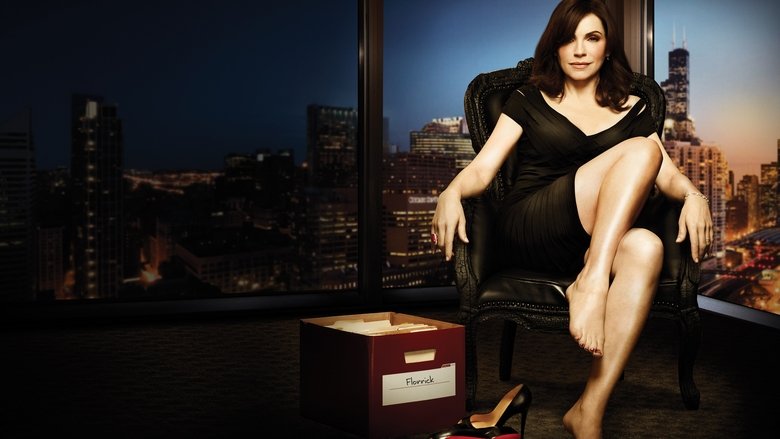
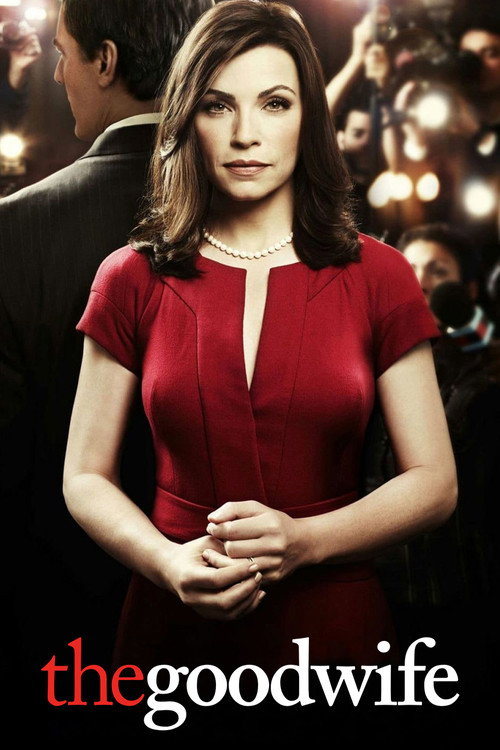
The Good Wife
A razor-sharp legal and political drama bathed in cool marble and bruised ambition, where institutional corruption and personal betrayal mirror a woman slowly shedding her innocence to wear power like armor.
The Good Wife

The Good Wife

"Don't let the name fool you."

22 September 2009 — 08 May 2016 United States of America 7 season 156 episode Ended 7.6 (697)

Cast: Julianna Margulies, Christine Baranski, Matt Czuchry, Alan Cumming, Archie Panjabi

Drama Systemic and Institutional Compromise Identity, Feminine Autonomy, and Complicity The Fluidity and Theater of the Law Compartmentalization and Personal Hypocrisy Technology, Surveillance, and Modern Power

Overview

The Good Wife opens in the aftermath of a humiliating public scandal. When Cook County State’s Attorney Peter Florrick is jailed for political corruption and illicit sexual conduct, his wife, Alicia Florrick, must resurrect her abandoned legal career after a thirteen-year absence to support her two teenage children. Hired as a junior litigation associate at the prestigious Chicago firm Stern, Lockhart & Gardner by her old law school classmate Will Gardner, Alicia enters a fierce corporate jungle where survival demands tactical brilliance, ethical compromise, and unflinching resilience.

As the narrative unfolds across seven seasons and 156 episodes, the series expands beyond a conventional courtroom procedural into an intricate exploration of law, machine politics, modern digital surveillance, corporate warfare, and systemic compromise. Alicia rises from an underdog associate competing with younger rivals to a named partner, political strategist, and eventual candidate for public office. Alongside her journey, the series chronicles the complex maneuvers of firm partner Diane Lockhart, strategist Eli Gold, associate-turned-adversary Cary Agos, and enigmatic in-house investigator Kalinda Sharma.

Throughout its run, The Good Wife examines the institutions that structure contemporary society—the courts, the political system, law enforcement, high-tech conglomerates, and the nuclear family. It portrays a world where moral absolutes dissolve into transactional pragmatism, and where personal autonomy is won only by mastering the subtle, ruthless rules of institutional power.

Core Meaning

The overarching thesis of The Good Wife is what showrunners Robert and Michelle King termed "the education of Alicia Florrick." The series deconstructs the patriarchal trope of the "stand-by-your-man" political spouse, questioning whether an individual can navigate corrupt, patriarchal systems without becoming corrupted themselves. The series posits that moral purity is a luxury of the powerless; the moment one seeks agency and influence in the legal or political sphere, compromise becomes inevitable. Ultimately, the show delivers a tragic and unsentimental portrait of empowerment, showing how survival and success in modern America can transform the victim into the victimizer.

Thematic DNA

Systemic and Institutional Compromise 30%
Identity, Feminine Autonomy, and Complicity 25%
The Fluidity and Theater of the Law 20%
Compartmentalization and Personal Hypocrisy 15%
Technology, Surveillance, and Modern Power 10%

Systemic and Institutional Compromise

From the backroom politics of the Cook County justice system to corporate boardrooms, the series argues that legal systems are not designed for abstract justice, but for winning leverage. Across the seasons, characters continually sacrifice their ideals—Diane Lockhart compromises her feminist and liberal principles for firm survival, Peter Florrick trades favors to regain power, and Alicia learns that procedural maneuvering trumps objective truth.

Identity, Feminine Autonomy, and Complicity

Beginning as a victimized housewife defined solely by her marriage, Alicia spends seven seasons constructing an autonomous identity. However, the series complicates simple feminist triumphalism by demonstrating that acquiring power often requires internalizing the very predatory behaviors previously suffered.

The Fluidity and Theater of the Law

The courtroom in The Good Wife is portrayed as an arena of legal gamesmanship and rhetorical performance rather than a temple of truth. Judges have explicit quirks and biases, evidentiary rulings pivot on procedural technicalities, and morality takes a back seat to aggressive advocacy.

Compartmentalization and Personal Hypocrisy

Alicia’s defining survival mechanism is mental compartmentalization—separating her private sexual desires from her public persona, and her personal ethics from her legal obligations. The show reveals the steep psychological toll of maintaining these emotional firewalls over time.

Technology, Surveillance, and Modern Power

Unlike most contemporary broadcast procedurals, The Good Wife leaned heavily into modern technology: metadata, NSA wiretapping, Bitcoin, algorithmic bias, hacktivism, and digital search engine manipulation. It tracks how digital surveillance erodes individual autonomy and how tech giants reshape jurisprudence.

Character Analysis

Alicia Florrick

Julianna Margulies

Archetype: Antiheroine / Fallen Protagonist Key Trait: Steely emotional compartmentalization and tactical intellect

Motivation

Initially driven by the instinct to protect her children and achieve financial independence; gradually driven by professional ambition, self-determination, and the thrill of power.

Character Arc

Begins as a humiliated, submissive political housewife whose entire world has collapsed. Over seven seasons, she transforms into a brilliant, cynical, and emotionally insulated attorney and politician. By the end of the series, she has mastered the machinations of Chicago politics and law, but at the cost of her moral core and personal relationships.

Diane Lockhart

Christine Baranski

Archetype: Mentor / Principled Liberal Stalwart Key Trait: Regal poise, fierce articulacy, and uncompromising work ethic

Motivation

Moves from defending the prestige and financial stability of her firm to seeking higher judicial or political office, and finally fighting for personal dignity and professional legacy.

Character Arc

A top-tier litigator and managing partner who champions progressive causes and female empowerment. Across the series, Diane repeatedly finds her liberal idealism clashing with corporate necessity, political corruption, and personal betrayal, leading to repeated betrayals from Alicia.

All 5 characters and cast

Symbols & Motifs

The Slap (The Physical Bookend)

Meaning:

It symbolizes the circularity of betrayal and Alicia’s complete journey from injured party to callous aggressor.

Context:

The series begins in the pilot with Alicia slapping Peter in private after his public apology; it ends in the series finale with Diane slapping Alicia after Alicia ruthlessly exposes Diane’s husband on the witness stand.

The Elevator Doors

Meaning:

Represent transitional thresholds dividing public social masks from vulnerable, private realities.

Context:

Crucial romantic encounters, such as Alicia and Will’s kiss in Season 2, tactical confrontations, and silent emotional breakdowns occur just before or after the elevator doors close.

The Red Wine Glass

Meaning:

Reflects Alicia’s loneliness, her growing emotional numbing, and the domestic cage she inhabits even after escaping Peter’s shadow.

Context:

A recurring visual motif shown in Alicia’s apartment at the end of every grueling workday as she isolates herself.

The Cell Phone and Interrupted Calls

Meaning:

Represents missed human connections, systemic miscommunication, and the pervasive vulnerability of private communication in the surveillance age.

Context:

Evidenced by pivotal plot devices such as Will’s fateful Season 1 voicemail confession erased by Eli, dropped cellular signals, and wiretapped phone conversations.

The Firm’s Name Wall

Meaning:

Serves as a dynamic visual scorecard of shifting internal alliances, hostile takeovers, and corporate ruthlessness.

Context:

The physical office directory wall of Stern, Lockhart & Gardner continually changes across the seven seasons through iterations like Lockhart/Gardner, Florrick/Agos, and Lockhart/Agos/Lee.

Memorable Quotes

I wanted his problems out of the office. What does that say about me? / It says you're becoming a lawyer.
— Alicia Florrick and Kalinda Sharma

Context

Season 1, Episode 12 ("Painkiller"). Alicia expresses guilt over prioritizing the firm’s defense over moral empathy, to which Kalinda pragmatically validates her transformation.

Meaning

Illustrates Alicia's creeping professional desensitization and the sacrifice of personal empathy required to succeed in high-stakes corporate law.

You sure this isn't pride? / Of course it's pride. What's wrong with pride? Pride built the pyramids. / And Watergate.
— Diane Lockhart and Will Gardner

Context

Season 2, Episode 6 ("Cleaning House"). Diane checks Will’s ambition as he aggressively escalates an internal and legal confrontation.

Meaning

Captures the essential tension between Will's reckless, masculine hubris and Diane's measured, principled caution.

All 5 quotes

Episode Highlights

Pilot

S1E1

Introduces Alicia Florrick picking up the pieces of her life following Peter's public scandal and re-entering the legal workforce at Stern, Lockhart & Gardner.

Significance:

Establishes the entire thematic architecture of the series—the press conference, the slap, Alicia’s return to work, and her dynamics with Will and Diane, setting the visual and moral baseline that the finale mirrors.

Closing Arguments

S2E23

During an all-night murder trial set in a hotel suite, Alicia and Will finally act on their mutual attraction and rent the Presidential Suite together.

Significance:

Marks Alicia’s first conscious abandonment of traditional wifely virtue and kicks off their complicated romantic affair.

Another Ham Sandwich

S3E14

Special Prosecutor Wendy Scott-Carr convenes a grand jury to indict Will Gardner for past judicial bribery, prompting Alicia to fiercely defend him.

Significance:

Highlights the weaponization and criminalization of standard legal practices, culminating in Will’s six-month suspension from the bar.

Red Team, Blue Team

S4E14

Alicia and Cary are pitted against Will and Diane in an internal mock trial, discovering that the equity partners are manipulating them with hollow partnership promises.

Significance:

Acts as the catalyst for Alicia and Cary's disillusionment, sparking their conspiracy to break away and found their own law firm.

Hitting the Fan

S5E5

Will discovers Alicia’s clandestine plot to leave Lockhart/Gardner and poach high-profile clients, resulting in an explosive, floor-by-floor office war.

Significance:

Universally regarded as the dramatic pinnacle of the series, permanently detonating the core firm dynamic and realigning all character loyalties.

The Decision Tree

S5E10

The series' 100th episode visualizes Will's strategic decision tree as he prepares to cross-examine Alicia during an intense courtroom battle.

Significance:

Juxtaposes intimate romantic flashbacks with vicious legal warfare, illustrating how personal history is weaponized inside the courtroom.

Dramatics, Your Honor

S5E15

During a routine trial, Will Gardner is shot and killed inside the courtroom by his panicked, unstable client Jeffrey Grant.

Significance:

Completely shatters the show’s central romantic axis and radically redirects Alicia’s emotional and psychological trajectory.

The Last Call

S5E16

In the immediate aftermath of Will's murder, Alicia obsessively investigates his final unfinished voicemail in an attempt to understand his dying thoughts.

Significance:

Provides a real-time, devastating study in sudden grief, guilt, and the agony of unresolved romantic closure.

Red Meat

S6E15

Follows election night tension during Alicia's campaign for State's Attorney while Diane attends an elite deer-hunting weekend with conservative donors.

Significance:

Sharply exposes the transactional and cynical reality of modern political campaigning and high-dollar legal fundraising.

End

S7E22

Alicia defends Peter at his federal corruption trial by ruthlessly destroying Diane's husband Kurt on the witness stand, leading to Peter's resignation and Diane's retribution.

Significance:

The series finale brings Alicia's moral evolution full circle as she stands alone in the corridor after receiving Diane's stinging slap, having traded her integrity for power.

Philosophical Questions

Can power be acquired within established institutions without moral corrosion?

The series examines whether legal, political, and corporate machines inherently force well-intentioned individuals to abandon ethical principles in order to achieve influence and survival.

Is procedural legal justice fundamentally separate from objective truth?

Through its courtroom battles, the show explores how the adversarial justice system prioritizes technical leverage, judicial biases, and superior narrative performance over moral fact.

What constitutes the modern foundation of marital loyalty?

The Florrick marriage probes whether modern matrimony functions primarily as an emotional commitment, an economic partnership, or a transactional public arrangement.

Alternative Interpretations

Viewers and scholars analyze the series and its conclusion through three distinct lenses:

Full ending explanation

Cultural Impact

Launching in 2009 amid high-profile political sex scandals and the aftermath of the 2008 financial collapse, The Good Wife captured the public consciousness around digital privacy disclosures, institutional cynicism, and modern feminism. Airing on CBS during the height of cable television's antihero golden age, it stood out as the sole 22-episode broadcast network drama capable of matching cable series like Mad Men and Breaking Bad in narrative complexity, adult moral ambiguity, and cinematic pacing.

Its fifth season achieved universal critical acclaim as a landmark masterclass in television writing. The show redefined network procedural storytelling by integrating continuous long-arc serialization, inspired international adaptations across South Korea, India, Japan, and Russia, and established a decade-spanning franchise through its critically acclaimed spinoffs The Good Fight and Elsbeth.

Audience Reception

The Good Wife earned elite critical acclaim and numerous accolades, including Emmy and Golden Globe Awards, particularly celebrating Julianna Margulies' layered performance, Christine Baranski's commanding presence, and Alan Cumming's sharp comedic energy. Season 5 holds a 100% Rotten Tomatoes approval rating and is frequently cited as one of the finest seasons in television history due to the explosive firm split in "Hitting the Fan" and the tragic execution of Will Gardner's sudden demise.

Despite widespread praise, certain creative choices drew criticism, including the widely panned Season 4 storyline involving Kalinda's abusive ex-husband Nick Savrese, the repetitive nature of Alicia's State's Attorney campaign fallout in Season 6, the noticeable green-screen compositing resulting from the Margulies-Panjabi rift, and the polarizing final slap in the series finale, which divided casual viewers while earning praise from critics for its structural daring.

Interesting Facts

  • Michelle and Robert King conceived the series after observing political sex scandals involving Eliot Spitzer, Bill Clinton, and John Edwards, fascinated by why educated attorney wives stood silently by their husbands during press conferences.
  • Julianna Margulies was not the first choice for Alicia Florrick; the role was offered to Ashley Judd and Helen Hunt first, both of whom passed.
  • Across the first four seasons, the episode titles had word counts corresponding to the season number (1, 2, 3, and 4 words), and Seasons 5, 6, and 7 reversed the pattern counting down with 3, 2, and 1 word titles.
  • Julianna Margulies wore a high-end wig for the entire run of the show to keep Alicia’s look pristine and avoid two hours of daily hair styling, saving hundreds of production hours.
  • Josh Charles decided not to renew his contract at the end of Season 4, but agreed to return for 15 episodes in Season 5 so the creators could craft Will's shocking courtroom death under complete secrecy.
  • Julianna Margulies and Archie Panjabi experienced an infamous behind-the-scenes rift; after Season 4, their characters never appeared together in a room in real time, and their final Season 6 scene was filmed separately using body doubles and composited together.
  • The series was executive produced by acclaimed filmmakers Ridley Scott and Tony Scott under Scott Free Productions, lending the network procedural cinematic production values.

Easter Eggs

Chumhum and Neil Gross

The recurring tech conglomerate Chumhum and its eccentric founder Neil Gross served as an ongoing satire of Google, Silicon Valley hubris, data harvesting, and overreaching terms of service.

Darkness at Noon

The fictional cable drama Darkness at Noon that Alicia and her family routinely watch was a direct parody of grim, prestige cable antihero shows such as Breaking Bad and Low Winter Sun.

Eccentric Recurring Judges and Lawyers

The Kings built a rich ecosystem of idiosyncratic recurring legal figures, such as Judge Abernathy requiring bias declarations, Judge Dunaway insisting on "in my opinion" qualifiers, and unpredictable litigators like Elsbeth Tascioni and Colin Sweeney.

Real-Life Legal Cameos

Prominent real-world legal and political figures made guest appearances as themselves or litigators, including Barry Scheck, Donna Brazile, Vernon Jordan, and David Boies.

The Spinoff Universe Connection

Laid the groundwork for the expanded Kings franchise, directly seeding the characters and legal landscapes for The Good Fight and Elsbeth.

Frequently Asked Questions

Explore More About This Movie

Dive deeper into specific aspects of the movie with our detailed analysis pages

Comments (0)

Leave a comment

No comments yet. Be the first to share your thoughts!

Similar Movies