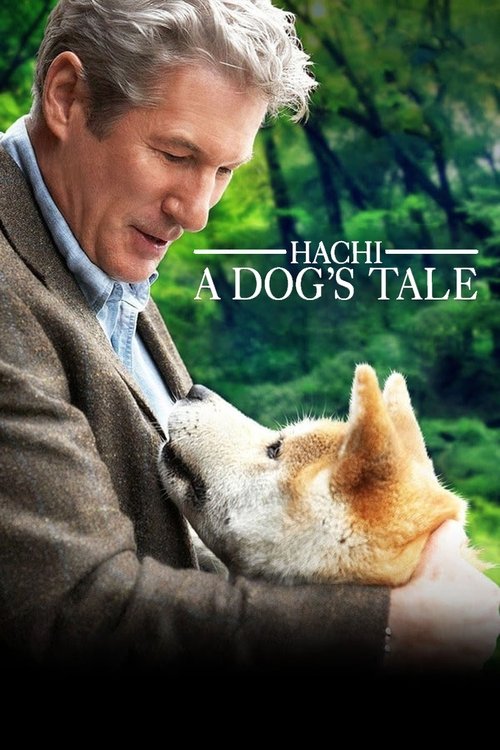
Hachi: A Dog's Tale
"A true story of faith, devotion and undying love."
Overview
"Hachi: A Dog's Tale" is a poignant drama based on the true story of a remarkably loyal Akita dog. The film follows Parker Wilson, a college professor who finds an abandoned puppy at a train station and takes him home. Despite his wife's initial reluctance, Parker forms a deep and unbreakable bond with the dog, whom he names Hachi. Their connection is beautifully illustrated by their daily routine: Hachi accompanies Parker to the train station every morning and faithfully awaits his return every evening.
This heartwarming ritual becomes a familiar sight to the local townspeople, who are charmed by the incredible devotion of the dog. The story takes a heart-wrenching turn, testing the strength of Hachi's loyalty in the face of unforeseen tragedy. The film explores the profound impact of this human-animal bond on a family and an entire community, celebrating a love that transcends time and even death itself.
Core Meaning
The core meaning of "Hachi: A Dog's Tale" revolves around the profound and enduring power of loyalty, love, and devotion. The director, Lasse Hallström, sought to convey a story that celebrates a form of love so pure and unwavering that it transcends ordinary understanding and the finality of death. The film posits that such loyalty is a fundamental lesson in how to love and remember those who have touched our lives. Hachi's decade-long vigil is not just a tale of a dog waiting for his owner; it's a powerful parable about the essence of true friendship and the unbreakable spiritual bonds that connect living beings. The film's message is encapsulated in the closing narration by Parker's grandson, who says that Hachi taught him the meaning of loyalty: "you should never forget anyone you have loved."
Thematic DNA
Unwavering Loyalty and Devotion
This is the central theme of the film, embodied by Hachi's relentless commitment to his master, Parker. For nearly a decade after Parker's death, Hachi returns to the train station every day, a powerful symbol of faithfulness that continues long after hope is gone. This theme is not just presented as a canine trait but as a profound spiritual lesson for the human characters and the audience, teaching them about love, compassion, and commitment. Hachi's loyalty becomes a local legend, inspiring and touching the lives of the community members who witness his daily vigil.
The Human-Animal Bond
The film deeply explores the powerful and transformative connection that can exist between humans and animals. The bond between Parker and Hachi is portrayed as a profound friendship built on mutual love and understanding that goes beyond words. Parker finds great joy and companionship in Hachi, and Hachi's life is defined by his love for Parker. The film suggests that this bond can be as strong, if not stronger, than many human relationships, offering a pure and unconditional form of love.
Love, Loss, and Grief
The narrative is deeply rooted in the emotional landscape of love and the inevitable pain of loss. Parker's sudden death creates a void not only for his human family but most palpably for Hachi. The film gently observes the different ways humans and animals process grief. While Parker's family mourns and eventually moves on with their lives, Hachi's grief manifests as a quiet, unyielding hope, a daily ritual of waiting that becomes a living memorial. His silent suffering and dignity in the face of loss resonate with anyone who has experienced the pain of losing a loved one.
The Passage of Time and Memory
The film effectively uses the passage of time to highlight the endurance of Hachi's memory and love. Seasons change, years pass, and the world around the train station evolves, yet Hachi remains a constant, unchanging presence. This contrast emphasizes the timeless nature of his devotion. The story itself is framed as a memory, told by Parker's grandson, ensuring that Hachi's legacy of loyalty is passed down through generations, becoming an unforgettable story. The film suggests that while life moves forward, the memories of those we love should never be forgotten.
Character Analysis
Parker Wilson
Richard Gere
Motivation
Parker is motivated by a simple, pure love for the dog he found. He is not seeking to train a perfect pet but to build a genuine companionship. His motivation is rooted in empathy and the joy he derives from his daily routines with Hachi. He finds a unique friendship in Hachi that transcends the norms of pet ownership.
Character Arc
Parker Wilson does not have a dramatic arc in the traditional sense; rather, he is a static character whose inherent goodness, kindness, and capacity for love are revealed through his relationship with Hachi. He begins as a compassionate man who can't bear to leave a lost puppy, and his bond with Hachi only deepens these qualities. His arc is one of finding a profound, unspoken connection that enriches his life, and his sudden death serves as the catalyst for the film's central story of loyalty.
Hachi
Layla, Chico, and Forrest (Akitas)
Motivation
Hachi's sole motivation is his profound and unconditional love for Parker. This love dictates his entire existence, from his daily trips to the station to his decade-long vigil after Parker's death. He is not driven by instinct alone, but by a deep-seated emotional connection and a hope that his friend will return.
Character Arc
Hachi's arc is an emotional and spiritual journey. He begins as a lost, vulnerable puppy who finds a loving home. His development is marked by the deepening of his bond with Parker. After Parker's death, Hachi's arc becomes a testament to unwavering loyalty. He transforms from a beloved pet into a symbol of devotion for the entire community, aging physically but remaining constant in his love. His journey concludes with a peaceful passing and a spiritual reunion with his master.
Cate Wilson
Joan Allen
Motivation
Initially motivated by a desire for an orderly home without pets, Cate's motivation shifts to a desire to protect her family's emotional well-being. She comes to understand and respect the unique bond her husband shares with Hachi. Ultimately, she is motivated by love for her late husband and a newfound appreciation for the dog that embodied such incredible loyalty to him.
Character Arc
Cate's arc is one of transformation. Initially, she is resistant to having a dog in the house, viewing Hachi as an inconvenience. However, as she witnesses the profound bond between her husband and Hachi, her heart softens, and she grows to love the dog. Years after Parker's death, upon seeing the elderly Hachi still waiting at the station, she has a moment of profound understanding and emotional catharsis, fully grasping the depth of Hachi's love and loyalty.
Ken Fujiyoshi
Cary-Hiroyuki Tagawa
Motivation
Ken is motivated by his friendship with Parker and his cultural understanding of the bond between Hachi and his master. He wants to honor both his friend's memory and the dog's profound loyalty. He acts as a bridge between the American setting and the Japanese origins of the story, helping the other characters and the audience understand the deeper meaning of Hachi's devotion.
Character Arc
Ken serves as a cultural and spiritual guide in the story. He does not have a personal arc but is crucial for interpreting Hachi's significance. He explains the meaning of Hachi's name and the unique nature of the Akita breed. Years later, he returns to find Hachi still waiting and gives voice to the film's message of respecting Hachi's choice, stating, "if Hachiko wants to wait, then Hachiko should wait." He provides context and a sense of reverence for Hachi's actions.
Symbols & Motifs
The Train Station
The train station symbolizes the bridge between two worlds: the daily life of work and the comfort of home. For Hachi, it represents hope, routine, and the sacred place of meeting and parting. After Parker's death, it transforms into a symbol of enduring hope, unwavering loyalty, and a place of memorial. It is the alpha and omega of Hachi's story with Parker—where they first met and where Hachi ultimately waits until his own passing.
The train station is the central location of the film. It's where Parker first finds Hachi, and it's the backdrop for their daily ritual of farewells and greetings. After Parker dies, Hachi's constant presence turns the station into a place of community focus and a testament to his devotion. The final scene, where Hachi dies at the station and is reunited with Parker in a vision, solidifies its symbolic meaning as a place of eternal connection.
The Fetch Ball
The ball symbolizes a unique connection and a special, unspoken understanding between Parker and Hachi. Ken explains that an Akita will only fetch for a special reason, suggesting that the act is more than just a game; it's an expression of a deeper bond or a premonition. Hachi finally fetching the ball on the day of Parker's death suggests an intuitive understanding of the impending tragedy and a desire to share a moment of pure joy with his master one last time.
Throughout the film, Parker tries unsuccessfully to get Hachi to play fetch. On the morning of his fatal stroke, Hachi, for the first and only time, brings the ball to Parker at the station and initiates a game of fetch. This surprising act deeply moves Parker. The ball is later found in Parker's pocket after his death, a poignant reminder of their final, special interaction.
Changing Seasons
The changing seasons—the falling leaves of autumn, the heavy snows of winter, the renewal of spring—symbolize the relentless passage of time. They highlight Hachi's unwavering dedication, as he remains at his post through all weather and seasons for nearly a decade. The cycle of seasons contrasts with Hachi's static, unchanging vigil, emphasizing the depth and persistence of his loyalty while the world around him moves on.
The film visually marks the passing years by showing Hachi waiting through different seasons. We see him covered in snow during harsh winters and sitting patiently under the changing colors of autumn trees. These recurring images serve as a powerful visual motif to demonstrate the longevity and difficulty of his wait, reinforcing the extraordinary nature of his commitment.
Memorable Quotes
I understand how you feel. Hachi, my friend, Parker is never coming home. But if Hachiko wants to wait, then Hachiko should wait.
— Ken Fujiyoshi
Context:
Ken says this to Hachi in Japanese at the train station, a year after Parker's death. He has read about Hachi's story in the newspaper and travels to see him. It is a quiet, poignant moment of understanding between someone who misses his friend and the dog who does as well.
Meaning:
This quote encapsulates the film's core message of respecting the profound nature of Hachi's loyalty. Ken articulates that Hachi's vigil is not something to be pitied or stopped, but a powerful expression of love that should be honored. It validates Hachi's choice and gives it a sense of spiritual dignity.
You should never forget anyone that you have loved.
— Ronnie (narrator)
Context:
This is the concluding line of the film, spoken by Parker's grandson, Ronnie, as he finishes telling the story of Hachi to his class for a presentation about their personal heroes. It summarizes what he, and the audience, have learned from Hachi's decade-long vigil.
Meaning:
This line, delivered at the end of the film, serves as the story's moral. It distills the epic tale of Hachi's loyalty into a simple, universal lesson for the audience. Hachi's life becomes a metaphor for the importance of keeping the memory of loved ones alive in our hearts.
If it's all right, could I wait with you for the next train?
— Cate Wilson
Context:
Ten years after Parker's death, Cate visits his grave and then goes to the train station, where she is moved to find the old, frail Hachi still waiting. She sits down beside him on the bench, tears in her eyes, and quietly asks for his permission to share in his wait.
Meaning:
This is a moment of profound emotional catharsis for Cate. After years of being away, she finally understands and accepts the depth of Hachi's grief and loyalty. By asking to wait with him, she is joining him in his vigil, honoring both the dog and the memory of her husband. It signifies her complete transformation from a skeptic to someone who deeply respects Hachi's love.
Philosophical Questions
What is the nature of loyalty, and is it an instinct or a conscious choice?
The film presents Hachi's loyalty as something profound and almost spiritual, going beyond mere canine instinct. Ken's comment that Akitas won't fetch without a "special reason" suggests a level of consciousness and choice in their actions. The film forces the viewer to question whether Hachi's decade-long vigil is simply a programmed behavior or a deliberate act of love and remembrance. It explores the idea that loyalty, in its purest form, is an unconditional commitment that doesn't require reciprocation or even the hope of a positive outcome.
How do different beings experience grief and the passage of time?
"Hachi: A Dog's Tale" offers a powerful contrast between human and animal experiences of grief. Parker's family mourns him, but they also move on—his wife sells the house, his daughter starts a family. For them, time is linear and healing. For Hachi, time seems to stand still. He lives in a perpetual state of waiting, where every day is a potential reenactment of his last happy day with Parker. The film uses this contrast to explore the nature of memory and how love can create a timeless emotional space, untouched by the world's progression.
Can a non-human animal be a moral teacher?
The film positions Hachi as a source of moral and spiritual wisdom for the human community. The townspeople, and eventually Parker's own family, learn about loyalty, patience, and devotion by observing him. The story is framed by Parker's grandson, who declares Hachi his hero. This raises the philosophical question of whether profound moral lessons can come from beings we often consider "lesser" than ourselves. Hachi, a speechless animal, becomes a powerful teacher, his actions speaking louder than any human words could about the virtues of faithfulness.
Alternative Interpretations
While the dominant interpretation of "Hachi: A Dog's Tale" centers on loyalty and love, some alternative readings offer different perspectives. One interpretation views Hachi's story not just as one of loyalty, but as a spiritual parable about faith and yearning for the divine. In this view, Hachi's unwavering vigil is akin to a spiritual practitioner's devotion, waiting for a connection with a higher power, a beloved that has been lost but is still felt. His act of showing up day after day becomes a form of sacred practice.
Another, more psychological interpretation, might see Hachi's behavior as a manifestation of an inability to process change and loss, a profound form of grief that traps him in a repetitive cycle. Rather than a purely noble act, his waiting could be seen as a tragic inability to move on, a canine form of deep-seated trauma. However, the film's gentle and reverent tone strongly discourages this reading, framing Hachi's actions almost exclusively through the lens of profound, admirable loyalty.
Cultural Impact
"Hachi: A Dog's Tale" had a significant cultural impact by introducing the touching true story of Hachikō to a global audience, many of whom were unfamiliar with the Japanese tale. The film transcended cultural boundaries, resonating with viewers worldwide due to its universal themes of love, loyalty, and the profound bond between humans and animals. It sparked renewed interest in the Akita breed, with many people being moved by the dog's incredible devotion.
The film was very well-received by audiences, often cited as an incredibly emotional and tear-jerking experience that stays with viewers long after they've watched it. It has become a go-to film for animal lovers and is frequently recommended as a heartfelt family movie, though with the caveat that it is deeply saddening. While some critics found it to be overly sentimental, audiences largely embraced its emotional sincerity. The story's impact is also evident in the decision to erect a statue of Hachi in Woonsocket, Rhode Island, where the movie was filmed, creating a permanent landmark that pays homage to both the real dog and the film's powerful retelling of his story.
Audience Reception
The audience reception for "Hachi: A Dog's Tale" has been overwhelmingly positive and deeply emotional. It is widely regarded as one of the most heart-wrenching and tear-jerking films ever made, with countless viewers sharing stories of being moved to tears. Dog lovers, in particular, have found the film to be profoundly affecting, resonating with the deep bond they share with their own pets. Praised for its beautiful story, strong performances (especially by the canine actors), and touching musical score, the film is often described as a "must-watch" for families and animal lovers. The main point of criticism from some viewers is that the film can be slow-paced and emotionally manipulative. However, for the vast majority of its audience, the film's emotional impact is seen as genuine and earned, celebrating a beautiful and true story of loyalty that leaves a lasting impression.
Interesting Facts
- The film is a remake of the 1987 Japanese film "Hachikō Monogatari," which tells the true story of an Akita dog who lived in Tokyo from 1923 to 1935.
- Three different Akita dogs—named Chico, Layla, and Forrest—were used to play the role of Hachi at different stages of his life.
- Richard Gere, a known animal lover, was deeply moved by the script and became a producer for the film to ensure the story was told.
- The role of Hachi as a puppy was played by Shiba Inu puppies, as they resemble Akita puppies but grow more slowly, which was better for the filming schedule.
- The movie was primarily filmed in Woonsocket, Rhode Island, which stood in for the fictional town of Bedridge. A bronze statue of Hachi was later erected at the Woonsocket Depot Square in honor of the film.
- The name "Hachi" means "eight" in Japanese. The number eight is considered lucky in Japanese culture, symbolizing prosperity and good fortune.
- The real Hachikō became a national symbol of loyalty in Japan, and a bronze statue of him stands in front of Shibuya Station in Tokyo, where he waited for his owner.
- The scenes from Hachi's point of view were filmed in desaturated, near black-and-white colors to simulate a dog's vision.
- Animal trainer Mark Harden and his team trained the three Akitas. After filming, Harden adopted Chico, and another trainer, David Allsberry, adopted Layla.
⚠️ Spoiler Analysis
Click to reveal detailed analysis with spoilers
Frequently Asked Questions
Explore More About This Movie
Dive deeper into specific aspects of the movie with our detailed analysis pages
Comments (0)
No comments yet. Be the first to share your thoughts!