Full spoilers follow.
The hidden mission. The film's first engine is concealed intent. Sa-mul is not simply a young officer posted to Ansi — he has been sent by his commanders in the capital with a secret assignment to assassinate Yang Manchun, who is regarded by the central government as a rogue commander who defied orders. Everything in the film's first movement is therefore double-coded: Sa-mul is studying the fortress not as a defender but as a killer looking for an opening, and the warmth he is shown is warmth extended to a man planning a murder.
The reversal. The Tang invasion overtakes the plot. As Li Shimin's army encircles Ansi, Sa-mul places the mission on hold to help with the defense — and the postponement becomes permanent. What he discovers inside the fortress is the opposite of the picture painted in the capital: a commander whose people follow him out of trust rather than fear. The deeper irony is structural — the state that labelled Yang Manchun a traitor is, in effect, prepared to see Ansi fall, while the "traitor" is the only person fighting for it. Sa-mul's transformation is the film's true arc: he must set his official loyalty to his country aside in order to serve the actual people of it.
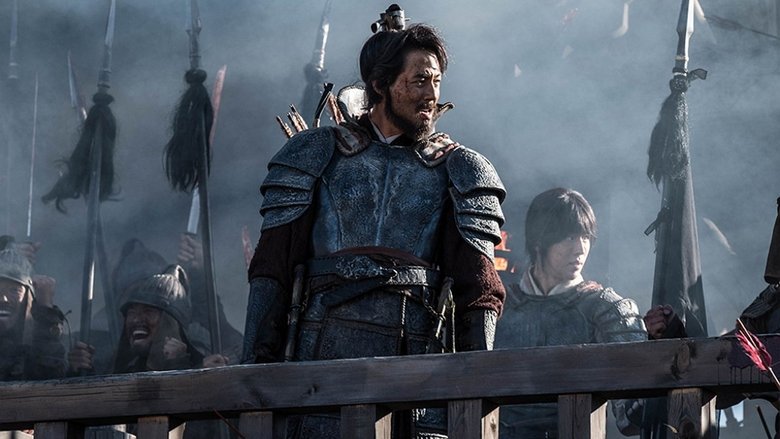
The siege itself. The eighty-eight days escalate through recognizable stages: mass infantry assaults on the walls, ladders and rams against the gate, sorties and counterattacks, attrition on both sides. When brute force fails, Tang engineering takes over, and the campaign's decisive threat becomes the enormous earthen siege ramp raised to overtop the fortress walls — the moment the defenders' one structural advantage, elevation, is cancelled. The climactic fighting turns on the contest for control of that mound, and the film's ultimate argument is delivered there: the empire's engineering can nullify the wall, but not the will of the people standing on it.
The ending. Ansi does not fall. Against every projection, the Tang campaign is broken off and Li Shimin withdraws — the historical outcome that made the siege legendary, since the failure at this single border fortress derailed the emperor's entire conquest of Goguryeo. The film's final beat draws on the Korean legend attached to that withdrawal, in which the emperor is struck by an arrow from the fortress — an image the movie's whole archery motif has been building toward, the single precise shot answering the infinite mass.
What becomes clear afterward. On reflection, the assassination plot is revealed as the film's thesis rather than its hook: the capital's judgment of Yang Manchun was the real threat to Ansi, more insidious than the army outside, because it came from within. And the fortress's victory is deliberately hollow in scale — the defenders win nothing but the right to continue existing. That, the film argues, was always the only prize available, and it was worth eighty-eight days.