Skip to content
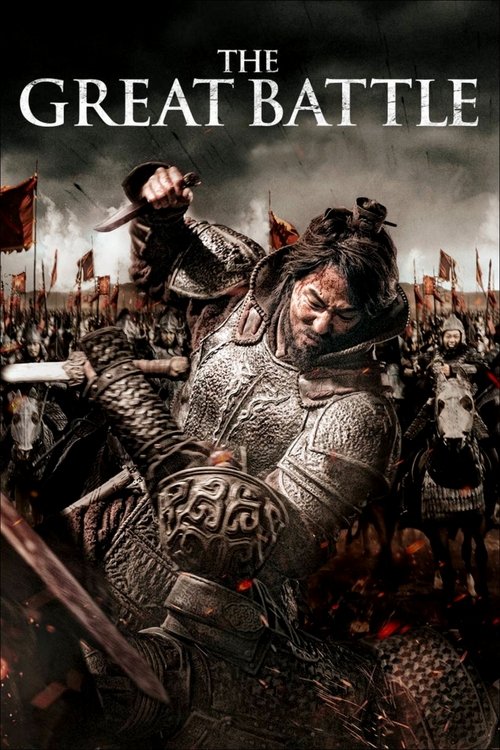
The Great Battle
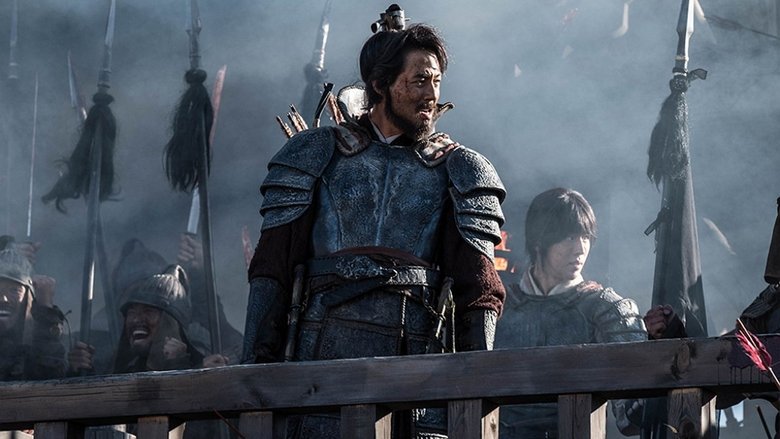
A dust-choked siege epic where a handful of defenders stand beneath an endless tide of banners — eighty-eight days of arrows, mud and stubborn hope hardening into a wall no empire can break.
The Great Battle

The Great Battle

안시성

"Fight to the death."

19 September 2018 South Korea 135 min 6.7 (197)

Director: Kim Kwang-sik

Cast: Zo In-sung, Nam Joo-hyuk, Park Sung-woong, Bae Sung-woo, Um Tae-goo

War History Action Defiance against overwhelming odds Loyalty, orders and conscience The community as protagonist The cost of empire Legend as national memory
Budget: $13,305,000
Box Office: $41,509,280

Overview

The Great Battle (안시성) dramatizes the siege of Ansi Fortress in 645 CE, the eighty-eight-day stand in which the Goguryeo commander Yang Manchun and his garrison held out against the invading armies of the Tang dynasty under Emperor Taizong, Li Shimin. Director Kim Kwang-sik, who also wrote the screenplay, builds the film almost entirely around the geography of a single stronghold: its walls, its gates, its water, and the shrinking space behind them.

The story enters the fortress through outside eyes. Sa-mul, a young officer trained in the capital, arrives at Ansi carrying a secret assignment from his superiors — Yang Manchun is regarded in Pyongyang as a rogue who refused to obey central command, and Sa-mul is expected to remove him. What the young man finds instead is a commander loved by his people and a garrison that has no intention of surrendering. As the Tang host masses beyond the walls, Sa-mul's mission and his conscience begin to pull in opposite directions.

From there the film becomes a study in siege craft and endurance: assault ladders and battering rams, cavalry sorties, fire attacks, and finally the vast earthen ramp the Tang engineers raise to overtop the walls. Around Yang Manchun stands a compact ensemble of captains, archers and cavalry — ordinary people who become extraordinary only because the alternative is annihilation. It is a war film whose real subject is whether a small place can refuse a large empire.
Core Meaning

Kim Kwang-sik's film argues that resistance is not a matter of strength but of refusal — the decision to remain standing when every rational calculation says to kneel. Ansi is deliberately framed as insignificant: a border fortress with a few thousand defenders facing an emperor who commands the largest army in the known world. The film's answer to that imbalance is not a secret weapon or a clever trick but the accumulated will of people who have nowhere else to go.

Its second, quieter argument concerns who is worth obeying. Sa-mul arrives believing loyalty means the orders of a distant capital; the siege teaches him that loyalty is owed to the people in front of him. Yang Manchun is labelled a traitor by his own government precisely because he protects his own — and the film treats that contradiction as the truest thing about war, where the state's interests and the survival of its people can come apart entirely.

Notably, several critics observed that the film eschews the shrill nationalism typical of the genre: the Tang are dangerous and disciplined rather than cartoonishly evil, and Li Shimin is given the gravity of a great ruler. The message lands less as "our people are superior" than as "no one should be erased simply because they are small."

Thematic DNA

Defiance against overwhelming odds 28%
Loyalty, orders and conscience 22%
The community as protagonist 20%
The cost of empire 18%
Legend as national memory 12%

Defiance against overwhelming odds

The film's structural spine. The historical siege lasted eighty-eight days, and the movie stages that duration as a grinding accumulation of assaults, each larger than the last, culminating in the Tang army's earthen siege ramp. Yang Manchun never claims the defenders can win by force — only that they will not open the gate. Every character is defined by how long they can keep standing.

Loyalty, orders and conscience

Carried entirely by Sa-mul, sent from the capital to assassinate Yang Manchun as a rogue commander. His arc is the slow discovery that the order he carries and the duty he feels are not the same thing. The film keeps him suspended between the abstraction of the state and the concrete faces of the garrison until the choice makes itself.

The community as protagonist

Ansi is not defended by a hero but by a place. Blacksmiths, farmers, archers, cavalry and cooks are all folded into the defense, and the film repeatedly cuts from the commander to the anonymous hands loading a ballista or hauling a stone. Critics noted this ensemble texture as the reason the spectacle carries emotional weight rather than mere scale.

The cost of empire

Li Shimin is depicted not as a monster but as a ruler for whom Ansi is a line on a map and its people an inconvenience. The film weighs the imperial logic of conquest — measured in campaigns and provinces — against the human arithmetic inside the walls, where every death is a name. Empire here is less villainous than indifferent, which the film treats as worse.

Legend as national memory

With almost no surviving Goguryeo records, the filmmakers openly reimagined the siege, drawing on legend rather than documentation. The film is therefore about how a people tells itself its own survival — a choice that drew criticism in the Korean press for historical inaccuracy while giving the story its near-mythic register.

Character Analysis

Yang Manchun

Zo In-sung

Archetype: Reluctant hero / defiant commander Key Trait: Immovable calm

Motivation

To keep the people of Ansi alive and their fortress unbroken, regardless of what Pyongyang or Chang'an want from him.

Character Arc

Introduced through hostile secondhand reputation — the capital calls him a rogue who defied central command — and gradually revealed as a leader whose authority rests on the trust of the people he governs rather than on rank. His arc is not transformation but vindication: the film steadily proves that his refusal to obey was the more loyal act.

Sa-mul

Nam Joo-hyuk

Archetype: Outsider initiate / moral center Key Trait: Divided conscience

Motivation

Initially duty to his commanders and country; ultimately the survival of the people he has come to know.

Character Arc

Arrives as an instrument of the capital, tasked with assassinating Yang Manchun, and is absorbed by the community he came to decapitate. As the siege deepens he postpones the mission, then abandons the logic behind it, ending as a defender rather than an agent — the film's proxy for the audience learning the fortress from the inside out.

All 3 characters and cast

Symbols & Motifs

The fortress wall

Meaning:

The boundary between a people and their erasure. The wall is less a military structure than a collective body — it is repaired, bled on, and held by the same hands it protects, and its condition is the film's running measure of the community's survival.

Context:

Nearly every major sequence is staged on, under, or against the wall: ladder assaults, the battering of the gate, the desperate repairs between waves. The camera returns to it constantly as the film's fixed point.

The siege ramp

Meaning:

The brute patience of empire. Where the defenders improvise, the Tang simply build — moving earth until geography itself is rewritten and the wall's height is cancelled. It symbolizes power that does not need cleverness because it has inexhaustible time and bodies.

Context:

The Tang engineering effort to raise an earthwork overtopping the fortress forms the film's late-siege escalation, the moment the defenders' greatest asset — their elevation — is taken from them.

The bow and the single arrow

Meaning:

Precision against mass. Archery in the film stands for the defenders' entire strategy: one small, exactly aimed thing set against an ocean of force — and, by extension, the idea that an empire has a single vulnerable point.

Context:

Archery recurs from the garrison's massed volleys down to the climactic long shot at the Tang command position, the image on which the film's legend-derived ending turns.

The gate

Meaning:

The threshold of surrender. To open it is to choose life for individuals and death for the community; to keep it shut is the film's entire moral position condensed into one hinge.

Context:

Repeated Tang attempts to breach it, and repeated internal pressure to negotiate, keep the gate as the film's recurring pressure point.

Dust and mud

Meaning:

The erosion of the distinction between soldier and civilian, victor and victim. As the siege wears on, everyone is coated in the same earth — the film's visual statement that war levels identity before it levels walls.

Context:

The palette darkens and thickens across the eighty-eight days, with the pristine banners of the opening giving way to grime on every face.

The Tang banners

Meaning:

Number as psychological weapon. The endless ranks of standards do more damage than the siege engines, because they tell the defenders that killing an enemy changes nothing.

Context:

Used in the film's wide establishing shots of the besieging host, where the enemy is presented as landscape rather than as individuals.

Philosophical Questions

When does disobedience become the higher form of loyalty?

The premise is built on this: Yang Manchun is condemned by his own government for refusing central command, and Sa-mul is dispatched to kill him for it. The film never resolves the tension by showing the capital to be wrong in some simple way — instead it makes the audience watch what obedience would have cost, and lets the eighty-eight days deliver the verdict.

Is resistance rational when defeat is near-certain?

Every strategic fact in the film argues for surrender: the Tang have overwhelming numbers, superior engineering, and time. The defenders' choice is therefore presented as something other than calculation — a refusal that precedes reasoning. The film asks whether such a stance is courage or futility, and quietly suggests the distinction only exists in hindsight.

What does an empire owe the small places it walks over?

Li Shimin is shown as a competent ruler for whom Ansi is a schedule item. By granting him dignity rather than villainy, the film makes the question sharper: the harm is done not through cruelty but through scale, by a system in which individual lives are simply below the resolution at which decisions get made.

Who does a soldier actually serve — the state, the commander, or the people?

Sa-mul carries all three loyalties into the fortress and cannot keep them aligned. The siege strips away the abstractions one by one until only the people beside him remain, dramatizing the argument that duty is finally something local and embodied rather than institutional.

Can a nation's truth survive the loss of its records?

The production worked from an almost empty historical archive and filled the gap with invention — the very choice for which it was criticized. The film thereby enacts its own question: when documentation is destroyed, memory becomes an act of imagination, and the retelling is all that is left to defend.

Alternative Interpretations

As nationalist epic versus humanist war film. The most persistent split in reception is whether the film is a patriotic monument or something more skeptical. Critics who read it the second way point to its refusal to demonize the Tang and its generous treatment of Li Shimin; those who read it the first way note that the entire narrative architecture is nonetheless a hymn to Korean endurance against a Chinese empire, a story with real political charge in the region.

Full ending explanation

Cultural Impact

The Great Battle arrived at a moment when Korean cinema was investing heavily in the historical blockbuster, and it did so on a scale — a budget of roughly ₩21.5 billion — that placed it among the country's most expensive productions. Released into the fiercely competitive 2018 Chuseok holiday corridor against several other mega-budget domestic titles, it emerged as the only one of that group to turn a profit, finishing with more than US$41.5 million in global grosses. That outcome mattered commercially as a demonstration that the large-scale siege film could still work in an increasingly saturated market.

Its subject carries unusual weight in Korean historical consciousness. Goguryeo's successful defense against Tang invasion is one of the foundational stories of Korean survival against a vastly larger continental power, and it sits inside a live regional debate over the interpretation of Goguryeo history. What surprised a number of international critics, however, was the film's restraint — reviewers noted that it largely eschews the flag-waving nationalism the premise invites, granting Emperor Taizong genuine stature rather than reducing him to a villain.

Critically the film landed positively overall, with praise for the cinematography, Kim Kwang-sik's direction, the battle choreography and the performances. Domestically it was more contentious: the Korean press criticized its loose relationship to the historical record, and audience reaction was polarized along the same fault line. Its most durable legacy is formal rather than ideological — it stands as one of Korean cinema's most sustained attempts at the classical siege film, built around the anatomy of a single fortress across eighty-eight days.

Audience Reception

What was praised. Audiences and critics converged on the spectacle. Reviewers repeatedly singled out the massive-scale ground battles, describing the siege sequences as delivering "jaw-dropping scale," alongside consistent praise for the cinematography, Kim Kwang-sik's direction and the cast's performances. The film's willingness to hold its focus on one fortress and one prolonged siege — rather than sprawling across a campaign — was widely read as a strength, and international reviewers noted approvingly that it avoids the strident nationalism the genre usually indulges.

Main criticisms. The most common complaint is length: several reviews call the film overlong, with meandering stretches between set pieces that the action has to compensate for. The other and louder objection, especially in Korea, concerns historical accuracy. The film drew knocks in the Korean press for its liberties, and reaction from domestic audiences was openly polarized on this point.

Controversial elements. Specific inventions became flashpoints: a Yang Manchun plausibly a decade or two too young, a squad of female warriors armed with blowguns, helmet-less near-superhuman fighters, and a fortress whose depicted scale does not match the record. Most conspicuously, the film pits the defenders against a Tang army rendered as 500,000 strong, far beyond what the historical accounts support.

Overall verdict. Positive on balance — a 7.0 IMDb user rating, favorable critical notices, and a strong commercial performance of over US$41.5 million, including the distinction of being the only profitable title among the mega-budget films crowding the 2018 Chuseok holiday. The consensus that emerges is that it is great fun and genuinely impressive as spectacle, provided the viewer accepts it as legend rather than history.

Interesting Facts

  • The film dramatizes a real event: the siege of Ansi Fortress in 645 CE, an eighty-eight-day battle between Yang Manchun's Goguryeo garrison and the invading Tang dynasty army of Emperor Taizong (Li Shimin).
  • Kim Kwang-sik both wrote and directed the film.
  • The production carried a budget of about ₩21.5 billion (roughly US$19.2 million), making it one of the largest Korean productions of its year.
  • It grossed over US$41.5 million worldwide, a substantial commercial success.
  • The film opened during South Korea's crowded Chuseok holiday season in 2018 against several other mega-budget domestic titles; among that cluster of releases, it was the only one to turn a profit.
  • Because almost no Goguryeo records survive, the director openly took liberties with the history, reimagining the siege in an almost fantasy-like register rather than reconstructing it.
  • The historical accounts describe a far smaller engagement than the film shows: the movie pits the defenders against a Tang host depicted as 500,000 strong, dramatically inflating the scale of the real battle.
  • Historians and the Korean press criticized several inventions, including the youthfulness of Yang Manchun (unlikely to have been in his mid-30s), a squad of female warriors using blowguns, and elite fighters who go into battle without helmets.
  • Critics singled out the cinematography, Kim's direction, the large-scale ground-battle staging and the acting as the film's strongest elements.
  • The film holds a 7.0 user rating on IMDb, and reviewers repeatedly noted that despite its length, the action sequences carry the picture.

Frequently Asked Questions

Explore More About This Movie

Dive deeper into specific aspects of the movie with our detailed analysis pages

Comments (0)

Leave a comment

No comments yet. Be the first to share your thoughts!

Similar Movies