
Skip to content
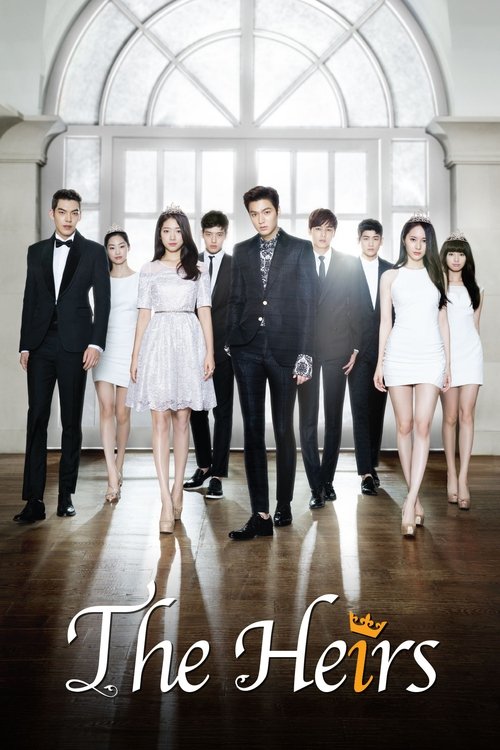
The Heirs
A glittering teen melodrama steeped in corporate grandeur and emotional isolation, where golden chains of privilege clash with forbidden adolescent love like a velvet curtain smothering a flickering flame.
The Heirs

The Heirs

상속자들

"Who said being a rich, beautiful high school student was easy?"

09 October 2013 — 12 December 2013 South Korea 1 season 20 episode Ended 7.8 (673)

Cast: Park Shin-hye, Lee Min-ho, Kim Woo-bin, Kim Ji-won, Kang Min-hyuk

Drama Comedy The Burden of Elite Class & Inherited Privilege Love vs. Family Duty & Sacrifice Parental Trauma & Emotional Neglect Identity & Self-Determination vs. Fate School Hierarchy, Classism & Bullying

Overview

The Heirs (2013), written by hitmaker Kim Eun-sook and directed by Kang Shin-hyo and Bu Sung-chul, is a 20-episode South Korean television drama that explores the gilded yet suffocating lives of South Korea’s top 1% elite youth. The narrative follows Kim Tan, the wealthy heir to the Jeguk Group conglomerate, who lives in exiled isolation in California. His trajectory crosses with Cha Eun-sang, an impoverished, pragmatic young woman who travels to the United States in search of her older sister, only to find herself stranded. After returning to Seoul, Eun-sang discovers that her mute mother works as a live-in housekeeper in Kim Tan’s family mansion, forcing the two young people to navigate the strict social hierarchies within their shared household and at Jeguk High School.

At Jeguk High, students are divided into rigid caste systems based on their family's wealth, corporate inheritance, and social standing. Kim Tan’s re-entry into this world reignites a volatile rivalry with his former best friend turned ruthless bully, Choi Young-do. Young-do takes an aggressive interest in Eun-sang to irritate Tan, creating an intense love triangle. Meanwhile, Tan must confront the emotional cruelty of his corporate chairman father, an arranged marriage with heiress Rachel Yoo, and the cold rejection of his half-brother, Kim Won.

Across its 20-episode run, the series transitions from a California-set teen romance into a melodrama on corporate politics, parental abuse, and the heavy sacrifices required to claim independence. The characters are forced to decide whether to succumb to their family legacies or forfeit their wealth to protect their own humanity and loved ones.


Core Meaning

The central philosophy of The Heirs is encapsulated by its full Korean title: "He Who Wishes to Wear the Crown, Must Bear Its Weight" (왕관을 쓰려는 자, 그 무게를 견뎌라). The creators demonstrate that extreme wealth and inherited power are not panaceas for human suffering, but gilded burdens that rob youth of genuine identity, emotional honesty, and freedom.

Through the contrasting choices of Kim Tan and his brother Kim Won, the series argues that true maturity lies in recognizing what "crown" one chooses to carry—whether it is the cold throne of corporate empire or the personal integrity required to defend love and selfhood.

Thematic DNA

The Burden of Elite Class & Inherited Privilege 30%
Love vs. Family Duty & Sacrifice 25%
Parental Trauma & Emotional Neglect 20%
Identity & Self-Determination vs. Fate 15%
School Hierarchy, Classism & Bullying 10%

The Burden of Elite Class & Inherited Privilege

Revealed from the outset through Kim Tan’s luxurious foreign exile and the corporate chess games of the Jeguk Group. The show illustrates how wealth functions as a golden cage: every heir is viewed not as a human being, but as corporate collateral, stock shares, or strategic marriage material. As the series progresses, this weight evolves from a passive annoyance into an existential crisis, forcing Tan and his peers to actively fight or surrender to their parents’ corporate demands.

Love vs. Family Duty & Sacrifice

This theme drives the core romantic tension across all 20 episodes. Kim Tan’s affection for the impoverished housekeeper’s daughter directly threatens the strategic alliance constructed by his father. The show contrasts Tan’s rebellious willingness to lose his inheritance for love against his brother Kim Won’s tragic decision to abandon his own true love for corporate dominance.

Parental Trauma & Emotional Neglect

Almost every teenage character suffers under toxic or emotionally absent parents. Chairman Kim treats his sons like corporate assets; Choi Young-do’s father uses physical violence and legal fraud; Rachel Yoo’s mother treats marriage as a business merger. The show details how these traumatized heirs project their pain onto others through bullying or cynicism, and explores their slow journey toward breaking free from generational cycles.

Identity & Self-Determination vs. Fate

Kim Tan spends the early portion of the show hiding his status as an illegitimate son. His main character arc centers on claiming his true identity, stepping out of the shadows, and accepting the public stigma of his birth to gain personal autonomy. Similarly, characters like Lee Hyo-shin struggle against parental expectations of legal careers, attempting to reclaim control over their own lives.

School Hierarchy, Classism & Bullying

Explicitly outlined via Yoon Chan-young's breakdown of Jeguk High’s four social tiers: Succession Heirs, Stock Heirs, Honor Heirs, and Social Care Targets. The lower tiers are systematically isolated and bullied by figures like Choi Young-do. Over time, this theme shifts from displaying systemic cruelty to demonstrating how empathy can dismantle toxic class dynamics.

Character Analysis

Kim Tan

Lee Min-ho

Archetype: The Troubled Heir / Hero Key Trait: Relentless persistence masked beneath a gentle, laid-back exterior.

Motivation

Initially motivated by passive escape from family friction; evolves into an active pursuit of personal autonomy and protecting Cha Eun-sang.

Character Arc

Begins as an exiled, lazy, emotionally defeated illegitimate heir hiding in California. Upon returning to Korea, he matures into a brave young man who publicly embraces his illegitimate origin, stands up to his tyrannical father, and gives up corporate safety to love Eun-sang.

Cha Eun-sang

Park Shin-hye

Archetype: The Everyday Heroine / Plucky Outsider Key Trait: Resilience in the face of structural humiliation.

Motivation

Shifts from basic financial survival and escaping poverty to fighting for her dignity and self-worth.

Character Arc

Starts as an exhausted, cynical girl buried under part-time jobs who dreams of escaping her impoverished reality. Throughout her time at Jeguk High, she grows from hiding her class background to proudly standing beside Tan despite immense intimidation from his father.

All 5 characters and cast

Symbols & Motifs

The Dreamcatcher

Meaning:

Symbolizes hope, filtering out nightmarish wealth expectations, and the lingering emotional connection between the main couple across physical and social divides.

Context:

Introduced in California when Eun-sang gifts it to Tan. It hangs in Tan's room both in Malibu and Seoul.

The Crown (왕관)

Meaning:

Represents inherited power, corporate status, and societal obligation. It is a metaphor for the agonizing compromises required to maintain elite dominance in modern Korea.

Context:

Central to the drama's overarching thematic motif and title, reflecting the burdens assumed by the young heirs.

Cell Phones & Dropped Calls

Meaning:

Reflects choked communications, parental surveillance, and desperate power plays among youth trying to reach each other.

Context:

A motif used repeatedly when characters snatch phones, refuse calls, or intentionally drop devices.

The Maid’s Entrance & Quarters

Meaning:

Symbolizes the rigid class divide present even under the same roof.

Context:

The physical threshold dividing Tan's grand mansion from the cramped basement room where Eun-sang lives.

Luxury Designer Sweaters & Uniforms

Meaning:

Signifies forced conformity to wealth expectations while masking internal vulnerability.

Context:

The extravagant fashion worn by Kim Tan and the strict Jeguk High school uniforms function as social armor.

Memorable Quotes

혹시 나 너 좋아하냐?
— Kim Tan

Context

Episode 3; Tan asks Eun-sang inside an LA movie theater while pretending to translate the film.

Meaning

Became an instant pop-culture sensation across Asia due to its unique, roundabout phrasing.

왕관을 쓰려는 자, 그 무게를 견뎌라.
— Kim Tan

Context

Episode 4 / Episode 12; reflected in Tan's journal as he reflects on his social obligations.

Meaning

The thematic foundation of the entire series.

All 5 quotes

Episode Highlights

Episode 1

S1E1

Introduces Kim Tan’s luxurious exile in Malibu and Eun-sang’s difficult life in Seoul. Their chance meeting in California establishes the cross-class romantic dynamic.

Significance:

Sets up the narrative engine and visual contrast between America and Korea.

Episode 4

S1E4

Tan returns to Seoul and discovers Eun-sang living in his basement as the housekeeper’s daughter. Eun-sang transfers to Jeguk High.

Significance:

Shifts the drama’s setting to the high school caste environment.

Episode 8

S1E8

Features the rooftop kiss where Tan snatches Eun-sang’s phone to prevent her from answering Young-do.

Significance:

Solidifies the love triangle and accelerates Young-do’s obsession with Eun-sang.

Episode 12

S1E12

Tan holds his biological mother’s hand, walks into a formal dinner, and announces to Rachel’s family that he is an illegitimate child, unilaterally breaking his corporate engagement. Chairman Kim slaps Tan twice in rage.

Significance:

The absolute climax of the series' political arc; Tan discards his corporate status for truth.

Episode 16

S1E16

Chairman Kim forces Eun-sang to disappear, sending her away to a secluded town. Tan discovers her empty room and breaks down weeping in the street.

Significance:

Marks the dark night of the soul for the hero before his final stand.

Episode 18

S1E18

Tan finds Eun-sang, brings her back to Seoul, and walks into his father’s birthday party holding her hand in front of the press.

Significance:

Reclaims their agency and forces the father to acknowledge their relationship.

Episode 20

S1E20

Kim Won secures the company but surrenders his love, crying alone in his office. Young-do reconciles with his mother. Tan and Eun-sang walk down a snowy street, looking forward into an uncertain yet hopeful future.

Significance:

Provides a realistic resolution showing that winning power costs happiness.

Philosophical Questions

Is true autonomy possible within inherited structural wealth?

Shows that wealth demands absolute obedience to corporate strategy, stripping individuals of free will unless they actively surrender their inheritance.

Does privilege inherently corrupt human intimacy?

Demonstrates through Choi Young-do and Rachel Yoo how elite upbringing teaches children to view human relationships as tactical transactions rather than genuine bonds.

What is the psychological cost of wearing a "crown" in modern society?

Examines how societal expectations destroy mental health, leading to extreme loneliness, violence, and emotional suppression among youth.

Alternative Interpretations

Critics and audiences hold two distinct readings of the ending:

Full ending explanation

Cultural Impact

Broadcasting in late 2013, The Heirs arrived at the height of the modern Hallyu (Korean Wave) expansion. It reflected South Korea’s intense societal anxieties regarding economic inequality, rigid social mobility, and the extreme pressures placed on high school students by hyper-wealthy families.

The series launched Lee Min-ho, Park Shin-hye, Kim Woo-bin, and Kim Ji-won into global superstardom, solidifying Kim Eun-sook as Korea’s most bankable television writer. The Heirs established a blueprint for high-budget, high-fashion youth melodramas, directly influencing subsequent hit dramas like Boys Over Flowers re-evaluations and international OTT streaming strategies when acquired by Netflix.

Audience Reception

Audience reception highlights both praised and criticized aspects of the series:

Praise:

  • Charismatic Ensemble: Exceptional star power and chemistry, particularly Kim Woo-bin’s breakout performance as Choi Young-do and the charming secondary couple played by Krystal Jung and Kang Min-hyuk.
  • Addictive Melodrama: Sharp, witty dialogue by Kim Eun-sook and memorable romantic confessions.
  • Production Value: Glossy visuals, iconic fashion, and a memorable soundtrack featuring Lee Hong-gi’s "I'm Saying".

Criticism:

  • Recycled Tropes: Heavy reliance on worn Cinderella/poor-girl-rich-boy clichés reminiscent of Boys Over Flowers.
  • Age Incongruity: 26-year-old Lee Min-ho and the adult cast playing 18-year-old high school students pulled some viewers out of immersion.
  • Passive Female Lead: Criticism that Park Shin-hye’s character spent too much time crying or being dragged by male leads.

Interesting Facts

  • Because SBS’s production budget did not fully cover high-end luxury fashion fitting for a top chaebol heir, Lee Min-ho personally paid over $50,000 USD out of his own pocket to purchase Kim Tan’s designer coats, sweaters, and accessories.
  • Writer Kim Eun-sook personally advocated for Kim Woo-bin to play Choi Young-do after being impressed by his supporting role in her previous drama A Gentleman’s Dignity (2012).
  • CNBLUE’s Jung Yong-hwa was originally cast in a major role (originally planned for Young-do or a similar lead role). However, due to scheduling conflicts with CNBLUE’s world tour and character adjustments between producers, he withdrew, paving the way for Kim Woo-bin’s breakout performance.
  • Filming took place across Malibu, Huntington Beach, Redondo Beach, and City Hall in Los Angeles during September 2013, creating an international production scale rare for Korean dramas at the time.
  • Despite initial competition, The Heirs became a ratings giant in South Korea, starting at 11.6% and culminating in a peak rating of 25.6% for its 20th episode.

Easter Eggs

Super Junior’s Kim Heechul Cameo

In Episode 5, Kim Heechul makes a cameo appearance as himself hosting a music show backstage, interacting banteringly with Krystal Jung’s character (Lee Bo-na).

K-Pop Idol Group Cameos

VIXX and BTOB make background cameo appearances as performing idol groups in broadcast studio scenes, reflecting the real-life music industry ties of cast members like Krystal (f(x)) and Kang Min-hyuk (CNBLUE).

Reference to Secret Garden

Screenwriter Kim Eun-sook inserted subtle meta-jokes referencing her 2010 hit Secret Garden, including humorous dialogue callbacks to rich men falling for poor women.

Frequently Asked Questions

Explore More About This Movie

Dive deeper into specific aspects of the movie with our detailed analysis pages

Comments (0)

Leave a comment

No comments yet. Be the first to share your thoughts!

Similar Movies