
Skip to content
The Liar and His Lover
A honeyed, melancholy music romance where a girl's untrained voice collides with a burnt-out producer's silence — young love recorded like a demo tape, warm, imperfect, and impossible to erase.
The Liar and His Lover

The Liar and His Lover

그녀는 거짓말을 너무 사랑해

20 March 2017 — 09 May 2017 South Korea 1 season 16 episode Ended 7.5 (152)

Cast: Lee Hyun-woo, JOY, Choi Min-soo, Lee Jung-jin, Kim In-kwon

Drama Comedy Lies, half-truths, and the erosion of self Music as vocation versus music as product First love and the courage of the unguarded Growing up inside an industry that wants you young Mentorship, and the debts adults leave to the young

Overview

The Liar and His Lover (그녀는 거짓말을 너무 사랑해) is a 16-episode tvN music romance produced by Studio Dragon, written by Kim Kyung-min and directed by Kim Jin-min, which aired Mondays and Tuesdays at 23:00 from March 20 to May 9, 2017. It adapts Aoki Kotomi's popular Japanese manga of the same name — a title that already had a devoted readership in Korea and had previously been made into a Japanese film — relocating its story of hidden authorship and first love into the machinery of the K-pop industry.

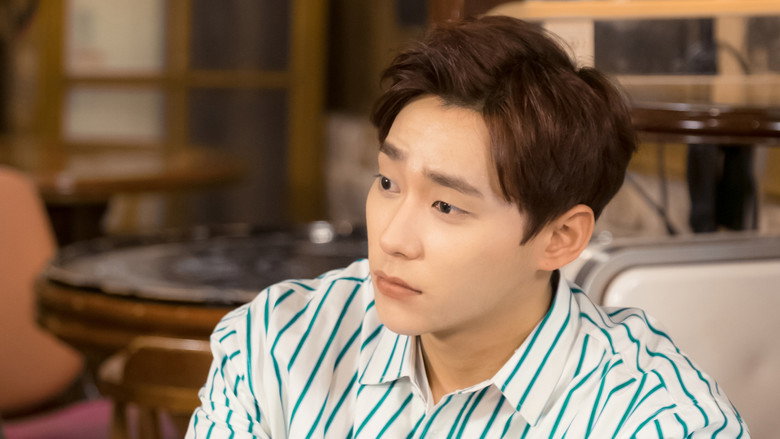
The series follows Kang Han-gyeol (Lee Hyun-woo), once the bassist of the pre-debut rock band Crude Play, whose songwriting turned the group into stars. Realising his gift lay behind the glass rather than on the stage, and encouraged by his agency's CEO, he left the line-up to work as a producer — successful, sought-after, and quietly hollowed out by the compromise. Into that airless studio life walks Yoon So-rim (Joy), a high school student with an untrained, arresting voice and no one in her corner who believes singing is a future. She recognises him; he does not want to be recognised. Rather than explain who he is, he offers a small lie, and the lie grows roots.

What unfolds is less a conventional romantic comedy than a coming-of-age story about music as labour and as love. So-rim's amateur band Mush & Co stumbles toward a real career, Crude Play's frontman Seo Chan-young (Lee Seo-won) circles both the girl and the songs, and the adults who run the industry — chief among them the agency chief played by Choi Min-soo — keep deciding which truths are commercially survivable. The show's central question is never whether the couple will get together, but what honesty costs when your name on a song is worth money to somebody else.

Core Meaning

At its heart the series argues that authorship is a form of honesty, and that lying about who made something eventually corrodes the person who made it. Han-gyeol's deception begins as a trivial social evasion — not correcting a girl about his identity — but it rhymes with the far larger industrial lie he is already living inside: songs credited to the people who can sell them rather than the person who wrote them.

Against that, So-rim's untutored voice functions as the show's moral standard. She sings badly by professional metrics and truthfully by human ones, and the drama repeatedly asks which of those is actually music. The romance is the vehicle; the thesis is that a song is a confession you cannot take back, and that the only way out of a lie is to sign your name to it.

Its gentler, secondary message is generational: the adults in this story have all traded something away and rationalised it, and the teenagers are being handed the same contract. The series ends by insisting that a career and an unfaked self are not mutually exclusive — but only if someone is brave enough to say the true thing out loud first.

Thematic DNA

Lies, half-truths, and the erosion of self 28%
Music as vocation versus music as product 24%
First love and the courage of the unguarded 18%
Growing up inside an industry that wants you young 17%
Mentorship, and the debts adults leave to the young 13%

Lies, half-truths, and the erosion of self

The title's lie is small and almost kind: a man does not correct a girl's mistaken impression of who he is. But the drama widens that pinhole steadily — into concealed authorship, manufactured band images, and adults who hide the industry's mechanics from the young people feeding it. Each episode raises the cost of the original omission, until confession becomes the only available plot movement.

Crucially, the show refuses to treat lying as villainy. Han-gyeol lies out of exhaustion and self-protection; the people around him lie to keep careers alive. The arc across sixteen episodes is not exposure and punishment but the slow, uncomfortable work of telling the truth while the truth is still survivable.

Music as vocation versus music as product

Han-gyeol's backstory — bassist who discovered he was a better writer than performer and stepped off the stage — sets the tension immediately: art made in a room versus art sold under lights. Crude Play embody the polished commercial object; Mush & Co, So-rim's scrappy amateur band, embody the thing made because it had to be made.

Across the run the two poles keep contaminating each other. The amateurs learn that professionalism is not corruption, and the professionals rediscover that a song written to move one specific person is the only kind that works. By the finale the series has quietly reconciled them rather than choosing a side.

First love and the courage of the unguarded

So-rim loves the way she sings: without technique and without hedging. Her directness is initially played for comedy against Han-gyeol's practised evasiveness, but it becomes the drama's engine — she is the only character who says what she wants when she wants it.

The romance develops less through obstacles than through Han-gyeol slowly becoming as legible as she already is. The finale's understated image of the two of them on a picnic, a year on, is the payoff: not grand reconciliation, but a relationship where nothing is being managed.

Growing up inside an industry that wants you young

The show is structurally a coming-of-age story wearing the clothes of a romance — a reading many reviewers landed on, finding it more satisfying as youth drama than as rom-com. Teenagers are asked to make binding decisions about their names, their voices, and their futures while adults hold the contracts.

Over the series, So-rim's classmates and bandmates each confront the gap between loving music and monetising it, and the ones who survive are those who define success themselves before someone defines it for them.

Mentorship, and the debts adults leave to the young

The agency chief (Choi Min-soo) who once told Han-gyeol to leave the band is both benefactor and architect of his compromise — the series' most morally interesting relationship. Around him orbit other adults who protect, exploit, and occasionally rescue the teenagers in equal measure.

By the epilogue, with the CEO running his own agency and Crude Play returning through a small concert rather than a stadium, the show suggests the cycle can be rewritten at a smaller, more honest scale — that mentorship redeemed looks like giving people back their own names.

Character Analysis

Kang Han-gyeol

Lee Hyun-woo

Archetype: Reluctant mentor / romantic antihero Key Trait: Guarded brilliance

Motivation

Initially, to finish the song and be left alone — creative survival over connection. That shifts to protecting So-rim from the industry that hollowed him out, and finally to being someone she does not have to guess about.

Character Arc

Begins as the ghost in his own success: the former Crude Play bassist whose songwriting built the band, who left the stage on the CEO's advice to become a producer and has been quietly numb ever since. Meeting So-rim, he tells a small lie about who he is rather than face being known, and spends the series discovering that the lie is only the visible edge of a much older habit of self-concealment.

His long arc is from concealment to attribution — learning to claim his work, his feelings and his place in a band he abandoned. By the one-year-later epilogue he is neither hiding behind the glass nor performing for anyone: he is in a stable relationship and reconnected to the people he wrote for.

Yoon So-rim

Joy

Archetype: Hero / innocent catalyst Key Trait: Unfiltered sincerity

Motivation

To sing, and to be believed. Later, to be told the truth by the person she loves — which she values more than being protected by him.

Character Arc

A high school student who wants to sing and has almost no one supporting the idea. Her trajectory runs from busking amateur to a member of Mush & Co with a real career in front of her, but the more interesting change is internal: she stops needing permission. Where the adults around her negotiate, she simply states what she wants.

Across sixteen episodes she is repeatedly given reasons to become cautious — deception, industry politics, competing affections — and repeatedly declines. In the finale her band is preparing a new single, which the show frames as a reward for never having faked anything.

All 4 characters and cast

Symbols & Motifs

The unsigned song / hidden credit

Meaning:

The central emblem of the series: a piece of work whose true author is invisible. It stands for every identity in the show that has been laundered for the market, and for Han-gyeol's own erased self.

Context:

Introduced through Crude Play's rise on songs Han-gyeol wrote, and echoed each time a track changes hands between characters. The finale resolves it in miniature — a new Mush & Co single arriving courtesy of Seo Chan-young, authorship openly given rather than concealed.

The untrained voice

Meaning:

So-rim's raw singing is the show's measure of truth. Technically unpolished, emotionally unfiltered, it represents everything the industry sands off in the name of marketability.

Context:

Established at the very first encounter, when her voice is what stops a jaded producer in his tracks, and returned to whenever the plot needs to remind us what is at stake. The OST — much of it performed by Joy herself, including Yeowooya, Your Days and Waiting for You — makes the symbol audible outside the fiction.

The recording studio glass

Meaning:

A transparent barrier: you can see the person making music but not reach them. It figures Han-gyeol's chosen position — present, essential, and permanently on the other side of the performance.

Context:

The producer's booth is his habitat throughout the series, and his gradual movement out from behind it tracks his emotional arc more reliably than any dialogue.

The band as chosen family

Meaning:

Both Crude Play and Mush & Co are surrogate families — one bound by contract and image, the other by affection and accident — asking whether loyalty can survive being professionalised.

Context:

Runs the length of the series in parallel: Crude Play fracturing under the weight of what it was built on, Mush & Co assembling itself out of nothing. The epilogue's mini-concert and new single show both families intact but resized.

The stage versus the street

Meaning:

Busking, rooftops and classrooms against arenas and broadcast sets: the geography of amateur joy versus manufactured spectacle.

Context:

The show keeps cutting between these registers, and its warmest scenes almost always take place on the smaller of the two — a preference the finale confirms by staging Crude Play's comeback as a mini concert.

Episode Highlights

Episode 1

S1E1

Establishes the collision the whole series runs on: burnt-out producer Kang Han-gyeol, who left Crude Play to write behind the scenes, encounters high school student Yoon So-rim and her untrained voice — and, rather than reveal who he actually is, lets a small untruth stand.

Significance:

Plants both engines at once: the romance and the deception. Every later complication is interest accruing on this one omission.

Episode 4

S1E4

An early turning point in the first act, as So-rim's amateur music-making begins moving from private enthusiasm toward something with an audience, and Han-gyeol's professional judgement starts pulling against his desire to stay uninvolved.

Significance:

Marks the shift from meet-cute to a working relationship, which is where the drama's real tension — mentor, liar, love interest, all at once — becomes unsustainable.

Episode 6

S1E6

Deepens the entanglement between Mush & Co's fledgling ambitions and Crude Play's established machine, forcing the two worlds — amateur and manufactured — into direct contact.

Significance:

The point at which So-rim's dream stops being a private matter and becomes an industry question, raising the stakes on who is credited for what.

Episode 10

S1E10

The midpoint pivot, where the accumulated concealments around identity and authorship can no longer be managed separately from the relationship they were meant to protect.

Significance:

Converts the show from a comedy of evasion into a drama about consequences; from here the plot is driven by disclosure rather than avoidance.

Episode 13

S1E13

Late-series reckoning as the adult decisions that shaped Crude Play and Han-gyeol's exit from the band come to bear on the teenagers now facing the same choices.

Significance:

Ties the generational theme to the plot mechanics — the mentor's old compromise becomes the young characters' immediate problem.

Episode 15

S1E15

The penultimate hour clears the ground for resolution, positioning each band and each relationship for the choice between continuing under false terms or starting again honestly.

Significance:

Sets up the finale's central proposition: that careers rebuilt smaller and truer are worth more than the versions built on concealment.

Episode 16 (Final)

S1E16

The finale jumps forward one year. The CEO (Choi Min-soo) is now running his own agency; Mush & Co are preparing a new single written by Seo Chan-young; Crude Play are easing back into the spotlight with a mini concert; and Han-gyeol and So-rim's relationship has deepened, sealed with a kiss during a picnic.

Significance:

Resolves the series thematically rather than melodramatically: every thread ends with authorship openly acknowledged and ambitions rescaled to something sustainable. The lie is gone and nobody had to be destroyed for it.

Philosophical Questions

Does a song belong to the person who wrote it or the person who sings it?

The premise makes this literal: Han-gyeol's songwriting built Crude Play, but the band wears the result. The series stages the question repeatedly through credits, contracts and performances, and answers it in the epilogue not by choosing a side but by insisting the arrangement must at least be known — Chan-young openly writing for Mush & Co is the corrected version of what was once hidden.

Is a lie of omission still a lie if it protects someone?

Han-gyeol's original untruth costs nothing and protects his privacy. The drama extends that logic outward — adults hiding industry realities from teenagers 'for their own good' — and shows how each protective silence removes someone's ability to choose. The consequences accumulate rather than explode, which is the show's argument.

Can something honest survive being made professional?

So-rim's value is that she is untrained; the industry's value proposition is training. The series follows her band from busking to a real single without resolving the tension cleanly, suggesting that professionalism is not itself corruption — but that it requires someone to keep deciding, over and over, what will not be traded away.

What do we owe the mentors who compromised us?

The CEO's advice to leave the stage was both correct and the source of Han-gyeol's emptiness. The show refuses to make him a villain, and its epilogue — a smaller, self-run agency — offers the idea that a mentor's debt is repaid by rebuilding the conditions under which the next generation won't need the same compromise.

How It Ends

Alternative Interpretations

As a romance versus as a coming-of-age story. The most common critical split concerns which genre the show actually is. A recurring reviewer position is that it works considerably better read as a charming coming-of-age drama about young people finding their vocation than as the romantic comedy its premise advertises — under that reading, the love story is the frame and So-rim's artistic self-determination is the subject.

Full ending explanation

Cultural Impact

The Liar and His Lover arrived in the middle of tvN's most confident era, produced by Studio Dragon and slotted into the late-night Monday–Tuesday block that the network used for younger-skewing, tonally softer material. It also belongs to a distinct mid-2010s wave of Korean adaptations of Japanese manga, and its announcement was covered specifically as a remake of a title that already had a committed Korean readership.

Its more lasting cultural function is as an idol-acting showcase: Joy's leading turn, backed by a soundtrack she largely performed herself, is the thing the drama is most often remembered for, and the OST — released by Stone Music Entertainment with tracks including Yeowooya, Your Days and Waiting for You — outlived the broadcast in the way music dramas' soundtracks tend to. Reviewers routinely noted that the songs stuck around long after the plot did.

Commercially and critically it was a modest rather than landmark success — around 6.8 on IMDb and 7.4 on MyDramaList — but its later availability on Netflix gave it a long international tail, and it remains a regularly recommended entry point for viewers looking for low-stakes music-and-youth K-drama rather than high-concept spectacle. Its self-aware portrait of ghostwriting and manufactured band identities also reads, in retrospect, as a gentle piece of industry self-criticism made by the industry itself.

Audience Reception

Reception was warm but qualified. Aggregate scores settled in the pleasant-not-essential band — roughly 6.8 on IMDb and about 7.4 on MyDramaList from over 21,000 users — and the general verdict among reviewers was that this is a good, light watch: a story about dreams and young love that satisfies without straining, carried substantially by its soundtrack.

The most consistent praise went to the music. Reviewers repeatedly singled out the OST as the element that lingers, with Joy's performances doing double duty as character work and as genuinely replayable songs. The show's coming-of-age register also drew appreciation: a common critical framing is that it is most enjoyable when taken as a charming youth drama rather than judged as a romantic comedy, and that its warmth toward its young musicians is its real strength.

Criticism clustered around missed opportunities — a frequently used phrase in reviews — with viewers feeling the premise's sharper implications about ghostwriting and industry manipulation were softened, and the romance under-served relative to its setup. Adaptation fidelity was the other flashpoint: the series takes noticeable liberties with Aoki Kotomi's manga, and manga readers split between disappointment and a willingness to enjoy the Korean version on its own terms, with a fair number reporting they still loved it despite the changes.

Overall verdict: a well-liked, gentle, music-forward drama that most audiences finished happy with and few call a masterpiece — remembered more for its songs, its atmosphere and Joy's performance than for narrative ambition.

Interesting Facts

  • The series is based on Aoki Kotomi's hit Japanese manga 'The Liar and His Lover', which already had a solid following in Korea before the remake was announced — meaning tvN had a waiting audience for the adaptation.
  • It aired on tvN from March 20 to May 9, 2017, in the Monday–Tuesday 23:00 slot, running 16 episodes.
  • The drama was produced by Studio Dragon, written by Kim Kyung-min and directed by Kim Jin-min.
  • The same manga had previously been adapted as a Japanese live-action film titled 'The Liar and His Lover'.
  • Joy, of Red Velvet, made her leading-role acting debut territory here playing an aspiring singer — and also performed much of the soundtrack herself.
  • The official OST includes Joy's tracks 'Yeowooya', 'Your Days', 'Shiny Boy', 'Waiting for You' and 'The Way to Me'.
  • The OST duet 'I'm Ok' features Joy with her co-star Lee Hyun-woo, putting both leads on the soundtrack.
  • The soundtrack was released through Stone Music Entertainment as an official tvN drama OST album.
  • The drama holds roughly 6.8 on IMDb and about 7.4 on MyDramaList from more than 21,000 user scores.
  • The series later became available internationally via Netflix, extending its life well beyond its original 2017 broadcast.

Easter Eggs

A real idol playing a fictional idol-in-the-making

Casting Red Velvet's Joy as an aspiring singer makes the entire show quietly self-referential: the K-pop machine depicted on screen is the one that produced its lead actress, and her OST recordings blur the line between character and performer.

The OST duet 'I'm Ok' between Joy and Lee Hyun-woo

The two leads recording together outside the narrative mirrors the in-story dynamic of producer and singer, letting the soundtrack function as an extension of the plot rather than accompaniment to it.

The pre-existing Japanese film version of the same manga

Viewers familiar with Aoki Kotomi's original and its earlier live-action film adaptation can read the Korean series as a third pass at the same material, and much of the fan conversation around it concerned which liberties the K-drama took with the source.

Frequently Asked Questions

Explore More About This Movie

Dive deeper into specific aspects of the movie with our detailed analysis pages

Comments (0)

Leave a comment

No comments yet. Be the first to share your thoughts!

Similar Movies