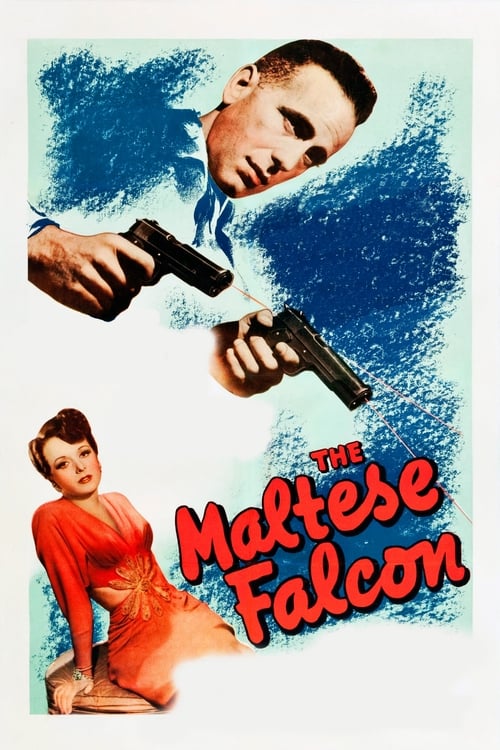
The Maltese Falcon
A quintessential film noir where shadows hide betrayals and a jewel-encrusted bird becomes a hollow idol of greed. It is a cynical masterpiece of moral ambiguity, defined by sharp dialogue and the chilling realization that some chases lead only to lead.
The Maltese Falcon

The Maltese Falcon

"A story as EXPLOSIVE as his BLAZING automatics!"

18 October 1941 United States of America 100 min ⭐ 7.7 (1,828)
Director: John Huston
Cast: Humphrey Bogart, Mary Astor, Gladys George, Peter Lorre, Barton MacLane
Crime Thriller Mystery
Greed and Obsession Deception and Appearance vs. Reality The Code of Ethics The Femme Fatale and Gender Dynamics
Budget: $375,000
Box Office: $1,772,000

Overview

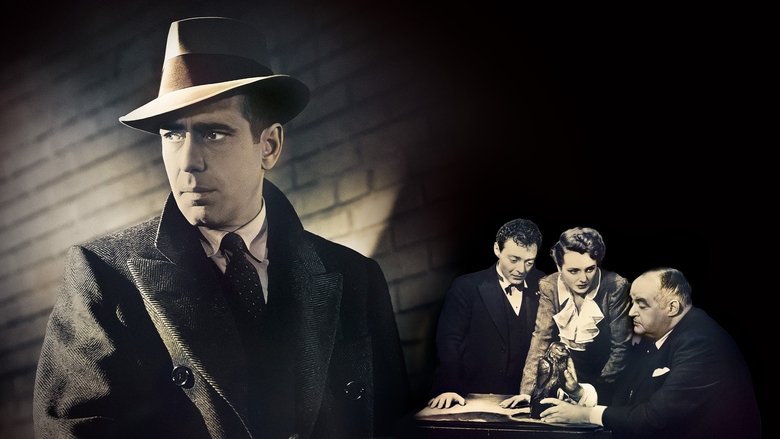
San Francisco private investigator Sam Spade takes on a case that quickly spirals into a labyrinth of deceit when his partner, Miles Archer, is murdered while trailing a man for a new client, the "effervescent" yet deceptive Brigid O'Shaughnessy. Spade finds himself the prime suspect in the murder, all while navigating a dangerous web woven by a trio of international criminals—the sophisticated 'Fat Man' Kasper Gutman, the effeminate Joel Cairo, and the trigger-happy 'gunsel' Wilmer Cook—who are all desperately hunting for a priceless statuette known as the Maltese Falcon.

As the bodies pile up and alliances shift with every scene, Spade must outsmart the police and the criminals alike to find the truth. The search culminates in a tense standoff where the coveted bird is finally revealed, only for the characters to discover a bitter irony that exposes the futility of their obsessive greed. Spade is forced to make a cold, ethical choice between love and his personal code of honor, defining the hard-boiled archetype for decades to come.
Core Meaning

At its heart, The Maltese Falcon is a cynical exploration of human greed and the elusive nature of truth. Director John Huston presents a world where traditional morality is replaced by self-interest, and where the objects of our deepest desires often turn out to be worthless—mere 'stuff that dreams are made of.' The film argues that in a corrupt world, a personal code of ethics is the only shield against chaos, even if it requires sacrificing personal happiness.

Thematic DNA

Greed and Obsession 30%
Deception and Appearance vs. Reality 25%
The Code of Ethics 25%
The Femme Fatale and Gender Dynamics 20%

Greed and Obsession

The Falcon serves as the ultimate catalyst for greed, driving characters to murder, betrayal, and ruin. Gutman, Cairo, and Brigid are willing to sacrifice anything for the statue, only to be left with a worthless piece of lead, illustrating the destructive and often futile nature of material obsession.

Deception and Appearance vs. Reality

Nothing in the film is as it appears. The 'priceless' bird is a fake; the 'innocent' client is a murderer; and the 'cynical' detective is the only one with a moral code. The pervasive lying—especially by Brigid, who admits, 'I am, I've always been a liar'—highlights the difficulty of finding truth in a noir world.

The Code of Ethics

Sam Spade operates by a strict, if unconventional, personal code. He may be a scoundrel, but he won't let his partner's killer go free, regardless of his feelings for her. This theme defines the hard-boiled hero: a man who adheres to his own rules when societal laws fail.

The Femme Fatale and Gender Dynamics

Brigid O'Shaughnessy represents the danger of female sexuality in the noir genre. She uses her appearance of vulnerability to manipulate men, challenging Spade's control. Spade's refusal to be swayed by her performance at the end marks the triumph of his professional code over romantic entanglement.

Character Analysis

Sam Spade

Humphrey Bogart

Archetype: The Hard-Boiled Detective / Anti-Hero
Key Trait: Cynical Integrity

Motivation

To survive, make a living, and adhere to his personal rule: 'When a man's partner is killed, he's supposed to do something about it.'

Character Arc

Spade starts as a cynical investigator indifferent to his partner's death but is drawn into a high-stakes game. He navigates the corrupt world by playing all sides, ultimately revealing his integrity by turning in the woman he loves to uphold his professional code.

Brigid O'Shaughnessy

Mary Astor

Archetype: Femme Fatale
Key Trait: Manipulative Deceit

Motivation

Greed and self-preservation; she uses men as tools to obtain the Falcon and protect herself.

Character Arc

She begins as a distress damsel seeking help, reveals herself as a manipulative liar, and is finally exposed as a cold-blooded killer. Her arc ends in defeat when her sexual manipulation fails to save her from justice.

Kasper Gutman

Sydney Greenstreet

Archetype: The Mastermind Villain
Key Trait: Sophisticated Ruthlessness

Motivation

Obsessive greed for the Maltese Falcon.

Character Arc

The 'Fat Man' is the architect of the chaos, pursuing the bird for 17 years. He is willing to sell out his own 'son' (Wilmer) for the prize, only to be crushed by the revelation that the bird is fake.

Symbols & Motifs

The Maltese Falcon

Meaning:

It symbolizes the futility of greed and the illusion of desire. It is a 'MacGuffin'—an object that drives the plot but has no intrinsic value. It represents the 'stuff that dreams are made of': a hollow promise that people destroy themselves to attain.

Context:

The statue is the center of the plot, pursued by all, but when finally unwrapped in the climax, it is revealed to be a heavy lead fake, rendering the characters' crimes and struggles meaningless.

Cigarettes and Alcohol

Meaning:

These represent the cynicism, stress, and ritual of the hard-boiled world. They are props of composure that characters use to mask their true emotions or to buy time during interrogations.

Context:

Spade is constantly rolling cigarettes or pouring drinks, using these actions to punctuate dialogue, assert dominance, or hide his thinking process from the police and villains.

The 'Fat Man' (Gutman)

Meaning:

Kasper Gutman's immense physical size symbolizes his gluttonous greed and the weight of his obsession. He is grotesque yet sophisticated, embodying the corruption of wealth.

Context:

Gutman is often shot from low angles to emphasize his bulk, and his search for the bird is described as a quest of many years, showing how his greed has consumed his entire life.

Memorable Quotes

The stuff that dreams are made of.

— Sam Spade

Context:

Spoken by Spade at the very end of the film when the police ask him what the heavy lead statue is.

Meaning:

This line encapsulates the film's central message: the object of their deadly obsession was an illusion all along. It references Shakespeare's The Tempest, elevating the noir story to a tragedy of human folly.

When you're slapped, you'll take it and like it.

— Sam Spade

Context:

Spade says this to Joel Cairo after disarming him and slapping him in the office.

Meaning:

Shows Spade's dominance and refusal to be intimidated by the criminal element. It establishes the hard-boiled detective's toughness and contempt for cheap crooks.

I don't mind a reasonable amount of trouble.

— Sam Spade

Context:

Spade talking to Brigid, negotiating his involvement in her messy situation.

Meaning:

Highlight's Spade's cool, professional detachment and his acceptance of danger as part of the job, provided he is paid or it serves his interest.

You know, darling, for that amount of money, I'd let you tell me a lie every day.

— Sam Spade

Context:

Spade to Brigid after she gives him money while spinning another one of her fabricated stories.

Meaning:

This cynical quip illustrates the transactional nature of Spade's relationships and his awareness of Brigid's deceitfulness.

Philosophical Questions

Does a personal code of ethics matter in a corrupt world?

Spade sacrifices his love for Brigid to adhere to his code ('When a man's partner is killed...'). The film asks if integrity is worth the cost of happiness, suggesting that without such a code, a man is lost in the chaos of the 'gunsel' and the 'grifter'.

Is truth objective or merely the most convincing lie?

Brigid constantly rewrites her history, and Gutman spins elaborate tales about the Falcon's value. The film suggests that in a world of deception, 'truth' is often just a narrative used to manipulate power, and objective value (the lead bird vs. the gold bird) is an illusion.

Alternative Interpretations

While typically viewed as a straightforward crime drama, some critics interpret the film as a critique of capitalism, where the pursuit of wealth (the Falcon) destroys human connections and renders life absurd. Others view it through a queer theory lens, analyzing the coded homosexuality of Joel Cairo, Wilmer, and Gutman, and their disruption of the heteronormative order represented by Spade. A more existential reading suggests the Falcon represents the unattainable object of desire (Lacan's objet petit a), proving that the search for meaning is more defining than the attainment of it.

Cultural Impact

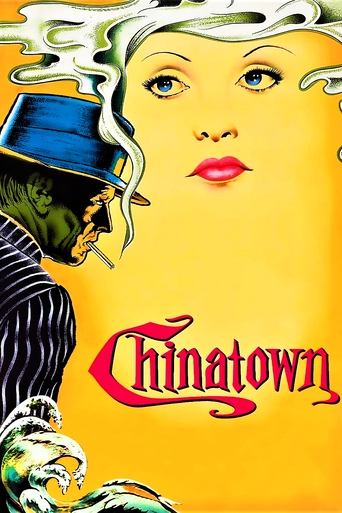
The Maltese Falcon is widely considered the first major film noir, establishing the visual and thematic template for the genre. It solidified the 'hard-boiled' private eye archetype: a cynical, fedora-wearing anti-hero with a moral code, immortalized by Humphrey Bogart's performance. The film's low-key lighting and 'ceiling shots' (a technique John Huston introduced to create claustrophobia) revolutionized cinematography. In 1989, it was one of the first 25 films selected for the U.S. National Film Registry, cementing its status as a culturally significant work that influenced decades of crime cinema, from Chinatown to The Big Lebowski.

Audience Reception

Upon release, the film was a critical and commercial hit, praised for its tight script, precise direction, and Bogart's magnetic performance. Contemporary audiences and critics continue to revere it as a masterpiece, often citing it as one of the greatest films ever made. It holds a near-perfect rating on review aggregators. Critics laud the razor-sharp dialogue and the ensemble acting (particularly Greenstreet and Lorre). Some modern viewers might find the plot mechanics dense or the lack of action slow compared to today's thrillers, but the consensus remains that it is the definitive detective movie.

Interesting Facts

  • The iconic 'stuff that dreams are made of' line was not in the script or the novel; Humphrey Bogart ad-libbed it based on Shakespeare's 'The Tempest'.
  • This film marked the directorial debut of John Huston, who also wrote the screenplay.
  • The role of Sam Spade was originally offered to George Raft, who turned it down because he didn't want to work with a first-time director, paving the way for Bogart's stardom.
  • Sydney Greenstreet (The Fat Man) made his film debut in this movie at the age of 61; he was previously a stage actor.
  • Two falcon props were used: a lightweight plaster one and a heavy 50-pound lead one. Actress Lee Patrick accidentally dropped the heavy one on Bogart's foot during filming.
  • John Huston shot the film largely in chronological order, which was extremely rare for studio productions at the time, helping the actors build tension naturally.
  • The term 'gunsel' was used to describe Wilmer. The censors believed it meant 'gunman,' but in the underworld slang Hammett used, it actually meant a 'catamite' (a young man kept for sex), slyly implying a relationship between Gutman and Wilmer.

Easter Eggs

Walter Huston's Cameo

The director's father, legendary actor Walter Huston, makes an uncredited cameo as Captain Jacoby, the man who stumbles into Spade's office, drops the falcon, and dies. John Huston reportedly made his father do the take repeatedly as a prank.

The Shakespeare Reference

The final line 'The stuff that dreams are made of' is a direct reference to Prospero's speech in The Tempest ('We are such stuff as dreams are made on'), linking the film's events to a theatrical illusion.

Detailed Prop Cameos

A copy of a newspaper in the film features a headline about the 'Klimfield' fire—a reference to a plot point in the original novel that was cut from the movie (the Flitcraft parable).

⚠️ Spoiler Analysis

Click to reveal detailed analysis with spoilers

Frequently Asked Questions

Explore More About This Movie

Dive deeper into specific aspects of the movie with our detailed analysis pages

Comments (0)

Leave a comment

No comments yet. Be the first to share your thoughts!