Skip to content
The Manipulated
A suffocating neo-noir thriller where innocence is surgically dismantled in dark alleyways, plummeting an ordinary man into an abyss of engineered madness before a razor-sharp blade of vengeance carves open the hidden rot of elite corruption.
The Manipulated

The Manipulated

조각도시

05 November 2025 — 03 December 2025 South Korea 1 season 12 episode Ended 8.3 (131)

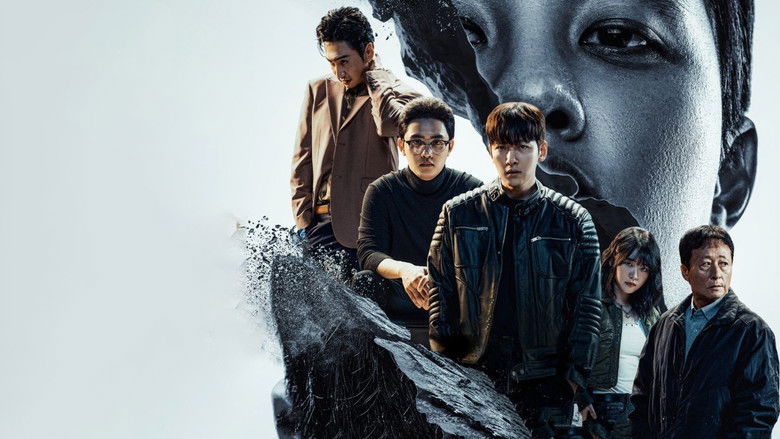
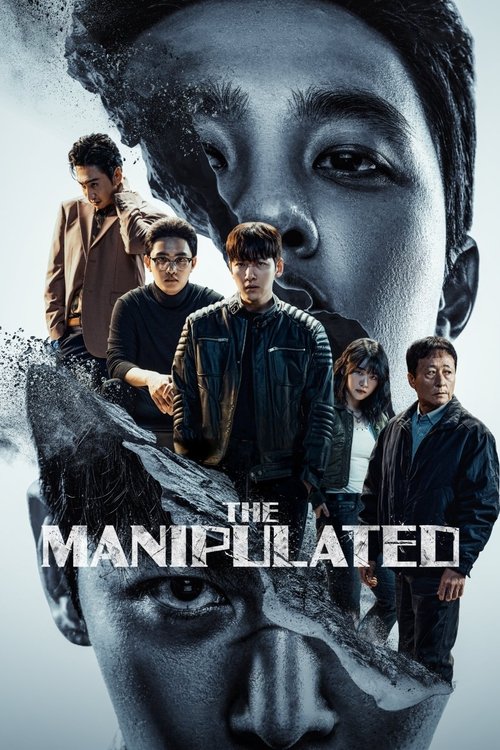
Cast: Ji Chang-wook, Doh Kyung-soo, Lee Kwang-soo, Jo Yoon-soo, Kim Jong-soo

Drama Crime Systemic Corruption and Class Impunity The Destruction and Fabrication of Truth Revenge vs. Moral Integrity Found Family and Human Resilience

Overview

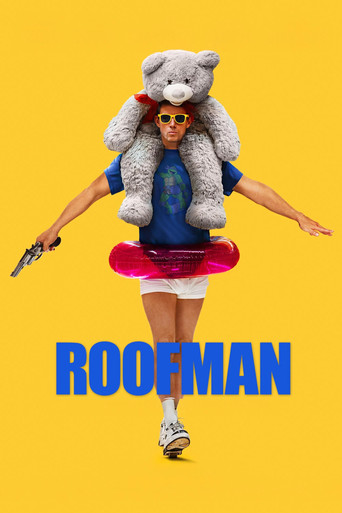
The Manipulated (Korean title: 조각도시, Jogakdosi, literally 'Sculptured City' or 'Carved City') is a 12-episode South Korean action-crime thriller series created by writer Oh Sang-ho and directors Park Shin-woo and Kim Chang-ju. Streaming internationally on Disney+ and Hulu in late 2025, the series offers an expanded, darker television adaptation rooted in the original blueprint of the 2017 film Fabricated City.

The narrative centers on Park Tae-jung, a hardworking, mild-mannered delivery driver whose modest dream of opening a rooftop garden cafe with his girlfriend is abruptly annihilated. After carrying out a simple act of courtesy by returning a lost cell phone, Tae-jung finds himself framed for a gruesome murder. Arrested, tried, and sentenced to maximum-security imprisonment within Guan Prison based on irrefutable, surgically fabricated evidence, Tae-jung endures horrific physical and psychological torment. Inside, he learns that his arrest was not a tragic accident, but a meticulously engineered setup designed to protect a wealthy perpetrator.

Driven beyond the brink of despair when his younger brother is murdered during an attempt to clear his name, Tae-jung transforms from a victim into a relentless force of retribution. Upon breaking free, he joins forces with a small group of allies to hunt down An Yo-han, a cold, psychopathic mastermind who operates a shadow business that carves up the lives of ordinary citizens to sell fabricated alibis to the ruling class. Across 12 episodes, the series delivers a high-stakes cat-and-mouse game between an ordinary man reclaiming his humanity and an elite sociopath who treats human lives as raw material for his dark artistic creations.
Core Meaning

At its core, The Manipulated serves as a fierce critique of structural inequality, technological vulnerability, and the illusion of judicial impartiality in modern society. The creators explore how advanced digital technology, surveillance networks, and institutional wealth can be weaponized to strip away an individual’s identity, truth, and basic human rights.

The overarching message of the series is that while systemic corruption can strip an innocent person of their freedom and reputation, true human dignity resides in moral choice. An Yo-han seeks to prove that every human being can be broken and forced to become a monster; Tae-jung’s journey proves that resisting evil without absorbing its cruelty is the ultimate triumph over manipulation.

Thematic DNA

Systemic Corruption and Class Impunity 30%
The Destruction and Fabrication of Truth 25%
Revenge vs. Moral Integrity 25%
Found Family and Human Resilience 20%

Systemic Corruption and Class Impunity

The series portrays a society where the ultra-wealthy view the legal system not as a set of rules, but as a commodity. Powerful politicians, business tycoons, and spoiled heirs hire Yo-han’s organization to 'carve out' innocent scapegoats, ensuring that elite crimes are paid for by powerless citizens.

The Destruction and Fabrication of Truth

Throughout the show, objective truth is rendered fragile by digital surveillance, planted DNA, deepfakes, and manipulated security footage. The series demonstrates how easily public perception and legal consensus can be manufactured when bad actors control data and media narratives.

Revenge vs. Moral Integrity

Tae-jung’s journey explores the fine line between justice and moral decay. As he adopts brutal methods to dismantle Yo-han’s empire, the narrative continually tests whether vengeance will turn him into the very monster Yo-han wants him to be.

Found Family and Human Resilience

In contrast to Yo-han’s solitary, sociopathic worldview, Tae-jung finds strength in solidarity. The bonds formed with fellow prison inmate Noh Yong-shik and his daughter Noh Eun-bi highlight that collective empathy and mutual trust are the only weapons capable of dismantling cold, calculated evil.

Character Analysis

Park Tae-jung

Ji Chang-wook

Archetype: Reluctant Hero / Tragic Avenger Key Trait: Unshakeable resilience and innate empathy

Motivation

Initially to prove his innocence and reunite with his family; evolves into destroying Yo-han’s fabrication network and protecting the innocent.

Character Arc

Begins as a gentle, altruistic delivery man dreaming of a modest future. After being framed, tortured in Guan Prison, and losing his brother, he transforms into a battle-hardened warrior driven by rage. In the end, he reclaims his soul by choosing justice over murder.

An Yo-han / "Arleli"

Doh Kyung-soo / EXO's D.O.

Archetype: Psychopathic Mastermind / The Architect Key Trait: Emotionless precision and chilling sadism

Motivation

To play god by erasing and rewriting human destinies for profit and dark artistic thrill.

Character Arc

Introduced as a polished, eerily calm fixer and art collector. As Tae-jung systematically dismantles his operations, Yo-han’s composure breaks down into unhinged madness and desperation to prove his nihilistic philosophy.

All 5 characters and cast

Symbols & Motifs

Sculptures / Carvings

Meaning:

Symbolizes Yo-han's god complex—viewing human lives as inanimate clay to be reshaped for his amusement.

Context:

Yo-han treats each fabricated crime as a 'sculpture' (hence his codename Arleli) displayed in his gallery.

The Emergency Phone Box in the Tunnel

Meaning:

Symbolizes the entrance into the labyrinth—a trap where an act of kindness becomes a snare.

Context:

The site where Tae-jung drops off the lost phone in Episode 1.

Potted Plants / Rooftop Seedlings

Meaning:

Represents Tae-jung's grounded, gentle nature and connection to life. The withered plants after his arrest symbolize his shattered dreams.

Context:

Associated with Tae-jung's love for gardening and his dream of opening a rooftop garden cafe.

Wall-Sized Surveillance Monitors

Meaning:

Symbolizes total control, panoptic surveillance, and the dehumanizing detachment of watching lives destroyed through screens.

Context:

Frequently shown in Yo-han's sanctuary and secret control rooms.

The Katana / Sword

Meaning:

Represents hidden danger disguised as high culture. In the climax, Tae-jung uses this blade not to decapitate Yo-han, but to pin him to the display screen, symbolizing the literal pinning down of deception.

Context:

Hidden within one of Yo-han's art sculptures and used during the final showdown in Episode 12.

Memorable Quotes

평범한 삶을 사는 게 왜 이렇게 힘들까?
— Park Tae-jung

Context

Spoken in Episode 2 inside his prison cell after realizing the entire legal apparatus has turned against him.

Meaning

Captures the tragic plight of the working class squeezed by systemic corruption.

사람 목숨도 잘 깎아내리면 훌륭한 예술품이 되거든요.
— An Yo-han

Context

Episode 5, when explaining his philosophy to Baek Do-kyung.

Meaning

Encapsulates Yo-han’s chilling sociopathic mindset and his view of human beings as disposable raw materials.

All 4 quotes

Episode Highlights

Season 1, Episode 1

S1E1

Introduces Tae-jung's peaceful life before he picks up the lost phone and is arrested. Sets up the premise and tone with a flash-forward tunnel motorcycle chase.

Significance:

Premiere episode that initiates Tae-jung's framing and sets the trajectory for the entire series.

Season 1, Episode 4

S1E4

The climax of the Guan Prison arc. Tae-jung suffers the loss of his brother Tae-jin, completes his physical training under Yong-shik, and executes a high-wire prison escape strategy.

Significance:

Marks Tae-jung's transformation from victim to active avenger and initiates his escape into the outside world.

Season 1, Episode 5

S1E5

The turning point where An Yo-han’s full fabrication operation ('Arleli') is unveiled. Introduces the gallery of 99 'sculptures' and shifts the drama into a psychological chess match.

Significance:

Reveals the grand scale of the villain's operation and sets up the central cat-and-mouse conflict.

Season 1, Episode 7

S1E7

A fan-favorite episode featuring high-octane car and motorcycle pursuits across Seoul. Tae-jung directly confronts Baek Do-kyung and uncovers Yo-han’s client ledger.

Significance:

Provides critical evidence against the syndicate and escalates the direct confrontation with the elites.

Season 1, Episode 11

S1E11

Yo-han frames Noh Yong-shik for murder and forces Tae-jung into a torturous choice in the tunnel with a murder weapon and a blank cheque.

Significance:

Sets up the emotional stakes and dilemma for the series finale.

Season 1, Episode 12

S1E12

The explosive finale at Yo-han's art auction. Tae-jung defeats Yo-han’s mercenaries, pins Yo-han to the screen with a katana, retrieves the hard drive, and escapes the burning mansion. Ends with a stinger showing a mysterious watcher.

Significance:

Resolves the primary duel between Tae-jung and Yo-han while leaving an open question regarding the broader network.

Philosophical Questions

If truth can be flawlessly fabricated, does justice exist beyond personal conviction?

The series asks whether institutional justice is real if evidence can be altered without detection.

Can a victim pursue absolute vengeance without surrendering their humanity?

Tae-jung struggles against becoming consumed by the very cruelty he seeks to destroy.

Is human free will an illusion in an era of total surveillance?

Through Yo-han’s ability to predict and manipulate choices, the show explores how easily human behavior can be steered.

Alternative Interpretations

1. The Survival vs. Legacy Reading of the Finale: While the main news media in Episode 12 reports that An Yo-han died in the gallery fire and his syndicate was exposed, the final post-credits scene reveals a shadowy figure sitting in front of a wall of surveillance screens.

Full ending explanation

Cultural Impact

Released on Disney+/Hulu in November 2025, The Manipulated tapped into global audience demand for high-intensity Korean revenge thrillers. It rapidly claimed the #1 streaming position worldwide on Disney+ and Hulu during its run, outperforming high-profile Western releases.

The drama captured the contemporary anxiety surrounding digital identity theft, surveillance abuse, and legal impunity enjoyed by elite circles. Doh Kyung-soo’s chilling portrayal of An Yo-han received praise from critics, establishing a benchmark for idol-actors transitioning into dark, complex villain roles.

Audience Reception

The Manipulated received strong reviews, earning an overall score of 8.5/10 on MyDramaList, an 88% Audience Score on Rotten Tomatoes, and 4.5/5 editor ratings.

Praised Aspects: Ji Chang-wook's visceral action sequences and emotional range; Doh Kyung-soo's unexpected performance as a terrifying, cold-blooded villain; fast-paced cinematography and tight action choreography.

Main Criticism: Pacing deceleration around Episodes 9–10; the open-ended cliffhanger in the finale; heavy violence and grim tone in early prison episodes.

Interesting Facts

  • Writer Oh Sang-ho and lead actor Ji Chang-wook previously collaborated on the 2017 blockbuster film Fabricated City. Oh Sang-ho adapted his original, darker film draft titled The Sculpted Man into this 12-episode series.
  • EXO's D.O. (Doh Kyung-soo) underwent a drastic physical transformation to play the villain An Yo-han, spending over 4 hours per session perming and dyeing his hair jet-black to create an eerie, unsettling aesthetic.
  • Produced by CJ ENM, Studio Dragon, and Simplex Films with an estimated production budget of ₩35 billion KRW.
  • Ji Chang-wook and Lee Kwang-soo re-teamed 14 years after starring together in Bachelor's Vegetable Store (2011), while Lee Kwang-soo and Doh Kyung-soo reunited 10 years after It's Okay, That's Love (2014).
  • Co-directed by Park Shin-woo (The Killing Vote) and Kim Chang-ju (Hard Hit), combining expertise in psychological tension and kinetic action editing.

Easter Eggs

Vehicle License Plate '5283'

In Episode 7, a getaway car displays the license plate number 5283, referencing writer Oh Sang-ho's hit series Taxi Driver, where protagonist Kim Do-gi drives Deluxe Taxi #5283.

Prisoner Number 2802

Tae-jung’s prison uniform in Guan Prison bears the number 2802, mirroring the designation of 'Special Task Force Unit 2802' featured in Taxi Driver 3, which aired during the same broadcast window.

Pyo Ye-jin Special Appearance

Actress Pyo Ye-jin (who plays Ahn Go-eun in Taxi Driver) makes a cameo appearance in Episode 1 as Tae-jung’s girlfriend Song Soo-ji.

Frequently Asked Questions

Explore More About This Movie

Dive deeper into specific aspects of the movie with our detailed analysis pages

Comments (0)

Leave a comment

No comments yet. Be the first to share your thoughts!

Similar Movies