
Skip to content
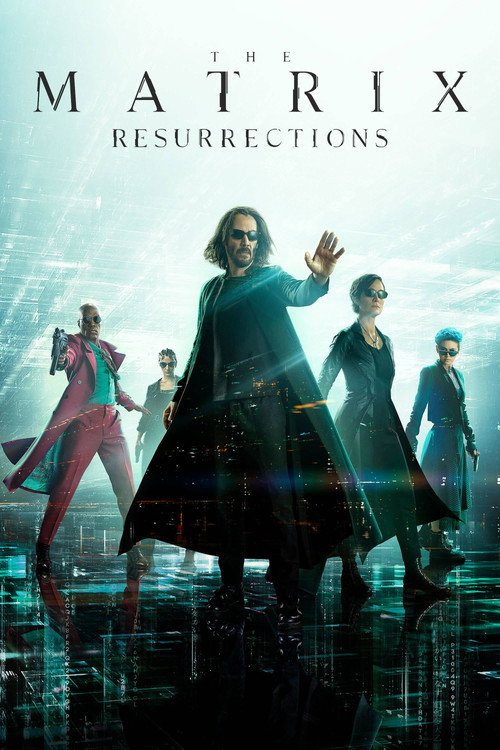
The Matrix Resurrections
A neon-lit meta-fable of memory and longing, tender and mischievous, in which a man's reflection in a cracked mirror turns out to be a door and love is the code that keeps it open.
The Matrix Resurrections

"Return to the Source."

16 December 2021 United States of America 148 min 6.3 (6,833)

Director: Lana Wachowski

Cast: Keanu Reeves, Carrie-Anne Moss, Yahya Abdul-Mateen II, Jonathan Groff, Jessica Henwick

Action Adventure Science Fiction Love and connection as liberation Nostalgia, sequels and corporate storytelling Control, manipulation and free will Identity, memory and grief Shared heroism and new generations
Budget: $190,000,000
Box Office: $156,497,322

The Matrix Resurrections — Ending Explained

The Ending in Brief

Trinity realizes she is not Tiffany, escapes the Analyst's Swarm mode with Neo, and discovers she can fly. They confront the Analyst, who loses control of the Matrix, and promise to free minds and remake the Matrix, leaving the future open.

⚠️ Spoiler Analysis

Neo and Trinity did die at the end of Revolutions. After the Machine War, the Analyst revived them in resurrection pods to study them. Studying Neo's body for years did not activate his source code. He then found that Neo and Trinity are not special individually, and that keeping them alive and close but apart makes the Matrix produce far more energy.

The Analyst used that discovery to seize power from the Architect and rebuild the Matrix around desire and fear. Neo became Thomas Anderson, a game designer, and Trinity became Tiffany, a wife and mother. Morpheus, in this version, is a program that Thomas unconsciously created. The Analyst is also Neo's therapist, and Smith is his business partner in the studio.

Bugs and her crew free Neo, and he wakes up in a pod with Trinity in the pod beside him. A civil war among the Machines had led a faction of Machines and programs to defect and join human society, and the new city of Io is run by Niobe. Neo insists on freeing Trinity. Sati, a program, plans a heist in the real world to rescue her from the Anomaleum, while Neo and his friends try to free her mind from the simulation.

In the Matrix, the Analyst makes a deal. If Trinity chooses to leave, Neo can take her. If she does not, Neo will plug back in for good. Trinity declines at first and is led away by her family. Neo and the others then rescue her anyway. Trinity realizes she is not Tiffany and runs with Neo, and the Analyst activates Swarm mode, turning everyone in the Matrix into an agent. On a rooftop, Trinity jumps and finds that she can fly. The pair are anomalies who emerged together, which explains why she has the same powers as Neo.

In the end Neo and Trinity fly, and they confront the Analyst. They promise to free people's minds and rebuild the Matrix in their own image.

Alternative Interpretations

Meta-commentary: Some read the film mainly as Wachowski's commentary on studio-driven sequels, with the story as a way to reclaim the franchise.

Transition allegory: Critics have read Thomas and Tiffany as versions of Neo and Trinity whose return to their true selves speaks to the nonlinear path of transition.

Grief reading: Given Wachowski's statements, the film can be seen as a work about loss, in which resurrecting beloved characters is a way of mourning.

Critical reading: Others found the film so inward-looking that it lacks real interest in humanity, or too solemn about its own radical intentions.

Explore More About This Movie

Dive deeper into specific aspects of the movie with our detailed analysis pages

Similar Movies