
Skip to content
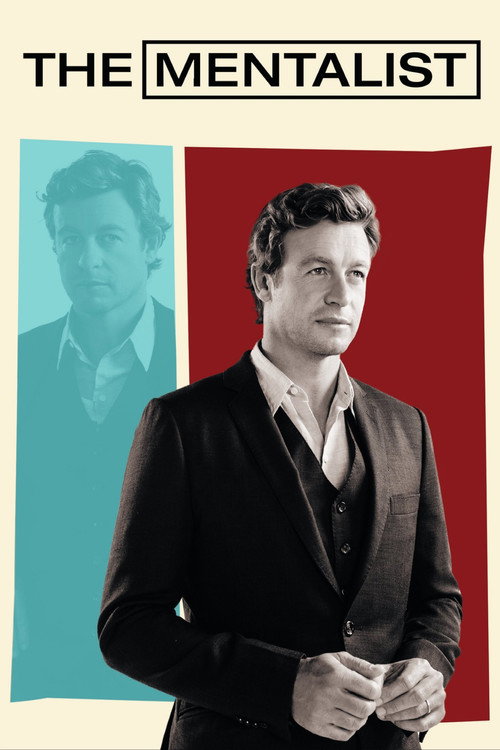
The Mentalist
A sun-drenched, melancholic police procedural where sharp intellect collides with devastating personal tragedy. The Mentalist is a bitter-sweet dance of light and shadow, visualizing a shattered soul navigating human darkness.
The Mentalist

The Mentalist

"Let the mind games begin."

23 September 2008 — 18 February 2015 United States of America 7 season 151 episode Ended 8.4 (4,484)

Cast: Simon Baker, Robin Tunney, Tim Kang, Owain Yeoman, Amanda Righetti

Drama Crime Mystery Revenge vs. Justice Deception, Truth, and Illusion Trauma, Grief, and Emotional Healing Morality and Institutional Rules vs. Personal Ethics Faith, Skepticism, and Human Perception

Overview

The Mentalist (2008–2015) is a seven-season, 151-episode crime drama created by Bruno Heller for CBS. The series follows Patrick Jane, an extraordinarily observant former fake psychic who suffered an unimaginable tragedy when his public hubris provoked a ruthless serial killer known as Red John to murder his wife and daughter. Stripped of his charade, Jane attaches himself as an independent consultant to the California Bureau of Investigation (CBI), led by Senior Agent Teresa Lisbon. Using techniques of psychological manipulation, hypnosis, cold reading, and hyper-observation, Jane assists the law enforcement team in solving complex homicides, all while harboring a singular obsession: uncovering Red John’s identity and exacting revenge.

Throughout its first five and a half seasons, the show balances episodic murder investigations with an overarching serialized pursuit of Red John and his clandestine web of influence. Jane operates outside standard law enforcement protocols, frequently using elaborate staged traps, deceptive tricks, and psychological provocation to uncover the truth. Meanwhile, Lisbon and her team—including the stoic Kimball Cho, the pragmatic Wayne Rigsby, and the open-minded Grace Van Pelt—provide the legal grounding and moral anchor that prevent Jane from sinking completely into nihilistic vengeance.

In its final two seasons, after a cataclysmic shift in the overarching narrative structure, the series undergoes a soft reboot. Transitioning from Sacramento, California, to the Federal Bureau of Investigation (FBI) office in Austin, Texas, the narrative shifts focus toward personal rehabilitation, emotional recovery, and the possibility of genuine happiness after trauma. The series evolves from a dark tale of vengeance into a warm story about human connection, redemption, and moving beyond past grief.


Core Meaning

At its core, The Mentalist explores the tension between human observation and deception, revenge and healing, and truth versus illusion. The creators utilize Patrick Jane's arc to illustrate that while intelligence and observation can unlock human behavior, they cannot mend a broken soul in isolation. Vengeance is portrayed not as a glorious crusade, but as a paralyzing trap that freezes an individual in time, preventing emotional growth.

The show ultimately conveys that true healing comes not from achieving obsessive retribution, but from rebuilding human relationships, accepting vulnerability, and choosing to participate in life once again. By contrasting Jane's cynicism with Lisbon's steadfast morality, the series asserts that reason without empathy leads to darkness, but love and community provide the ultimate antidote to trauma.

Thematic DNA

Revenge vs. Justice 30%
Deception, Truth, and Illusion 25%
Trauma, Grief, and Emotional Healing 20%
Morality and Institutional Rules vs. Personal Ethics 15%
Faith, Skepticism, and Human Perception 10%

Revenge vs. Justice

Begins as Jane’s total obsession, explicit desire for vigilante justice, and refusal to let law enforcement handle Red John. Over five seasons, this vengeance isolates Jane. After achieving his goal in Season 6, he faces an existential emptiness that forces him to re-evaluate justice, shifting toward lawful enforcement and true redemption with the FBI.

Deception, Truth, and Illusion

Initially focused on Jane’s past as a fraudulent psychic conning gullible people. Throughout the series, Jane uses the tools of deception (hypnosis, trickery, stagecraft) not for personal profit, but to unmask real-world deceivers and reveal truth. It constantly questions the illusions people build to survive.

Trauma, Grief, and Emotional Healing

Explored through Jane’s persistent insomnia, wearing his wedding ring, sleeping on a bare mattress under the Red John mark, and emotional detachment. Over seasons, through his deep bond with Teresa Lisbon, Jane gradually lets down his guard, eventually letting go of past grief to accept love and a future.

Morality and Institutional Rules vs. Personal Ethics

Represented through the constant push-and-pull between Jane’s complete disregard for legal protocol and Lisbon’s dedication to institutional order. As the series progresses, Lisbon learns to trust Jane’s unconventional methods, while Jane comes to respect Lisbon’s unyielding moral baseline.

Faith, Skepticism, and Human Perception

Jane remains a staunch rationalist who insists "there is no such thing as psychics". The show explores different worldviews through characters like Van Pelt (believer in faith/fate) and Lisbon (Catholic upbringing), challenging Jane's cold rationalism with the mysteries of love, human hope, and spiritual comfort.

Character Analysis

Patrick Jane

Simon Baker

Archetype: The Reluctant Trickster / Damaged Detective / Antihero seeking redemption Key Trait: Razor-sharp observation, cold reading, and psychological manipulation

Motivation

Initially revenge against Red John; evolves into protecting the people he loves (Lisbon and the team) and seeking emotional peace.

Character Arc

Transforms from a self-absorbed, arrogant con artist into a broken, revenge-driven consultant, and finally into an emotionally whole husband and father who abandons revenge for genuine peace.

Teresa Lisbon

Robin Tunney

Archetype: The Moral Anchor / Righteous Law Enforcer / Steadfast Companion Key Trait: Stoic moral integrity, fierce loyalty, and pragmatic leadership

Motivation

Upholding justice and protecting her team; evolves into building a fulfilling life with Jane outside of trauma.

Character Arc

Starts as a strict, by-the-book CBI Senior Agent trying to control Jane’s wild antics. Over time, she learns to flex the rules for true justice and eventually allows herself to express her romantic feelings for Jane.

All 5 characters and cast

Symbols & Motifs

Red John’s Smiley Face

Meaning:

Symbolizes malevolent pride, mockery, and the persistent shadow of Jane’s past guilt.

Context:

Drawn in blood on walls using a victim's blood in a clockwise motion using a gloved hand.

The Color Red (Title Naming Motif)

Meaning:

Acts as a visual and textual motif reminding the viewer that Red John colors every aspect of Jane’s mind.

Context:

Every episode title in Seasons 1 through 6 (up to Episode 8) contains the word "Red" or a color/concept associated with red (e.g., Ruby, Scarlet, Crimson, Blood).

Tea and the Teacup

Meaning:

Symbolizes Jane’s need for comfort, control, domestic normality, and a civilized ritual amidst violence and chaos.

Context:

Jane constantly brews tea in victims' houses, offices, and the CBI bullpen.

The CBI Brown Leather Couch

Meaning:

Represents his liminal state—neither fully an officer nor a civilian—and his desire to escape inside his mind during long cases.

Context:

Jane’s preferred resting spot in the middle of the noisy office.

Jane’s Three-Piece Suit (Without a Tie)

Meaning:

Symbolizes his former identity as a showman, his defense mechanism against the world, and his refusal to conform to conventional corporate/police attire.

Context:

His uniform throughout the series, carried over from his psychic performer days.

William Blake’s Poem "The Tyger"

Meaning:

Represents the sinister, organized nature of Red John's dark secret society (The Blake Association) and the terrifying duality of beauty and evil.

Context:

Quoted by Red John ("Tyger Tyger, burning bright...").

Memorable Quotes

There's no such thing as psychics.
— Patrick Jane

Context

Stated repeatedly throughout the series, notably introduced in Season 1, Episode 1 ("Pilot") and reiterated in interactions with alleged psychics like Kristina Frye.

Meaning

Jane’s core philosophy and public stance. It asserts his total reliance on observation and logic over supernatural explanations.

He belongs to me.
— Patrick Jane

Context

Season 1, Episode 1 ("Pilot"), during a conversation with Lisbon about who gets to catch Red John.

Meaning

Highlights Jane’s terrifying personal claim over Red John, placing his own vendetta above the legal justice system.

All 5 quotes

Episode Highlights

Pilot

S1E1

Establishes Jane’s back-story, his dynamic with Lisbon’s team, his tragic history with Red John, and his cynical stance on psychics.

Significance:

Sets the core premise and narrative foundation for the entire show.

Red John's Footsteps

S1E23

Season 1 finale where Jane comes closest to Red John yet and introduces the blind woman Rosalind Harker (Red John's lover).

Significance:

Establishes the dark scope and reach of Red John's network.

Red Sky in the Morning

S2E23

Jane’s first direct, face-to-face confrontation with Red John (who is masked). Red John rescues Jane from copycat killers and recites Blake's "The Tyger".

Significance:

Elevates the villain from serial killer to a mythic adversary.

Strawberries and Cream (Part 2)

S3E24

Iconic Season 3 finale where Jane shoots and "kills" a man claiming to be Red John (Timothy Carter) in a public food court.

Significance:

Delivers on Jane's promise of vengeance and creates a massive narrative cliffhanger.

The Crimson Hat

S4E24

Season 4 finale where Jane hits rock bottom and appears to suffer a complete nervous breakdown in Las Vegas.

Significance:

Reveals Jane's breakdown was a master plan to draw out Red John.

Devil's Cherry

S5E2

Accidental ingestion of belladonna causes Jane to hallucinate his deceased daughter as a teenager.

Significance:

Serves as an emotional masterclass, revealing the agonizing depth of Jane's repressed grief.

Red John's Rules

S5E22

Season 5 finale where Jane narrows his suspect list down to seven men, and Red John sends a video showing he already knows all seven names.

Significance:

Demonstrates Red John's near-supernatural foresight and sets up the final hunt.

Red John

S6E8

The ultimate confrontation where Jane unmasks Sheriff Thomas McAllister as Red John, exposes the Blake Association, and physically strangles Red John to death in a park.

Significance:

Permanently closes the primary narrative arc of the series.

Blue Bird

S6E22

Season 6 finale where Jane chases Lisbon to an airport to stop her from moving to DC with Marcus Pike, confessing his love for her.

Significance:

Shifts the show completely from procedural revenge to romance.

White Orchids

S7E13

Series finale where Jane and Lisbon marry on Jane’s newly purchased property, and Lisbon reveals she is pregnant.

Significance:

Provides Jane with full redemption and a clean slate for family life.

Philosophical Questions

Can vengeance ever truly bring peace or closure to a victim?

Explored through Jane's journey: after strangling Red John, he does not experience instant euphoria, but rather aimlessness and emptiness until he rebuilds his life.

Where is the moral line between benign deception and harmful manipulation?

Explored through Jane using lies, hypnosis, and psychological tricks to catch killers versus scammers and fake psychics using deception to exploit vulnerable people.

Is justice defined by institutional laws or by personal morality?

Explored via the ideological clash between Lisbon's legalism and Jane's vigilante philosophy throughout the series.

Alternative Interpretations

The Dark Mirror Reading: Some critics argue that Patrick Jane and Red John are two sides of the same coin. Both are master manipulators who control people around them. Under this reading, Red John represents what Jane would become if he completely surrendered to anti-social narcissism.

Full ending explanation

Cultural Impact

Created during the golden age of American network TV police procedurals (alongside House, Bones, and Castle), The Mentalist stood out by blending lighthearted procedural charm with deeply dark serial-killer noir. Bruno Heller, coming off HBO’s acclaimed drama Rome, brought a cinematic sophistication to CBS’s traditional procedural formula.

The show had a substantial impact on pop culture’s portrayal of mentalism and cold reading, demystifying fake psychics while championing human rationalism. Globally, it became one of the most-watched international series, drawing massive audiences across Europe and Asia.

When the series shifted from the CBI in California to the FBI in Austin during Season 6, critics noted it successfully reinvigorated a show that risked becoming stagnant, allowing it to land a rare, heartwarming series finale that satisfied fans.

Audience Reception

Early Seasons (Seasons 1–3): Extremely high ratings and critical praise for Simon Baker’s charismatic performance. Praised for witty dialogue, procedural flair, and a compelling central mystery.

Middle Seasons (Seasons 4–5): Audience opinion became slightly polarized regarding the pace of the Red John storyline. While character dynamics (especially Jane and Lisbon’s chemistry) were widely praised, fans grew impatient with constant Red John teases and red herrings.

Season 6 Red John Reveal: Highly controversial. The reveal of Sheriff Thomas McAllister as Red John received mixed-to-negative reactions from vocal segments of the fanbase who felt he was a minor character introduced too early without enough dramatic weight. However, the physical execution of the confrontation scene was praised for its raw realism.

FBI Reboot & Final Season (Seasons 6B–7): Warmly embraced by long-term viewers. The shift to Austin, Texas, breathed fresh air into the show. The romance between Jane and Lisbon ("Jisbon") was celebrated by fans as a natural, emotionally satisfying conclusion to a seven-year journey.

Overall Verdict: Considered one of the defining police procedurals of its era, beloved for its lead character, humor, and emotional heart, despite minor dissatisfaction with its main villain's final reveal.

Interesting Facts

  • Simon Baker was instrumental in creating Jane’s iconic wardrobe, deciding he should wear scruffy, dry-cleaned three-piece suits without a tie and worn Chelsea boots to represent clothes leftover from his wealthy psychic days.
  • Simon Baker directed several key episodes throughout the series, including Season 3's 'Red Moon', Season 4's 'Blinking Red Light', Season 5's 'Red Barn', and Season 6's 'My Blue Heaven'.
  • USA Network’s Psych premiered two years before The Mentalist with a similar premise, and frequently poked fun at The Mentalist in on-screen jokes, which Bruno Heller and the cast took in lighthearted humor.
  • Production hired real-life mentalists and magicians (such as Luke Jermay) as technical consultants to train Simon Baker in sleight-of-hand, card manipulation, and psychological misdirection techniques.
  • Amanda Righetti (Grace Van Pelt) was pregnant during Season 5, leading directors to hide her pregnancy behind desks, large coats, and props before taking her off-screen for several episodes to attend computer training courses.

Easter Eggs

Title Naming System

Every single episode title from S1E1 to S6E8 includes the word "Red" or a shade of red. From S6E9 onward (after Red John’s death), episode titles feature other colors (e.g., Blue, Green, White, Silver), visually signifying that Red John is gone.

Sheriff McAllister’s Early Debut

Red John’s true identity, Sheriff Thomas McAllister, appears in Season 1, Episode 2 ("Red Hair and Silver Tape"). During that early episode, he plays a game of rock-paper-scissors with Jane and loses, hiding in plain sight for over five seasons.

William Blake Cultural Allusions

Beyond "The Tyger", numerous episode titles pay homage to William Blake’s artwork and poetry, such as Season 4's "His Thoughts Were Red Thoughts" and Season 6's "Red Dragon".

The Red John Handshake Rule

In Season 5, Episode 22, Jane realizes Red John is someone he has met and shaken hands with since his family died. Dedicated fans retroactively combed through all 116 episodes to index every character Jane shook hands with on screen.

Frequently Asked Questions

Explore More About This Movie

Dive deeper into specific aspects of the movie with our detailed analysis pages

Comments (0)

Leave a comment

No comments yet. Be the first to share your thoughts!

Similar Movies