Mother
A neo-noir tragedy blending crime thriller with psychological horror. It dissects the terrifying depths of maternal instinct, using rain-soaked visuals and a haunting dance to depict a love that devours morality.
Mother

Mother

마더

"She'll stop at nothing."

28 May 2009 South Korea 129 min ⭐ 7.7 (1,637)
Director: Bong Joon Ho
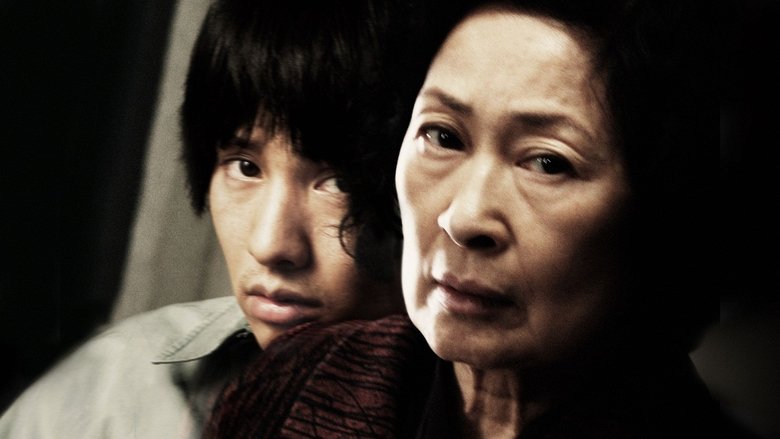
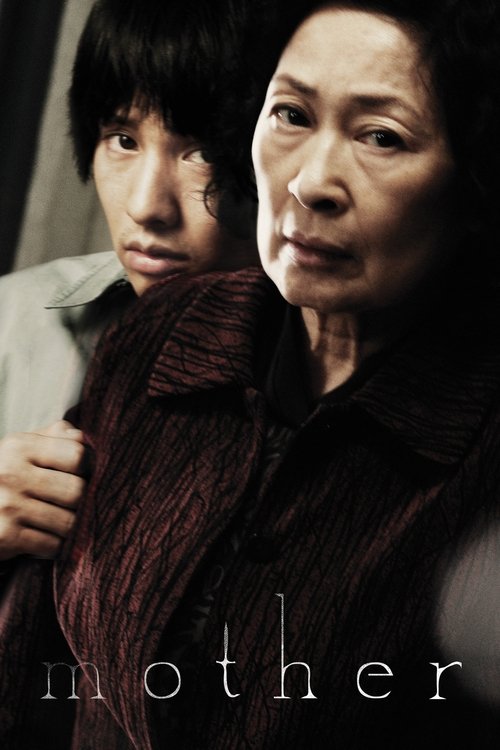
Cast: Kim Hye-ja, Won Bin, Jin Goo, Yoon Je-moon, Jeon Mi-seon
Drama Crime Mystery
The Monstrosity of Maternal Love Memory and Forgetting Disability and Social Stigma Class and Justice
Budget: $5,000,000
Box Office: $17,112,713

Overview

In a small South Korean town, an unnamed widow (Kim Hye-ja) lives a quiet life conducting unlicensed acupuncture and caring for her intellectually disabled adult son, Yoon Do-joon (Won Bin). When a local high school girl is found murdered and her body displayed on a rooftop, the incompetent police force quickly pins the crime on Do-joon, who was seen following her the night of the murder. With no real evidence other than circumstantial details and a coerced confession, Do-joon is imprisoned.

Desperate to prove his innocence, the mother embarks on a frantic and dangerous investigation of her own. She enlists the help of Do-joon's shady friend, Jin-tae, and relentlessly questions townspeople, uncovering the victim's troubled life. Her journey transforms from a quest for justice into a descent into moral darkness as she discovers uncomfortable truths about her son and is forced to make a harrowing choice to protect him at any cost.

Core Meaning

Mother is a subversive deconstruction of the 'sacrificial mother' archetype common in Korean culture. Director Bong Joon Ho challenges the notion that maternal love is inherently pure and benevolent, revealing it can be obsessive, destructive, and terrifying.

The film argues that the primal instinct to protect one's offspring can supersede all societal morality and law. It explores the perverse symbiosis between mother and son, suggesting that extreme love can justify even the most heinous acts. Ultimately, it asks if one can truly live with such guilt, or if 'forgetting' is the only way to survive the horror of one's own actions.

Thematic DNA

The Monstrosity of Maternal Love 40%
Memory and Forgetting 25%
Disability and Social Stigma 20%
Class and Justice 15%

The Monstrosity of Maternal Love

The film twists the standard trope of a mother's love. Instead of being a source of warmth, the mother's devotion is suffocating and violent. She is willing to cross every moral line—including murder—to save her son, proving that her love is an unstoppable, almost amoral force.

Memory and Forgetting

Memory is a burden in the film. The mother is haunted by a past attempt to kill herself and her son (using poisoned Bacchus). The narrative culminates in her desperate need to erase her own memory using her acupuncture needles, suggesting that blissful ignorance is the only escape from the trauma of truth.

Disability and Social Stigma

Do-joon's intellectual disability makes him a pariah and an easy scapegoat for the police. The film critiques how society dismisses and underestimates the disabled, while also revealing that Do-joon is not merely a helpless victim but capable of his own agency and violence.

Class and Justice

Like many of Bong's films, the justice system is portrayed as incompetent and biased against the poor. The police are lazy, coercing a confession to close the case quickly. Wealthier characters (like the professors at the golf course) are treated differently, highlighting the class disparity in South Korea.

Character Analysis

Mother (Hye-ja)

Kim Hye-ja

Archetype: Tragic Anti-Hero / The Devouring Mother
Key Trait: Obsessive Devotion

Motivation

To protect her son Do-joon at absolutely any cost, driven by guilt from a past attempt to kill him and herself.

Character Arc

Starts as a frantic, sympathetic figure trying to save her son against a corrupt system. Devolves into a ruthless protector who commits murder to cover up the truth, ending as a tragic figure who chooses willful amnesia over guilt.

Yoon Do-joon

Won Bin

Archetype: The False Innocent
Key Trait: Intellectual Disability / Hidden Volatility

Motivation

To avoid being called 'retard' (pabo), which triggers his violent rage.

Character Arc

Appears as a helpless, childlike victim of a miscarriage of justice. It is revealed he is the killer, triggered by a specific insult, shattering the audience's perception of his innocence.

Jin-tae

Jin Goo

Archetype: The Trickster / False Antagonist
Key Trait: Ruthless Pragmatism

Motivation

Money and loyalty (in that order).

Character Arc

Initially suspected by the mother of being the real killer or a bad influence. He proves to be a pragmatic, if mercenary, ally who helps the mother uncover the truth.

Junk Collector

Lee Young-suk

Archetype: The Witness / The Victim
Key Trait: Solitude

Motivation

To tell the truth about what he saw.

Character Arc

A hermit who saw the truth. He becomes the innocent casualty of the mother's desperate need to bury the secret.

Symbols & Motifs

Acupuncture Needles

Meaning:

They symbolize control and the power to erase pain and memory. They are the mother's tool for healing but ultimately become her instrument for self-induced oblivion.

Context:

She uses them on her thigh to 'clear her heart' and bad memories. In the final scene, she uses one on herself to forget her crime before dancing on the bus.

The Rock

Meaning:

A symbol of blunt, primitive violence and hidden guilt. It foreshadows the 'scholar stone' in Parasite as an object of destruction.

Context:

Do-joon throws a large rock to kill the girl after she insults him. It is the murder weapon that links his childish impulsiveness to lethal consequences.

Water and Rain

Meaning:

Water represents cleansing, concealment, and lack of clarity. Rain often accompanies key turning points, blurring the lines of truth.

Context:

It rains heavily during the investigation. Water is used to wash away blood (evidence), and the spilled water bottle in the police station reflects the mess of the situation.

Dancing

Meaning:

Represents a state of hysteria, madness, and release. It is a grotesque expression of emotions that cannot be spoken.

Context:

The film opens with the mother dancing alone in a field (a surreal expression of her inner state) and ends with her dancing on a bus, lost in a trance of induced forgetfulness.

Memorable Quotes

Even if you do have a mother, nobody trusts a retard.

— Police Officer

Context:

Spoken during the interrogation/investigation phase, reinforcing the hopelessness of Do-joon's situation.

Meaning:

Highlights the profound social prejudice against the disabled and explains why the police were so quick to scapegoat Do-joon without proper evidence.

You threw a rock. A big stone.

— Junk Collector

Context:

The mother visits the junk collector's shack thinking he is the killer, only to learn he is the eyewitness to her son's crime.

Meaning:

The pivotal moment of revelation. This simple factual statement shatters the mother's (and the audience's) belief in her son's innocence.

Do you know what this is? It's a needle jar. You dropped it... at the place with the fire.

— Yoon Do-joon

Context:

Do-joon finds her acupuncture kit in the debris of the junk collector's burned house and returns it to her as she leaves for the bus trip.

Meaning:

A chilling moment where the son unknowingly confronts the mother with her own crime. It reveals he remembers details but may not understand their full weight, deepening the mother's guilt.

Philosophical Questions

Is love a virtue if it leads to evil?

The film posits that the purest form of love (maternal) can be the most dangerous. It asks if an action can be 'good' (protecting a child) if the method is 'evil' (murdering an innocent witness).

Is memory a blessing or a curse?

Through the acupuncture motif, the film suggests that human survival sometimes depends on the ability to forget. The truth is too heavy to bear, so the 'happy' ending is actually a lobotomized state of ignorance.

Alternative Interpretations

The Freudian Reading: Many critics view the relationship as deeply Oedipal. Do-joon sleeps in his mother's bed, and her obsession with him borders on romantic jealousy. His violence is a result of this suffocating intimacy.

The Political Allegory: The Mother can be seen as representing the 'Old Guard' of Korea—willing to destroy the truth and the future (the young girl, the witness) to protect the incompetent status quo (the son). Her 'forgetting' at the end mirrors a society that chooses to ignore its dark history to maintain comfort.

The 'Do-joon is a Genius' Theory: A minority fan theory suggests Do-joon is not disabled but a psychopath feigning disability to manipulate his mother into cleaning up his messes, though most evidence points to genuine disability and impulse control issues.

Cultural Impact

Mother is considered a modern masterpiece of South Korean cinema. It played a significant role in cementing Bong Joon Ho's reputation as a world-class auteur before Parasite. Culturally, it was shocking for Korean audiences to see Kim Hye-ja, a national icon of maternal warmth, play a character who commits murder and arson. The film challenged the Confucian ideal of the 'sacrificial mother' by taking it to a grotesque extreme, sparking discussions about the dark side of family loyalty. It was widely acclaimed by critics, holding a 96% rating on Rotten Tomatoes, and is frequently cited in analyses of the 'evil mother' trope in horror/thriller genres.

Audience Reception

Audiences were deeply unsettled by the film. While the cinematography and acting were universally praised, the twist ending left many feeling 'hollow' or 'horrified.' Viewers often express shock at the revelation of Do-joon's guilt, having been conditioned by Hollywood tropes to expect his innocence. The ambiguity of the ending—whether the needle actually works or if she is just pretending—is a frequent topic of debate. It is regarded not as a 'fun' thriller but as a heavy, emotional experience.

Interesting Facts

  • Director Bong Joon Ho wrote the screenplay specifically for actress Kim Hye-ja, a veteran known as 'Korea's Mother' for her warm TV roles, to subvert her public image.
  • Won Bin was a huge heartthrob star in Korea, and casting him as a mentally disabled village idiot was a deliberate move to play against his 'pretty boy' type.
  • The film was South Korea's official submission for the Best Foreign Language Film at the 82nd Academy Awards.
  • The 'pabo' (retard) trigger for Do-joon was inspired by real behaviors where a specific word can cause a violent reaction in otherwise gentle individuals.
  • The opening dance scene was filmed in a way that Kim Hye-ja had to dance to no music, with the music added later, to create an eerie, disjointed feeling.
  • The final shot on the bus was filmed during the 'magic hour' (sunset) to get the specific lighting, requiring precise timing.

Easter Eggs

Lee Jung-eun's Appearance

Actress Lee Jung-eun, who famously played the housekeeper Moon-gwang in Bong's Parasite, appears briefly as a relative of the murdered girl. This establishes a recurring collaboration with Bong.

The 'Scholar Stone' Parallel

Do-joon kills the girl with a large rock. This visual motif of a rock as a weapon/symbol of doom recurs prominently in Bong's later film Parasite (the viewing stone).

Bookended Dancing

The film starts and ends with the mother dancing. The opening dance is a surreal foreshadowing of her mental state; the closing dance is a desperate, drug-induced attempt to forget her reality.

⚠️ Spoiler Analysis

Click to reveal detailed analysis with spoilers

Frequently Asked Questions

Explore More About This Movie

Dive deeper into specific aspects of the movie with our detailed analysis pages

Comments (0)

Leave a comment

No comments yet. Be the first to share your thoughts!