Skip to content
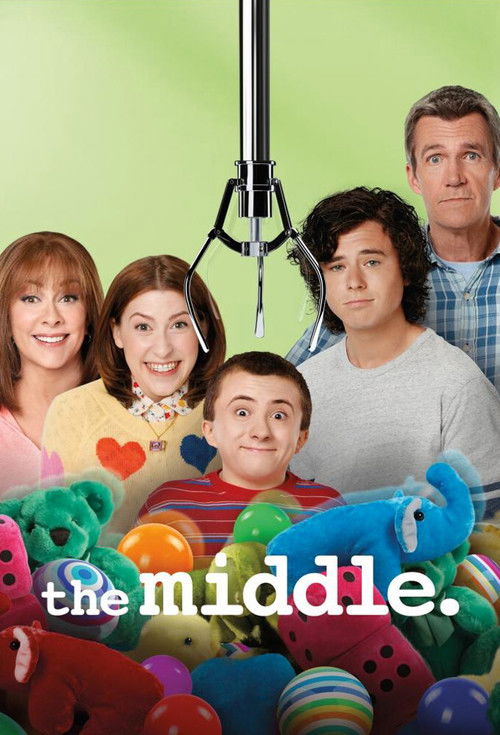
The Middle
A sun-bleached Midwestern single-camera comedy wrapped in gentle melancholia and relentless optimism, evoking the frayed comfort of an overcrowded station wagon rattling along a two-lane highway toward an imperfect horizon.
The Middle

The Middle

"Oh, and your family's so perfect."

30 September 2009 — 22 May 2018 United States of America 9 season 215 episode Ended 7.6 (770)

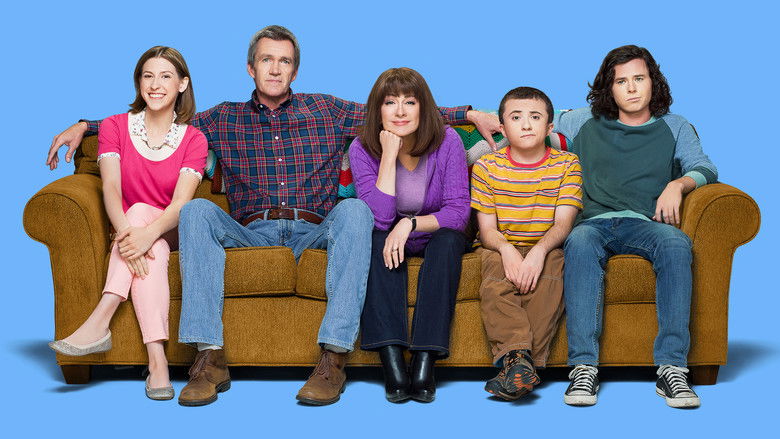
Cast: Patricia Heaton, Neil Flynn, Charlie McDermott, Eden Sher, Atticus Shaffer

Comedy Economic Fragility and Working-Class Realism Resilience Through Adversity The Messiness of Familial Love and Imperfect Parenting Geographic Identity and the "Flyover State" Experience

Overview

Created by Eileen Heisler and DeAnn Heline, The Middle (2009–2018) is a single-camera sitcom chronicling the day-to-day realities of the Heck family in the fictional rural town of Orson, Indiana. Spanning nine seasons and 215 episodes, the series avoids the glossy affluence and cynical irony common to contemporary sitcoms. Instead, it centers on the financial and domestic friction of lower-middle-class working parents Frankie and Mike Heck as they manage their household, cope with career shifts, and rear three distinctly eccentric children: the athletic slacker Axl, the perpetually unacknowledged yet stubbornly buoyant Sue, and the introverted, book-obsessed youngest son, Brick.

The overarching narrative tracks a decade-long transition of modern domestic life. As the children mature from elementary, middle, and high school into university and early adulthood, the show explores how a working-class family navigates evolving generational dynamics. Frankie and Mike fight off financial exhaustion and job insecurity, gradually accepting that their parenting—often compromised by convenience food, piled-up laundry, and improvisational problem-solving—is forged through steadfast loyalty rather than perfection.

Across nine seasons, the series presents domestic growth not through dramatic upheavals, but through gradual, earned milestones: passing driver's license tests, scraping together college tuition, surviving sibling rivalries, and facing the impending emptiness of the family home. The narrative creates an affectionate chronicle of Middle America ("flyover country"), demonstrating that ordinary survival can form a meaningful, resilient life.

Core Meaning

The core thesis of The Middle is that an ordinary, financially constrained, and imperfect life possesses profound dignity and value. Creators Heisler and Heline sought to validate the lived experience of millions of working-class families living between America's coastal hubs. Through Frankie’s framing narration, the series argues that modern cultural metrics of success—wealth, effortless parenting, social prestige, and relentless upward mobility—are illusions. True connection is sustained in the unglamorous day-to-day trenches: sharing fast food around an unsteady kitchen table, cheering from cold bleachers, and enduring familial foibles with unvarnished, enduring devotion.

Thematic DNA

Economic Fragility and Working-Class Realism 30%
Resilience Through Adversity 25%
The Messiness of Familial Love and Imperfect Parenting 25%
Geographic Identity and the "Flyover State" Experience 20%

Economic Fragility and Working-Class Realism

Unlike sitcoms where money troubles are transient plot devices, the Hecks’ precarious financial state is a constant structural reality. From Frankie working low-wage car sales and later retraining as a dental assistant, to Mike balancing management at the local limestone quarry with side enterprises, money dictates every choice. The theme evolves from raw panic over unexpected appliance breakdowns in early seasons to navigating high-stakes hurdles like college tuition, illustrating the persistent balancing act of modern blue-collar existence.

Resilience Through Adversity

Embodied predominantly by Sue Heck, the series treats failure not as tragedy, but as routine friction to be met with optimism. Sue’s endless streak of being cut from teams, overlooked in school yearbooks, and rejected from social clubs never hardens into bitterness. As the seasons progress, this resilience spreads to the entire unit, demonstrating how ordinary people persevere through chronic disappointment.

The Messiness of Familial Love and Imperfect Parenting

Frankie frequently self-identifies as an exhausted, shortcut-taking mother who feeds her children fast food and relies on the microwave. The show deconstructs the idealized "supermom" trope, depicting parenting as an unglamorous marathon of triage and guilt. Over nine seasons, this dynamic deepens as the children recognize their parents' sacrifices, evolving from self-absorbed adolescents into appreciative young adults.

Geographic Identity and the "Flyover State" Experience

Orson, Indiana, is depicted as a distinct cultural landscape defined by community rituals, modest ambitions, and isolation from coastal cultural shifts. The show highlights the value of provincial community networks—church youth groups, quarry work, and local rivalries—affirming that a quiet, rooted life in Middle America is as richly layered as any metropolitan existence.

Character Analysis

Frankie Heck

Patricia Heaton

Archetype: The Harried Everywoman / Narrator Key Trait: Manic, loving perseverance combined with guilt-driven pragmatism

Motivation

To keep her family afloat emotionally and financially while seeking validation as a good mother.

Character Arc

Begins as an anxious mother striving for an impossible magazine-standard domestic ideal while failing to sell cars at Ehlert Motors. Over nine seasons, she returns to school, retrains as a dental assistant, and accepts the disorder of her life, finding peace as her adult children leave the nest.

Mike Heck

Neil Flynn

Archetype: The Stoic Blue-Collar Patriarch Key Trait: Deadpan practicality and emotional restraint

Motivation

Providing quiet stability, avoiding unnecessary drama, and keeping practical order in the home.

Character Arc

A taciturn manager at the Orson limestone quarry, Mike begins as emotionally guarded, struggling to express affection. Across the series, he gradually softens, supporting Frankie’s career shifts, secretly funding Sue’s college dreams, and forming deeper emotional connections with his sons.

All 5 characters and cast

Symbols & Motifs

The Family Car / Road Trips

Meaning:

The battered Heck station wagon encapsulates the family’s economic wear-and-tear and their physical journey through life together.

Context:

It acts as a recurring confined stage where unresolved conflicts erupt and reconciliations occur during family travels.

Appliances as Storage (Quilts in the Oven)

Meaning:

Symbolizes financial improvisation and the unresolved clutter of lower-middle-class survival.

Context:

The Heck household frequently features broken appliances repurposed for domestic storage, such as storing quilts or bags of chips inside a non-functioning oven.

The Frugal Hoosier

Meaning:

Serves as a recurring motif for the family's socioeconomic coping strategies, highlighting their humorous pragmatism.

Context:

The local discount grocery store specializing in dented cans and expired products frequented by the family.

Brick’s Verbal Tics (Whispering and "Whoop!")

Meaning:

Symbolizes his neurodivergent comfort mechanism and emotional processing, functioning in the series finale as the ultimate thematic punctuation mark.

Context:

Exhibited throughout the series as Brick repeats words whispered softly to his chest.

The Kitchen Table and Fast-Food Bags

Meaning:

Serves as visual shorthand for modern maternal exhaustion and unpretentious domesticity.

Context:

The Heck dinner table rarely features home-cooked feasts; instead, it is strewn with takeout wrappers and frosting tubs eaten straight with spoons.

Memorable Quotes

I will stick anything in that microwave that you want.
— Frankie Heck

Context

Season 9, Episode 24 (“A Heck of a Ride”) during Frankie's maternal offer to Axl during his final morning at home.

Meaning

Encapsulates her pragmatic, unpretentious parenting style.

No, that’s okay. Somebody’s gotta love the weird ones.
— Brick Heck

Context

Season 2, Episode 17 (“The Math Class” / Health Class Baby assignment) when Brick chooses to keep a broken doll rather than take a pristine one.

Meaning

Delivers a heartfelt statement on self-acceptance and familial empathy.

All 5 quotes

Episode Highlights

Pilot

S1E1

Introduces the Heck family, Frankie’s car sales job, and the single-camera visual geography of Orson, Indiana.

Significance:

Sets the series' thematic template of working-class survival and Frankie's narrative framing.

The Quarry

S2E8

Mike takes a suspended Axl to work at the quarry to teach him blue-collar realities.

Significance:

Explores working-class labor, father-son dynamics, and the subversion of standard sitcom morality lessons.

The Graduation

S4E24

Marks Axl’s graduation from high school and his transition toward adulthood.

Significance:

Serves as a major structural turning point where the series proved it could mature its characters in real time.

The Wonderful World of Hecks

S5E24

A trip to Walt Disney World where the family's bad luck clashes with commercialized magic.

Significance:

Highlights the show’s central argument that genuine family bonds transcend synthetic perfection.

The Bridge

S6E24

Frankie and Mike prepare for Sue’s high school graduation while Brick tackles his fear of crossing bridges.

Significance:

Crystallizes Sue’s emotional impact on the family before she departs for college.

The Core Group

S8E1

Explores the anxiety of adult children bringing significant others into the tight-knit family unit.

Significance:

Tests the family's protective instincts as outside forces begin shifting household dynamics.

The 200th

S9E9

Celebrates the series milestone by uniting recurring Orson citizens (Mr. Ehlert, the Glossner brothers, cheerleaders).

Significance:

Pays homage to the communal fabric and extended world of the town of Orson.

A Heck of a Ride

S9E23

The first half of the one-hour series finale centered on a road trip to Denver to drop off Axl.

Significance:

Initiates emotional milestones and sibling reconciliations on the eve of major life transitions.

Philosophical Questions

What constitutes a meaningful life when upward mobility is unattainable?

The series examines whether happiness requires financial prestige or if meaning is cultivated through communal solidarity and familial endurance.

Is complete parental competence an unattainable cultural myth?

Frankie and Mike’s daily improvisations challenge the idea of standard modern parenting, positing that providing unconditional presence matters far more than flawless execution.

How does geographic isolation shape identity?

The series questions whether living in "flyover country" limits human potential or shields individuals from the superficial pressures of modern coastal consumerism.

How It Ends

Alternative Interpretations

Frankie’s Memory as Unreliable Pastoral Comfort: Frankie’s framing narration and the concluding flash-forward have sparked debates among critics and viewers. Some read the show not as objective reality, but as Frankie’s rose-colored retrospective, finding romantic nostalgia in economic struggle and chaos long after her children have grown.

Full ending explanation

Cultural Impact

Debuting in the fall of 2009 in the wake of the 2008 Great Recession, The Middle captured the economic anxieties of the American lower-middle class. While premiering alongside high-profile ABC comedy Modern Family, The Middle offered a socioeconomic counterweight. Where other sitcoms presented upper-middle-class affluence, designer homes, and fashionable careers, The Middle offered a realistic portrayal of families balancing high-interest credit cards, relying on church hand-me-downs, and working extra shifts to fix used washing machines.

Critically, the show enjoyed steady acclaim across all nine seasons. Television commentators frequently described it as one of the most under-recognized comedies in broadcast history, often overlooked by major award circuits despite high viewership and critical esteem. Its cultural legacy lies in its unpatronizing depiction of Middle America, presenting small-town life with humor, dignity, and warmth.

Audience Reception

Audiences and critics consistently lauded the show's honesty regarding blue-collar domesticity, with critics specifically highlighting Eden Sher’s performance as Sue Heck as one of television’s most endearing comic creations. Early reviewers initially compared the show to Malcolm in the Middle due to its eccentric youngest child and harried mother, though the series quickly distinguished itself. Occasional criticism targeted Frankie’s parenting shortcuts, which some viewers found grating. Overall, The Middle remained a steady Wednesday-night anchor for ABC throughout its nine-year run, and its finale was praised by outlets like Paste Magazine and The A.V. Club as one of the most satisfying sitcom conclusions of the 2010s.

Interesting Facts

  • Creators Eileen Heisler and DeAnn Heline met as college roommates at Indiana University, drawing heavily on their Midwestern backgrounds to construct Orson, Indiana.
  • Despite the authentic Indiana setting, exterior shots and neighborhood scenes were filmed on "Blondie Street" at the historic Warner Bros. Ranch facility in Burbank, California, across from sets used in classic sitcoms like Bewitched.
  • Writers Heisler and Heline previously honed their working-class comedic sensibilities in the writers' rooms of groundbreaking series such as Roseanne and Murphy Brown.
  • Both leads were established veterans; Patricia Heaton had won multiple Emmys on Everybody Loves Raymond, while Neil Flynn transitioned directly from his role as the Janitor on Scrubs.
  • Unlike shows canceled due to falling ratings, the creators and cast made the mutual decision during Season 8 to end the series after Season 9, allowing the final season to be plotted as a cohesive farewell.
  • In 2018, ABC developed a spin-off pilot centered on Sue Heck titled Sue Sue in the City, exploring her early twenties in Chicago, though ABC passed on picking it up for series.

Easter Eggs

Dick Van Dyke's Ottoman Nod

Before guest star Dick Van Dyke arrives as Uncle Dutch, Tag Spence warns the family to move an ottoman because Dutch will trip over it—a direct meta-reference to the iconic opening of The Dick Van Dyke Show.

Real-Life Sibling Dynamics

Jerry Van Dyke played recurring character Tag Spence (Frankie’s father), and his real-life brother Dick Van Dyke was cast as his estranged sibling.

Warner Ranch Set Connections

Background shots along the Heck street feature classic television landmarks, including the fountain seen in the Friends opening credits and facades from mid-century television productions.

Local Indiana Cultural Accents

The show frequently incorporated references to authentic Indiana regional fixtures, including Paul George and the Indiana Pacers, Andrew Luck and the Indianapolis Colts, and local culinary idioms.

Frequently Asked Questions

Explore More About This Movie

Dive deeper into specific aspects of the movie with our detailed analysis pages

Comments (0)

Leave a comment

No comments yet. Be the first to share your thoughts!

Similar Movies