Skip to content
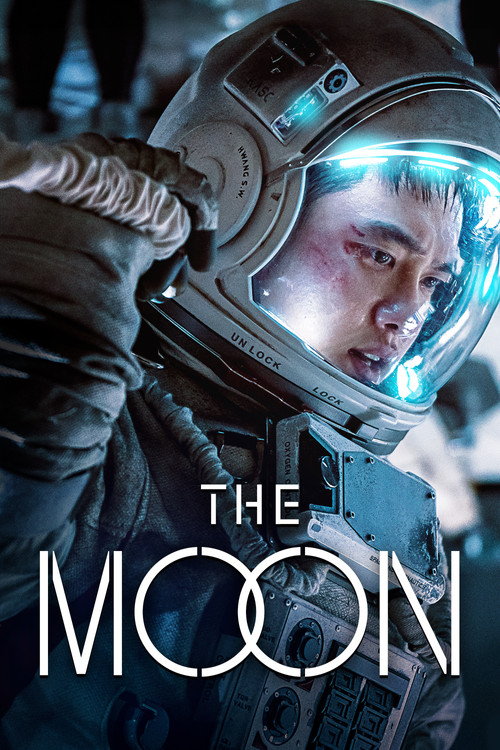
The Moon
A sleek, sorrowful space-survival drama in which one young astronaut drifts through the silver silence of the Moon while an entire nation holds its breath below, reaching for him across the dark.
The Moon

The Moon

더 문

"Only one astronaut is left stranded on the moon"

02 August 2023 South Korea 129 min 6.5 (219)

Director: Kim Yong-hwa

Cast: Sul Kyung-gu, Doh Kyung-soo, Kim Hee-ae, Park Byung-eun, Cho Han-cheul

Drama Adventure Science Fiction Redemption and guilt Survival against the void National ambition and the new Space Race Solidarity and cooperation Youth and sacrifice
Budget: $20,000,000
Box Office: $92,718

Overview

The film is set in 2029, sixty years after Neil Armstrong's first step. Vast energy resources have been found beneath the lunar surface, and that discovery has restarted the Space Race. South Korea is determined to take part. Its space agency launches the Woori-ho with a three-man crew, aiming to make Korea only the second country to send people to the Moon. The mission's goal is to land near a permanently shadowed crater and collect ice samples.

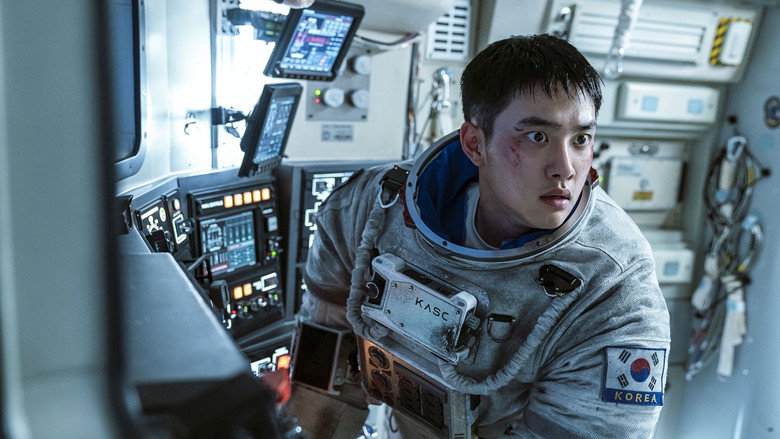
The youngest crew member is Hwang Sun-woo (Doh Kyung-soo), a former soldier. Partway to the Moon, a severe solar storm hits the spacecraft and the mission falls apart. Sun-woo ends up stranded far from home and faces one disaster after another.

On Earth, Kim Jae-guk (Sul Kyung-gu) is pulled back into the effort. He is a former director who resigned in disgrace after an earlier failed mission. As the rescue attempt spreads across agencies and borders, the film becomes a race against time. It is also a story about redemption, national pride and the human cost of reaching for the stars.


Core Meaning

Kim Yong-hwa uses a big-budget space disaster story to tell a Korean tale of guilt, atonement and collective hope. The film treats space exploration as more than a technical contest. It is a test of whether a nation, and the people who failed it before, can find the courage to try again and to value one human life above prestige.

The director openly accepts shinpa, the emotional, tear-driven melodrama typical of Korean cinema. He talked about this directly in interviews around the release. The film suggests that the cold logic of spaceflight can be answered by human solidarity: people on the ground who refuse to let one person drift away.

Thematic DNA

Redemption and guilt 25%
Survival against the void 25%
National ambition and the new Space Race 20%
Solidarity and cooperation 15%
Youth and sacrifice 15%

Redemption and guilt

Kim Jae-guk left in disgrace after an earlier failed mission. Sun-woo's crisis gives him a painful second chance to face his past and make up for it.

Survival against the void

After the solar storm, Sun-woo faces one catastrophe after another. His fight to survive, alone and far from Earth, drives the film's tension.

National ambition and the new Space Race

The discovery of lunar energy resources restarts a global competition. South Korea's wish to become the second nation to put people on the Moon frames the whole mission as a matter of national pride.

Solidarity and cooperation

The rescue depends on people and institutions on Earth working together, sometimes across national lines, to bring one stranded astronaut home.

Youth and sacrifice

Sun-woo is a young former soldier carrying the hopes of a nation. The film asks what older generations owe the young people they send into danger.

Character Analysis

Hwang Sun-woo

Doh Kyung-soo

Archetype: Reluctant hero / survivor Key Trait: Resilience

Motivation

To survive, to complete the mission, and to get home.

Character Arc

He starts as the youngest member of the crew, a former soldier. After the solar storm leaves him stranded, he has to rely on his own endurance and the help of people on Earth to survive.

Kim Jae-guk

Sul Kyung-gu

Archetype: Wounded mentor Key Trait: Burdened experience

Motivation

Redemption, and bringing the stranded astronaut home alive.

Character Arc

He is a former director who resigned in disgrace after an earlier failed mission. He is drawn back in to help save Sun-woo, and this forces him to face his past guilt.

All 3 characters and cast

Symbols & Motifs

The Moon

Meaning:

It stands for ambition, national prestige and a new frontier. It is also a place of isolation and possible death.

Context:

It is the goal of the Woori-ho mission and the setting of Sun-woo's ordeal.

Lunar ice in the shadowed crater

Meaning:

It represents the scientific and economic treasure that drives the new Space Race, and the price of getting it.

Context:

Collecting ice samples near a permanently shadowed crater is the crew's official objective.

The solar storm

Meaning:

It shows how small human plans are next to the forces of the universe, and how quickly ambition can turn into disaster.

Context:

The storm hits the Woori-ho on the way to the Moon and sets off the main crisis.

The Woori-ho spacecraft

Meaning:

"Woori" means "our" in Korean. The ship stands for collective national identity and shared hope.

Context:

This is the ship carrying Korea's three-man crew toward the Moon.

Philosophical Questions

Is one human life worth more than national prestige or scientific gain?

Once Sun-woo is stranded, the mission's goals of ice samples, energy resources and national pride compete with the plain duty to save him.

Can past failures be redeemed?

Kim Jae-guk's return after resigning in disgrace asks whether guilt can become meaningful action.

What drives humanity to reach into space?

The film places curiosity and wonder next to economic competition over lunar resources, and asks which one really drives exploration.

How It Ends

Alternative Interpretations

As national allegory: The mission can be read as a stand-in for South Korea's wish for global recognition, with failure and rescue reflecting a collective national psychology.

Full ending explanation

Cultural Impact

The film arrived as South Korea's real space program was growing, and it imagines Korea as a major player in a revived lunar race. Technically it was a milestone for Korean blockbusters. It was the first Korean film to use the 1.90:1 IMAX digital ratio, and its native 4K VFX came from Dexter Studios, the effects company founded by Kim Yong-hwa.

Commercially it was a major disappointment. It cost about $21.8 million and earned only around $5.2 million, during a crowded 2023 summer season. Some commentators said the failure had more to do with studio hubris and an inability to read the audience than with craftsmanship. The film is now often cited in discussions of the risks of expensive Korean tentpole films after the pandemic.

Audience Reception

Critics and audiences gave the film mixed to negative reviews. It holds an IMDb rating of about 5.8.

  • Praised: the polished, convincing visual effects and space imagery, which many called world-class for a Korean production, and Doh Kyung-soo's committed lead performance.
  • Criticized: pacing and plot that many felt could not hold interest over 129 minutes, a heavily derivative structure borrowed from Gravity and The Martian, a crowded opening full of exposition, and heavy shinpa melodrama.

Verdict: The film is technically impressive and emotionally sincere, but many viewers found it overlong and too familiar.

Interesting Facts

  • Kim Yong-hwa wrote, co-produced and directed the film. He also founded Dexter Studios, the company that made its visual effects.
  • It was shot on the Arri Alexa 65. The director considered an Alexa IMAX camera but decided against it because the only significant difference was the color pipeline.
  • The VFX and digital intermediate work were done in 4K resolution.
  • It was the first Korean film to use the 1.90:1 IMAX digital aspect ratio.
  • The film was released theatrically in South Korea on August 2, 2023, and runs 129 minutes.
  • It had a reported budget of about US$21.8 million but earned only about US$5.2 million at the box office.
  • Sul Kyung-gu and Doh Kyung-soo had both worked with Kim Yong-hwa before, on the Along with the Gods films.
  • The story is set in 2029, 60 years after the Apollo 11 landing.

Easter Eggs

Setting the story sixty years after Neil Armstrong's first step

This deliberately places Korea's fictional mission in the historical line that runs back to Apollo 11, framing it as the next chapter of human lunar exploration.

Echoes of Gravity, The Martian and Apollo 13

Critics pointed out that the film combines familiar Hollywood space-survival stories: an astronaut stranded in orbit facing growing disasters (Gravity), and a ground effort to bring a stranded astronaut home (The Martian). One reviewer called it Korea's fictional answer to Apollo 13.

Frequently Asked Questions

Explore More About This Movie

Dive deeper into specific aspects of the movie with our detailed analysis pages

Comments (0)

Leave a comment

No comments yet. Be the first to share your thoughts!

Similar Movies