Warning: full spoilers, including the ending.
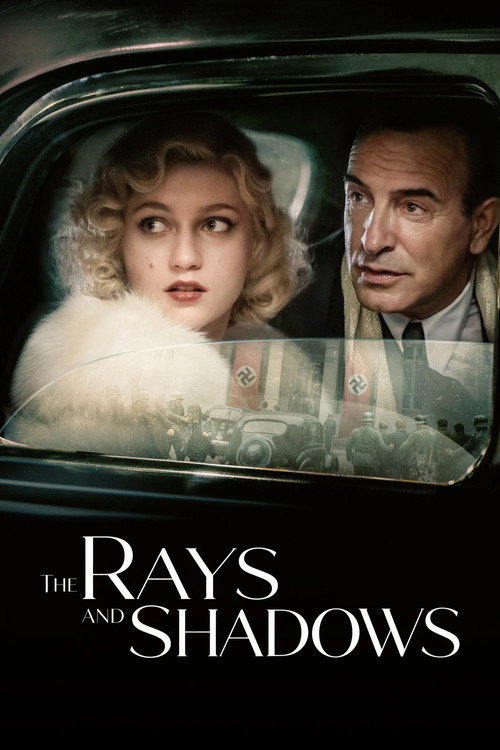
The film draws its shape from documented history, and its "twist" is structural rather than narrative: the story is told by Corinne Luchaire in retrospect, which means the audience is watching a defence, a confession and an elegy simultaneously. Everything charming in the first movement is being narrated by someone who already knows the price.
Jean Luchaire's trajectory runs from influential, sociable journalist to the principal press voice of collaboration, sustained by his relationship with the German ambassador Otto Abetz — a friendship that is also patronage, and that funds the family's Parisian life and Corinne's film career. The turn is that this ascent is never presented as a moral fall in progress; it is presented as success. Only when the Reich collapses does the arrangement reveal what it always was. With the Liberation, the collaborationist milieu is swept into the German retreat and the exile of Vichy's remnants, and the machinery that made Luchaire indispensable disappears in weeks.
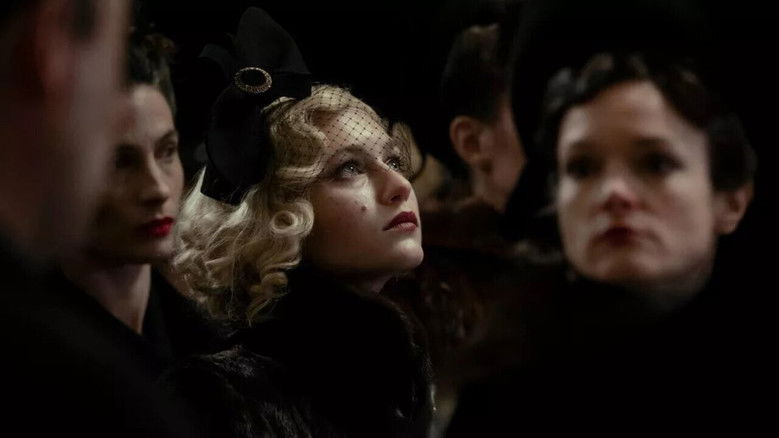
The film then delivers the reckoning the narration has been anticipating from the first frame: Jean Luchaire is captured, tried for intelligence with the enemy in the postwar purge, and executed. Corinne, who has no crime beyond the life she was given, is condemned as well — stripped of civic standing and of her career, publicly disgraced, her stardom converted into the evidence against her. Her ruin is not a courtroom event but a slow one: illness, poverty and erasure, dying young with her name intact only as a scandal.
What becomes clear afterwards. The Hugo title stops being decorative and becomes the verdict: the rays and the shadows were never two sets of people. The film's early pleasures — the dinners, the receptions, the premieres, the ambassador's exquisite manners — are retroactively revealed as the whole mechanism of the crime, not its backdrop; nothing more sinister was ever required. Abetz's Francophilia, initially the film's warmest register, is exposed as its most efficient act of conquest. And the narration's final meaning lands only at the end: Corinne is not explaining her father to us, she is explaining that she cannot separate loving him from being destroyed by him. The tragedy is that the two are the same act. Giannoli's refusal of Manichaeism pays off here — because the audience has been permitted to enjoy the Luchaires' world, the punishment does not feel like relief, and the discomfort of that is the point.