Skip to content
The Shrinking Man
An existential sci-fi drama steeped in suffocating dread, where a shrinking man’s frantic fight for survival turns his mundane basement into a terrifying, infinite abyss of cosmic insignificance.
The Shrinking Man

The Shrinking Man

L'Homme qui rétrécit

22 October 2025 France 99 min 6.0 (161)

Director: Jan Kounen

Cast: Jean Dujardin, Marie-Josée Croze, Daphné Richard, Serge Swysen, Salim Talbi

Adventure Science Fiction Existential Scale and Cosmic Relativity Deconstruction of Masculinity and Social Role Domestic Horror and Primal Survival Isolation and Incommunicability
Budget: $24,350,000

Overview

The Shrinking Man (L'Homme qui rétrécit) is a French-Belgian sci-fi survival drama directed by Jan Kounen. The story focuses on Paul, a prosperous, middle-aged shipbuilder who enjoys a quiet coastal life with his wife Élise and their young daughter Mia. During a routine boat excursion along the coast, Paul passes through an unexplained meteorological fog. Shortly thereafter, he notices that his clothes no longer fit and his height is diminishing. Despite undergoing rigorous medical testing, doctors are baffled by his "proportional involution," unable to find a cure or slow down the process.

As Paul shrinks from normal height down to the size of a doll, his home becomes an increasingly treacherous environment. Forced into seclusion to avoid public exploitation, Paul relies on his family for protection. However, a sudden domestic accident forces him into the dark, forgotten depths of his home cellar, cutting off all communication with the upper floor. Trapped in a subterranean world where everyday household pests become colossal predators and dust storms present environmental hazards, Paul must use his raw intelligence and physical endurance to survive.


Core Meaning

Jan Kounen utilizes Richard Matheson’s classic premise to critique modern human hubris and explore existential transcendence. The film contrasts man's perceived dominance over nature with the stark reality of cosmic insignificance. Through Paul's physical diminishing, Kounen systematically dismantles the traditional markers of identity—masculinity, economic success, and physical dominance. Rather than portraying shrinking merely as a tragic medical curse, the director frames it as a transformative spiritual journey: stripped of material attachments and social utility, Paul is forced to confront his place in an indifferent universe.

Thematic DNA

Existential Scale and Cosmic Relativity 30%
Deconstruction of Masculinity and Social Role 25%
Domestic Horror and Primal Survival 25%
Isolation and Incommunicability 20%

Existential Scale and Cosmic Relativity

The film constantly contrasts human perspective with the infinite macro and micro cosmos. Paul begins as a master of his environment (a shipbuilder) but realizes that human importance is merely an optical illusion.

Deconstruction of Masculinity and Social Role

As Paul loses physical stature, he loses his status as the provider and protector of his household. His inability to maintain his traditional patriarchal role creates an insurmountable rift between him and his family.

Domestic Horror and Primal Survival

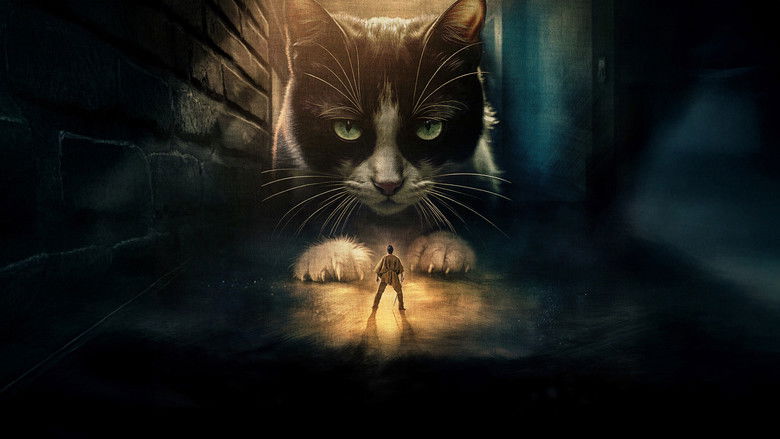
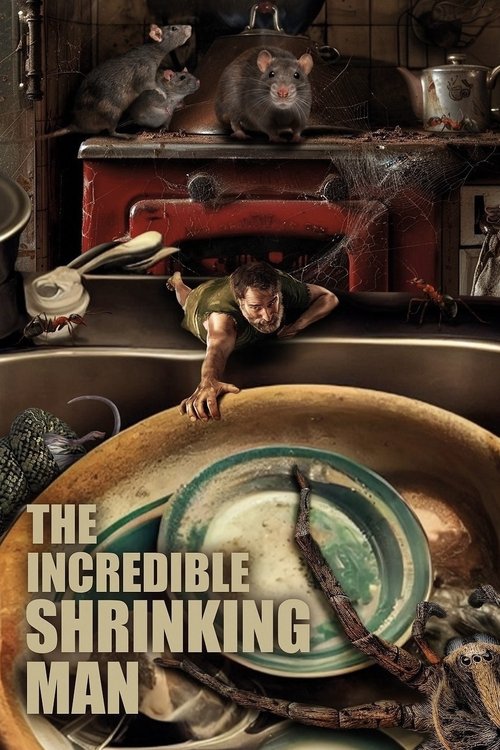
The narrative flips domestic comfort into nightmare territory. A pet cat becomes a ferocious beast, a house spider becomes an apex monster, and a simple sewing needle becomes a broadsword.

Isolation and Incommunicability

Trapped in the basement, Paul can hear the faint footsteps and voices of his grieving family upstairs but remains completely incapable of reaching out to them, symbolizing the profound loneliness of human suffering.

Character Analysis

Paul

Jean Dujardin

Archetype: Fallen Hero / Everyman Key Trait: Practical resourcefulness

Motivation

Survival, reconnecting with his family, and ultimately making peace with his cosmic fate.

Character Arc

Begins as a confident, self-reliant patriarch; falls into despair and powerlessness; evolves into a fierce primal survivor; ends as a serene, transcendent entity accepting infinity.

Élise

Marie-Josée Croze

Archetype: Devoted Spouse / Overwhelmed Caregiver Key Trait: Pragmatic emotional self-preservation

Motivation

Protecting her husband while attempting to preserve a sense of household stability.

Character Arc

Moves from loving support to emotional fatigue and tragic grief, eventually accepting Paul's presumed death.

All 4 characters and cast

Symbols & Motifs

The Oceanic Fog / Cloud

Meaning:

Symbolizes cosmic mystery and human powerlessness.

Context:

Acts as an unfeeling catalyst that alters Paul's destiny without explanation during a coastal boat excursion.

The Sewing Needle

Meaning:

Represents human adaptability, resourcefulness, and the regression to primitive tool-making.

Context:

Used by Paul in the basement as a improvised broadsword to defend himself against predators.

The Family Cat (Tchoupi)

Meaning:

Symbolizes the fragility of human dominance over nature, with a beloved pet inverted into an unfeeling predator.

Context:

Attacks Paul in a sudden domestic incident that precipitates his fall into the basement.

The Cellar / Basement

Meaning:

Represents the subconscious mind, a metaphorical grave, and a crucible where Paul's former ego must die.

Context:

The dark subterranean environment where Paul is trapped and cut off from the human world above.

The Spider

Meaning:

Symbolizes the brutal, mechanical efficiency of nature, indifferent to human emotion or morality.

Context:

Serves as the ultimate monster Paul must fight in a prolonged cellar battle over food.

The Dollhouse

Meaning:

A direct visual mirror of Paul’s diminishing agency within his own family life.

Context:

Reflects Paul's reduced scale and helplessness while living at home before his fall into the cellar.

Memorable Quotes

Il y a des lois dans l'univers qu'on ne comprend pas encore.
— Opening title epigraph (quoting author Richard Matheson)

Context

Displayed as the opening epigraph of the film.

Meaning

Establishes the sci-fi premise and primes the audience to view Paul's affliction not as a medical glitch, but as a cosmic mystery beyond human intellect.

On décide de très peu de choses. Au fond, notre vie se passe très bien de nous.
— Paul

Context

Delivered in a philosophical voiceover as Paul experiences his physical shrinkage.

Meaning

Reflects Paul's realization of how little control human beings actually exercise over their own lives.

All 5 quotes

Philosophical Questions

Does human worth depend on scale or social utility?

The film strips Paul of his work, height, and familial role, questioning whether consciousness alone retains intrinsic value.

How does human ego confront an indifferent universe?

Through the unexplained fog and relentless shrinking, the film questions humanity's need to rationalize and control natural phenomena.

Is total physical decay a prelude to spiritual freedom?

The ending asks whether losing one's physical footprint allows a person to merge with the infinite cosmos.

Alternative Interpretations

The film can be interpreted in several distinct ways:

Full ending explanation

Cultural Impact

Released in late 2025, The Shrinking Man represented an ambitious attempt by French cinema to reclaim high-concept, existential science fiction. While Jack Arnold's 1957 adaptation reflected 1950s Cold War anxieties surrounding atomic radiation, Kounen's 2025 version reframes the story through a contemporary lens: climate helplessness, loss of traditional masculine identity, and existential isolation in a hyper-technological age.

The film generated notable discussion in cinephile circles for its artistic nerve. Financially, however, it faced stiff competition at the French box office against domestic blockbusters like Kaamelott: Part 2, rendering its theatrical run commercially challenging despite strong international festival screenings (such as Sitges and CINEMANIA).

Audience Reception

Praised:

  • Jean Dujardin's committed physical performance, carrying long stretches of dialogue-free survival acting.
  • Creative practical visual effects and immersive macro-cinematography.
  • Alexandre Desplat's atmospheric, haunting musical score.

Criticized:

  • Heavy-handed, pretentious philosophical voiceover monologues spoken by Dujardin throughout the film.
  • Rush through the initial domestic setup in the first act before reaching the basement.

Verdict: Celebrated by genre enthusiasts as a poetic, visual exercise in existential dread, though somewhat polarizing for general mainstream audiences due to its deliberate pacing and philosophical voiceovers.

Interesting Facts

  • Jean Dujardin personally initiated the project and approached Jan Kounen to direct, reuniting 18 years after their hit collaboration 99 Francs (2007).
  • Jan Kounen consciously avoided relying entirely on modern CGI or green screens, building huge oversized sets and practical props (giant furniture, floorboards, and dust mites) to ground the actor's physical performances.
  • The film was produced as a high-concept French-Belgian co-production with a budget of over €21 million.
  • Academy Award-winning composer Alexandre Desplat composed the score, using low-key acoustic textures, subtle electronics, and tension-driven percussion for the basement survival sequences.
  • The family cat, named Tchoupi in real life, was filmed using macro cinematography to make its movements feel heavy and monstrous.

Easter Eggs

Literary Epigraph

The film opens with an explicit text quote from Richard Matheson's 1956 original novel, paying direct homage to the master sci-fi author.

1957 B-Movie Homages

Several basement survival beats (stabbing the spider with a sewing needle, using a matchbox as a bed, navigating water droplets near a leaky pipe) directly replicate iconic framing from Jack Arnold's 1957 film The Incredible Shrinking Man.

French Classical Literature Nods

Critics noted thematic echoes of classic French philosophical literature dealing with bodily scale and relativity, such as Voltaire's Micromégas and François Rabelais' Pantagruel.

Kounen's Visionary Style

Brief hallucination sequences during Paul's moments of near-death nod to Jan Kounen's interest in altered states of consciousness and shamanism (previously explored in Blueberry).

Frequently Asked Questions

Explore More About This Movie

Dive deeper into specific aspects of the movie with our detailed analysis pages

Comments (0)

Leave a comment

No comments yet. Be the first to share your thoughts!

Similar Movies