Skip to content
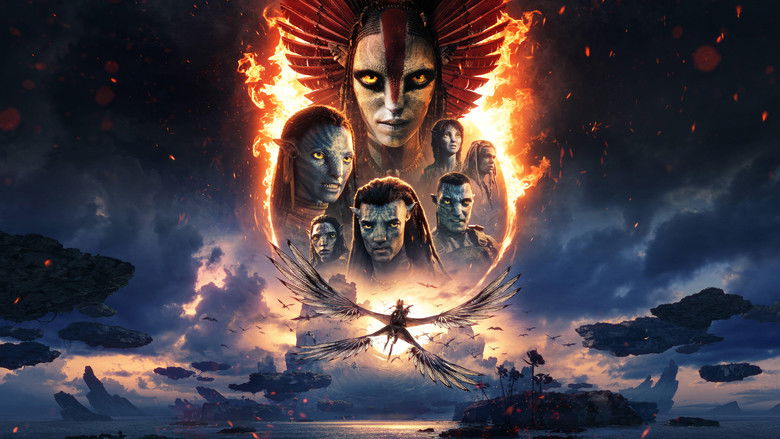
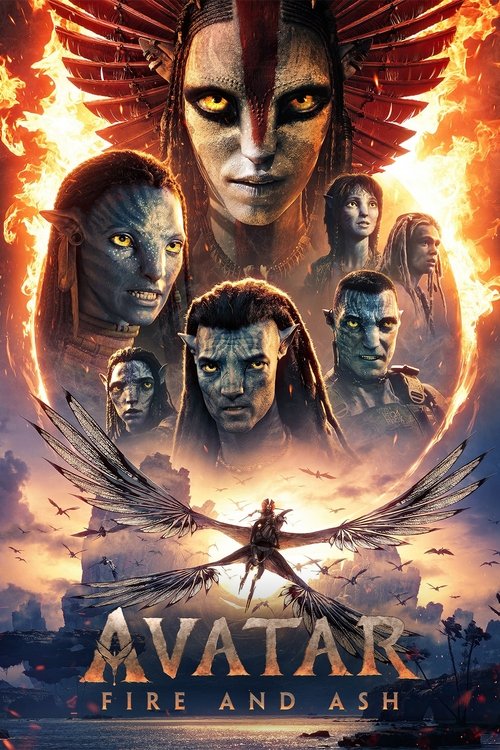
Avatar: Fire and Ash
A fiery, tragic exploration of grief and survival. As the ashes of war rain down, the consuming glow of vengeance threatens to destroy Pandora's delicate soul.
Avatar: Fire and Ash

Avatar: Fire and Ash

"The world of Pandora will change forever."

17 December 2025 United States of America 198 min 7.6 (3,815)

Director: James Cameron

Cast: Sam Worthington, Zoe Saldaña, Sigourney Weaver, Stephen Lang, Oona Chaplin

Fantasy Adventure Science Fiction The Cycle of Violence and Hatred Grief and Loss Evolution and Biological Adaptation The Brutality of Nature
Budget: $350,000,000
Box Office: $1,490,477,656

Overview

Set shortly after the tragic events of The Way of Water, Avatar: Fire and Ash follows Jake Sully, Neytiri, and their family as they grapple with the devastating loss of their eldest son, Neteyam. Their search for healing and safety leads them into an unforeseen conflict when they encounter the Mangkwan, an aggressive and volcanic Na'vi clan known as the Ash People. Led by their fierce Tsahìk, Varang, this new tribe rejects the peaceful balance of Eywa, having survived historical catastrophes through raw resilience and fire.

The threat escalates exponentially when Varang forms an unprecedented alliance with the resurrected Recom Colonel Miles Quaritch and the human RDA forces. As the RDA seeks new methods to colonize Pandora and exploit its resources, Jake and his family find themselves caught in a harrowing three-front war. The film broadens the scope of Pandora's world, challenging the Sullys to confront their inner demons, intense grief, and a darker side of Na'vi culture they never knew existed.
Core Meaning

At its heart, Avatar: Fire and Ash is an allegory for the cyclical nature of violence and the consuming, destructive power of unhealed grief. Director James Cameron uses the fiery Mangkwan clan to illustrate how trauma, if left unresolved, can harden into hatred and fuel perpetual conflict. The film argues that true strength lies not in destructive retaliation (the "fire of hate"), but in holding onto empathy, interconnectedness, and the delicate balance of life, even when the world seems entirely indifferent to our pain.

Thematic DNA

The Cycle of Violence and Hatred 35%
Grief and Loss 25%
Evolution and Biological Adaptation 20%
The Brutality of Nature 20%

The Cycle of Violence and Hatred

The film explores how vengeance breeds further destruction, primarily through Neytiri's growing hatred toward all humans following Neteyam's death, and Varang's resentment toward Eywa for abandoning her people. The narrative emphasizes that unchecked anger burns both the victim and the oppressor.

Grief and Loss

The Sully family's deep mourning serves as the emotional anchor. Jake and Neytiri process their tragedy differently, threatening their bond, while the younger generation struggles to find their place in a fractured family dynamic.

Evolution and Biological Adaptation

Biological and cultural adaptation is a major theme, culminating in Spider's shocking physiological transformation. The line between human and Na'vi becomes increasingly blurred, forcing characters to reevaluate what constitutes identity and belonging on Pandora.

The Brutality of Nature

Unlike the idyllic Omatikaya or harmonious Metkayina, the Ash People represent the harsh, unforgiving, and destructive aspects of nature. This challenges the romanticized view of Pandora, showing that nature can be a brutal, Darwinian force of fire and ash.

Character Analysis

Jake Sully

Sam Worthington

Archetype: Mentor/Hero Key Trait: Pragmatic empathy

Motivation

To protect his remaining family, halt the cycle of hatred, and preserve the fragile balance of Pandora.

Character Arc

Jake struggles to hold his fractured family together while preventing Neytiri from being consumed by vengeance. He is forced to reclaim his mantle as Toruk Makto to defend against a new, complex threat.

Neytiri

Zoe Saldaña

Archetype: The Wounded Warrior Key Trait: Fierce protectiveness

Motivation

Vengeance for her son's death and absolute protection of her remaining children.

Character Arc

Consumed by the trauma of losing Neteyam, Neytiri battles severe prejudice and hatred toward humans, testing her relationship with Jake and Spider, before ultimately having to reconcile her rage.

Varang

Oona Chaplin

Archetype: The Shadow/Antagonist Key Trait: Ruthless pragmatism

Motivation

Survival and dominance, rooted in a childhood trauma where she felt her people were abandoned by their deity.

Character Arc

As the Tsahìk of the Mangkwan, she represents what the Na'vi can become without Eywa. She leads her people into a dark alliance with the RDA, believing in strength through fire.

Kiri

Sigourney Weaver

Archetype: The Chosen One Key Trait: Spiritual sensitivity

Motivation

To understand her deep, mysterious connection to Eywa and protect her siblings at all costs.

Character Arc

Kiri evolves from a confused teenager into a powerful, active conduit for Eywa, learning to harness her connection to the planet to perform miracles that fundamentally change the future of the human-Na'vi conflict.

Miles "Spider" Socorro

Jack Champion

Archetype: The Bridge Key Trait: Resilience

Motivation

To be fully accepted by his adopted Na'vi family and shed the violent legacy of the Sky People.

Character Arc

Spider transitions from feeling like an outsider burdened by his human biology and his biological father's sins, to becoming miraculously and physically integrated into Pandora's ecosystem.

Symbols & Motifs

Fire and Ash

Meaning:

Symbolizes both the consuming nature of grief and hatred, as well as the unforgiving, destructive elements of the natural world. For the Mangkwan, fire is a tool of survival that replaced the spiritual comfort of Eywa.

Context:

Prominently featured in the volcanic environment of the Ash People and the horrific burning of the merchant ships.

Spider's Oxygen Mask

Meaning:

Symbolizes the barrier between humanity and Pandora, as well as Spider's physical and emotional isolation from his adopted Na'vi family.

Context:

Used throughout his life, its ultimate failure and his subsequent biological transformation marks the shattering of the barrier between the two species.

The Mycelia Network

Meaning:

Represents the profound, tangible power of interconnected life and Eywa's boundless, active intervention in the physical realm.

Context:

Used in the climactic scene where Kiri channels the network into the ground to fundamentally alter Spider's biology to save his life.

Memorable Quotes

This world goes much deeper than you imagine. You cannot live like this, baby, in hate!
— Jake Sully

Context

Spoken to Neytiri as she spirals into vengeance following their violent encounters with the RDA and the Mangkwan.

Meaning

Jake's desperate plea highlights the core thematic conflict of the film: the profound danger of letting grief calcify into destructive anger.

The fire came from the mountain when I was little, burnt our forest. My people cried for help but Eywa did not come. So I went to the fire, and I learned its way. Your goddess has no dominion here.
— Varang

Context

Varang explains her tribe's origin and philosophy, mocking the spiritual beliefs of the other clans.

Meaning

A powerful ideological declaration that shatters the universal reverence for Eywa among the Na'vi, introducing a faction born entirely of trauma and survival.

A weak mother for weak children. My people do not suckle at the breast of weakness. I am the fire!
— Varang

Context

Spoken directly to Kiri while holding Spider at knifepoint, taunting Kiri's deep connection to the Great Mother.

Meaning

Demonstrates Varang's absolute rejection of Eywa's nurturing nature in favor of a brutal, Darwinian strength.

Leave my mother alone, bitch!
— Kiri

Context

Kiri fiercely defends Neytiri during a tense, physical confrontation with the hostile Mangkwan.

Meaning

Shows Kiri's fierce loyalty and a stark, aggressive departure from her usually peaceful, spiritually-focused demeanor.

Philosophical Questions

Does severe trauma justify the abandonment of empathy?

The film contrasts Neytiri's grief-fueled hatred with Jake's pragmatic empathy, while Varang's entire society is built on the trauma of feeling abandoned by their deity. It challenges the viewer to consider how societies and individuals should process immense loss without becoming the monsters they fight.

What defines our fundamental identity and nature?

With Spider physically gaining the ability to breathe Pandora's air and human Recoms continuing to exist in Na'vi bodies, the film blurs the lines of species, asking whether our identity is tied to our biology, our culture, or our moral choices.

Alternative Interpretations

A major point of analytical divergence among critics and fans is Kiri's climatic act of altering Spider's biology. On the surface, it is viewed as a miraculous, benevolent act of salvation by Eywa. However, an alternative interpretation suggests a more sinister or utilitarian reading of Eywa's motives. Some theorists argue that Eywa is acting as a self-preserving planetary immune system; by allowing humans to breathe the air, Eywa might be attempting to assimilate the Sky People into Pandora's natural equilibrium rather than fighting them, potentially pacifying the human threat through biological assimilation. Another interpretation focuses on Varang's rejection of Eywa, positing that the Ash People are not inherently evil villains, but rational survivors of natural disasters that the "benevolent" Eywa ignored, framing the film as a critique of blind religious devotion.

Cultural Impact

Upon its theatrical release in December 2025, Avatar: Fire and Ash cemented James Cameron's franchise as an unstoppable box-office juggernaut, earning nearly $1.5 billion globally. Culturally, the film sparked significant discourse by subverting the "noble savage" trope that critics had aimed at the previous films. By introducing the Mangkwan—a deeply flawed, aggressive, and imperialistic Na'vi clan—Cameron forced audiences to view Pandora not as a black-and-white moral utopia, but as a complex, messy ecosystem capable of cruelty. The inclusion of pop powerhouse Miley Cyrus for the end-credit track "Dream as One" also represented a shift toward integrating mainstream pop culture into the world-building of Pandora. However, critical reception was more divided than previous entries; while the visual effects and expansions of lore were universally praised, some critics argued the narrative structure felt repetitive, heavily mimicking the beats of The Way of Water.

Audience Reception

Audience reactions to Avatar: Fire and Ash were largely enthusiastic but noticeably mixed compared to its predecessors. Fans overwhelmingly praised the breathtaking visual design of the volcanic biomes and the terrifying screen presence of the Ash People. The emotional weight of the Sully family's grief and Kiri's escalating powers were highlighted as major narrative strengths. However, a significant portion of the audience and critics pointed out a formulaic narrative structure, noting that the "fleeing to a new tribe and facing a massive third-act battle" mirrored The Way of Water too closely. The controversial biological changes to Spider sparked intense debate, with some loving the progression and others feeling it undermined the stakes of human survival on Pandora. Overall, it was deemed a visually spectacular but overly familiar bridge to the highly anticipated Avatar 4.

Interesting Facts

  • The film's end-credits feature an original song titled 'Dream as One,' performed by Miley Cyrus and co-written with Mark Ronson, Andrew Wyatt, and composer Simon Franglen.
  • Unlike previous Avatar films where the Na'vi were strictly portrayed as the 'good guys,' Fire and Ash intentionally introduces a villainous Na'vi faction (the Mangkwan) to show the darker side of Pandora's indigenous life.
  • Director James Cameron explicitly stated that the film's themes of cyclical violence and the 'fire of hate' were heavily inspired by real-world conflicts, specifically mentioning the wars in Ukraine and Gaza during promotional interviews.
  • Despite grossing nearly $1.5 billion worldwide and ranking in the top three highest-grossing films of 2025, it fell slightly short of 20th Century Studios' massive $2 billion target.
  • The Ash People feature a completely unique visual design compared to other clans, with stark white skin, black and red details, and tentacle-like appendages coming from their shoulders and heads.

Easter Eggs

Jemaine Clement's character (Dr. Ian Garvin) wears a t-shirt featuring the word 'Vakhërs' and a fictional band name 'Void Tourist'.

This hidden detail adds flavor to the human cultural remnants on Pandora, sparking curiosity among fans about the pop-culture humans brought with them from Earth.

⚠️ Spoiler Analysis

Click to reveal detailed analysis with spoilers

Frequently Asked Questions

Explore More About This Movie

Dive deeper into specific aspects of the movie with our detailed analysis pages

Comments (0)

Leave a comment

No comments yet. Be the first to share your thoughts!

Similar Movies