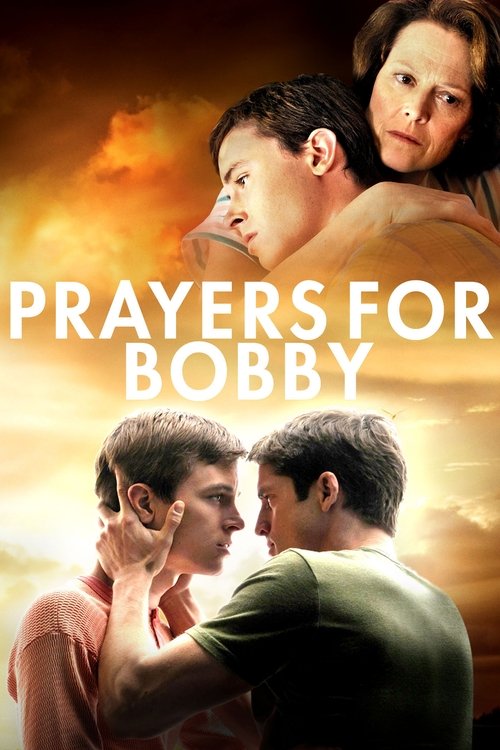
Prayers for Bobby
A heart-wrenching drama where a mother's fervent faith collides with her son's identity, painting a poignant cinematic portrait of love, loss, and the arduous journey to acceptance.
Prayers for Bobby

Prayers for Bobby

"She loves everything about her son...except who he is."

24 January 2009 United States of America 89 min ⭐ 8.1 (600)
Director: Russell Mulcahy
Cast: Ryan Kelley, Sigourney Weaver, Henry Czerny, Dan Butler, Austin Nichols
Drama History TV Movie
Religious Intolerance vs. Unconditional Love The Struggle for Self-Acceptance The Consequences of Ignorance and Prejudice Activism and Redemption

Overview

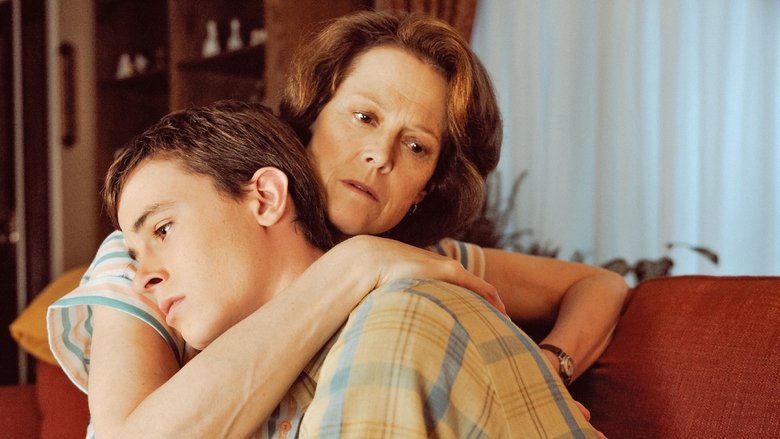
"Prayers for Bobby" is a profoundly moving television movie based on the true story of Mary Griffith, a devout Christian mother, and her son, Bobby. Set in the late 1970s and early 1980s, the film chronicles the Griffith family's life in Walnut Creek, California. Mary raises her children according to the strict teachings of her Presbyterian church. When her teenage son, Bobby, confides in his brother that he is gay, the family's world is turned upside down.

Mary, driven by her religious convictions, believes that homosexuality is a sin that can be "cured." She initiates a relentless campaign of prayer and therapy to change her son, refusing to accept him for who he is. Bobby, desperate for his mother's love and approval, struggles with immense guilt and depression. This emotional turmoil eventually leads him to a tragic decision. The latter half of the film focuses on Mary's journey after this tragedy, as she begins to question her rigid beliefs and confronts the devastating consequences of her actions.

Core Meaning

The core meaning of "Prayers for Bobby" is a powerful plea for acceptance, understanding, and unconditional love in the face of religious dogma and societal prejudice. The film critiques the destructive potential of blind faith when it is prioritized over familial love and compassion. Director Russell Mulcahy and screenwriter Katie Ford aimed to tell a cautionary tale about the real-life consequences of intolerance and the importance of listening to and supporting LGBTQ+ youth. The message is that love and kindness are paramount, and that religious beliefs should not be used as a weapon to condemn or reject one's own children. Ultimately, the film is a story of transformation, showing that it is possible to move from ignorance and bigotry to advocacy and empathy, but often at a tragic cost.

Thematic DNA

Religious Intolerance vs. Unconditional Love 40%
The Struggle for Self-Acceptance 30%
The Consequences of Ignorance and Prejudice 20%
Activism and Redemption 10%

Religious Intolerance vs. Unconditional Love

This is the central theme of the film, embodied in the conflict between Mary Griffith's deeply held religious beliefs and her love for her son, Bobby. Initially, her interpretation of the Bible leads her to believe that homosexuality is a grave sin that must be eradicated. She places her religious convictions above her son's well-being, which leads to his deep emotional suffering and ultimate suicide. After Bobby's death, Mary's journey is one of re-evaluating her faith. She eventually comes to understand that her rigid beliefs were a form of "bigotry" and that God's love is unconditional. The film contrasts her initial conditional love with the unconditional love she learns to embrace, becoming an advocate for LGBTQ+ rights.

The Struggle for Self-Acceptance

Bobby's internal conflict is a major theme. Raised in a devoutly religious family, he internalizes the homophobic teachings of his mother and the church, leading to immense self-hatred and guilt. He desperately tries to change himself to win his mother's approval and to align with his upbringing. His journal entries reveal his torment and his struggle to reconcile his identity with his family's beliefs. Even when he finds some acceptance with his cousin and a boyfriend, the emotional wounds inflicted by his mother's rejection are too deep, highlighting the devastating psychological impact of non-acceptance on a young person's journey to self-love.

The Consequences of Ignorance and Prejudice

The film starkly illustrates the tragic consequences of ignorance and prejudice. Mary's actions are rooted in a lack of understanding about homosexuality, which she views as a sickness or a sinful choice. This ignorance, fueled by her church, leads to Bobby's death. The film serves as a powerful message that societal and familial rejection can have fatal consequences. Mary's transformation into an activist is a direct result of her confronting her own ignorance and the painful realization of its impact. Her final speech is a call to action against the dangers of prejudice, urging others to think before they speak because "a child is listening."

Activism and Redemption

The second half of the film focuses on Mary's path to redemption through activism. Wracked with guilt after Bobby's death, she finds solace and a new purpose by connecting with PFLAG (Parents, Families and Friends of Lesbians and Gays). She transforms her personal tragedy into a public mission to educate others and fight for the rights of LGBTQ+ youth. This theme suggests that while the past cannot be undone, it is possible to find redemption by working to prevent others from suffering the same fate. Mary's evolution from a rigid ideologue to a compassionate activist is the film's message of hope.

Character Analysis

Mary Griffith

Sigourney Weaver

Archetype: The Transformed Antagonist
Key Trait: Zealous

Motivation

Initially, her motivation is to "save" her son's soul, which she believes is damned by his homosexuality. She is driven by a fear rooted in her religious teachings. After his death, her motivation shifts to seeking understanding and, ultimately, redemption by preventing other families from making the same mistakes.

Character Arc

Mary begins as the film's antagonist, a loving but dangerously misguided mother whose rigid religious beliefs cause her to reject her son. Her arc is one of profound transformation fueled by grief and guilt. After Bobby's suicide, she embarks on a painful journey of self-reflection, questioning the religious dogma she once held sacred. She evolves from a perpetrator of intolerance into a passionate and celebrated advocate for LGBTQ+ rights, demonstrating a complete reversal of her initial beliefs and actions.

Bobby Griffith

Ryan Kelley

Archetype: The Tragic Hero/Victim
Key Trait: Sensitive

Motivation

Bobby's primary motivation is to gain his mother's love and acceptance. He initially tries to suppress and "cure" his homosexuality to please her. Even after leaving home, his actions are still haunted by a desire for her approval, and the lack of it is what ultimately breaks him.

Character Arc

Bobby's arc is a tragic one of descent. He starts as a seemingly happy teenager in a close-knit family. Upon realizing he is gay, he is thrown into a desperate struggle for acceptance from his mother. His attempts to change and his subsequent move to find freedom are constantly undermined by the internalized shame and guilt from his upbringing. His arc tragically ends in suicide, as he is unable to overcome the emotional damage of his mother's rejection.

Robert Griffith

Henry Czerny

Archetype: The Passive Enabler
Key Trait: Reserved

Motivation

His motivation is to keep peace within the family. He is conflict-avoidant and struggles to challenge his wife's convictions, even when he may privately disagree with her methods. His love for both his wife and son puts him in a difficult, and ultimately passive, position.

Character Arc

Robert, Bobby's father, is a more passive and reserved character. While he loves his son, he is largely cowed by his wife's strong personality and religious fervor. His arc shows a slow and quiet journey towards acceptance, often acting as a buffer but never directly confronting Mary's destructive behavior until it's too late. After Bobby's death, he supports Mary's transformation and joins her in her activism, finding his own way to honor their son.

Reverend Whitsell

Dan Butler

Archetype: The Mentor
Key Trait: Compassionate

Motivation

His motivation is to provide support and spiritual guidance to those who have been rejected by mainstream religion. He is driven by a belief in an inclusive God and a desire to help people, like Mary, reconcile their faith with love and acceptance for their LGBTQ+ children.

Character Arc

Reverend Whitsell is a compassionate and understanding minister at a gay-friendly Metropolitan Community Church. His role is to guide Mary after Bobby's death. He doesn't have a significant personal arc but serves as the catalyst for Mary's transformation. He challenges her rigid interpretation of scripture and introduces her to a more inclusive and loving form of Christianity.

Symbols & Motifs

Bobby's Diary/Journal

Meaning:

Bobby's journal symbolizes his inner turmoil, his unspoken thoughts, and the truth of his emotional state that he cannot share with his family. It is the only place where he can be his authentic self without fear of judgment.

Context:

Throughout the first half of the film, Bobby is seen writing in his journal. After his death, Mary discovers and reads it, which is a pivotal moment in her transformation. The journal forces her to confront the depth of her son's pain and the role she played in it, shattering her denial and starting her on a path of questioning her beliefs.

The Bible and Posted Scriptures

Meaning:

The Bible, and specifically the verses Mary posts around the house, symbolize the weaponization of religion and dogma. Instead of being a source of comfort and love, it becomes a tool of oppression and condemnation in the Griffith home.

Context:

Mary tapes handwritten Bible verses about the abomination of homosexuality to Bobby's mirror and other places in the house in an attempt to "cure" him. This constant visual reminder of his supposed sin exacerbates Bobby's guilt and self-loathing. Later, Mary revisits her Bible with new understanding, seeking a more compassionate interpretation.

The Bridge Overpass

Meaning:

The bridge from which Bobby jumps symbolizes his final point of despair and the tragic consequence of the emotional chasm between him and his mother. It represents a point of no return, a fatal leap resulting from unbearable emotional pain and isolation.

Context:

Haunted by his mother's rejection and feeling utterly alone after seeing his boyfriend with someone else, Bobby drives to a freeway overpass. In his final moments, he recalls his mother's words, "I will not have a gay son," before jumping to his death. The location becomes a stark symbol of his tragedy.

The Pride Parade

Meaning:

The Pride Parade at the end of the film symbolizes hope, acceptance, community, and Mary's complete transformation. It represents her moving from the confines of her conservative church to a public and celebratory embrace of the LGBTQ+ community.

Context:

The final scene shows Mary, along with her family, marching in a San Francisco Pride Parade with a PFLAG banner. She sees a young man who reminds her of Bobby and embraces him, offering the acceptance she denied her own son. This act signifies her redemption and her commitment to being a mother figure to other vulnerable youth.

Memorable Quotes

I will not have a gay son.

— Mary Griffith

Context:

Mary says this to Bobby during a heated argument after he has moved away and is trying to live his life. It is a pivotal, devastating moment that underscores his alienation. He recalls these words just before he takes his own life.

Meaning:

This is the ultimate expression of Mary's rejection and the line that haunts Bobby. It signifies the point where her religious dogma completely overrides her maternal love, creating an impossible ultimatum for her son.

I know now why God didn't heal Bobby. He didn't heal him because there was nothing wrong with him.

— Mary Griffith

Context:

Mary has this epiphany after months of soul-searching, attending PFLAG meetings, and speaking with Reverend Whitsell. It is the turning point that allows her to move from guilt to activism.

Meaning:

This line represents the climax of Mary's transformation. It is her profound realization that her son was not sick, sinful, or broken. It signifies her complete rejection of her former beliefs and her full acceptance of Bobby for who he was.

Before you echo 'amen' in your home or place of worship, think. Think, and remember, a child is listening.

— Mary Griffith

Context:

Mary delivers this line during a speech to a city council meeting where she is advocating for a gay rights ordinance. Her words are a culmination of her tragic experience, transformed into a plea for compassion and awareness.

Meaning:

This is the powerful closing statement of Mary's public speech. It serves as the film's central message and a direct warning to other parents. It highlights the profound and often unseen impact that homophobic rhetoric, especially when cloaked in religion, has on vulnerable children.

Homosexuality is a sin. Homosexuals are doomed to spend eternity in Hell... These are all the things I said to my son Bobby when I found out he was gay.

— Mary Griffith

Context:

This is part of the same public speech at the city council meeting. She begins by laying out the exact religious condemnations she used against Bobby, showing the audience the root of the tragedy before explaining her change of heart.

Meaning:

This quote, from the opening of her speech, is a stark and painful confession. Mary publicly admits to the harmful words and beliefs she forced upon her son, taking full responsibility for the destructive impact of her intolerance.

Philosophical Questions

Where is the line between faith and fanaticism?

The film explores this question through Mary Griffith's character. Her initial faith is presented as absolute and unyielding, leading her to fanatically pursue the 'cure' for her son's homosexuality. She prioritizes a literal interpretation of scripture over the visible pain of her child. The film suggests that faith becomes dangerous when it closes off empathy, dialogue, and the capacity to question one's own beliefs. Mary's journey after Bobby's death is a painful process of dismantling this fanaticism to find a more humane and loving faith, one that is not based on fear and condemnation.

Is parental love truly unconditional?

"Prayers for Bobby" directly challenges the notion of unconditional parental love. Mary deeply loves Bobby, but her love is initially conditional upon him conforming to her religious and moral standards. Her ultimatum, "I will not have a gay son," is the ultimate expression of this conditional love. The tragedy of the film is the catalyst for her to learn what unconditional love truly means: accepting her child for who he is, not who she wants him to be. The film argues that true parental love must be rooted in acceptance, not the fulfillment of expectations.

Can atonement ever truly be achieved after causing an irreversible tragedy?

The second half of the film is a study in atonement. Mary is consumed by guilt, at one point crying out that she killed her son. Her subsequent activism is a clear attempt to atone for her past actions. While she can never bring Bobby back, the film suggests that a form of redemption is possible through transformative action. By dedicating her life to saving other children from the fate her son met, she honors his memory and turns her devastating regret into a positive force for change, suggesting that while the past can't be erased, a meaningful future can be forged from its ashes.

Alternative Interpretations

While the film's primary interpretation is a straightforward cautionary tale about the dangers of religious intolerance, some discussions have offered slightly different perspectives. One interpretation focuses less on Mary as a villain-turned-hero and more as a victim of her own indoctrination. This view suggests that Mary was also a victim of a rigid, fear-based religious system that provided her with no tools for understanding or compassion, effectively trapping her in a cycle of destructive behavior until tragedy struck. Her story then becomes not just one of personal failure, but a critique of the religious institutions that foster such harmful ideologies.

Another perspective examines the film through the lens of societal progress. The story is set in the early 1980s, a time of widespread ignorance and fear surrounding homosexuality, compounded by the emerging AIDS crisis. From this viewpoint, Mary's initial reaction, while tragic, is presented as a product of its time. Her subsequent transformation can be seen as mirroring a broader, albeit slow, societal shift towards greater acceptance. The film, therefore, is not just a personal story but a historical document of a particular era of the gay rights struggle and the painful process of changing hearts and minds.

Cultural Impact

"Prayers for Bobby" had a significant cultural impact, particularly upon its release in 2009. As a high-profile TV movie on the Lifetime network, it brought a deeply personal and tragic story about the consequences of religious-based homophobia into millions of homes.

Its creation in the late 2000s came at a time when LGBTQ+ rights were a major topic of public and political debate. The film provided a powerful, emotional narrative that humanized the statistics of LGBTQ+ youth suicide and directly challenged the 'love the sinner, hate the sin' rhetoric often used in conservative religious circles. For many viewers, it was an unflinching look at how parental rejection, even when motivated by a desire to 'save' a child, can be devastatingly harmful.

Critically, the film was well-received, with particular praise for Sigourney Weaver's transformative performance, which garnered major award nominations. This critical acclaim helped lend legitimacy and urgency to its message. The film won a GLAAD Media Award, cementing its importance within the LGBTQ+ community. It has since become a widely used educational tool for organizations like PFLAG and The Trevor Project, and is often recommended to parents struggling to accept their LGBTQ+ children. Sigourney Weaver herself has noted that she receives more feedback from young people and parents about this film than almost any other work in her career, underscoring its lasting personal impact.

Audience Reception

Audience reception for "Prayers for Bobby" has been overwhelmingly emotional and positive. Viewers frequently describe the film as "heartbreaking," "powerful," and "a must-watch." Many praise it for its important and timely message about the need for love and acceptance for LGBTQ+ youth. Sigourney Weaver's performance is almost universally lauded as phenomenal and emotionally devastating, with many considering it one of her best roles. A significant portion of audience reviews comes from members of the LGBTQ+ community and their families, who find the story deeply resonant and, unfortunately, still relevant. The film is often credited with opening up difficult conversations within families and religious communities. The primary point of criticism, though minor, is that as a TV movie, its production values and some supporting performances are not of the same caliber as a theatrical release. However, most viewers agree that the power of the true story and the strength of the lead performances far outweigh any technical shortcomings.

Interesting Facts

  • The film is based on the 1995 book "Prayers for Bobby: A Mother's Coming to Terms with the Suicide of Her Gay Son" by Leroy F. Aarons.
  • The real Mary Griffith became a prominent activist for LGBTQ+ rights after her son's death and worked with PFLAG for many years. She passed away in 2020.
  • Sigourney Weaver was nominated for an Emmy Award, a Golden Globe Award, and a Screen Actors Guild Award for her performance as Mary Griffith.
  • Sigourney Weaver met with the real Mary Griffith to prepare for the role. Griffith shared her personal Bible with Weaver, which had verses she had used against Bobby underlined.
  • The project was in development for 13 years before it was finally made.
  • The film won a GLAAD Media Award for Outstanding Television Movie or Miniseries.
  • For her work on the film, Sigourney Weaver was honored with the Trevor Life Award from The Trevor Project, an organization focused on suicide prevention among LGBTQ youth.

⚠️ Spoiler Analysis

Click to reveal detailed analysis with spoilers

Frequently Asked Questions

Explore More About This Movie

Dive deeper into specific aspects of the movie with our detailed analysis pages

Comments (0)

Leave a comment

No comments yet. Be the first to share your thoughts!