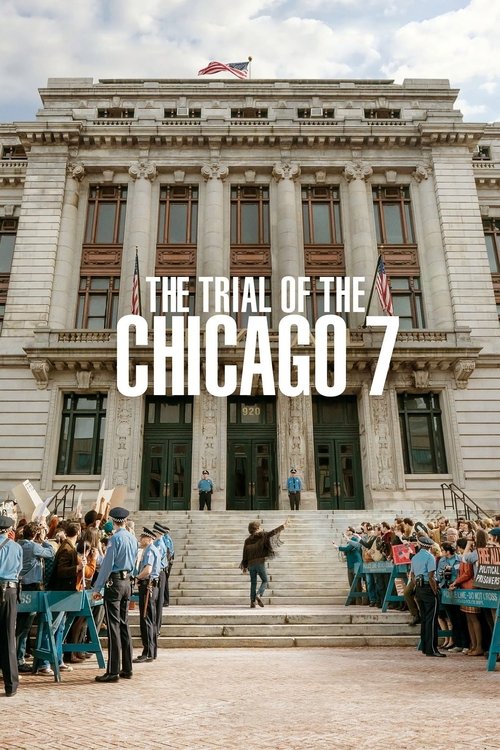
The Trial of the Chicago 7
"In 1968, democracy refused to back down."
Overview
Set against the backdrop of a deeply divided 1960s America, The Trial of the Chicago 7 chronicles the infamous legal battle following the violent clashes between police and anti-Vietnam War protesters at the 1968 Democratic National Convention in Chicago. The Nixon administration, seeking to crush radical dissent, charges a disparate group of activist leaders with conspiracy to cross state lines and incite a riot.
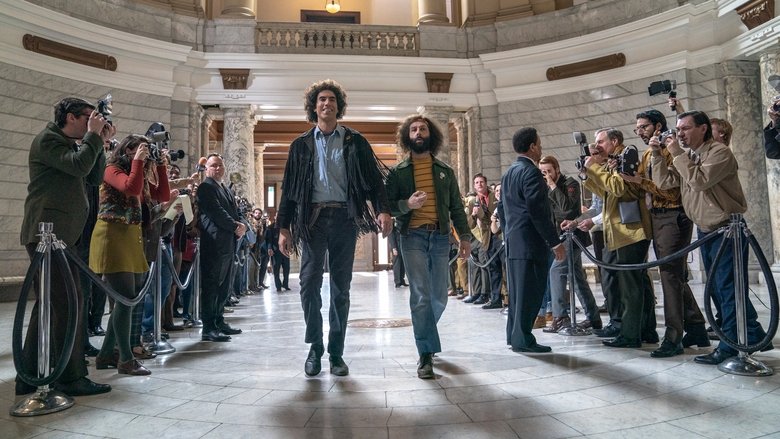
The defendants—who range from pragmatic, clean-cut student leaders to theatrical, anti-establishment Yippies—find themselves lumped together in a politically motivated trial. Inside the courtroom, they face the deeply biased and authoritarian Judge Julius Hoffman, whose overt prejudice turns the proceedings into a chaotic media circus. The defense attorneys struggle to maintain order and fight for a fair trial while the defendants debate the best way to protest a corrupt system.
As the trial drags on, internal ideological conflicts arise among the activists, particularly between the suit-wearing Tom Hayden and the revolutionary Abbie Hoffman. Simultaneously, the horrifying treatment of Black Panther Party chairman Bobby Seale, who is denied legal representation, exposes the deep-seated racism of the American justice system.
Core Meaning
Aaron Sorkin uses the historical trial as a microcosm of the 1960s counterculture and a timeless critique of the systemic suppression of dissent. The core message is that when the state targets its political opponents to make an example of them, the justice system ceases to be objective; as one character notes, a trial initiated for political reasons is inherently a political trial.
The film emphasizes the enduring necessity of protest in a true democracy and exposes the lengths to which corrupt institutions will go to silence voices that threaten the status quo. Ultimately, it asserts that genuine patriotism sometimes requires challenging the very institutions that claim to protect it.
Thematic DNA
InstitutionalCorruptionandJudicialBias
Thefilmmeticulouslyexposesthefragilityofjusticewhenoverseenbyprejudicedindividuals.JudgeHoffman'sblatantfavoritismtowardtheprosecutionandhisweaponizationofcontemptchargesrevealasystemdesignedtoprotecttheestablishmentratherthanupholdthetruth[1.10].
Pragmatism vs. Theatrics in Protest
A central ideological clash occurs between Tom Hayden, who believes in changing the system from within through respectability and electoral politics, and Abbie Hoffman, who believes the system is fundamentally broken and requires a disruptive cultural revolution. The film explores how both approaches have value and flaws.
Systemic Racism and Silencing of Minorities
Through the harrowing subplot of Bobby Seale, the film highlights the distinct, harsher reality faced by Black activists compared to their white counterparts. Seale is thrown into the trial purely to "scare the jury" and is violently silenced when he demands his constitutional rights.
The Right to Dissent
The overarching theme is the fundamental American right to protest. The trial represents the government's attempt to criminalize dissent, while the defendants' ultimate solidarity underscores that resisting an unjust war is a moral imperative.
Character Analysis
Abbie Hoffman
Sacha Baron Cohen
Motivation
To expose the absurdity and corruption of the trial and the American establishment to the public, aiming for a broader cultural revolution.
Character Arc
Abbie initially appears to be a frivolous provocateur using the trial for stand-up comedy and theatrics. As the trial progresses, he reveals a deadly serious intellect and a deep moral core, proving that his disruptive methods are a calculated response to a farcical system [1.9].
Tom Hayden
Eddie Redmayne
Motivation
To end the Vietnam War through legitimate political organization and electoral change.
Character Arc
A clean-cut, serious progressive who tries to play by the rules and despises the Yippies' antics. He eventually realizes the system is rigged against them all and embraces a more radical, defiant stance of solidarity by the film's climax.
Judge Julius Hoffman
Frank Langella
Motivation
To maintain strict, unquestioned order and heavily punish those he deems unpatriotic or a threat to national security.
Character Arc
He remains a static representation of institutional power. However, as he continually loses control of his courtroom to the defendants' defiance, he becomes increasingly vindictive, petty, and exposed in his prejudice.
William Kunstler
Mark Rylance
Motivation
To provide a fair and robust legal defense for his clients despite facing impossible, rigged odds.
Character Arc
A principled, somewhat weary lawyer who starts out believing in the neutrality of the law. As the trial becomes increasingly absurd and biased, he loses his faith in the system, shifting from a polite attorney to an outraged advocate.
Bobby Seale
Yahya Abdul-Mateen II
Motivation
To receive a fair trial with his own chosen legal counsel, refusing to be a passive prop in a racist legal proceeding.
Character Arc
Dragged into a trial he has virtually no connection to, Seale consistently and fiercely demands his constitutional rights. His arc highlights the brutal lengths the state will go to in order to suppress him, culminating in a mistrial for his case.
Symbols & Motifs
Judge Hoffman's Gavel
The gavel symbolizes the weaponization of the law and authoritarian control. It represents the brute force of the establishment disguised as legal procedure [1.10].
Judge Hoffman constantly bangs the gavel to silence the defendants, issue contempt of court charges, and maintain his tyrannical grip over the courtroom, shutting down any legitimate defense.
Bobby Seale's Gag and Chains
A visceral and horrifying symbol of systemic racism, literal oppression, and the silencing of Black voices in America.
After repeatedly demanding his constitutional right to his own lawyer, Seale is taken into an adjacent room, beaten, and returned to the courtroom physically bound and gagged by order of the judge.
The Names of the Fallen Soldiers
They symbolize the true human cost of the Vietnam War, grounding the abstract political theater of the trial in the grim reality of life and death.
Used at the emotional climax of the film, Tom Hayden reads the names of the dead soldiers during his sentencing statement, shifting the focus from the defendants' legal peril to the tragedy of the war they were protesting.
Memorable Quotes
The whole world is watching!
— Crowd / Protesters
Context:
Chanted by the protesters outside the convention and the courthouse as they clash with the police and face the oppressive justice system.
Meaning:
A chilling reminder to the establishment that their heavy-handed, violent tactics are being broadcast globally, shifting the power dynamic from the oppressors to the oppressed through visibility [1.2].
Give me a moment, would you, friend? I've never been on trial for my thoughts before.
— Abbie Hoffman
Context:
Said by Abbie Hoffman while testifying on the stand, when pressed by the prosecutor about his intentions going into Chicago.
Meaning:
A profound encapsulation of the film's core theme. It highlights the unconstitutional nature of the government's case, pointing out that they are prosecuting ideology rather than actual criminal acts.
There are civil trials, and there are criminal trials. There's no such thing as a political trial.
— William Kunstler
Context:
Kunstler says this to Abbie Hoffman early on, to which Abbie scoffs, knowing the system is already weaponized against them.
Meaning:
This quote represents the naive idealism of the legal defense at the beginning of the trial, an illusion that is brutally shattered by the judge's actions as the proceedings unfold.
If blood is going to flow, let it flow all over the city.
— Tom Hayden
Context:
Revealed on a tape recording of Hayden speaking to the crowd after his friend is beaten by police. Abbie later clarifies on the stand that Hayden meant "our blood"—if the police beat them, it should happen in front of everyone.
Meaning:
A notoriously controversial quote that serves as the prosecution's smoking gun. It shows the breaking point of the peaceful protest movement when faced with police brutality.
Martin's dead. Malcolm's dead. Medgar's dead. Bobby's dead. Jesus is dead.
— Bobby Seale
Context:
Spoken by Seale when his friend tries to warn him against going to speak in Chicago due to the danger.
Meaning:
A stark, rhythmic summary of the tragic assassinations of progressive and civil rights leaders, explaining the urgent, militant shift in the Black Panther Party's approach to oppression.
Philosophical Questions
Whatistheboundarybetweenfreespeechandincitingviolence?
Thefilmdelvesdeeplyintothepowerofrhetoric.Itaskswhetherfierylanguageusedbyactivists(likeHayden's"letbloodflow")isanexpressionoffreespeechandfrustration, oradirectcatalystforphysicalviolence, especiallywhenthepolicearealreadyprimedtoattack[1.2].
Can a legal system ever be truly objective when judging political dissent?
By showing a judge who is blatantly aligned with the prosecution and the government's agenda, the film questions the myth of blind justice. It asks whether institutions built by the establishment can ever fairly judge those who seek to dismantle the establishment.
Which is more effective for social change: working within the system or disrupting it?
The constant friction between Hayden (the pragmatist) and Hoffman (the revolutionary) serves as a philosophical debate on the mechanics of change. Must one wear a suit and cut their hair to be taken seriously, or does true change only come from radical, uncompromising defiance?
Alternative Interpretations
The Sorkinization of Radical History: Many leftist critics argue the film offers a highly idealized, liberal interpretation of radical history. By focusing on the courtroom drama and ending with an uplifting, patriotic climax (Hayden reading the names of fallen American soldiers), the film is seen as softening the actual anti-imperialist, revolutionary stances of the real defendants. In reality, the defendants read the names of both American and Vietnamese casualties early in the trial, not as a triumphant finale.
Taking Sides in the Leftist Divide: Another interpretation suggests that Sorkin subtly favors Tom Hayden's electoral pragmatism over Abbie Hoffman's cultural revolution. Despite showing their mutual respect by the end, Sorkin gives Hayden the moral climax, reflecting a moderate liberal bias that working within the system (or at least honoring conventional patriotism) is ultimately superior to tearing the system down.
Cultural Impact
Released in October 2020, The Trial of the Chicago 7 arrived at a boiling point in modern American history, closely following the widespread summer protests against police brutality and systemic racism. The film's depiction of a militarized police force clashing with protesters, and a justice system rigged against minority defendants, struck a profound cultural nerve, drawing stark parallels between the unrest of 1968 and 2020.
Critically, the film was a major success, earning six Academy Award nominations, including Best Picture and Best Supporting Actor for Sacha Baron Cohen. It sparked renewed interest in the history of the radical left, the Vietnam War, and the FBI's COINTELPRO operations. Furthermore, it cemented Aaron Sorkin's reputation for translating dense, historical legal battles into thrilling, fast-paced cinema, influencing discussions on how Hollywood interprets and occasionally sanitizes radical political history for mainstream consumption.
Audience Reception
Audiences overwhelmingly praised the film for its electric pacing, sharp dialogue, and powerhouse ensemble cast. Sacha Baron Cohen's portrayal of Abbie Hoffman and Yahya Abdul-Mateen II's intense performance as Bobby Seale were frequently singled out as highlights. Viewers found the courtroom scenes to be white-knuckle thrill rides that perfectly balanced humor and outrage.
However, the film faced criticism from historians and some audience members for its historical inaccuracies and emotionally manipulative climax. The final scene, where the courtroom stands and cheers as Hayden reads the soldiers' names, was heavily criticized as a "schmaltz fest" that betrayed the true, messier reality of the trial. Despite these critiques, the overall verdict was highly positive, cementing it as one of the standout films of 2020.
Interesting Facts
- AaronSorkinoriginallywrotethescreenplayin2007withStevenSpielbergsettodirect, buttheprojectwasshelvedforoveradecadeduetotheWritersGuildofAmericastrikeandbudgetconcerns[1.5].
- Because of the COVID-19 pandemic shutting down global cinemas, Paramount Pictures sold the distribution rights to Netflix, making it a major streaming release in 2020.
- To authentically portray the physical binding of Bobby Seale, Sorkin chose to feature the gagging scene briefly rather than for the four actual days it lasted in real life, stating he did not want to 'normalize' the horrific image for the audience.
- Sacha Baron Cohen spent months researching Abbie Hoffman, uncovering archives of his speeches to master his specific accent, charisma, and underlying depression.
- Many of the most outrageous and biased statements made by Judge Julius Hoffman in the film were not invented by Sorkin; they were taken verbatim from the actual historical trial transcripts.
Easter Eggs
Police officers removing their name badges before the riot.
A chilling, historically accurate hidden detail highlighting the premeditation of police brutality. The officers removed their badges so they could not be easily identified and held accountable for beating the protesters [1.10].
The inclusion of John Froines and Lee Weiner.
While they are main characters, they frequently comment on their own irrelevance to the trial. In reality, they were widely believed to be indicted merely so the jury would have someone to acquit, making the other convictions look like a compromise. The film nods to this by having them act almost as a Greek chorus.
⚠️ Spoiler Analysis
Click to reveal detailed analysis with spoilers
Frequently Asked Questions
Explore More About This Movie
Dive deeper into specific aspects of the movie with our detailed analysis pages
Comments (0)
No comments yet. Be the first to share your thoughts!