Skip to content
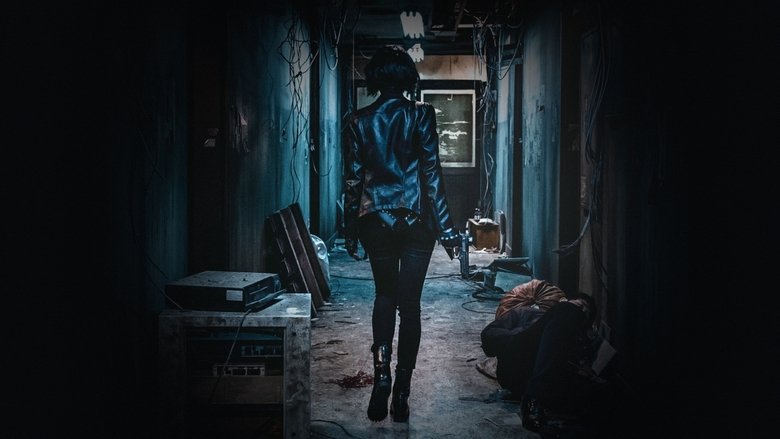
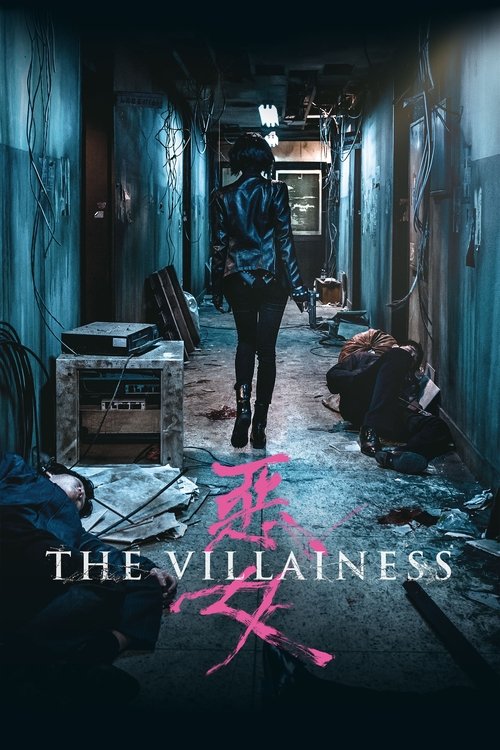
The Villainess
A relentless neo-noir tempest drenched in neon and blood, capturing the heartbreaking anguish of a trapped soul fighting like a caged tiger whose every leap toward light only pulls her deeper into the slaughterhouse.
The Villainess

The Villainess

악녀

"An endless vengeance begins."

08 June 2017 South Korea 129 min 6.9 (788)

Director: Jung Byung-gil

Cast: Kim Ok-vin, Shin Ha-kyun, Sung Joon, Kim Seo-hyung, Cho Eun-ji

Action Thriller The Cycle of Vengeance and Retribution Institutional Control and Exploitation Maternal Instinct and the Quest for Domesticity Identity, Deception, and False Realities Fatalism and the Inevitability of the "Monstrous" Self
Budget: $125,000
Box Office: $8,737,458

Overview

The Villainess (악녀, Angnyeo) is a 2017 South Korean action thriller directed by Jung Byung-gil and starring Kim Ok-vin. The film plunges the viewer into the chaotic life of Sook-hee, an elite assassin forged through extreme violence since her childhood. Following a devastating personal tragedy, Sook-hee embarks on a single-handed rampage against an entire syndicate, an assault that leads to her capture by the South Korean intelligence apparatus.

Rather than executing her, the secretive government agency offers Sook-hee an ultimatum: undergo facial reconstruction, adopt a new identity, and serve as a covert sleeper agent for ten years. In exchange, she is promised a comfortable life and total freedom for herself and her unborn child. Placed in a specialized training facility masquerading as a school for performing arts and culinary crafts, she prepares for her re-entry into civil society under the guise of a stage actress named Chae Yeon.

Once released into the outside world with her young daughter, Sook-hee attempts to embrace a peaceful domestic existence. She attracts the romantic interest of an affectionate neighbor, Hyun-soo, offering a rare glimpse of genuine happiness. However, as past traumas resurface and secret allegiances unspool, the fragile boundary between her domestic illusions and her lethal profession violently collapses, dragging her into a web of deceit.

Core Meaning

Director Jung Byung-gil uses the adrenaline-fueled revenge thriller to examine how vulnerable individuals are dehumanized, manipulated, and molded into weapons by patriarchal and institutional powers. The central meaning is an ironic subversion of its title: Sook-hee is designated as "the villainess" (악녀) by society and the narrative, yet she is fundamentally a victim seeking maternal peace and emotional warmth, forced into monstrous cruelty because every system of trust around her has betrayed her. The film illustrates how cycles of violence consume personal identity until the only autonomy left is the ferocious acceptance of the monstrous role thrust upon oneself.

Thematic DNA

The Cycle of Vengeance and Retribution 30%
Institutional Control and Exploitation 25%
Maternal Instinct and the Quest for Domesticity 20%
Identity, Deception, and False Realities 15%
Fatalism and the Inevitability of the "Monstrous" Self 10%

The Cycle of Vengeance and Retribution

Violence operates as an inescapable loop. From childhood retribution for her father's death to the climactic vendetta, every violent act only spawns another level of bloodshed and misery.

Institutional Control and Exploitation

Whether organized crime syndicates or state intelligence agencies, malevolent hierarchies exploit desperate women, using their bodies, skills, and children as leverage.

Maternal Instinct and the Quest for Domesticity

Sook-hee’s primary motivation is not the thrill of the kill, but safeguarding her daughter and securing ordinary human love, contrasting ruthless carnage with intimate domestic warmth.

Identity, Deception, and False Realities

Sook-hee’s life is repeatedly rewritten—new faces, fake names, and orchestrated relationships (such as her courtship by an undercover agent)—leaving her trapped in hall-of-mirrors deceit.

Fatalism and the Inevitability of the "Monstrous" Self

The tragedy of accepting that once tainted by systemic cruelty, true redemption or peaceful assimilation into normal society becomes virtually impossible.

Character Analysis

Sook-hee / Chae Yeon

Kim Ok-vin

Archetype: Tragic Antihero / Vengeful Mother Key Trait: Unmatched martial lethality and relentless endurance.

Motivation

To protect her child and achieve genuine freedom.

Character Arc

Evolves from an orphaned victim to an elite assassin, attempts a domestic life, and ultimately embraces total ferocity.

Lee Joong-sang

Shin Ha-kyun

Archetype: Corrupt Mentor / False Savior Key Trait: Cold, manipulative charm masking total ruthlessness.

Motivation

Criminal power, greed, and obsessive control.

Character Arc

Introduced as her savior and husband; revealed as her father’s actual murderer and the architect of her suffering.

All 5 characters and cast

Symbols & Motifs

The Mirror and Shattered Glass

Meaning:

Mirrors symbolize the fracturing of identity, the duality between human and killer, and the violent awakening to external reality.

Context:

Seen prominently in the opening perspective shift when Sook-hee’s face is slammed into a mirror and during climactic fights.

The Whistled Melody

Meaning:

Functions as a recurring auditory trigger of trauma, deceit, and lingering vengeance across decades.

Context:

A haunting tune whistled by her father's killer during her childhood and repeated later in the film.

The Wedding Dress and Sniper Rifle

Meaning:

Visualizes the violent contamination of domestic romantic dreams by institutional obligation.

Context:

Featured when Sook-hee is forced to carry out a hit in the middle of her own wedding ceremony.

The Young Daughter (Eun-hye)

Meaning:

Represents Sook-hee’s tether to her humanity, innocence, and her sole reason for enduring endless torment and enslavement.

Context:

Central to Sook-hee's domestic life and her motivation for accepting the government agency's contract.

The Motorcycle and Helmet

Meaning:

Symbolic of high-speed alienation, mechanized lethality, and kinetic escape, where human faces and identities are hidden behind visors.

Context:

Utilized during high-octane chase scenes and sword duels on live roadways.

The Handheld Axe / Hatchet

Meaning:

Sook-hee’s weapon of raw, primal survival, emphasizing visceral, close-quarters brutality over detached gunplay.

Context:

Used by Sook-hee in key moments of lethal retribution and desperate combat, including the final showdown.

Memorable Quotes

내가 누구냐고? 나? 보여줄게... 당신들이 날 어떻게 만들었는지.
— Sook-hee (Kim Ok-vin)

Context

Spoken toward the climax when Sook-hee completely casts aside obedience to her handlers and manipulators.

Meaning

Signals her final descent into full retribution and total rejection of her manipulators.

10년만 일해. 그러면 넌 진짜 자유야. 네 아이와 함께.
— Chief Kwon-sook (Kim Seo-hyung)

Context

Spoken at the agency compound when recruiting Sook-hee as an operative.

Meaning

Illustrates the deceptive golden cage offered by institutional power, bargaining with maternal hope.

All 3 quotes

Philosophical Questions

Can a weapon ever truly become human again?

The film explores whether an individual molded exclusively for slaughter can successfully de-program and assimilate into normal domestic society.

Is institutional benevolence merely sanitized slavery?

It investigates the moral distinction between illegal criminal exploitation and legal state-sanctioned weaponization of human lives.

What is the true cost of complete vengeance?

The film questions if revenge offers catharsis or merely guarantees the complete annihilation of the avenger's own soul and identity.

Alternative Interpretations

The Nihilistic Determinism Reading: Sook-hee never had genuine free will. From the moment her father was killed, her life was a predetermined track crafted by predators and intelligence agencies. Her final deranged smile is the horrific realization of absolute futility.

Full ending explanation

Cultural Impact

South Korean cinema throughout the 2000s and 2010s was dominated by male-centric gangster and revenge noirs (such as Oldboy, I Saw the Devil, The Man from Nowhere). The Villainess was notable as a high-budget, ultra-violent Korean action vehicle entirely anchored by a solo female lead.

Director Chad Stahelski openly cited The Villainess as direct inspiration for the motorcycle sword fight sequence in John Wick: Chapter 3 – Parabellum (2019).

While praised internationally for revolutionizing handheld and fluid action cinematography, domestic and international critics offered more mixed assessments regarding its fractured, melodramatic flashback structure.

Audience Reception

The Villainess received strong praise for its groundbreaking, visceral, and inventive camera work (such as the POV transition, motorcycle duel, and bus chase finale), Kim Ok-vin's intense physical commitment and emotional dedication, and its audacious pacing and adrenaline-soaked set pieces.

Conversely, criticism was directed toward an over-complicated, non-linear plot with disorienting flashback structures, melodramatic subplots that occasionally stall the kinetic momentum, and thin character development for secondary male characters.

Overall, it is regarded as a landmark technical milestone in modern action cinema that influenced the global genre, even if weighed down by melodramatic narrative complexity.

Interesting Facts

  • Kim Ok-vin holds black belts in Hapkido and Taekwondo, enabling her to perform approximately 90% of her own demanding action sequences without stunt doubles.
  • The film received a midnight screening at the 70th Cannes Film Festival in 2017, earning an enthusiastic four-minute standing ovation.
  • Director Jung Byung-gil is an alumnus of the Seoul Action School; before directing feature thrillers, he helmed the acclaimed stunt documentary Action Boys (2008).
  • The Villainess marks the third time lead actors Kim Ok-vin and Shin Ha-kyun starred opposite each other, following Park Chan-wook’s Thirst (2009) and The Front Line (2011).
  • Cinematographer Park Jung-hoon utilized custom hand-rigs, helmet mounts, and low-angle wire cameras to move dynamically between moving vehicles and performers without relying on CGI cuts.
  • The famous motorcycle sword duel was filmed on live roadways using complex camera rigs attached to chasing vehicles, minimizing green screen usage.
  • Director Jung Byung-gil stated that the core inspiration for the movie dated back to when he was 10 years old and watched Luc Besson's La Femme Nikita.

Easter Eggs

La Femme Nikita (1990) Homages

The secret training facility, culinary and acting cover training, bathroom window sniper mission, and assigned husband directly mirror Luc Besson's classic hitwoman film.

Hardcore Henry (2015) & FPS Video Games

The opening continuous five-minute sequence borrows first-person shooter gaming mechanics, transitioning to third-person only when the protagonist hits a mirror.

Kill Bill & Lady Snowblood DNA

The bridal sequence featuring a concealed weapon in a wedding dress recalls Beatrix Kiddo in Quentin Tarantino's Kill Bill and the legendary Japanese revenge archetype Lady Snowblood.

Park Chul-min Cameo

Veteran actor Park Chul-min makes a key cameo appearance as Sook-hee's tragic father, anchoring the central trauma that drives the plot.

Frequently Asked Questions

Explore More About This Movie

Dive deeper into specific aspects of the movie with our detailed analysis pages

Comments (0)

Leave a comment

No comments yet. Be the first to share your thoughts!

Similar Movies