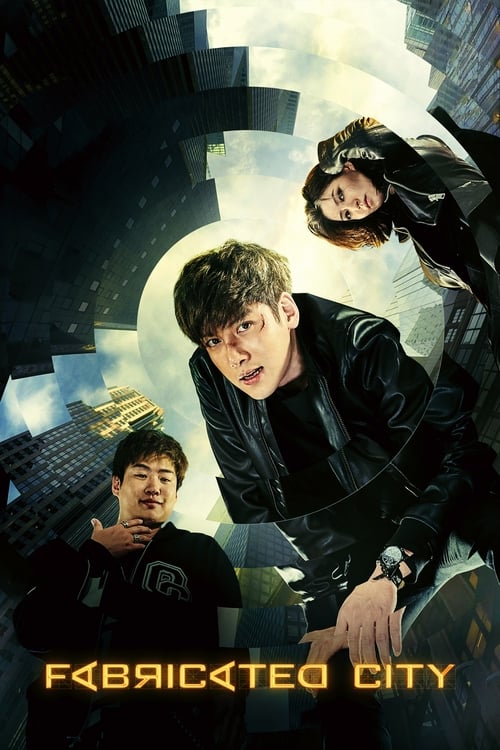
Fabricated City
A visceral high-tech noir where the boundary between digital heroism and grim reality dissolves. Through the lens of a framed gamer, it paints a kinetic portrait of lost souls finding resurrection in a world built on manufactured lies, exploding with game-logic action and unexpected heart.
Fabricated City

Fabricated City

조작된 도시

"Enter virtually. Reset reality."

09 February 2017 South Korea 126 min ⭐ 7.7 (338)
Director: Bae Jong
Cast: Ji Chang-wook, Shim Eun-kyung, Oh Jung-se, Ahn Jae-hong, Kim Sang-ho
Crime Action Thriller
Virtual vs. Reality The Fabrication of Truth Resurrection of the Forgotten Corrupt Authority vs. The Common Man

Overview

Kwon Yoo, a former national Taekwondo champion, lives a double life: an unemployed lounger in the real world and the celebrated leader "Captain" of the elite gaming squad "Resurrection" in the virtual one. His mundane existence shatters when he is framed for the brutal rape and murder of a minor after returning a lost phone. Swiftly convicted by undeniable DNA evidence, he is thrown into a maximum-security prison where he endures hellish torture at the hands of gang leader Ma Deok-su.

Upon receiving news of his mother's suicide, Kwon Yoo executes a daring escape to uncover the truth. He is soon found by his gaming teammate Yeo-wool (Mr. Hairy), a socially reclusive genius hacker who discovers that the evidence against him was fabricated in a mere 3 minutes and 16 seconds. Rallying the rest of their online team—including special effects expert Demolition—into the real world, they expose a terrifying conspiracy led by a shadowy figure who treats the justice system like a customizable operating system.
Core Meaning

At its heart, Fabricated City explores the weaponization of information and the redemptive power of the "useless." Director Bae Jong (Park Kwang-hyun) critiques a society where truth is a commodity sold to the highest bidder, and the marginalized (unemployed, gamers, social outcasts) are viewed as disposable "rotten trees." The film flips this narrative, asserting that these overlooked individuals possess unique skills and distinct moral clarity that can dismantle the fabricated realities constructed by the powerful.

Thematic DNA

Virtual vs. Reality 30%
The Fabrication of Truth 30%
Resurrection of the Forgotten 25%
Corrupt Authority vs. The Common Man 15%

Virtual vs. Reality

The film constantly blurs the line between the game world and the real world. Initially, the game is an escape for Kwon Yoo, but as the plot progresses, the team applies game logic (strategies, roles, vehicular combat) to real-life survival. The visual language reinforces this, treating the prison break and car chases with the hyper-kinetic energy of a First-Person Shooter.

The Fabrication of Truth

Through the antagonist Min Cheon-sang, the film demonstrates how easily reality can be edited. Using a massive Big Data supercomputer, Min orchestrates crimes like a director, planting DNA and editing CCTV footage to create "perfect" narratives, questioning the reliability of the evidence we trust implicitly.

Resurrection of the Forgotten

The team name "Resurrection" is literal and metaphorical. The characters are societal rejects—unemployed, awkward, ignored. The film gives them a second life, transforming their "useless" hobbies (hacking, drone flying, model building) into heroic tools, proving that value exists where society sees none.

Corrupt Authority vs. The Common Man

A classic David vs. Goliath struggle where the "Goliath" is not just a person but a system. The legal and penal systems are depicted as playgrounds for the rich, where a phone call and a wire transfer can rewrite a person's entire history, leaving the common man defenseless without extra-legal solidarity.

Character Analysis

Kwon Yoo (Captain)

Ji Chang-wook

Archetype: The Wronged Hero / The Leader
Key Trait: Tactical brilliance & Indomitable will

Motivation

To clear his name and avenge his mother, whose death was staged as a suicide by the villains.

Character Arc

Starts as a passive, unemployed gamer who only feels worth online. After being stripped of his dignity in prison, he is forced to channel his virtual leadership skills into reality, evolving from a victim into a proactive warrior for justice.

Yeo-wool (Mr. Hairy)

Shim Eun-kyung

Archetype: The Tech Wizard / The Loner
Key Trait: Social anxiety & Hacking genius

Motivation

Loyalty to her "Captain" and a desire to use her hacking skills for a righteous cause.

Character Arc

A recluse with severe social anxiety (communicating initially via phone even when in the same room). She steps out of her comfort zone to trust Kwon Yoo, becoming the brain behind the "Resurrection" team's counter-attack.

Min Cheon-sang

Oh Jung-se

Archetype: The Puppeteer / Wolf in Sheep's Clothing
Key Trait: Maniacal two-faced nature

Motivation

Power, control, and the thrill of rewriting reality like a god.

Character Arc

Introduced as a clumsy, incompetent public defender. He is revealed to be a sadistic mastermind who runs a "fabrication agency" for the elite. His arc is one of unmasking, showing the monster behind the banal façade.

Symbols & Motifs

The Rotten Tree Poem

Meaning:

Symbolizes hidden potential and resilience. It represents Kwon Yoo and his team, whom society has written off.

Context:

Kwon Yoo recites a poem about a "rotten tree" that is actually alive and reaching for the sky. He recites it at the beginning (in game) and at the end (in reality), marking his transition from a virtual hero to a real one.

The Rice Grain

Meaning:

Represents the fragility of truth and the meticulous nature of the frame-up.

Context:

A single grain of rice containing Kwon Yoo's DNA is planted at the crime scene. This microscopic detail destroys his life, highlighting how small, fabricated "facts" can outweigh a larger truth.

The Matiz

Meaning:

Symbolizes the underdog team: small, shabby, and laughed at, but surprisingly capable and resilient.

Context:

The team drives a beat-up, old Daewoo Matiz. Despite its appearance, it outmaneuvers luxury police cars and villains during high-speed chases, mirroring the team's own deceptive competence.

Big Data Screen

Meaning:

The Panopticon; the god-like view of the manipulator who sees and controls all citizens.

Context:

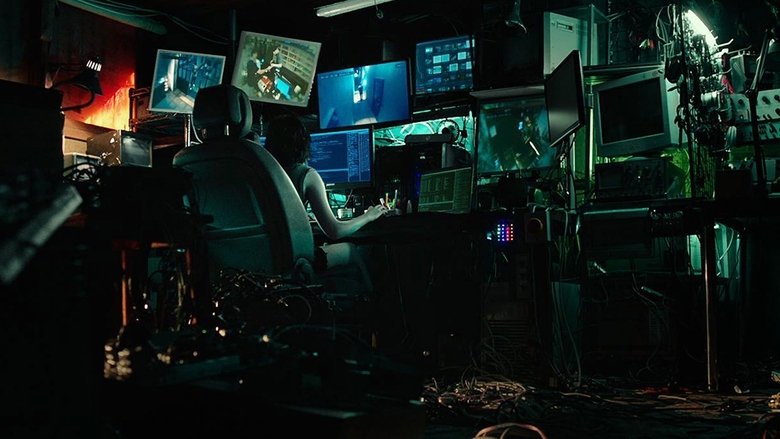
Located in Min Cheon-sang's secret office, the massive touch-screen wall allows him to access any CCTV, phone, or record in Korea, visualizing the terrifying extent of digital surveillance.

Memorable Quotes

People say I'm a rotten tree. But I'm not rotten.

— Kwon Yoo

Context:

Kwon Yoo narrates this via voiceover, first referring to his gaming character, and later as a declaration of his real-world survival.

Meaning:

The film's central mantra. It asserts that value is intrinsic and not defined by social status or employment.

Captain! We are ready.

— Yeo-wool (Mr. Hairy)

Context:

When the team finally assembles in person to help Kwon Yoo, affirming their loyalty despite the danger.

Meaning:

Signifies the moment the virtual alliance becomes a real-world brotherhood.

I edit the story. I decide the ending.

— Min Cheon-sang

Context:

Spoken by Min in his secret command center as he manipulates evidence to frame another victim.

Meaning:

Encapsulates the villain's god complex and the film's theme of narrative control.

Philosophical Questions

Does truth exist if it can be perfectly manufactured?

The film suggests that in a digital age, truth is less about facts and more about who controls the data. It asks viewers to question the "evidence" presented by media and authority, as reality itself becomes editable code.

Is virtual worthlessness equal to real-world worthlessness?

By showing "useless" gamers taking down a powerful syndicate, the film challenges the capitalist metric of human value. It posits that skills and virtues cultivated in the virtual world (loyalty, strategy, coordination) translate to real-world heroism.

Alternative Interpretations

Some critics view the film not just as an action thriller, but as a metaphor for filmmaking itself. Min Cheon-sang represents a tyrannical director who "casts" victims and "edits" the story (evidence) to fit a script. Kwon Yoo's team represents the indie filmmakers or rebellious audience fighting to reclaim the narrative.
Another reading suggests the entire third act retains a "game-like" quality because it is Kwon Yoo's fantasy projection—a way to cope with the trauma of prison—though the text presents it as reality.

Cultural Impact

Fabricated City struck a chord with the younger Korean generation (the "Sampo generation") who feel disenfranchised by unemployment and societal pressure. By heroizing the "loser" gamer demographic, it validated a subculture often looked down upon by traditional Korean society.
Critically, the film was noted for its hybrid genre style—mixing heavy noir elements with comic-book levity—which influenced subsequent webtoon adaptations. While it received mixed reviews for its suspension of logic, it was a box office success, cementing Ji Chang-wook as a bankable action star and praising Director Bae Jong's unique visual flair after his long absence.

Audience Reception

Praised: Audiences widely loved the visual style and the creative action sequences (especially the drone and car chases). Ji Chang-wook's performance was a major highlight, with fans appreciating his emotional range and physical dedication. The chemistry of the "Resurrection" team provided welcome humor.

Criticized: Many viewers found the plot to be implausible and riddled with holes (e.g., the ease of escaping prison, the cartoonish nature of the villain's technology). Some felt the tonal shift from gritty prison drama to lighthearted heist movie was jarring.

Verdict: Generally considered an entertaining, stylish, popcorn-action flick that prioritizes fun and visual flare over narrative logic.

Interesting Facts

  • This was actor Ji Chang-wook's first leading role in a feature film.
  • Director Bae Jong (Park Kwang-hyun) returned to filmmaking after a 12-year hiatus following his hit 'Welcome to Dongmakgol'.
  • The 'rice grain' evidence scene became a topic of discussion for its terrifying depiction of how easily DNA can be planted.
  • The car chase scene involving the Daewoo Matiz was praised for its creativity, specifically the use of driving in reverse to utilize the stronger front engine block as a shield.
  • The film's English title is 'Fabricated City', but the literal translation of the Korean title 'Jojakdoen Doshi' is 'Manipulated City'.
  • Director Bae Jong focused on a unique visual style, using paper arrows in the dark to visualize sound and strategy during action sequences.
  • Ji Chang-wook performed many of his own stunts, leveraging his experience from action dramas like 'The K2' and 'Healer'.

Easter Eggs

Woo Hyun as the Old Prisoner

Veteran actor Woo Hyun plays a deceptively frail prisoner who is actually a serial killer. This casting plays on his frequent comedic roles, subverting audience expectations similarly to the main villain.

Paper Arrows

The visual of paper arrows flying in the dark during the blackout fight is a stylistic nod to the director's background in visual design, representing sound waves and tactical intuition physically.

Game Character Avatars

The characters' in-game avatars visually contrast with their real selves (e.g., the clumsy 'Demolition' is a sniper online), highlighting the theme of escapism and the disparity between digital projection and reality.

⚠️ Spoiler Analysis

Click to reveal detailed analysis with spoilers

Frequently Asked Questions

Explore More About This Movie

Dive deeper into specific aspects of the movie with our detailed analysis pages

Comments (0)

Leave a comment

No comments yet. Be the first to share your thoughts!