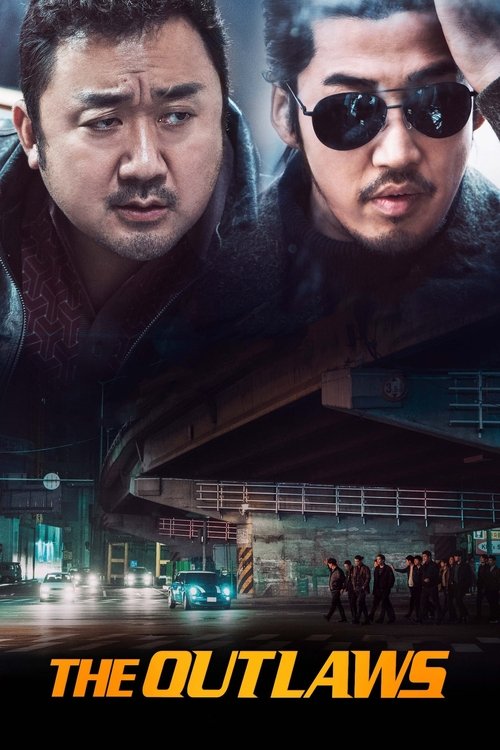
The Outlaws
A visceral crime thriller pulsing with the neon grit of Seoul's back alleys. It juxtaposes the chaotic brutality of a foreign invader against the immovable, iron-fisted justice of a 'beast cop,' creating a kinetic symphony of punches and dark humor.
The Outlaws

The Outlaws

범죄도시

"Kickstarting a plan to mop up the mob in one clean sweep!"

03 October 2017 South Korea 121 min ⭐ 7.7 (505)
Director: Kang Yun-sung
Cast: Don Lee, Yoon Kye-sang, Jo Jae-yun, Choi Gwi-hwa, Lim Hyung-jun
Crime Action Thriller
Justice vs. Power The Necessary Evil Community Solidarity Xenophobia and Integration
Budget: $5,900,000
Box Office: $52,946,454

Overview

Based on real events from 2004 and 2007, The Outlaws chronicles a turf war in the Garibong-dong district of Seoul. The delicate balance between local gangs is shattered by the arrival of Jang Chen, a ruthless loan shark from Harbin, China, who uses extreme violence to seize control of the neighborhood.

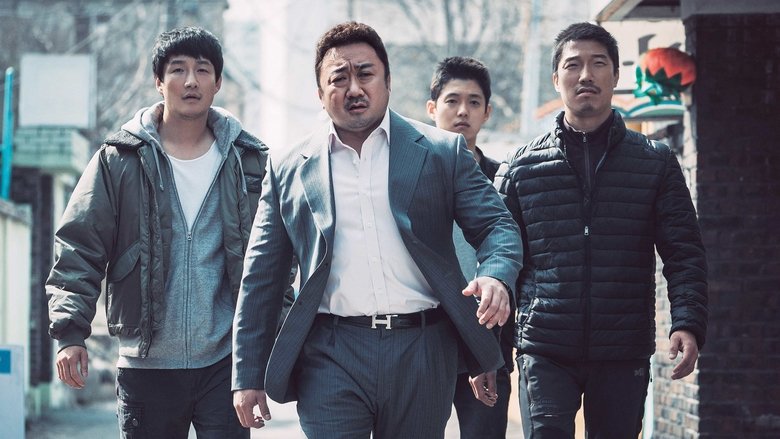
Standing in his way is Ma Seok-do, a physically imposing detective who treats the district like his own backyard. Eschewing standard police procedure for brute force and street diplomacy, Ma must unite the local community and law enforcement to take down Jang Chen's terrifying syndicate before the chaos consumes the entire city.
Core Meaning

At its heart, the film explores the concept of necessary force in the face of lawless cruelty. Director Kang Yun-sung suggests that when civil order is threatened by an entity that respects no rules, true justice requires a protector who is willing to be physically tougher and more fearsome than the criminals he hunts.

Thematic DNA

Justice vs. Power 30%
The Necessary Evil 25%
Community Solidarity 25%
Xenophobia and Integration 20%

Justice vs. Power

The film contrasts Jang Chen's raw, chaotic power—derived from fear and unpredictability—with Ma Seok-do's structured use of force. While Jang Chen exerts power to exploit, Ma uses his immense physical strength to restore balance and protect the vulnerable.

The Necessary Evil

Ma Seok-do operates in a gray area, often using violence, intimidation, and the infamous 'Truth Room' to get results. The film posits that in the gritty reality of the streets, a 'monster cop' is needed to catch monsters, challenging the effectiveness of by-the-book policing against extreme brutality.

Community Solidarity

The residents of Garibong-dong, initially paralyzed by fear, eventually band together to help the police. This theme highlights that true safety comes not just from law enforcement, but from the collective courage of the community to reject violence.

Xenophobia and Integration

The film navigates the tension between local Koreans and Chinese-Korean immigrants (Joseonjok). While it risks stereotyping the 'foreign' gangs as exceptionally savage, it also humanizes the local immigrant community who are the primary victims of Jang Chen's terror.

Character Analysis

Ma Seok-do

Ma Dong-seok (Don Lee)

Archetype: The Beast Cop / Antihero
Key Trait: Overwhelming physical strength mixed with dry humor

Motivation

To protect the peace of his neighborhood and its residents, viewing the district as his personal responsibility.

Character Arc

He starts as a comfortable king of his hill, managing local crime with casual force. Jang Chen's arrival challenges his control, forcing him to escalate his methods and put his life on the line to restore peace to his district.

Jang Chen

Yoon Kye-sang

Archetype: The Ruthless Invader
Key Trait: Cold-blooded unpredictability

Motivation

Money and absolute dominance; he cares nothing for rules, territories, or human life.

Character Arc

A static force of destruction. He arrives, conquers through fear, and continues to escalate his violence until he is physically stopped. He shows no remorse or change, only a hunger for money and dominance.

Wi Sung-rak

Jin Seon-kyu

Archetype: The Savage Henchman
Key Trait: Menacing shaved head and unhinged loyalty

Motivation

Loyalty to Jang Chen and a shared sadism.

Character Arc

Jang Chen's right-hand man, who executes the gang's most brutal orders. His capture becomes a turning point for the police investigation.

Symbols & Motifs

The Truth Room

Meaning:

Symbolizes the extralegal methods Ma employs. It represents a space where the bureaucratic constraints of the law are suspended in favor of immediate, 'street' justice.

Context:

A corner of the police station hidden by a curtain where Ma puts a motorcycle helmet on suspects and beats them to extract confessions without leaving visible marks.

Ma Seok-do's Hands

Meaning:

Represent an immovable object and an unstoppable force. His open-palm slaps and heavy punches act as the ultimate gavel of justice, silencing chaos instantly.

Context:

Used throughout the film to disarm knife-wielding gangsters with a single blow, emphasizing his physical superiority over weapons.

Jang Chen's Axe

Meaning:

Represents indiscriminate brutality and the disruption of order. It is a primitive, messy weapon that contrasts with the detectives' firearms (which they rarely use).

Context:

Wielded by Jang Chen and his henchmen to dismember rivals, creating a visceral sense of horror that escalates the stakes.

The Airport Bathroom

Meaning:

A contained space of final judgment. It strips away the territories and gangs, reducing the conflict to a primal duel between the two alpha males.

Context:

The setting of the climactic final fight where Ma and Jang Chen have their last, brutal confrontation.

Memorable Quotes

Eo, ajik single-iya. (Yeah, I'm still single.)

— Ma Seok-do

Context:

The final confrontation in the airport bathroom just before the fight begins.

Meaning:

A pun on the Korean word 'honja' which can mean 'alone' or 'single'. When Jang Chen asks if he is alone, Ma intentionally misinterprets it as a relationship status, showing his absolute lack of fear.

Do you know who I am?

— Jang Chen

Context:

Used frequently to intimidate victims and rivals, asserting his dominance.

Meaning:

Epitomizes his arrogance and belief that his reputation for violence places him above everyone else, including the law.

Come here.

— Ma Seok-do

Context:

Said to various criminals right before Ma delivers a devastating punch or slap.

Meaning:

A simple command that precedes a beatdown. It strips the criminals of their power, treating them like naughty children about to be disciplined.

Send him to the Truth Room.

— Ma Seok-do

Context:

Spoken in the police station when a suspect refuses to talk, prompting the team to prepare the helmet.

Meaning:

A euphemism for police torture/interrogation. It highlights the film's acceptance of vigilantism within the system.

Philosophical Questions

Is police brutality justified as a 'necessary evil'?

The film glorifies Ma's use of violence and the 'Truth Room' to catch heinous criminals. It asks the audience to condone procedural violations if the result saves lives, challenging the moral rigidity of the justice system.

Does power respect anything other than greater power?

Jang Chen respects no laws or social contracts, only physical dominance. The film posits that diplomacy is ineffective against pure malevolence; only superior force can stop it.

Alternative Interpretations

Some critics view the film as a Modern Western, where the lawless 'outlaws' (Jang Chen) invade a frontier town (Garibong-dong), and the Sheriff (Ma) must use his guns (fists) to restore order. Others interpret Ma Seok-do not as a cop but as a benevolent monster, suggesting that in a world of extreme violence, civil society requires a controlled monster to keep the uncontrolled ones at bay.

Cultural Impact

The Outlaws revitalized the Korean cop-action genre by shifting focus from brooding, noir-style detectives to a charismatic, superhero-like physical force. It launched the massive 'The Roundup' franchise, establishing Ma Seok-do as Korea's answer to Dirty Harry or a Marvel hero. Culturally, it sparked discussions about the representation of Joseonjok (Chinese-Koreans), with some criticizing the negative stereotyping while others praised the film for highlighting the community's victimization. It cemented Ma Dong-seok as a global action icon.

Audience Reception

The film was widely acclaimed by audiences, holding high ratings on portals like Naver and Rotten Tomatoes. Viewers praised the visceral action, Ma Dong-seok's comedic timing, and the terrifying presence of Yoon Kye-sang as the villain. The 'one-punch' takedowns became legendary. Criticism was minor, mostly focused on the excessive gore and the controversial depiction of the Chinese-Korean community, which led to some protests from civic groups.

Interesting Facts

  • The film is based on the real-life 'Heuksapa Incident' in 2007, where police arrested 32 members of a Yanbian criminal organization.
  • This was actor Yoon Kye-sang's first villain role; he was previously known for playing gentle, romantic leads.
  • Ma Dong-seok has stated that becoming a police officer was one of his childhood dreams, which he fulfills through his roles.
  • The film was a surprise sleeper hit, becoming the 3rd highest-grossing domestic film of 2017 in South Korea despite its R-rating.
  • Director Kang Yun-sung and Ma Dong-seok are close friends and planned this film for years before production.
  • The character Ma Seok-do is often compared to Bud Spencer by European audiences due to his 'one-punch' fighting style.
  • Jin Seon-kyu, who played the henchman Wi Sung-rak, won Best Supporting Actor at the Blue Dragon Film Awards for his performance.

Easter Eggs

Cho Jin-woong Cameo

Famous actor Cho Jin-woong makes a surprise appearance as the Chief of the Regional Investigation Unit, adding star power and a nod to the shared universe of Korean crime thrillers.

The 'Truth Room' Helmet

The motorcycle helmet used in the 'Truth Room' has become an iconic prop, referenced in sequels and fan culture as a symbol of Ma's 'manual' investigation techniques.

Ma Seok-do's Name

The character's name is phonetically very similar to the actor's name (Ma Dong-seok), blurring the line between the actor's persona and the character.

⚠️ Spoiler Analysis

Click to reveal detailed analysis with spoilers

Frequently Asked Questions

Explore More About This Movie

Dive deeper into specific aspects of the movie with our detailed analysis pages

Comments (0)

Leave a comment

No comments yet. Be the first to share your thoughts!