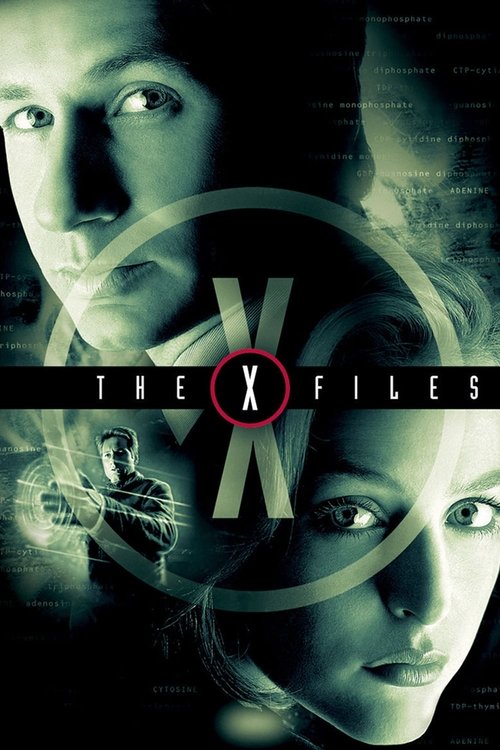
The X-Files
"The truth is out there."
Overview
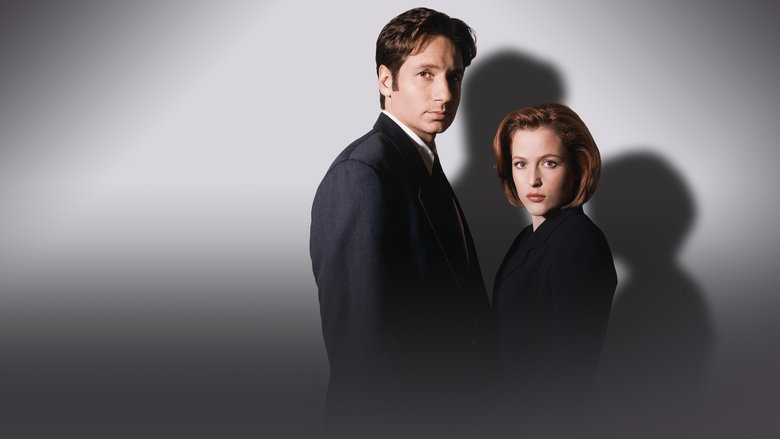
The X-Files follows FBI Special Agents Fox Mulder and Dana Scully as they investigate unsolved cases involving paranormal phenomena. Mulder, a brilliant profiler and conspiracy theorist, is driven by the childhood abduction of his sister to uncover the truth about extraterrestrial life. Scully, a medical doctor and skeptic, is initially assigned to debunk his work but becomes his fiercest ally. Together, they navigate a labyrinth of government cover-ups, genetic experiments, and monsters hidden in plain sight.
The series balances stand-alone "Monster of the Week" episodes with a complex, overarching "mythology" (mytharc) concerning a shadow organization known as the Syndicate and their collaboration with alien colonists. As the series progresses, the agents face personal tragedies, professional exile, and a shifting global conspiracy that threatens humanity's future. Later seasons introduce Agents Doggett and Reyes as the torch is passed, leading to a revival that questions the very nature of the conspiracies Mulder fought to expose.

Core Meaning
At its heart, The X-Files is a meditation on the necessity of the search for truth in a world designed to obscure it. It posits that belief and skepticism are not opposites but necessary partners in navigating a chaotic universe. The show suggests that while institutions may be corrupt and the cosmos indifferent, the human connection—specifically the trust between two people—is the only sanctuary against the darkness.
Thematic DNA
Trust vs. Institutional Paranoia
The series is deeply rooted in post-Watergate cynicism, portraying the government not as a protector but as a malevolent force hoarding knowledge. The slogan "Trust No One" encapsulates the isolation of the protagonists, who can rely only on each other while navigating a web of surveillance, lies, and shadow governments (The Syndicate).
Faith vs. Science
Represented by the Mulder-Scully dynamic, this theme explores the tension between empirical evidence and intuitive belief. The show does not declare a winner; instead, it evolves to show that science requires the imagination to ask questions, and faith requires the rigor to test them. Scully's Catholicism and Mulder's blind faith in the paranormal often overlap and invert.
The Monstrosity of Humanity
While the show features aliens and mutants, the true horror often stems from human actions—eugenics, greed, and the banality of evil. Episodes like "Home" or the Syndicate's bargaining with colonists reveal that humans are often more monstrous than the creatures they hunt.
The Elusive Nature of Truth
The truth is portrayed as a shifting, subjective target. Facts are manipulated, memories are implanted, and evidence is destroyed. The series suggests that absolute truth may be unattainable, but the struggle to find it is what gives life meaning.
Character Analysis
Fox Mulder
David Duchovny
Motivation
To find his sister, Samantha, and to expose the government conspiracy concealing extraterrestrial existence.
Character Arc
Mulder begins as a driven, obsessive agent defined by his sister's abduction. Over the seasons, he moves from a naive crusader to a weary, disillusioned exile. He eventually finds that the specific truth of his sister is less important than the truth he finds in his connection with Scully. In the revival, he struggles with the realization that he may have been manipulated by the very conspiracies he fought.
Dana Scully
Gillian Anderson
Motivation
To apply science and justice to the unexplained, and later, to protect Mulder and their son.
Character Arc
Scully starts as a rigid rationalist sent to debunk Mulder. Her journey is one of the most profound in TV history, transforming from a skeptic into a "reluctant believer" who has seen too much to deny. She endures abduction, cancer, and the miraculous birth of her son, William, eventually becoming the one who must push Mulder to keep believing when he falters.
Walter Skinner
Mitch Pileggi
Motivation
To maintain order and integrity within the FBI while protecting his agents from the forces that want them dead.
Character Arc
Initially an antagonist representing FBI red tape, Skinner evolves into the agents' most loyal ally. He constantly balances his duty to the Bureau with his moral obligation to Mulder and Scully, often risking his career and life to protect them from the Syndicate.
Cigarette Smoking Man (C.G.B. Spender)
William B. Davis
Motivation
To manage the survival of the human race (on his terms) by collaborating with the alien colonists.
Character Arc
The personification of the conspiracy. He evolves from a silent observer to a complex villain who believes his terrible actions are necessary to save humanity (or himself) from alien colonization. He is revealed to have deep personal ties to Mulder and later plays a pivotal role in the apocalypse narrative of the revival.
Symbols & Motifs
The "X" Tape
A symbol of defiance and a beacon for contact. It represents Mulder's refusal to give up and his method of signaling his mysterious informants.
Mulder places masking tape in the shape of an "X" on his apartment window to signal his informant, "Mr. X," or to request a meeting with deep-throat sources.
Flashlights in the Dark
A visual metaphor for the agents' attempt to illuminate the truth in a world of overwhelming darkness and obscurity.
Used in almost every episode, the crossing beams of Mulder and Scully's high-powered flashlights cutting through fog and darkness became the show's most iconic visual signature.
Scully's Cross Necklace
Represents Scully's connection to her faith, her family, and her humanity, serving as a grounding anchor against the scientific horrors she witnesses.
Scully wears it consistently; it becomes a plot point in her abduction arc and a token Mulder holds onto when she is in danger or comatose.
Sunflower Seeds
Symbolizes Mulder's non-conformity and his connection to his father (who also ate them). It's a grounding habit for his restless mind.
Mulder is frequently seen cracking sunflower seeds, and their presence at a crime scene or office often indicates his presence.
The Cigarette
Represents the cancerous corruption of the government and the calm, banal face of evil.
The primary antagonist is known simply as the "Cigarette Smoking Man" (CSM), often seen silently smoking Morley cigarettes while observing from the shadows or destroying evidence.
Memorable Quotes
The Truth Is Out There.
— Tagline
Context:
Appears at the end of the opening credits in almost every episode.
Meaning:
The central philosophy of the show, suggesting that answers exist but are external, hidden, and require a journey to find.
I want to believe.
— Poster slogan
Context:
Printed on a poster of a UFO in Mulder's office; a mantra for the character throughout the series.
Meaning:
Summarizes Mulder's struggle: belief is not a given state but an active desire and a choice he makes despite lack of proof.
Trust no one.
— Deep Throat
Context:
Spoken by Mulder's first informant, Deep Throat, in the Season 1 finale "The Erlenmeyer Flask".
Meaning:
The survival rule of the series. It highlights the paranoia and the reality that anyone could be part of the conspiracy.
Deny everything.
— Tagline / Deep Throat
Context:
Often associated with the show's marketing and the methodology of the Syndicate.
Meaning:
Reflects the government's strategy of plausible deniability and disinformation.
You're my one in five billion.
— Fox Mulder
Context:
Spoken by Mulder to Scully in Season 5, Episode 19 "Folie à Deux", affirming she is the only person he trusts.
Meaning:
A declaration of love and the unique bond between the partners. It elevates Scully above his obsession with the truth/aliens.
Episode Highlights
Pilot
Scully is assigned to the X-Files to debunk Mulder. They investigate abductions in Oregon. Key moment: Mulder tells Scully about his sister, establishing his motivation and their dynamic.
Establishes the premise, the characters' opposing worldviews, and the visual tone of the series.
Clyde Bruckman's Final Repose
The agents hunt a killer with the help of a reluctant psychic (Peter Boyle) who can see how people die. It balances dark humor with profound melancholy.
Widely considered one of the best standalone episodes; it won an Emmy for writing and acting, showcasing the show's ability to blend genre and drama.
Home
Mulder and Scully investigate a baby buried alive in a small town, leading them to the incestuous, feral Peacock family. It is visceral, disturbing, and famously the first TV episode to receive a TV-MA rating.
Demonstrates the show's capacity for genuine horror and social commentary on the dark underbelly of the American dream.
Memento Mori
Scully is diagnosed with cancer. Mulder breaks into a high-security facility to find a cure, discovering the disease is connected to her abduction. The episode focuses on their emotional bond.
A pivotal character episode that deepens the stakes of the mythology, moving it from abstract aliens to personal tragedy.
Bad Blood
A comedic episode told in Rashomon style where Mulder and Scully recount different versions of a vampire investigation to Skinner. Highlights their biases and how they view each other.
A fan favorite that showcases the chemistry between the leads and the show's ability to parody itself.
One Son
The conclusion of a major mythology arc where the Syndicate is destroyed by alien rebels. We learn the history of the conspiracy and the deal made to save their families.
Effectively ends the original conspiracy storyline, forcing the show to pivot to new mysteries in later seasons.
Philosophical Questions
Is the truth worth the cost of knowing it?
Mulder sacrifices his career, family, and safety for the Truth. The show constantly asks if exposing the conspiracy helps humanity or merely destroys the lives of the whistleblowers.
Can faith and science coexist?
Through Scully, the show explores how a rigorous scientific mind reconciles with the unexplainable. It suggests that true science must remain open to the impossible, effectively blurring the line between the laboratory and the church.
Alternative Interpretations
The Psychological Reading: Some critics argue that the aliens are metaphors for suppressed trauma. Mulder's search for his sister is a refusal to accept her random death, inventing a cosmic conspiracy to give it meaning. Scully's skepticism is a defense mechanism against a chaotic world.
The Religious Allegory: Mulder can be seen as a gnostic seeker of hidden knowledge (gnosis), while Scully represents the orthodox church structure (faith + rules). The "truth" they seek is spiritual enlightenment or God, hidden by the "demons" of the Syndicate.
The Ending Ambiguity: The revival ending (Season 11) is controversial. Some interpret the revelation about William's parentage as a final violation of Scully by the Smoking Man, solidifying him as the ultimate patriarch to be defeated. Others view the final scene not as a happy ending, but as the agents accepting that the "Truth" is unknowable, and finding solace only in their biological creation (the new baby).
Cultural Impact
The X-Files is a touchstone of 1990s culture, bridging the gap between cult sci-fi and mainstream prestige drama. It popularized the concept of the "mytharc" (serialized storytelling) alongside episodic television, paving the way for shows like Lost and Fringe. Culturally, it tapped into and amplified the pre-millennial anxiety and distrust of government following the Cold War.
The "Scully Effect" significantly impacted real-world gender roles in science. The intense chemistry between the leads popularized the term "shipping" (derived from 'relationship') in internet fandom. Critics praised the first five seasons as some of the best television ever made, though the reception cooled during the later seasons and the 2016/2018 revivals. Its legacy remains that of a genre-defining mood piece that made paranoia stylish.
Audience Reception
Seasons 1-5: Universally acclaimed. Viewed as groundbreaking, atmospheric, and essential viewing. The "Golden Age" of the show.
Season 6: Well-received but noted for being lighter, more comedic, and sunnier due to the move to Los Angeles.
Seasons 7-9: Mixed reception. Fans criticized the lack of direction in the mythology, the reduced role of Mulder (Duchovny), and the introduction of Doggett and Reyes, though Doggett has since gained a cult appreciation. The original finale was seen as disappointing.
Revival (Seasons 10-11): Highly divisive. While fans enjoyed seeing the actors together, the writing (especially the mythology episodes written by Chris Carter) was heavily criticized for being convoluted and retconning established plot points. The "Monster of the Week" episodes in the revival fared much better with critics.
Interesting Facts
- The famous whistle in the theme song was an accidental echo effect on the composer's synthesizer.
- Gillian Anderson is 5'2" and often had to stand on a specially made box, dubbed the "Gilly Board," to be in the same frame as the 6-foot David Duchovny.
- The character of Dana Scully inspired the "Scully Effect," a phenomenon where a generation of women entered STEM, medicine, and law enforcement careers because of her influence.
- The show filmed in Vancouver for the first five seasons to capture the moody, overcast "Pacific Northwest" look, before moving to Los Angeles in Season 6 at Duchovny's request.
- The phone number for Mulder's cell phone in early seasons was actually the production designer's number, leading to many fan calls.
- Chris Carter's birthday, October 13 (10/13), appears frequently as a time, date, or code throughout the series, and is the name of his production company (Ten Thirteen).
Easter Eggs
Leyla Harrison
In Season 8, a character named Leyla Harrison is introduced. She was named after a prolific fanfiction writer and internet fan who passed away from cancer.
10:13
Clocks frequently read 10:13, and apartment numbers or codes often use these digits. It is a reference to creator Chris Carter's birthday (October 13).
Kim Manners' Headstone
In the revival (Season 10), Mulder visits a cemetery. A tombstone reads "Kim Manners" with the epitaph "Kick it in the ass." Manners was a longtime director/producer of the show who died in 2009; the phrase was his catchphrase.
Morley Cigarettes
The fictional brand smoked by the Cigarette Smoking Man. It is a nod to the film Psycho and has become a standard prop in Hollywood for a generic cigarette brand.
⚠️ Spoiler Analysis
Click to reveal detailed analysis with spoilers
Frequently Asked Questions
Explore More About This Movie
Dive deeper into specific aspects of the movie with our detailed analysis pages
Comments (0)
No comments yet. Be the first to share your thoughts!