Life
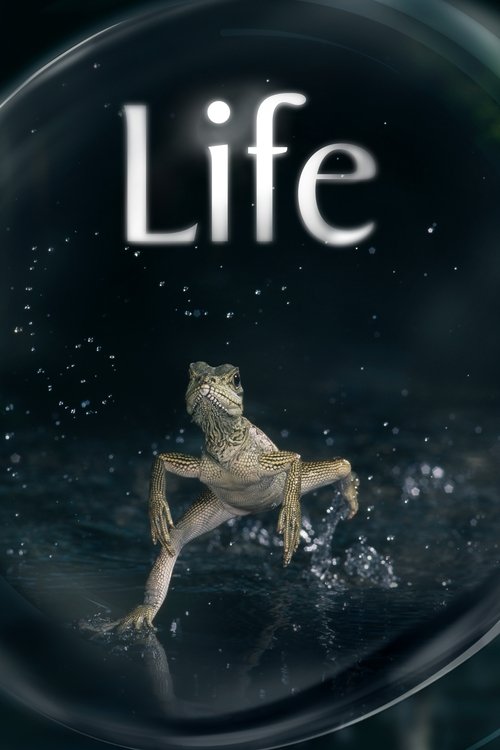
A breathtaking cinematic journey into the extreme strategies living things use to stay alive. From the microscopic to the massive, it captures the relentless drama of survival with stunning high-definition intimacy.
Life

Life

"Four years, 3000 filming days, ten part blockbuster."

11 October 2009 — 13 December 2009 United Kingdom 1 season 10 episode Ended ⭐ 8.4 (383)
Cast: David Attenborough, Oprah Winfrey
Documentary
The Struggle for Existence Parental Sacrifice Innovation and Adaptation

Overview

Life is a landmark ten-part nature documentary series from the BBC Natural History Unit that offers a global view of the specialized strategies and extreme behaviors that living things have developed in order to survive. Narrated by David Attenborough (UK) and Oprah Winfrey (US), the series is structured around the Darwinian concept of "the struggle for existence." Each episode focuses on a specific animal group—such as reptiles, mammals, fish, birds, and insects—or a specific challenge, exploring the lengths to which they go to feed, reproduce, and escape predation.

Filmed over four years across every continent, the series was the first blue-chip natural history production commissioned in high definition. It utilizes cutting-edge camera technologies, including high-speed cameras capable of 8,000 frames per second and the "Yogi" cam for tracking shots, to reveal behaviors never before seen on screen. From the heat run of humpback whales to the minute details of insect warfare, Life combines scientific rigor with cinematic storytelling to document the ingenuity of the natural world.
Core Meaning

The core meaning of Life is a celebration of the extraordinary tenacity and diversity of life on Earth. It illustrates that the "struggle for existence" is not just about brute strength, but about adaptation, intelligence, and extreme specialization. The series emphasizes that every organism, from the smallest plant to the largest whale, is the protagonist of its own epic story, driven by the universal imperative to survive long enough to pass on its genes.

Thematic DNA

The Struggle for Existence 40%
Parental Sacrifice 30%
Innovation and Adaptation 30%

The Struggle for Existence

This is the central thesis of the series, explicitly referenced from Charles Darwin. Every episode underscores the constant, high-stakes battle animals face against the elements, predators, and rivals. Whether it's a pebble toad bouncing down a cliff to escape a tarantula or a cheetah coalition hunting an ostrich, the show posits that life is a perpetual challenge where failure often means death.

Parental Sacrifice

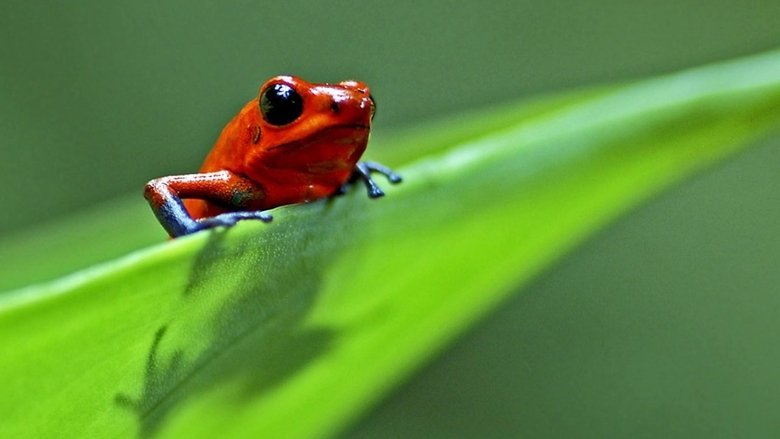
A recurring emotional thread is the extreme lengths parents go to for their offspring. The series highlights the Giant Pacific Octopus starving herself to death to protect her eggs and the Strawberry Poison-Dart Frog carrying her tadpoles one by one into the canopy. These narratives humanize the subjects and highlight reproduction as the ultimate goal of survival.

Innovation and Adaptation

The series focuses heavily on unique, often bizarre evolutionary adaptations. It moves beyond standard hunting scenes to show "extreme" behaviors: fish that fly, lizards that run on water, and monkeys that use tools. It suggests that evolution solves problems in infinite, often surprising ways.

Character Analysis

Strawberry Poison-Dart Frog

N/A (Animal Subject)

Archetype: The Devoted Mother
Key Trait: Maternal Dedication

Motivation

To successfully rear her offspring in a predator-free environment, despite the immense physical toll of the climb.

Character Arc

A tiny mother facing a monumental task. She must carry each of her six tadpoles individually from the forest floor to water-filled bromeliads high in the canopy. Her arc is one of endurance and tireless repetition to ensure the next generation's survival.

Cheetah Brothers

N/A (Animal Subject)

Archetype: The Strategic Hunters
Key Trait: Cooperation

Motivation

To secure a meal that a solitary hunter could never manage, proving that teamwork aids survival.

Character Arc

Three brothers form a coalition, breaking the solitary norm of their species to take down prey much larger than themselves. Their arc demonstrates the power of cooperation, culminating in the successful takedown of an ostrich.

Komodo Dragon

N/A (Animal Subject)

Archetype: The Patient Assassin
Key Trait: Patience

Motivation

To obtain a massive food source with minimal energy expenditure by utilizing biological weaponry (venom).

Character Arc

portrayed as a remnant of the dinosaur age. The dragon bites a water buffalo and then simply waits for weeks. Its arc is slow and inevitable, following the prey until the venom and infection take hold, showing a grim, energy-efficient dominance.

Giant Pacific Octopus

N/A (Animal Subject)

Archetype: The Tragic Heroine
Key Trait: Self-Sacrifice

Motivation

To ensure her single brood survives to hatching, sacrificing her own life in the process.

Character Arc

She dedicates the end of her life to a single clutch of eggs. She guards them for months without eating, gently tending to them until they hatch, at which point she dies of starvation. Her death is the direct cost of her children's life.

Symbols & Motifs

The Pebble Toad

Meaning:

It symbolizes resilience and the use of passive defense mechanisms. Its ungraceful fall is a victory, not a defeat.

Context:

In the "Reptiles and Amphibians" episode, a tiny toad curls into a ball and bounces down a jagged cliff face to escape a tarantula, surviving the fall unharmed.

The Venus Flytrap

Meaning:

Represents the blurring of lines between predator and plant, and the active nature of flora.

Context:

Used in the "Plants" episode (and the opening montage) to show that plants are not passive scenery but aggressive hunters in their own right.

The Mud Ring

Meaning:

Symbolizes intelligence, culture, and learned behavior in animals.

Context:

Bottlenose dolphins in Florida are shown creating rings of mud to trap fish—a learned technique passed down through generations, highlighting animal ingenuity.

The Humpback Heat Run

Meaning:

Represents the sheer physical cost of reproduction and male competition.

Context:

A chaotic, violent race where multiple male whales batter each other for the chance to mate with a single female, showing the "battle" aspect of nature.

Memorable Quotes

Our planet may be home to 30 million different kinds of animals and plants, each individual locked in its own lifelong fight for survival.

— David Attenborough (Narrator)

Context:

Spoken during the opening sequence of Episode 1, "Challenges of Life," over a montage of dramatic animal behaviors.

Meaning:

The opening thesis of the series, setting the scale of biodiversity and the universal theme of struggle that connects all living things.

Everywhere you look, on land or in the ocean, there are extraordinary examples of the lengths living things go to to stay alive.

— David Attenborough (Narrator)

Context:

Introduction to the series, framing the diverse and often bizarre adaptations the viewer is about to see.

Meaning:

Emphasizes the central premise of the show: that survival pushes evolution to extremes.

This is the last place on Earth still ruled by reptiles.

— David Attenborough (Narrator)

Context:

Introduction to the Komodo dragon segment in the "Reptiles and Amphibians" episode.

Meaning:

Highlights the prehistoric, almost mythical nature of the Komodo dragon and its island habitat.

It is the biggest battle on Earth.

— David Attenborough (Narrator)

Context:

During the sequence in "Mammals" where male whales collide and fight for a female.

Meaning:

Describes the sheer scale and violence of the Humpback Whale 'heat run', contrasting the gentle giant image with brutal competition.

Episode Highlights

Challenges of Life

S1E1

The series opener establishes the high stakes of survival. Key moments include the Cheetah coalition hunting an ostrich and the Bottlenose dolphins using mud rings to trap fish. It also features the Strawberry Poison-Dart Frog's epic climb.

Significance:

Sets the tone for the series by showcasing a variety of classes (mammals, amphibians, fish) and introducing the central theme of extreme behavior and innovation.

Reptiles and Amphibians

S1E2

Famous for the Pebble Toad bounce and the Basilisk Lizard running on water. The centerpiece is the grueling, slow-motion hunt of the Komodo dragon taking down a buffalo.

Significance:

Challenges the perception of these animals as primitive, showing them as highly sophisticated survival machines with unique adaptations.

Mammals

S1E3

Highlights include the massive Humpback Whale heat run and the migration of the Straw-coloured fruit bats. Also features the emotional story of an elephant matriarch guiding her herd.

Significance:

Focuses on intelligence, family bonds, and social complexity as the key factors in mammalian success.

Fish

S1E4

Utilizes high-speed photography to show Flying Fish gliding and Sailfish hunting. It also reveals the bizarre territorial disputes of the Sarcastic Fringehead.

Significance:

Demonstrates that the underwater world is just as complex and competitive as the land, with fish displaying surprising agility and territorial behavior.

Birds

S1E5

Features the visually stunning courtship of the Marvelous Spatuletail hummingbird and the complex bower building of the Vogelkop Bowerbird.

Significance:

Showcases the role of sexual selection in evolution, where beauty and display are as critical to survival (genetically) as finding food.

Insects

S1E6

Uses macro photography to reveal the brutal wars of Japanese Red Bugs and the chemical warfare of Bombardier Beetles.

Significance:

Reveals the hidden, alien world of the small, proving that insects possess arguably the most diverse and extreme weaponry in nature.

Philosophical Questions

Does the struggle for survival justify the cruelty of nature?

The series unflinchingly shows predation and suffering (e.g., the buffalo slowly dying from Komodo venom, the baby seal snatched by the orca). It asks the viewer to accept these events not as 'evil' but as necessary mechanics of a functioning ecosystem, challenging human morality when applied to nature.

Is parenting the ultimate act of altruism or selfishness?

Through examples like the Giant Pacific Octopus, the series explores the 'selfish gene' theory. The mother sacrifices her life, which looks like altruism, but it is biologically driven by the imperative to pass on her own genetic material. It questions whether 'love' in nature is a distinct emotion or a survival strategy.

Alternative Interpretations

While primarily a factual documentary, Life can be interpreted as a dramatic tragedy/comedy where individual animals are cast as characters in a play. Critics have noted that the editing imposes human narrative structures (the 'hero's journey') onto chaotic nature.

Another interpretation focuses on the technological gaze: the series is as much about the ability to see (through macro and slow-mo) as it is about what is seen. It suggests that nature is only truly understood when time is manipulated (slowed down or sped up) by human technology, implying that 'real' time hides the true complexity of life.

Cultural Impact

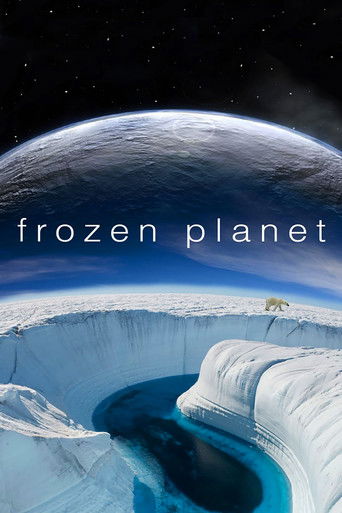
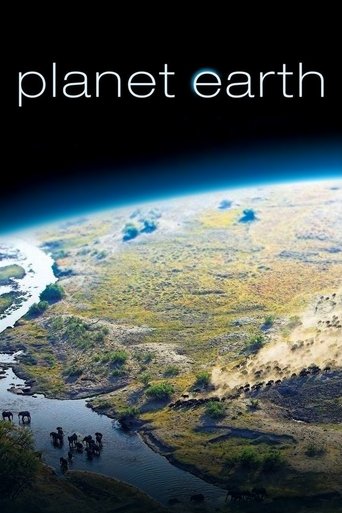
Life was a significant milestone in nature documentaries, bridging the gap between the cinematic grandeur of Planet Earth (2006) and later narrative-driven series. Culturally, it is best known for pushing the boundaries of high-definition and high-speed photography, giving audiences their first slow-motion look at behaviors like the basilisk lizard's run.

The series generated a notable trans-Atlantic divide regarding its narration. While the UK version with David Attenborough was universally acclaimed, the US version narrated by Oprah Winfrey received mixed-to-negative reviews from critics and fans who felt her delivery was overly dramatic or lacked the scientific authority of Attenborough. Despite this, the series was a global success, winning a Primetime Emmy for Cinematography and influencing the visual language of future documentaries by proving that 'small' subjects (insects, frogs) could be filmed with the same epic scope as big cats.

Audience Reception

Life holds a very high rating among audiences (typically over 9/10 on aggregators). The visuals were universally praised as groundbreaking, particularly the macro and slow-motion sequences.

However, the narration remains the single biggest point of division. The UK audience and international viewers of the Attenborough version praise the script's wit and authority. In contrast, the US audience reception was polarized; many viewers expressed frustration with the Discovery Channel's decision to replace Attenborough with Oprah Winfrey, feeling her tone was condescending ('Disney-fied') and that the script was dumbed down. Despite this, the show is regarded as a classic of the genre, sitting comfortably alongside Planet Earth and Blue Planet.

Interesting Facts

  • The series took four years to make and involved approximately 3,000 filming days.
  • High-speed cameras capable of shooting 8,000 frames per second were used to capture the 'Jesus Christ Lizard' running on water and flying fish in slow motion.
  • The crew used a specialized 'Yogi' cam, a gyro-stabilized camera, to track alongside migrating reindeer and elephants smoothly.
  • The sequence of the Komodo dragon hunting the water buffalo was the first time such a complete predation cycle was filmed, confirming the use of venom.
  • The time-lapse of the oak woodland in the 'Plants' episode was actually filmed in a studio over two years, with the set built to replicate a real Devon wood.
  • In the US broadcast, the narration by David Attenborough was replaced by Oprah Winfrey, which caused significant controversy among purist fans.
  • The series was the first BBC natural history production to be commissioned entirely in high definition.

Easter Eggs

Life on Location

At the end of each episode, the 'Life on Location' segment breaks the fourth wall, showing the camera crews, their hardships, and the technology used. It reveals the human struggle paralleling the animal struggle.

Vogelkop Bowerbird Footage

The footage of the Vogelkop Bowerbird's courtship was a major triumph, capturing a behavior rarely seen, and is often cited as one of the most charming sequences in natural history filmmaking.

⚠️ Spoiler Analysis

Click to reveal detailed analysis with spoilers

Frequently Asked Questions

Explore More About This Movie

Dive deeper into specific aspects of the movie with our detailed analysis pages

Comments (0)

Leave a comment

No comments yet. Be the first to share your thoughts!