Skip to content
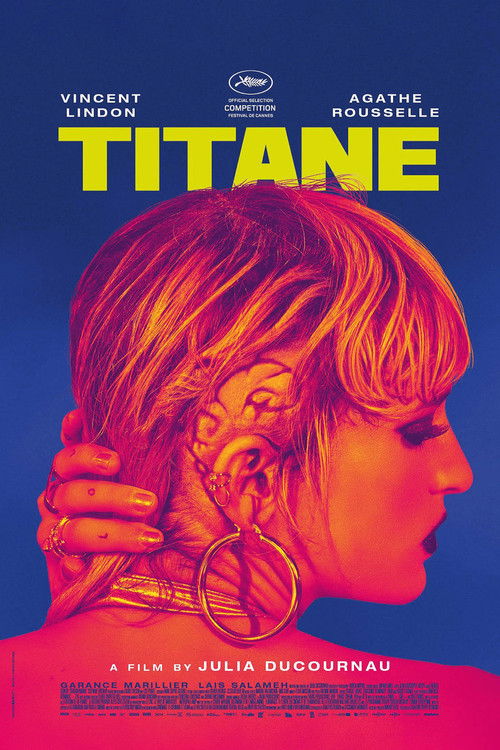
Titane
A ferocious body-horror fever dream fueled by diesel and raw grief, where jagged titanium wounds give way to the tender, redemptive pulse of found family beneath neon-drenched chrome.
Titane

Titane

14 July 2021 Belgium 108 min 6.3 (1,735)

Director: Julia Ducournau

Cast: Vincent Lindon, Agathe Rousselle, Garance Marillier, Laïs Salameh, Mara Cissé

Drama Thriller Horror Metamorphosis, Gender Fluidity & Queer Identity Chosen Family vs. Biological Kinship Body Horror, Aging & Bodily Autonomy The Synthesis of Flesh and Machine / Techno-Body
Budget: $6,600,000
Box Office: $4,982,335

Overview

Titane follows Alexia, a young woman who survived a catastrophic childhood car crash that left her with a titanium plate surgically embedded in her skull. As an adult, she works as a motor-show dancer, harboring an intense, psychosexual obsession with automobiles and an unhinged, violent impulse toward anyone who attempts to breach her personal space.

When a series of increasingly brutal and unhinged murders leaves her on the run from the authorities, Alexia is forced to undergo an extreme physical transformation to mask her identity. She adopts the persona of Adrien Legrand, a boy who went missing ten years earlier, throwing herself into the path of Adrien's grief-stricken father, Vincent, a firefighting captain desperately clinging to the hope of reclaiming his lost son.

What begins as an evasive masquerade soon morphs into a bizarre, deeply intimate domestic relationship. As Vincent embraces "Adrien" unconditionally despite mounting physical anomalies and behavioral cracks, Alexia must navigate the agonizing demands of an impossible pregnancy and a male-dominated fire station, discovering genuine human connection in the most extreme, uncanny circumstances.


Core Meaning

Director Julia Ducournau centered the film on the birth of love and unconditional acceptance emerging from monstrous origins. The narrative deconstructs how identity, gender, and societal roles are artificially imposed upon the human body. By exploring how trauma and emotional isolation can detach an individual from humanity—rendering flesh as cold and violent as metal—the film posits that love is neither biological nor transactional, but an act of mutual emotional shelter. True intimacy requires looking past physical monstrousness to embrace another being wholly and without conditions.

Thematic DNA

Metamorphosis, Gender Fluidity & Queer Identity 30%
Chosen Family vs. Biological Kinship 25%
Body Horror, Aging & Bodily Autonomy 25%
The Synthesis of Flesh and Machine / Techno-Body 20%

Metamorphosis, Gender Fluidity & Queer Identity

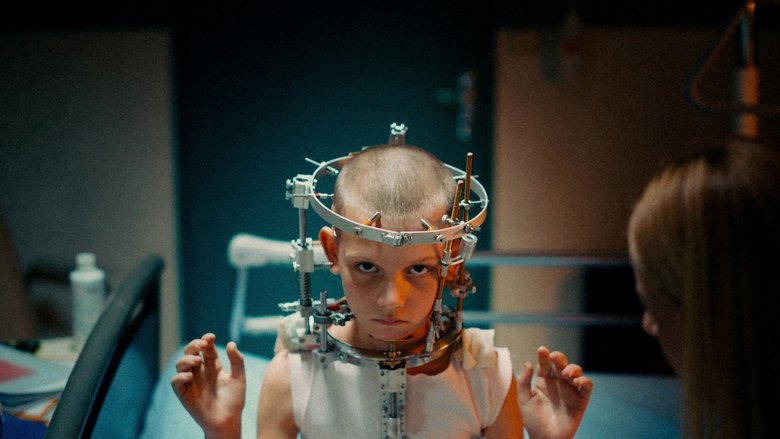
The film challenges fixed binary classifications as Alexia moves fluidly between hyper-feminized car-show dancer, violent cipher, and disguised teenage boy. Her physical binding, nose-breaking, and shaved head serve as a violent transmasculine bodily reconfiguration, showing that identity shifts to accommodate survival and emotional evolution.

Chosen Family vs. Biological Kinship

Contrasting with Alexia's cold, alienated, and abusive biological family, her fabricated relationship with Vincent blossoms into genuine love. Vincent chooses to see his son in Alexia—even knowing deep down she is not him—because both desperately need to love and be loved, turning found family into a life-affirming pact.

Body Horror, Aging & Bodily Autonomy

Bodies are portrayed as sites of torment, decay, and transformation. While Alexia endures an agonizing pregnancy leaking motor oil, Vincent wages war against his aging body by compulsively injecting steroids to maintain physical virility.

The Synthesis of Flesh and Machine / Techno-Body

Metal and chrome are treated as eroticized, living components of modern humanity. The titanium plate inside Alexia's skull bridges organic matter and machinery, representing how modern human trauma and technology alter biology itself.

Character Analysis

Alexia / Adrien Legrand

Agathe Rousselle

Archetype: Antihero / Monstrous Hybrid / Metamorphic Outcast Key Trait: Extreme physical endurance and muted, feral emotional intensity.

Motivation

Survival, evading arrest, and dealing with her bizarre machine-induced pregnancy.

Character Arc

Begins as an emotionless, murderous predator alienated from humanity. Through masquerading as Adrien and receiving Vincent's unconditional affection, she learns empathy, vulnerability, and maternal protection before dying during childbirth.

Vincent Legrand

Vincent Lindon

Archetype: Grieving Father / Tragic Mentor / Protector Key Trait: Fierce, stubborn paternal loyalty and vulnerable machismo.

Motivation

Overcoming the void left by his lost child and fighting the decay of his own body.

Character Arc

Consumed by grief over his missing son and fighting physical aging through steroids, Vincent chooses will-to-believe over reality, finding a redemptive paternal purpose in sheltering Alexia unconditionally.

All 4 characters and cast

Symbols & Motifs

The Titanium Implant (Titane)

Meaning:

Symbolizes indelible childhood trauma, emotional disconnection, and the literal synthesis of machine and human biology.

Context:

Implanted behind Alexia's ear after a traumatic childhood automobile accident caused by her unruly behavior.

Motor Oil and Fluids

Meaning:

Represents the corruption of natural organic processes and the chimeric fusion of human biology with machine mechanics.

Context:

Secreted and bled by Alexia from her breasts and vagina instead of normal amniotic fluids throughout her gestation.

Fire and Firetrucks

Meaning:

Serves as a dual force of destruction and warmth/shelter, while firehouse culture represents rigid masculine community turned upside down.

Context:

Used by Alexia to destroy her childhood home, and later encountered as a sanctuary at Vincent's fire station.

The Hairpin

Meaning:

Symbolizes weaponized femininity and Alexia's immediate, violent reflex to puncture any invasive threat.

Context:

Employed as Alexia's primary weapon to brutally execute victims who breach her personal boundaries.

The Ace Bandage / Chest Binding

Meaning:

Represents the painful suppression of bodily truth and self-inflicted violence undertaken to maintain an artificial identity for survival.

Context:

Used by Alexia to flatten her chest and suppress her expanding pregnancy belly while disguised as Adrien.

Memorable Quotes

T'es mon fils. Qui que tu sois, t'es mon fils.
— Vincent

Context

Spoken to Alexia/Adrien during an intimate, critical moment of tenderness.

Meaning

Signifies unconditional love and acceptance, demonstrating Vincent's choice to embrace Alexia as his child regardless of biological truth or deception.

Je suis là. Je suis là.
— Vincent

Context

Spoken during the climactic birth scene as Alexia endures fatal labor.

Meaning

Provides ultimate emotional shelter and reassurance of shared presence during mortal agony.

All 3 quotes

Philosophical Questions

What constitutes parenthood and kinship?

Investigates whether familial identity is dictated by genetic lineage or forged through the radical, unconditional decision to shelter and love another person.

Is identity tied to biology or self-construction?

Interrogates whether gender and selfhood are fixed biological constraints or malleable physical and social performances through extreme bodily alterations.

Where does the human end and technology begin?

Explores the integration of mechanical materials and industrial products into human psychology, physical bodies, and erotic desires.

Can unconditional love redeem monstrousness?

Examines whether an alienated, violent killer can discover empathy and tenderness when offered total, non-transactional acceptance.

Alternative Interpretations

The film invites diverse analytical frameworks: Transmasculine & Dysphoria Allegory: Alexia's chest-binding, physical alteration, and agony over pregnancy reflect experiences of gender dysphoria and bodily transition. Posthumanist Cyborg Rebirth: Drawing on Donna Haraway's cyber-feminism, the titanium-spined newborn symbolizes a post-human hybrid defying biological determinism. Folie à Deux / Grief Dynamic: Vincent consciously engages in a shared delusion to prevent mutual suicide. Religious Parable: Represents a profane virgin birth where suffering gives rise to a biomechanical savior.

Full ending explanation

Cultural Impact

Premiering in 2021, Titane bridged European art cinema and the New French Extremity tradition within a post-#MeToo cultural framework. It gained acclaim for subverting binary gender representation, consent, and bodily autonomy through radical genre horror. Its historic Palme d'Or victory marked a watershed moment that validated body horror on the global prestige festival stage, with Ducournau urging the industry to "let the monsters in."

Audience Reception

Titane received widespread acclaim for its fearless originality, visionary direction, and the emotional vulnerability anchored by Agathe Rousselle and Vincent Lindon. Critics praised Ducournau's balance of visceral body horror and heartfelt melodrama. Mainstream detractors cited jarring tonal shifts, boundary-pushing gore, and the surreal car pregnancy, which caused early festival walkouts. Overall, it stands regarded as a bold modern genre masterpiece.

Interesting Facts

  • Julia Ducournau became only the second female director in history to win the Palme d'Or at the Cannes Film Festival in 2021.
  • Jury President Spike Lee accidentally revealed that Titane won the Palme d'Or at the beginning of the closing awards ceremony.
  • Lead actress Agathe Rousselle was discovered on Instagram and underwent a full year of physical and fight choreography training for her debut role.
  • The concept originated from Julia Ducournau's recurring nightmares about giving birth to engine parts.
  • Agathe Rousselle underwent hours of daily special effects prosthetic makeup for scalp plates, scars, bindings, and a mechanical pregnancy belly.
  • Cinematographer Ruben Impens filmed the complex continuous long take at the motor show on the very first day of production.
  • Director Julia Ducournau does not possess a driver's license despite making a film centered on an erotic obsession with automobiles.

Easter Eggs

Homage to David Cronenberg's Crash (1996)

Directly dialogues with and subverts the themes of symphorophilia (erotic arousal from car crashes) through a queer, female perspective.

Reference to Shinya Tsukamoto's Tetsuo: The Iron Man (1989)

The biomechanical transformation, metal piercing flesh, and engine oil bodily secretions pay tribute to Japanese cyberpunk body horror.

Cameo by Director Bertrand Bonello

The acclaimed French filmmaker appears in the opening act portraying Alexia's cold, estranged father.

Garance Marillier Reunion

The star of Ducournau's debut feature Raw plays Justine, connecting the thematic and stylistic continuity of both works.

Visual echoes of The Passion of Joan of Arc (1928)

Close-up framing of Rousselle's shaved head, anguish, and physical suffering mirrors Falconetti's performance in Carl Theodor Dreyer's classic.

Frequently Asked Questions

Explore More About This Movie

Dive deeper into specific aspects of the movie with our detailed analysis pages

Comments (0)

Leave a comment

No comments yet. Be the first to share your thoughts!

Similar Movies