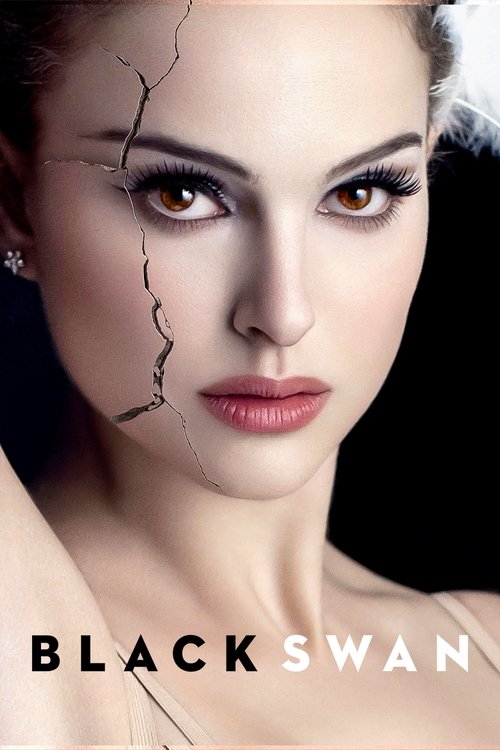
Black Swan
""I just want to be perfect.""
Overview
Nina Sayers is a dedicated but fragile ballerina in a New York City ballet company, living with her overbearing mother, Erica. When the artistic director, Thomas Leroy, decides to replace his prima ballerina for the new season's opening production of Swan Lake, Nina is the top choice. However, the role requires a dancer who can play both the innocent White Swan and the sensual, malevolent Black Swan. While Nina fits the White Swan perfectly, Thomas fears she lacks the dark passion required for the Black Swan.
As pressure mounts, Nina feels threatened by a new dancer, Lily, who embodies the reckless abandon Nina lacks. Nina's drive for perfection begins to fracture her grip on reality, leading to terrifying hallucinations, physical transformations, and a paranoid belief that Lily is trying to sabotage her. Her journey becomes a nightmare of body horror and psychological unraveling as she struggles to unlock her repressed dark side.
On opening night, the boundary between the stage and Nina's mind completely dissolves. Battling her own reflection and inner demons, she pushes herself beyond physical and mental limits to achieve the transcendence she craves, delivering a performance that is as perfect as it is fatal.

Core Meaning
At its heart, Black Swan is a tragic examination of the destructive nature of artistic perfectionism. Director Darren Aronofsky uses the framework of Swan Lake to explore the duality of human nature—the Apollonian (control, order, the White Swan) versus the Dionysian (chaos, passion, the Black Swan). The film suggests that true artistic transcendence requires the destruction of the self and the embrace of one's shadow side, posing the terrifying question: what is the price of perfection?
Thematic DNA
The Destructive Pursuit of Perfection
The central theme revolves around Nina's obsession with being 'perfect.' This drive is shown not as a virtue but as a pathology that leads to self-harm, isolation, and eventually madness. The film illustrates that perfection is a dead end, while true art requires a messy, dangerous loss of control.
Duality and The Doppelgänger
Mirroring the ballet Swan Lake, the film is obsessed with doubles. Nina is split between her repressed, child-like self (White Swan) and her hallucinated, liberated alter-ego (Black Swan). Mirrors, reflections, and the character of Lily serve as constant reminders of this fractured identity.
Metamorphosis and Body Horror
Nina's psychological change is manifested physically through body horror elements—scratching, skin peeling, and bones cracking. These visceral visuals symbolize the violent, painful process of shedding her old self to 'become' the swan.
Sexual Repression vs. Liberation
Nina's journey is also a warped coming-of-age story. Her mother infantilizes her, keeping her asexual and dependent. To dance the Black Swan, Nina must unlock her sexuality, which manifests in the film as a terrifying, predatory force rather than healthy liberation.
Character Analysis
Nina Sayers
Natalie Portman
Motivation
To achieve absolute perfection and please her director and mother, ultimately seeking to transcend her own limitations.
Character Arc
Starts as a frigid, repressed, and technically precise dancer. Through trauma and hallucination, she breaks her mental barriers to embody the Black Swan, achieving a moment of artistic perfection at the cost of her life/sanity.
Lily
Mila Kunis
Motivation
To dance and enjoy life; she lacks Nina's desperate ambition but possesses the natural passion Nina envies.
Character Arc
Remains constant as a free-spirited, sensual dancer. To Nina, she transforms from a rival into a friend, then a seductress, and finally a monster, depending on Nina's mental state.
Thomas Leroy
Vincent Cassel
Motivation
To create a visceral, raw, and perfect production of Swan Lake, regardless of the cost to his dancers.
Character Arc
He pushes Nina to her breaking point, using sexual manipulation and harsh criticism to extract the performance he wants, indifferent to the psychological toll it takes on her.
Erica Sayers
Barbara Hershey
Motivation
To control Nina and keep her a 'little girl' forever, shielding her from the mistakes she herself made, yet paradoxically pushing her to succeed.
Character Arc
She begins as a protective caretaker and is revealed to be a suffocating force who resents her daughter's success while simultaneously living vicariously through it.
Symbols & Motifs
Mirrors and Reflections
Mirrors represent Nina's fractured psyche and the duality of her nature. They show her the 'truth' she hides from herself—often moving independently or showing a different version of her.
Present in almost every scene: the ballet studio, Nina's dressing room, and the subway. The final act of violence involves a shard of a broken mirror, symbolizing her shattering self.
The Scratch/Rash
A physical manifestation of her guilt, anxiety, and the internal 'darkness' trying to break out. It represents her self-destructive tendency and the literal shedding of her human skin.
Nina constantly scratches a spot on her shoulder blade. Her mother cuts her nails to stop it, but the wound grows, eventually sprouting black feathers in her hallucinations.
Pink and White vs. Black
Color coding represents innocence versus corruption/maturity. Nina is surrounded by childish pinks and whites initially, which are slowly invaded by black and grey as she transforms.
Nina's bedroom is a suffocating shrine of pink and stuffed animals. Lily wears black. The final costume change from the pristine white tutu to the black tutu marks her complete transformation.
The Double
Represents the repressed 'shadow self'—the part of Nina that is sexual, aggressive, and dangerous. She projects this onto Lily but ultimately realizes it is within her.
Nina sees herself in other people's faces, sees her reflection smiling when she is not, and physically fights a doppelgänger in her dressing room.
Memorable Quotes
I was perfect.
— Nina Sayers
Context:
Spoken by a dying Nina to Thomas as the white light consumes the screen after she falls onto the mattress at the end of the ballet.
Meaning:
The film's final line. It signifies that she has achieved her goal, but the tragedy lies in the fact that she had to destroy herself to do it. It is a moment of ultimate triumph and ultimate defeat.
The only person standing in your way is you.
— Thomas Leroy
Context:
Thomas tells this to Nina during rehearsals when she is technically proficient but emotionally rigid.
Meaning:
Summarizes the central conflict. Nina's external rivals (like Lily) are not the true threat; her own repressed psychology and fear are the obstacles.
Perfection is not just about control. It's also about letting go.
— Thomas Leroy
Context:
Thomas trying to coach Nina on how to dance the Black Swan role, urging her to stop over-thinking.
Meaning:
This outlines the artistic philosophy of the film. Technical skill (control) is not enough; true art requires danger, vulnerability, and the loss of self.
Philosophical Questions
Is true artistic greatness worth the destruction of the self?
The film asks if the perfect performance requires a sacrifice of sanity and life. Nina achieves perfection only at the moment of her death/destruction, suggesting a nihilistic view that the highest art consumes the artist.
What is the nature of identity?
Through the motif of the doppelgänger, the film explores whether our 'dark' impulses are foreign entities or essential parts of our true selves that we repress at our own peril.
Alternative Interpretations
Psychosis vs. Supernatural: While most view the film as a depiction of paranoid schizophrenia or severe psychosis (where the transformation is all in her mind), some readings suggest a magical realism element where Nina literally metamorphoses into the swan entity.
The 'Death' Ending: The ending is ambiguous. The literal reading is that Nina bleeds to death from a self-inflicted stab wound. An alternative metaphorical reading is that the 'Nina' who was the terrified little girl has died, and she has been fully consumed by her art/role, regardless of physical survival.
Lily as a Figment: A more extreme theory posits that Lily herself (or at least the version Nina interacts with most) might not exist as presented, functioning entirely as a projection of Nina's desires, though the presence of the 'real' Lily at the end contradicts this being entirely true.
Cultural Impact
Black Swan became a massive critical and commercial success, grossing over $329 million worldwide on a $13 million budget. It revitalized the psychological horror genre by blending high art (ballet) with body horror.
- Awards: It earned five Academy Award nominations, including Best Picture, and won Best Actress for Natalie Portman.
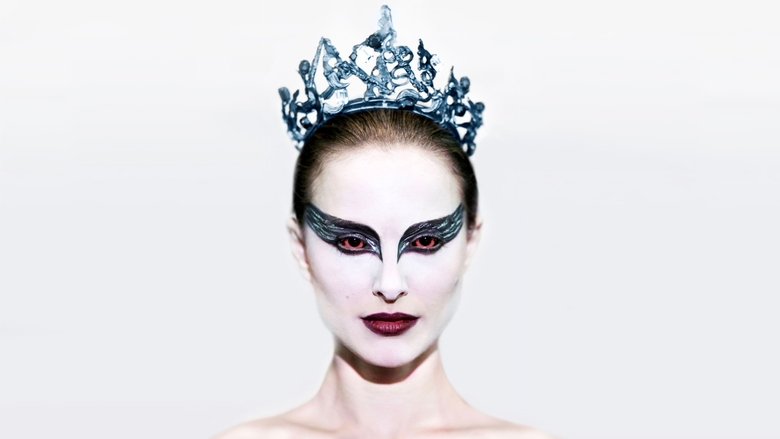
- Pop Culture: The film's stark black-and-white makeup and costumes became iconic, frequently replicated in fashion and Halloween costumes.
- Conversations: It sparked intense debates about the mental health of artists, the toxicity of perfectionism, and the grueling nature of professional ballet.
- Legacy: It remains a touchstone for films depicting female madness and the 'tortured artist' trope, often compared to Polanski's Repulsion and Powell and Pressburger's The Red Shoes.
Audience Reception
Praised: Audiences and critics universally acclaimed Natalie Portman's committed performance and Aronofsky's intense, claustrophobic direction. The film's atmosphere, score, and visual effects were highly lauded for creating a sense of dread.
Criticized: Some critics found the film 'campy' or melodramatic, arguing that it relied too heavily on horror tropes (jump scares, body horror) rather than psychological subtlety. A few ballet purists criticized the depiction of the dance world as exaggeratedly cutthroat and the dancing itself (specifically the use of doubles) as inauthentic.
Verdict: Generally regarded as a modern masterpiece of psychological horror.
Interesting Facts
- Natalie Portman trained for a year before filming, paying for ballet classes out of her own pocket before the film was even greenlit.
- During production, Natalie Portman dislocated a rib and had to give up her trailer so the budget could cover a medic.
- Director Darren Aronofsky considers this film a companion piece to 'The Wrestler' (2008), as both films depict performers destroying their bodies for their art.
- The film's score by Clint Mansell is largely a distortion of Tchaikovsky's original 'Swan Lake' music, often played backwards or manipulated to sound unsettling.
- Natalie Portman met her husband, choreographer Benjamin Millepied, on the set of this film. He also plays the dancer David.
- Mila Kunis was cast as Lily after Natalie Portman suggested her to Aronofsky; the two were already friends in real life.
- To create the subtle eerie effects, the visual effects team often digitally manipulated Nina's reflection to move slightly out of sync with her body.
Easter Eggs
The Swan Mosaic
In the bathroom scene where Nina is submerged in the tub, a mosaic on the wall behind her forms the shape of a swan's wings, visually foreshadowing her transformation.
Lily's Tattoo
Lily has a tattoo of black wings on her back. In Nina's hallucination, this tattoo becomes literal black wings sprouting from her own skin.
The Green Scratch
The visual of the rash/scratch on Nina's back and the way she peels the skin is a visual homage to Cronenberg's The Fly, emphasizing the body horror aspect of her metamorphosis.
Black Swan Plush
Among the many white stuffed animals in Nina's room, there is a single Black Swan plush toy, symbolizing the dark persona hiding in plain sight within her innocent environment.
⚠️ Spoiler Analysis
Click to reveal detailed analysis with spoilers
Frequently Asked Questions
Explore More About This Movie
Dive deeper into specific aspects of the movie with our detailed analysis pages
Comments (0)
No comments yet. Be the first to share your thoughts!