Skip to content
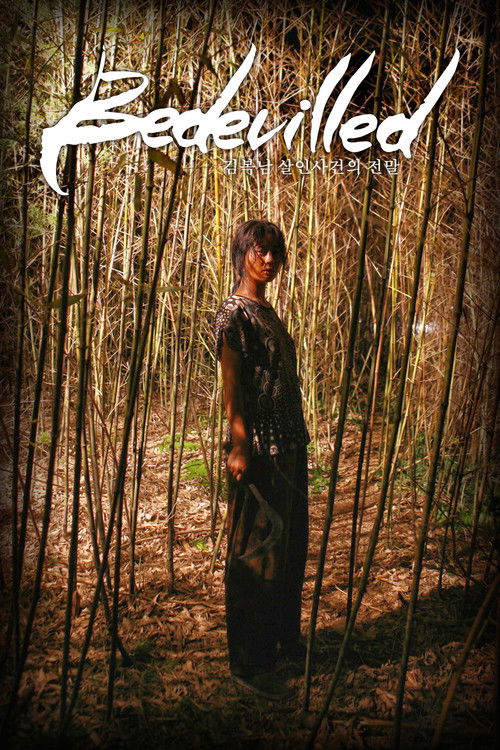
Bedevilled
Drenched in sweltering, claustrophobic dread and explosive catharsis, this rural psychological nightmare transforms a sunbaked, isolated island into a slaughterhouse of broken silence, where an abused soul turns a rusty sickle into a harvest of wrath.
Bedevilled

Bedevilled

김복남 살인사건의 전말

"Nothing is more deadly than a woman seeking revenge."

19 August 2010 South Korea 117 min 7.2 (508)

Director: Jang Cheol-soo

Cast: Seo Young-hee, Ji Sung-won, Park Jeong-hak, Baek Su-ryeon, Kim Gyung-ae

Drama Crime Thriller Horror Bystander Apathy and Complicity Patriarchal Oppression and Female Complicity Urban Alienation vs. Rural Feudalism Revenge and Catharsis as Reclaiming Agency
Budget: $700,000

Overview

Bedevilled follows Hae-won (Ji Sung-won), a cold, aloof, and hyper-competitive bank clerk in Seoul whose rigid indifference shields her from the turbulent city around her. After witnessing a brutal street assault and refusing to assist the police out of fear of getting involved, Hae-won experiences an emotional meltdown at work and is ordered to take an involuntary leave of absence. Yearning for respite from the suffocating pressure of modern urban society, she accepts a long-standing invitation to visit Moodo (Mudo), a tiny, idyllic-looking, remote island in the southern seas where she spent idyllic summers during her youth.

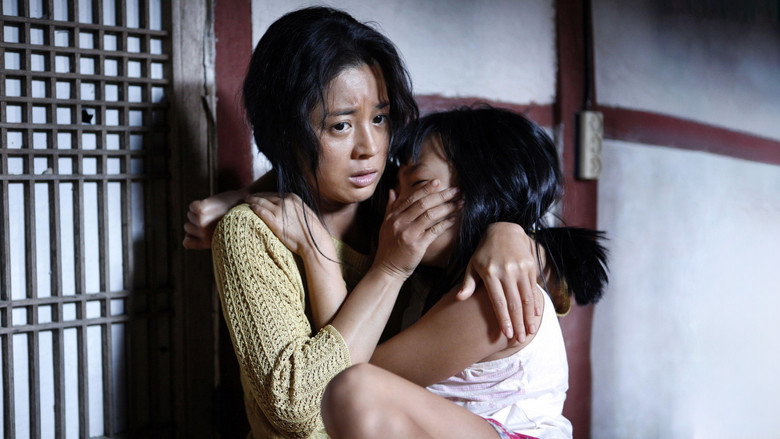
Upon arriving, Hae-won reunites with her childhood friend, Kim Bok-nam (Seo Young-hee), who welcomes her with open arms and warm, desperate affection. Beneath the picturesque coastal landscape, however, lurks a nightmarish, deeply patriarchal feudal order. Bok-nam is essentially enslaved by the handful of elderly residents and the brutal brothers Man-jong (Park Jeong-hak) and Cheol-jong (Bae Sung-woo). Subjected to nonstop domestic servitude, systemic physical violence, and sexual assault, Bok-nam clings to Hae-won as her sole beacon of hope, praying that her educated city friend will help her and her young daughter escape to Seoul.

Yet Hae-won clings obstinately to the detached bystander mentality she honed in Seoul, intentionally ignoring Bok-nam’s cries for help to protect her own peace of mind. As the island's cruelty tightens its grip and tragedy strikes Bok-nam's family, the fragile boundaries holding Bok-nam's sanity together disintegrate. Left utterly alone under the blistering summer sun, Bok-nam abandons endurance for annihilation, setting off a ferocious cycle of retribution.

Core Meaning

Directed by Jang Cheol-soo, Bedevilled is fundamentally an indictment of bystander apathy and willful blindness.

Through the parallel lives of Hae-won and Bok-nam, Jang argues that the chilling indifference of modern civilized people is not merely cowardly; it is an active accomplice to atrocity. The true horror of Moodo is not only the monstrous savagery of the abusers, but the cold complicity of those who look away—both the matriarchs who normalize abuse and the educated outsider who refuses to get her hands dirty. Jang presents extreme violence not as unprovoked madness, but as the final, tragic explosion of human dignity when all institutional, communal, and personal avenues of compassion have been systematically sealed off.

Thematic DNA

Bystander Apathy and Complicity 35%
Patriarchal Oppression and Female Complicity 25%
Urban Alienation vs. Rural Feudalism 20%
Revenge and Catharsis as Reclaiming Agency 20%

Bystander Apathy and Complicity

The thematic cornerstone of the film. Hae-won ignores an assaulted woman in Seoul and repeatedly looks away when Bok-nam is beaten, raped, and driven to madness. The film demonstrates that passive onlookers are directly responsible for pushing victims past the breaking point.

Patriarchal Oppression and Female Complicity

On Moodo, feudal patriarchy reduces Bok-nam to chattel. Crucially, the system is maintained not just by the men, but by the elder women (led by Dong-ho’s grandmother), who actively police and abuse Bok-nam, proving that internalized misogyny serves as the primary engine preserving archaic power structures.

Urban Alienation vs. Rural Feudalism

The film juxtaposes Seoul’s hyper-modern, competitive, individualistic alienation against Moodo’s primitive, communal insularity. While Seoul is sterile and bureaucratic, Moodo is lawless and tribal; both spaces prove utterly devoid of genuine empathy.

Revenge and Catharsis as Reclaiming Agency

Bok-nam’s bloody rampage is a desperate reclamation of personhood. Deprived of the legal system, family protection, and friendship, physical violence becomes the only language her tormentors understand and her only means of self-liberation.

Character Analysis

Kim Bok-nam

Seo Young-hee

Archetype: The Tragic Victim turned Avenging Angel Key Trait: Limitless endurance transforming into cold, terrifying fury.

Motivation

To protect her daughter Yeon-hee and escape to Seoul.

Character Arc

Endures inhuman subjugation for the sake of her daughter; upon losing her, completely shatters and executes systematic retribution.

Hae-won

Ji Sung-won

Archetype: The Apathetic Bystander Key Trait: Cold, aloof detachment; deep-seated fear of involvement.

Motivation

Self-preservation and emotional insulation.

Character Arc

Moves from emotionally frozen, selfish urban bureaucrat to traumatized survivor forced to confront her moral cowardice.

All 4 characters and cast

Symbols & Motifs

The Blistering Sun

Meaning:

Represents overwhelming, inescapable agony and divine judgment.

Context:

In a pivotal scene in the potato field, Bok-nam stares directly into the sun; the blinding heat acts as an ignition switch, burning away her patience and commanding her vengeance.

The Sickle (낫)

Meaning:

Inverted from an instrument of exploitation into a weapon of grim reaping, symbolizing the return of the repressed worker against her feudal masters.

Context:

Used as a traditional agrarian tool of hard labor on Moodo in the fields before being turned on her abusers.

White Makeup / Pale Skin

Meaning:

Symbolizes the unattainable glamour and freedom of the civilized city, reflecting a desperate, tragic longing to escape their rural purgatory.

Context:

Represented by Hae-won's pale skin, and clumsy moments where Bok-nam and her daughter Yeon-hee smear white powder on their faces.

The Island (Moodo) and the Flute

Meaning:

The island represents an echo chamber cut off from mainland law mirroring Hae-won's emotional isolation. The recorder flute represents lost innocence and their childhood bond, later transformed into an instrument of death.

Context:

Set on the remote island cut off from society, and through the recorder flute played together by Hae-won and Bok-nam which is later featured in their final confrontation.

The Letters

Meaning:

Symbolize unheard cries for help buried beneath layers of urban selfishness.

Context:

Written by Bok-nam throughout her isolation to Hae-won, left unsent or unread until the film's climax.

Memorable Quotes

넌 너무 불친절해.
— Kim Bok-nam

Context

Spoken to Hae-won during the harrowing final act, where Bok-nam chooses not to curse Hae-won with hatred.

Meaning

This soft-spoken indictment exposes the cold, civil cruelty of the bystander, cutting deeper than physical violence.

햇볕을 오래 쬐면… 머리가 지끈거려.
— Kim Bok-nam

Context

Uttered in the blistering heat of the potato field before her massacre begins.

Meaning

Signals the physiological and psychological boiling point where heat, suffering, and delirium crystallize into violent clarity.

All 4 quotes

Philosophical Questions

Is willful inaction morally equivalent to active cruelty?

The narrative poses that Hae-won’s polite silence and refusal to bear witness are just as lethal as Man-jong's physical strikes.

Where does individual agency lie within an omnipresent social cage?

Bok-nam is trapped geographically, economically, and culturally; her turn to carnage investigates whether extreme violence can truly be considered 'choice' or simply an inevitable physical reaction to entrapment.

Can civilization exist without empathy?

By contrasting Seoul's sterile high-rises with Moodo’s primitive huts, the film asks whether urban civilization is merely an illusion of order concealing the same base disregard for human life found in barbarism.

Alternative Interpretations

The Allegory of Social Awakening (Moral Redemption Reading): The harrowing experience at Moodo shatters Hae-won's emotional numbness. Bok-nam’s sacrifice and final words ('You are so unkind') act as a brutal awakening: in the final scene, when Hae-won goes to the police station and positively identifies the perpetrators from the opening assault, she finally steps out of bystander complicity into moral accountability.

Full ending explanation

Cultural Impact

In the late 2000s, rapid urbanization in South Korea accelerated a stark socio-cultural divide between ultra-cosmopolitan Seoul and the rapidly depopulating, aging, conservative southern rural islands. Bedevilled captured the anxiety surrounding this divide, reflecting real-world societal concerns about modern bystander syndrome (방관자 효과) and systemic abuses hidden within isolated rural enclaves.

Alongside Park Chan-wook’s Sympathy for Lady Vengeance (2005), Bedevilled stands as one of South Korea's most influential feminist revenge horror films, transforming the traditionally male-dominated South Korean 'extreme' thriller wave of the 2000s into a female-centered social critique. While mainstream Korean critics initially debated its sheer brutality and graphic depiction of sexual violence, it was championed by international festivals and film communities as a masterpiece of social thriller filmmaking, launching director Jang Cheol-soo's career.

Audience Reception

Praise: Critics and audiences universally lauded Seo Young-hee’s bravura, emotionally shattering performance. The pacing was heavily praised: a methodical, unbearable, slow-burn first half that builds claustrophobia before releasing it into a frenetic, deeply cathartic slasher bloodbath.

Criticisms: Some viewers and critics found the relentless sexual abuse, animalistic mistreatment, and graphic violence overly gratuitous, borderline exploitative, and exhausting to sit through.

Controversies: The film ignited fierce debates over its depictions of rural elders as unrepentant monsters and the graphic nature of child endangerment and violence involving Bok-nam’s daughter.

Verdict: Recognized as a cult masterpiece of 2010s South Korean cinema—a harrowing, uncompromising psychological thriller that bridges art-house social critique with savage horror.

Interesting Facts

  • Jang Cheol-soo made his full-length feature debut with Bedevilled after working for years as an assistant director under provocative auteur Kim Ki-duk on films such as Spring, Summer, Fall, Winter... and Spring (2003) and Samaritan Girl (2004).
  • The film premiered in the International Critics' Week section at the 63rd Cannes Film Festival in 2010, earning widespread international praise for its ferocious blend of art-house character study and midnight-movie horror.
  • Seo Young-hee, renowned for playing tormented victims (notably in Na Hong-jin’s The Chaser), took the role of Bok-nam specifically to turn the archetype on its head by claiming violent agency, despite the physically and mentally grueling island shoot.
  • The film was produced on a lean budget of approximately ₩700 million (~US$636,000) and went on to become a box-office hit in South Korea, grossing roughly US$1.1 million.
  • Seo Young-hee swept the Best Actress categories across South Korean and international genre film circuits, winning at the Korean Film Awards, the Blue Dragon Film Awards, the Fantastic Fest in Austin, Texas, and the Bucheon International Fantastic Film Festival.
  • Jang Cheol-soo revealed in an interview that the single most important rule Kim Ki-duk instilled in him as an assistant was: 'Make sure the audience cannot take their eyes off the screen'.

Easter Eggs

Subverting The Chaser (2008)

Seo Young-hee was famous for her role as Mi-jin in The Chaser, where she was brutally assaulted, tortured, and murdered with hammers and chisels without being saved. Casting Seo in Bedevilled served as an intentional meta-commentary: audiences expected another helpless victim role, making her sudden transformation into an unstoppable slasher an explosive subversion of modern Korean cinema tropes.

Kim Ki-duk Motifs

The isolated water-bound location, fishing hooks, rural cruelty, and raw, visceral body horror echo the signature visual and thematic palette of Kim Ki-duk’s The Isle (2000) and Spring, Summer, Fall, Winter... and Spring (2003).

Visual Symmetry of the Ending

The opening scene of urban indifference (the car window rolling up to ignore a brutal crime) mirrors the island sequences where shutters and doors are pulled shut to drown out Bok-nam's screams.

Frequently Asked Questions

Explore More About This Movie

Dive deeper into specific aspects of the movie with our detailed analysis pages

Comments (0)

Leave a comment

No comments yet. Be the first to share your thoughts!

Similar Movies