
Skip to content
Tower of God
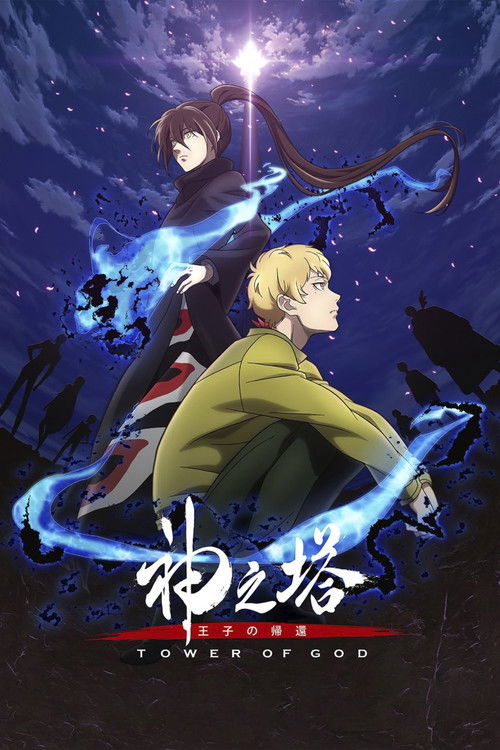
A dark, atmospheric fantasy where innocent longing bleeds into brutal betrayal, visualised as a solitary star flickering inside a endless, oppressive labyrinth of towering steel and glowing liquid light.
Tower of God
Tower of God

神之塔 -Tower of God-

02 April 2020 — 29 December 2024 Japan 2 season 39 episode Ended 8.1 (527)

Cast: Taichi Ichikawa, Nobuhiko Okamoto, Takuya Eguchi, Yuma Uchida, Sayumi Watabe

Animation Sci-Fi & Fantasy Action & Adventure Mystery Ambition vs. Morality Codependency and Identity Formation Destiny vs. Free Will Classism and Systemic Corruption Trust, Betrayal, and Redemption

Tower of God — Ending Explained

⚠️ Spoiler Analysis

Season 1 Plot Twists:

  • The Irregular Revelation: Bam is revealed to be an Irregular who opened the doors himself, instantly marking him as a threat to King Jahad.
  • Rachel's Betrayal: In Episode 13, it is revealed that Rachel failed Headon's initial test. Headon granted her passage only if she agreed to betray Bam. During the final underwater test, Rachel pushes Bam off the platform to steal his accomplishments and climb in his place.

Season 2 Plot Twists:

  • Viole's True Identity: The menacing, long-haired FUG Slayer Candidate "Jue Viole Grace" is actually Bam, who survived Rachel's push.
  • FUG's Blackmail: Bam did not turn evil; FUG held his Season 1 friends hostage, threatening to execute Khun, Rak, and others if Bam refused to train as FUG's god-killing weapon.
  • Workshop Battle Climax: During the Workshop Battle, FUG attempts to dissolve Bam into a liquid weapon vessel to combine him with the "Thorn". Wangnan, Khun, and Team Sweet Apple intervene, allowing Bam to safely acquire the Thorn weapon, reunite with his original allies, and reclaim his freedom as Twenty-Fifth Bam.

Alternative Interpretations

The series can be interpreted through three major lenses:

  • The Sociological Reading: The Tower is a capitalistic meat-grinder where "floors" represent social mobility. Climbing requires exploiting others, and King Jahad represents an entrenched aristocracy keeping the lower floors stagnant.
  • The Psychological/Codependency Reading: Bam’s journey is a parable of toxic attachment. His cave represents psychological stasis, and Rachel is his projection of ideal perfection. Her push forces his painful transition into self-actualized adulthood.
  • The Religious/Mythological Reading: Bam acts as a messianic figure ("Twenty-Fifth Bam" translates roughly to "25th Night/Christ's rebirth") descending into a corrupted universe ruled by false gods (Jahad).

Explore More About This Movie

Dive deeper into specific aspects of the movie with our detailed analysis pages

Similar Movies