Skip to content
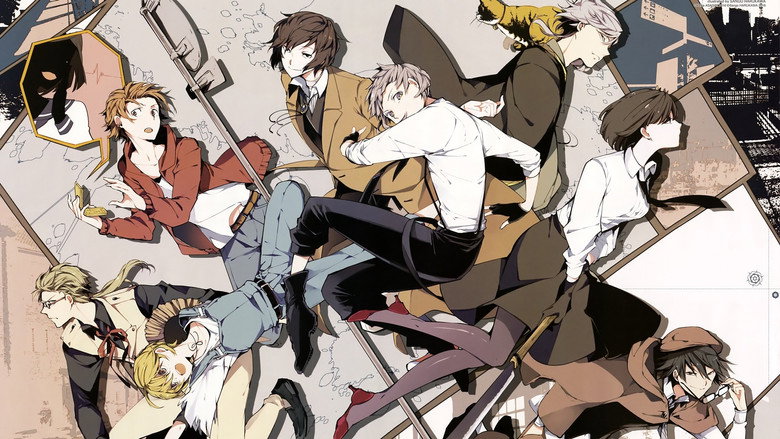
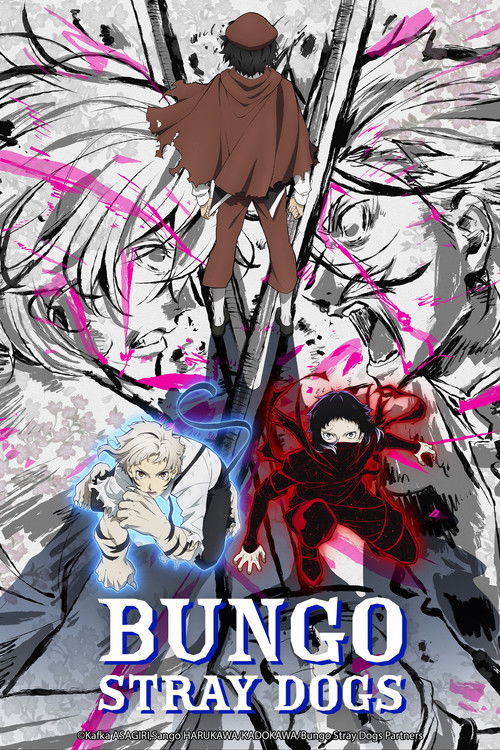
Bungo Stray Dogs
A stylish neo-noir supernatural thriller imbued with melancholy and existential yearning, where wounded souls navigate shadowy urban alleys like stray wolves chasing a distant lantern light in the dark.
Bungo Stray Dogs
Bungo Stray Dogs

文豪ストレイドッグス

07 April 2016 — 20 September 2023 Japan 1 season 60 episode Returning Series 8.2 (447)

Cast: Mamoru Miyano, Yuto Uemura, Masaaki Mizunaka, Hiroyuki Yoshino, Sumire Morohoshi

Crime Animation Sci-Fi & Fantasy Action & Adventure Mystery Traumatic Past and Self-Forgiveness Purpose, Existential Meaning, and the "Reason to Live" Moral Duality and the Interdependence of Light and Shadow Found Family and Camaraderie Among Outcasts The Dual Nature of Power and Justice

Bungo Stray Dogs — Ending Explained

⚠️ Spoiler Analysis

The narrative is defined by major plot twists across each season:

  • Season 1: Atsushi discovers that the rampaging white tiger is his own untamed ability rather than an external beast. Dazai intentionally orchestrates his own capture by the Port Mafia to gather intelligence on the Guild’s bounty on Atsushi.
  • Season 2: Port Mafia Boss Ōgai Mori intentionally engineered the deaths of Sakunosuke Oda’s foster orphans to force Oda into a suicidal mutual kill with Mimic leader André Gide, thereby securing the government's Special Ability Business Permit. During the Guild climax, Atsushi and Akutagawa unite aboard the crashing Moby Dick, and Kyōka passes her Agency entrance test by sacrificing a drone to save the city.
  • Season 3: Fyodor Dostoevsky infects Fukuzawa and Mori with the Cannibalism virus. Dazai and Ranpo outmaneuver him by using Natsume Sōseki (disguised for years as the calico cat Sensei) to broker peace, capturing Fyodor.
  • Seasons 4 & 5: The Decay of the Angel uses a page from The Book to frame the Agency as terrorists. Their leader, Kamui, is revealed to be Ōchi Fukuchi—Fukuzawa’s childhood friend and commander of the Hunting Dogs. Fukuchi uses Bram Stoker's virus to create a global vampire army. In Meursault prison, Chūya's vampirism is revealed to be a ruse; using gravity manipulation to stop bullets, Chūya and Dazai engineer the destruction of Fyodor's escape helicopter. Fukuchi's scheme is revealed as a gambit to unify world superpowers against a common threat to avert a catastrophic world war, accepting death to pass the defense mantle to Fukuzawa before a flash-forward reveals a new cosmic threat.

Alternative Interpretations

The series can be analyzed through three primary critical lenses:

  • The Psychoanalytic Reading (Subconscious & Trauma): Supernatural abilities function as direct psychological externalizations of the characters' subconscious wounds. Atsushi’s tiger represents repressed instinct and fear, Dazai’s No Longer Human represents his alienation from humanity, and Akutagawa’s Rashomon reflects his jagged, defensive nature.
  • The Meta-Textual Literary Allegory: The entire narrative operates as an allegory for the act of writing and the enduring legacy of literature. "The Book" is the ultimate literary canvas, and the factional battles mirror clashes between distinct literary movements (the traditionalist Port Mafia, the Romantic/Modernist Agency, the Western Imperialist Guild, and Russian existentialism).
  • The Sociological Outsider Framework: The "Stray Dogs" represent individuals disenfranchised by rigid societal structures. Yokohama serves as a haven of border zones where outlaws and state mechanisms constantly negotiate survival, challenging conventional state authority and standard definitions of civic duty.

Explore More About This Movie

Dive deeper into specific aspects of the movie with our detailed analysis pages

Similar Movies