Skip to content
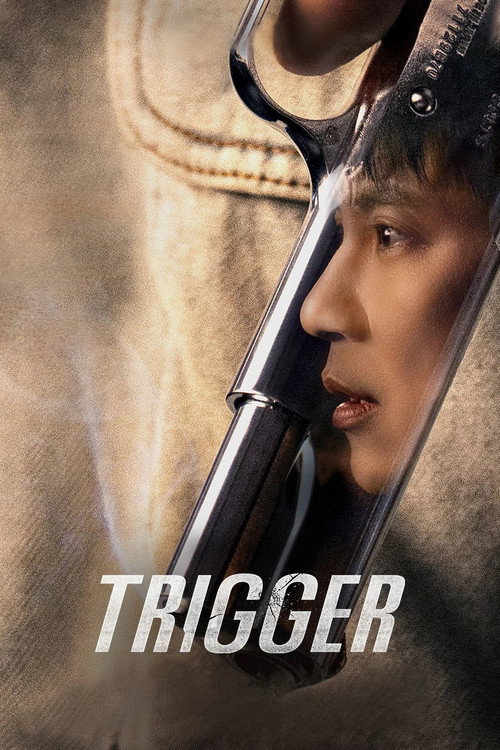
Trigger
A tense crime disaster thriller steeped in helpless dread and quiet tragedy, where anonymous packages unleash a storm of lead and shadow, shattering the fragile sanctuary of a gun-free nation like a bullet piercing glass.
Trigger

Trigger

트리거

"What if everyone had guns?"

25 July 2025 — 25 July 2025 South Korea 1 season 10 episode Ended 8.1 (105)

Cast: Park Yoon-ho, Kim Nam-gil, Kim Young-kwang, Moon Seong-hyun, Park Hoon

Drama Crime Action & Adventure The Fragility of Societal Peace & Systemic Neglect Trauma, Retaliation, and Moral Choice The Illusion of Firearms as an Equalizer Empathy vs. Collective Hysteria

Overview

Set in South Korea, a nation where strict gun control laws make private firearm ownership virtually non-existent, Trigger (2025) depicts a horrifying sudden collapse of public safety. The peaceful status quo shatters when military-grade illegal handguns and rifles begin arriving at people's doorsteps, delivered anonymously like everyday e-commerce packages. The recipients—bullied students, exhausted civil service exam candidates, grieving parents, and marginalized citizens—are given instant lethal power with zero instructions. As victims turn into shooters, sudden gun violence erupts across the country, plunging society into a state of disaster and paranoia.

Detective Lee Do (Kim Nam-gil), a former military sniper living a quiet life as a local police officer while battling combat trauma, is tasked with investigating the influx of illegal weapons. As the body count rises, he encounters Moon Baek (Kim Young-kwang), an eccentric, charming, yet deeply mysterious arms broker. Initially appearing as an ally offering crucial insights into the underground weapons trade, Moon Baek harbors a dark, carefully orchestrated agenda that threatens to turn the entire country into an active war zone.

Across its 10 episodes, the series evolves from localized episodic gun-crime investigations into a high-stakes psychological and moral war. It contrasts Lee Do's uncompromising commitment to non-lethal de-escalation against Moon Baek's nihilistic mission to prove that every human carries a violent trigger waiting to be pulled.
Core Meaning

Created, written, and directed by Kwon Oh-seung (director of Midnight), Trigger uses a hypothetical premise—what happens when lethal firearms flood a strictly gun-controlled society?—to deliver a biting critique of societal neglect, systemic injustice, and human rage.

The show argues that firearms do not create evil out of nothing; rather, they act as immediate, irreversible catalysts ("triggers") for latent pain, inequality, and institutional failure. However, the core message asserts that private revenge and retaliatory violence offer no true justice or salvation. Picking up a weapon to punish one's tormentors only traps the victim in a cycle of self-destruction. True strength and social healing reside in moral restraint, empathy, and refusing to let anger dictate human choices.

Thematic DNA

The Fragility of Societal Peace & Systemic Neglect 30%
Trauma, Retaliation, and Moral Choice 25%
The Illusion of Firearms as an Equalizer 25%
Empathy vs. Collective Hysteria 20%

The Fragility of Societal Peace & Systemic Neglect

The show demonstrates how easily social order crumbles when safety nets fail. By showing ordinary citizens resorting to gunfire when pushed to their limits, the series exposes how unresolved workplace abuse, school bullying, and administrative indifference erode human empathy.

Trauma, Retaliation, and Moral Choice

Both lead characters suffer childhood tragedy. However, while Lee Do chooses non-violence and restraint despite his sniper past, Moon Baek allows his trauma to fester into destructive revenge. The theme traces how personal trauma either breeds empathy or fuels destructive nihilism.

The Illusion of Firearms as an Equalizer

Critiquing vigilante justice, the show debunks the notion that weapons empower the weak. Every character who accepts a gun package to solve their problems ends up destroying their own life and spreading harm to innocent bystanders.

Empathy vs. Collective Hysteria

Throughout the series, mass fear rapidly breeds mob behavior. The narrative illustrates that while terror spreads exponentially, a single genuine act of compassion and human shielding can break the spiral of panic.

Character Analysis

Lee Do

Kim Nam-gil

Archetype: Righteous Lawman / Reluctant Hero Key Trait: Unwavering empathy and moral restraint under fire

Motivation

Protecting the innocent and preventing society from falling into chaos without compromising his human values.

Character Arc

A former military sniper haunted by the lives he took overseas, living in quiet penance as a friendly patrol detective. Forced to pick up arms again during the crisis, he evolves from a soldier weighed down by guilt into a steadfast guardian who refuses to take a life, choosing de-escalation over lethal force.

Moon Baek

Kim Young-kwang

Archetype: Twisted Mastermind / Tragic Antihero Key Trait: Dual personality (childlike, third-person playfulness masking cold nihilism)

Motivation

Proving that everyone is capable of extreme violence when given a trigger, avenging his childhood trafficking trauma.

Character Arc

Appears initially as a playful, eccentric underground arms broker assisting Lee Do. He is eventually unmasked as the terminally ill architect of the entire gun distribution scheme, seeking to burn down a society that failed him before his illness takes him.

All 5 characters and cast

Symbols & Motifs

Unmarked Delivery Boxes

Meaning:

Symbolizes how easily lethal temptation and domestic terror can intrude into everyday private spaces.

Context:

Transforms ordinary courier logistics into vectors of violence as anonymous firearm packages arrive directly at citizens' doorsteps.

The 5mm Trigger Pull

Meaning:

A recurring verbal and visual motif representing the tiny, irreversible distance between anger and murder, thought and action.

Context:

Used in confrontations to emphasize how small physical efforts release massive, uncontrollable societal devastation.

The Sniper Scope / Crosshairs

Meaning:

Represents Lee Do's past military trauma, his burden of responsibility, and the terrifying power of objective detachment versus human engagement.

Context:

Appears during Lee Do's combat flashbacks and high-pressure tactical confrontations.

Moon Baek’s White Hair & Flamboyant Wardrobe

Meaning:

Serves as visual armor masking his impending death from terminal illness.

Context:

As Moon Baek's body weakens (signified by natural silver hair), his clothing becomes increasingly flashy and colorful.

Smoke & Misty Public Plazas

Meaning:

Symbolizes the visual and moral fog of societal panic, where fear blinds citizens from seeing each other's shared humanity.

Context:

Used during key climax scenes, particularly in the finale public plaza standoff.

Memorable Quotes

문백이는 참지 않지!
— Moon Baek

Context

Spoken in the third person throughout multiple episodes when Moon Baek decides to violently eliminate obstacles or execute erratic decisions.

Meaning

Embodying Moon Baek's eerie juxtaposition of childlike eccentricity and sudden lethality, this line became the show's signature viral catchphrase.

사람은 누구나 마음속에 트리거가 하나씩 다 있어요.
— Psychiatrist / Opening Narration

Context

Spoken in Episode 1 as the first illegal courier packages arrive at victims' homes.

Meaning

Serves as the central thesis statement of the series, questioning whether any human is truly immune to violent impulses when pushed past their limit.

All 4 quotes

Episode Highlights

The Delivery

S1E1

Civil service exam candidate Yoo Jung-tae receives a package and opens fire on his noisy neighbors.

Significance:

Establishes the terrifying premise, introduces Detective Lee Do's past as a sniper, and sets up the central police investigation.

Unlikely Alliance

S1E3

Police raid a hidden arms cache where Lee Do encounters Moon Baek for the first time.

Significance:

Showcases Lee Do's high-level marksmanship used strictly non-lethally to disable suspects rather than kill them.

Targeting the Vulnerable

S1E5

The gun syndicate ships weapons directly to bullied high school students and grieving mother Oh Kyung-sook.

Significance:

Illustrates how the gun syndicate deliberately targets societal wounds and vulnerable citizens.

School Crisis

S1E6

A bullied high school student brings a rifle to school, placing the entire facility under siege.

Significance:

Lee Do and Moon Baek race against time to de-escalate the crisis without child fatalities.

Blood and Betrayal

S1E8

A massive police raid targets the Glory Gang and cleanup squads, leading to Captain Jo's death.

Significance:

Shatters Lee Do's emotional baseline and fully unmasks Moon Baek as the true mastermind.

The Trigger Point

S1E10

Moon Baek drops thousands of free guns and smoke bombs in a public plaza to ignite a civil riot, but Lee Do shields a terrified child instead of firing.

Significance:

Serves as the climax of the series, inspiring citizens to drop their weapons and ending the violent spiral.

Philosophical Questions

Does weapon access create violence, or does it merely unlock rage already latent within human society?

Explored through the sudden influx of firearms to ordinary citizens, examining whether lethal weapons act as primary instigators or merely as irreversible catalysts for existing societal rage and trauma.

Can private retaliatory violence ever deliver genuine justice, or does it inevitably consume the victim?

Depicted through characters like Oh Kyung-sook and Moon Baek, demonstrating how accepting weapons for private vengeance destroys the lives of those seeking retribution.

Is societal peace built on true moral harmony, or merely on the physical absence of lethal tools?

Analyzed through South Korea's sudden descent into chaos when firearms become widely accessible, questioning the stability of social order when safeguards fail.

Alternative Interpretations

Triumph of Human Compassion: Lee Do’s refusal to shoot in the final plaza standoff proves that empathy and selflessness can de-escalate mass hysteria, validating the ultimate goodness of human nature.Cynical Dystopian Warning: Despite Lee Do stopping the immediate riot, Moon Baek successfully introduced thousands of untracked firearms into South Korean society, permanently destroying the nation's...

Full ending explanation

Cultural Impact

South Korea is globally recognized for having some of the strictest firearm control laws in the world, where private gun violence is practically zero. Trigger turns this national reality on its head, presenting a dark social experiment.

Upon its release on July 25, 2025, the show achieved 2.9 million views in 3 days, placing #4 in Netflix Global Top 10 (Non-English) and #1 in South Korea, trending in 45 countries. International critics noted that Trigger flips the American gun narrative ("Guns don't kill people, people kill people") on its head—arguing that in a society where weapons do not exist, violent impulses rarely turn into fatal mass shootings.

Audience Reception

Praised Aspects: Critics and viewers widely praised the chemistry between Kim Nam-gil and Kim Young-kwang, the high-octane action choreography, and the daring high-concept premise. Kim Young-kwang's villain performance was singled out as a career highlight.

Criticisms: Some viewers felt the finale plaza sequence—where civilians frantically scramble for free gun boxes—was somewhat exaggerated or melodramatic. Pre-release concerns regarding potential glorification of vigilante violence were mitigated by the story's clear anti-violence conclusion.

Overall Verdict: Received highly positive reviews (8.5/10 viewer rating average, 100% Rotten Tomatoes critic consensus upon release), praised as one of 2025's most compelling South Korean thrillers.

Interesting Facts

  • Produced by Bidangil Pictures with a massive budget of approximately ₩30 billion KRW (~$22 million USD), making it one of Netflix’s flagship 2025 Korean releases.
  • Director Kwon Oh-seung avoided green screens for car chases, mounting real cameras onto moving cars driven through uninhabited redevelopment zones, which genuinely frightened Kim Nam-gil during Kim Young-kwang's wild driving.
  • Kim Young-kwang utilized his own natural grey hair for Moon Baek's styling, exaggerating it with white powder to reflect the character's terminal illness.
  • Kim Nam-gil underwent tactical gun handling training before shooting and refreshed his muscle memory for 10 minutes prior to every scene so his sniper movements looked authentic.
  • This marks writer-director Kwon Oh-seung’s second major project following his acclaimed 2021 debut thriller film Midnight.

Easter Eggs

Parallel 2025 Disney+ K-Drama Title

In early 2025, Disney+ aired a K-drama originally titled Trigger (starring Kim Hye-soo). To avoid confusion with Netflix’s action series Trigger (released July 2025), Disney+ renamed their show Unmasked in international markets.

Visual Callbacks to Midnight (2021)

Director Kwon Oh-seung inserted claustrophobic alleyway chase shots and urban isolation angles directly reminiscent of his feature debut Midnight.

Courier Box Realism

The anonymous gun courier packages were deliberately designed to resemble South Korea's ubiquitous daily e-commerce delivery boxes (such as Coupang or CJ Logistics), grounding the thriller in mundane everyday reality.

Frequently Asked Questions

Explore More About This Movie

Dive deeper into specific aspects of the movie with our detailed analysis pages

Comments (0)

Leave a comment

No comments yet. Be the first to share your thoughts!

Similar Movies