Skip to content
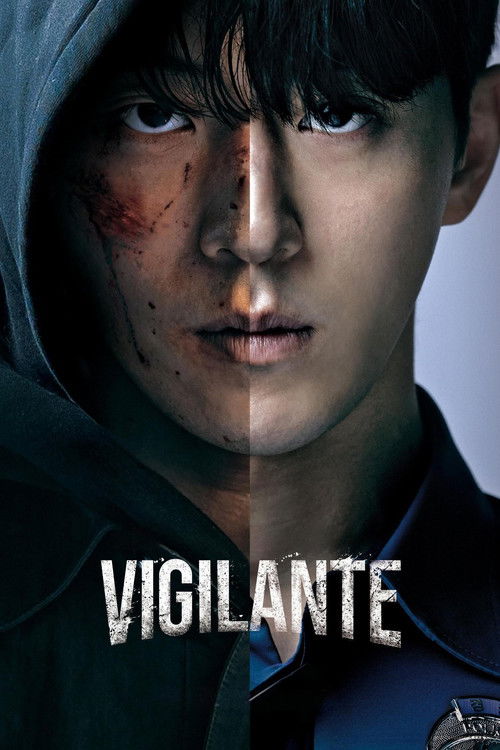
Vigilante
A rain-slicked, neon-drenched urban noir where raw grief transforms into cold retribution, illuminating the dark void between broken laws and bloodstained knuckles on shadow-draped alleyways.
Vigilante

Vigilante

비질란테

"I'll show you real justice."

08 November 2023 — 29 November 2023 South Korea 1 season 8 episode Ended 8.5 (111)

Cast: Nam Joo-hyuk, Yoo Ji-tae, Kim So-jin, Lee Jun-hyuk, Kwon Hae-hyo

Drama Crime Action & Adventure Systemic Legal Failures vs. Retributive Justice Moral Ambiguity and the Cost of Vigilantism Media Sensationalism and Public Perception Institutional Corruption and Corporate Oligarchy

Overview

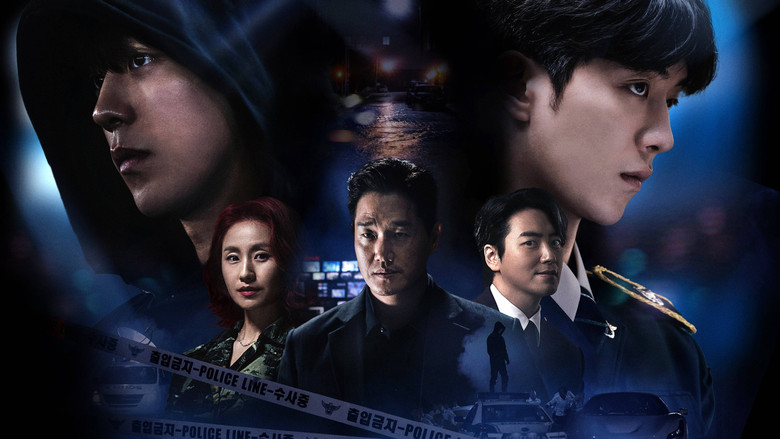
Vigilante (비질란테) is an eight-episode South Korean crime action thriller that explores the dark underbelly of South Korea's legal system. The story follows Kim Ji-yong, an exemplary cadet at the Korean National Police University by day who transforms into a relentless punisher of unrepentant violent criminals by night. Driven by the trauma of witnessing his mother's brutal murder as a child—and the outrage of seeing her killer released after a lenient court sentence—Ji-yong takes the law into his own hands on weekends, targeting offenders who exploit legal loopholes to escape meaningful punishment.

As Ji-yong's violent crusade captures public imagination, ambitious investigative journalist Choi Mi-ryeo dubs him the "Vigilante" on live television, escalating his actions into a national obsession. Meanwhile, Cho Kang-ok, a wealthy corporate heir and fanatical admirer, steps into the shadows as an eccentric copycat and benefactor, equipping Ji-yong with high-tech assistance. Their extralegal activities draw the attention of Detective Jo Heon, the head of a specialized police investigation team, whose formidable strength and strict belief in legal order make him determined to bring the Vigilante to justice.

As the net closes in, Ji-yong's personal quest for vengeance uncovers a far broader web of systemic corruption connecting high-ranking police officials, ruthless gang leaders, and corporate CEOs. What begins as street-level retributive justice escalates into a multi-front war against structural corruption, forcing all major players to confront the true cost of moral compromises and the limits of the law.
Core Meaning

The central thesis of Vigilante lies in its critique of systemic flaws within the formal judicial framework—specifically how procedural leniency, light sentencing, and institutional corruption frequently abandon victims and erode public faith in justice. Through Ji-yong's dual life, the creators pose a provocative question: What happens when society's designated guardians fail to protect the innocent and punish the guilty?

The series does not present vigilantism as an idealized hero's journey; rather, it portrays extralegal retributive justice as a dark, volatile response born from institutional failure. While Ji-yong "fills the void" left by broken statutes, his actions trigger a domino effect that unleashes collateral damage, claims innocent lives, and risks replacing bad laws with lawlessness. The ultimate message is a double-edged warning: a justice system that prioritizes technicalities over moral accountability will inevitably give birth to monsters—and those who fight monsters risk becoming the very evil they set out to destroy.

Thematic DNA

Systemic Legal Failures vs. Retributive Justice 35%
Moral Ambiguity and the Cost of Vigilantism 25%
Media Sensationalism and Public Perception 20%
Institutional Corruption and Corporate Oligarchy 20%

Systemic Legal Failures vs. Retributive Justice

The primary engine of the series explores how judicial loopholes, soft sentences, and corruption alienate citizens. Ji-yong's origin stems from his mother's killer receiving a short prison sentence, establishing the show's continuous conflict between procedural legality and moral justice. Throughout the season, this theme expands from personal vengeance to systemic critique as Ji-yong targets repeat offenders and high-level official corruption.

Moral Ambiguity and the Cost of Vigilantism

The narrative constantly questions whether the ends justify the means. Ji-yong's righteous fury borders on dark obsession, raising questions about whether he is a protector or a serial killer. This theme peaks during his confrontations with Detective Jo Heon, who argues that extralegal violence destroys the foundation of civil society regardless of motives.

Media Sensationalism and Public Perception

Through reporter Choi Mi-ryeo, the show illustrates how news outlets romanticize, manipulate, and profit from vigilante justice. The media turns Ji-yong into a pop-culture icon, shaping public opinion and pressuring both the police and government officials, highlighting the media's power to create folk heroes out of killers.

Institutional Corruption and Corporate Oligarchy

The plot shifts from punishing low-level criminals to exposing high-level collusion among corporate conglomerates (Sewool Enterprise), corrupt police chiefs (Eom Jae-hyup), and organized crime fixers. This reveals that street-level crimes are often symptoms of systemic rotting at the top of society.

Character Analysis

Kim Ji-yong

Nam Joo-hyuk

Archetype: Vigilante Antihero / Dark Avenger Key Trait: Cold, unshakeable discipline masked by a quiet, polite student exterior.

Motivation

Begins with personal revenge for his mother's murder, evolving into a systemic crusade to punish those who escape legal justice.

Character Arc

Transforms from a traumatized child into an elite police university cadet who lives a double life. Over the season, his target shifts from individual street offenders to high-level corrupt officials, accepting his identity as a dark necessity.

Jo Heon

Yoo Ji-tae

Archetype: The Unstoppable Law Enforcer / Physical Powerhouse Key Trait: Overwhelming physical stature combined with sharp investigative instincts.

Motivation

Preserve public faith in the law; evolves into accepting that official channels are deeply compromised.

Character Arc

Head of the Metropolitan Investigation Unit who strictly enforces the rule of law. Initially views Ji-yong as a criminal who must be stopped, but upon discovering corruption within his own police leadership, he forms a tense, unspoken alliance to clean up the system.

All 4 characters and cast

Symbols & Motifs

The Black Hoodie

Meaning:

It symbolizes anonymity, the shadow cast by legal oversights, and the transformation from an obedient police cadet into an unseen judge.

Context:

Ji-yong's iconic vigilante garment worn during extrajudicial strikes.

Blood-Written Messages on Walls

Meaning:

These visceral inscriptions represent public judgment, unyielding moral reckoning, and a warning to unrepentant offenders.

Context:

Left behind by Ji-yong after punishing criminals.

The Police Badge vs. The Mask

Meaning:

A visual contrast representing official authority versus rogue justice. Jo Heon notes that "sometimes the badge is the mask," highlighting how legal credentials can be used to hide institutional crimes.

Context:

Used to contrast official authority with rogue justice throughout the series.

Cryptocurrency / QQ Coin

Meaning:

It symbolizes modern, untraceable corporate corruption operating above traditional laws.

Context:

Used by Chairman Kim Sam-doo and corrupt officials to launder illegal profits.

Rain and Night Urban Scenery

Meaning:

Symbolizes the moral murkiness of Ji-yong's world and the rain that cannot wash away the city's blood or corruption.

Context:

Wet asphalt and dark shadows frame every vigilante strike.

Memorable Quotes

법에는 구멍이 있다. 이제 내가 그 구멍을 채우겠다. 이것이 정의다.
— Kim Ji-yong

Context

Spoken in Episode 1 during Ji-yong's first vigilante strikes.

Meaning

Lays out his primary thesis and motivation for taking extrajudicial action.

평생을 반성하며 살아갔어야지. 너를 풀어준 법을 원망해라.
— Kim Ji-yong

Context

Delivered in Episode 1 when confronting his mother's unrepentant killer.

Meaning

Emphasizes that the failure of the legal system directly sealed the criminal's fate.

All 5 quotes

Episode Highlights

The Origin

S1E1

Establishes Ji-yong's childhood trauma, his mother's murder, the court's lenient three-year sentence, and his decision to confront unrepentant offenders while studying at the police academy.

Significance:

Sets up the dual-life structure and ideological premise of the series.

The Naming

S1E2

Broadcast journalist Choi Mi-ryeo covers Ji-yong's actions on live television and officially coins the name "Vigilante".

Significance:

Transforms isolated acts of retributive violence into a national media event, forcing law enforcement to form a dedicated task force.

Enter the Copycat

S1E3

Cho Kang-ok appears as a copycat, imitating Ji-yong's methods and seeking out the real Vigilante.

Significance:

Introduces high-tech resources and financial backing to Ji-yong's mission, showing how vigilantism inspires imitators.

Clash of Ideologies

S1E5

Detective Jo Heon confronts Ji-yong directly in a brutal physical and moral showdown.

Significance:

Forces Ji-yong to confront the physical limits of his crusade while testing Jo Heon's absolute faith in formal legal channels.

The Web of Corruption

S1E6

Reveals the connection between Sewool Enterprise, Chairman Kim Sam-doo, organized crime fixer Mr. Bang, and Police University Chief Eom Jae-hyup. Jo Heon is ambushed by Mr. Bang.

Significance:

Shifts the focus of the show from punishing low-level offenders to dismantling systemic institutional corruption.

The World Cup Stadium Finale

S1E8

An explosive final confrontation at a stadium concert where Ji-yong, Jo Heon, Kang-ok, and Mi-ryeo face off against Chairman Kim Sam-doo and Mr. Bang. Ji-yong's best friend Min Seon-wook is tragically killed.

Significance:

Mi-ryeo and Jo Heon protect Ji-yong's identity by publicly attributing vigilante acts to Seon-wook. Ji-yong graduates as an officer but refuses to salute the national flag, keeping his vigilante mission alive in secret.

Philosophical Questions

Can extralegal violence ever be morally justified when formal legal institutions systematically fail to protect victims?

The series explores this by demonstrating how procedural leniency and judicial loopholes abandon victims, driving Ji-yong to execute retributive justice while illustrating the volatile collateral damage that occurs when individuals replace legal institutions.

Does becoming a "monster" to punish evil make an individual morally indistinguishable from the criminals they target?

The show examines this through Ji-yong's acknowledgement that catching monsters requires becoming a bigger monster, contrasted against Detective Jo Heon's warnings that extralegal violence destroys the foundation of civil society.

Who holds the authority to define and execute "justice" when state institutions tasked with doing so are compromised by corruption?

This is explored through the collision between law enforcement, news media, corporate fixers, and rogue vigilantes in a system where high-ranking police officials and corporate leaders actively orchestrate systemic crime.

Alternative Interpretations

The Moral Corruption Warning: Under this reading, the series acts as a cautionary tale showing that extrajudicial violence ultimately consumes the pure motives of its instigator. The collateral death of Ji-yong's innocent friend Min Seon-wook shows that vigilante justice causes collateral damage that mirrors the flaws of the legal system.

Full ending explanation

Cultural Impact

Vigilante premiered during a period of widespread public discussion in South Korea regarding perceived leniency in legal sentencing—particularly soft sentences handed down for violent crimes involving alcohol-induced diminished capacity or legal technicalities. The show taps directly into public frustration over victim protections versus perpetrator rights.

Alongside series such as Taxi Driver, The Devil Judge, and The Killing Vote, Vigilante contributed to a popular wave of Korean "dark hero" media exploring extralegal justice. Critics praised the series for its fast pacing, action choreography, and dark performances—notably Yoo Ji-tae's transformation—while some noted that condensing the original webtoon into eight episodes required streamlining certain side character backstories.

Audience Reception

Praise: Viewers and critics lauded Nam Joo-hyuk's departure from romantic leads into dark action, Yoo Ji-tae's physical presence as Jo Heon, and the gritty hand-to-hand fight sequences. The fast pacing and atmospheric urban noir visuals were consistently highlighted as major strengths.

Criticism: The main point of criticism centered on the abbreviated 8-episode format. Fans of the original webtoon noted that several supporting plotlines and character backstories were compressed or cut, making the final episodes feel somewhat rushed.

Overall Verdict: A thrilling, visceral action series that delivers strong lead performances and sharp commentary on justice, leaving audiences eager for a second season.

Interesting Facts

  • Nam Joo-hyuk finished filming Vigilante shortly before enlisting for his mandatory military service in March 2023. Because he was serving during the show's premiere, press events and interviews were conducted without his physical presence.
  • To portray Detective Jo Heon—who is depicted as a towering powerhouse in the webtoon—Yoo Ji-tae gained 20 kg (44 lbs) of bulk through heavy weight training and dietary adjustments.
  • Nam Joo-hyuk attended stunt school, took daily 1-on-1 boxing lessons, and underwent two months of physical training prior to production to execute real-looking hand-to-hand combat.
  • Vigilante debuted at the 28th Busan International Film Festival (BIFF) in October 2023, where its first three episodes were screened in the 'On Screen' section to sold-out theater crowds before its streaming debut.
  • Director Choi Jeong-yeol adapted the popular Naver webtoon by CRG and Kim Gyu-sam, condensing extensive comic story arcs into a tight, fast-paced 8-episode narrative designed to maintain continuous tension.

Easter Eggs

Webtoon Panel Recreations

Key scenes—such as the stadium crowd wearing matching black hoodies in Episode 8—are shot-for-shot visual recreations of iconic panels from Kim Gyu-sam's original webtoon.

Classical Literature Reference (Tao Te Ching)

Ji-yong leaves the ancient Chinese quote "Heaven's net is vast; it lets nothing slip through" (天網恢恢 疎而不漏) at crime scenes, framing his extralegal actions as divine retribution.

Comic Book Archetype Homages

The dynamic between Ji-yong and Cho Kang-ok mirrors classic superhero pairings: Kang-ok serves as an eccentric, high-tech benefactor (similar to Lucius Fox or a dark Robin), while Jo Heon represents an unyielding officer torn between duty and systemic rot (echoing Inspector Gordon).

Frequently Asked Questions

Explore More About This Movie

Dive deeper into specific aspects of the movie with our detailed analysis pages

Comments (0)

Leave a comment

No comments yet. Be the first to share your thoughts!

Similar Movies