Skip to content
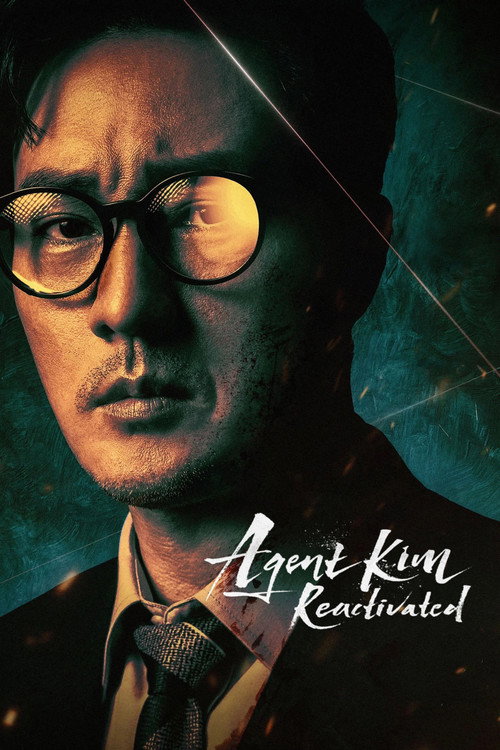
Agent Kim Reactivated
An adrenaline-charged revenge action thriller drenched in visceral paternal devotion, where an unseen, weary father sheds his gentle civilian mask to become an unstoppable shadow tearing through the underworld for his child.
Agent Kim Reactivated

Agent Kim Reactivated

김부장

"Daughter missing, past unleashed."

26 June 2026 — 25 July 2026 South Korea 1 season 10 episode Ended 8.2 (105)

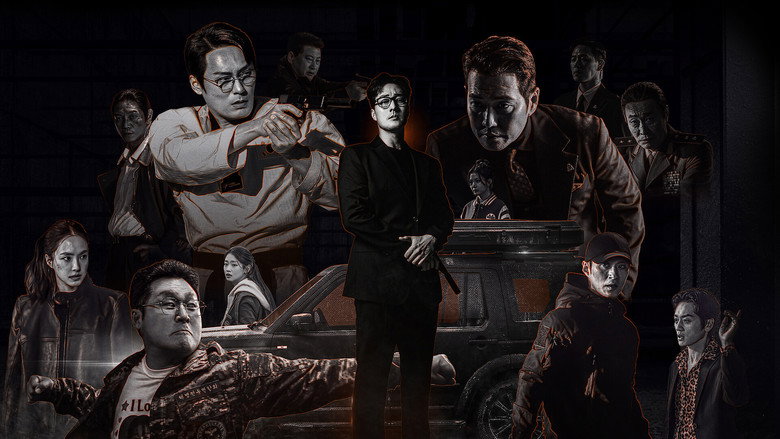
Cast: So Ji-sub, Choi Dae-hoon, Yoon Kyung-ho, Joo Sang-wook, Son Na-eun

Drama Crime Action & Adventure Paternal Devotion and Unconditional Sacrifice The Hidden Dignity of the Ordinary "Ajusshi" Confronting the Shadows of the Past and Redemption Systemic Corruption and Corporate Impunity Unbreakable Brotherhood and Camaraderie

Overview

Agent Kim Reactivated (Korean: 김부장, Kim Bu-jang / Manager Kim) is a 2026 South Korean action thriller series based on the popular Naver webtoon Manager Kim by Toy and Jeong Jong-taek. The narrative centers on Kim Do-hyeon (So Ji-sub), an ordinary, mild-mannered section chief at Sangsae Savings Bank. To his daughter Min-ji (Seo Su-min) and co-workers, Kim appears to be nothing more than a quiet, middle-aged single father struggling to navigate parenthood and modern corporate life. However, beneath his unassuming exterior lies a dangerous past: Kim is actually "Code 66," a former elite black-ops operative from a specialized North-South espionage unit who retired to live a quiet life after promising his late wife he would raise their child in peace.

The narrative inciting incident occurs when Min-ji mysteriously disappears following a violent altercation at school involving corrupt high-society bullies. Driven by paternal love and desperation, Kim reactivates his long-buried skills and embarks on a relentless mission to find her. Realizing the scale of the threat, Kim recruits two fellow retired black-ops agents who are also middle-aged fathers: taekwondo master Seong Han-soo (Choi Dae-hoon) and heavy-hitting brawler Park Jin-cheol (Yoon Kyung-ho).

As the trio of fathers delves into the underworld, what begins as a search for a missing teenager quickly escalates into a multi-front war. The investigation pits them against Joo Kang-chan (Joo Sang-wook)—the ruthless chairman of Juhak Construction—alongside organized crime syndicates, North Korean assassins, and South Korea’s secret Special Missions Directorate (SMD). Across its 10 episodes, the series weaves high-intensity hand-to-hand combat and espionage with emotional family drama.
Core Meaning

The core premise of Agent Kim Reactivated is an exploration of the absolute, boundless nature of paternal love and sacrifice. The creators use the espionage and revenge thriller genre to subvert societal perceptions of middle-aged men in contemporary South Korea. In modern corporate culture, men like "Manager Kim" are often dismissed, mocked as rigid "kkondae" (꼰대), or treated as invisible wage earners. Through Kim’s transformation into Agent 66, the show delivers a message: behind the mundane sacrifices and stoic silence of ordinary fathers lie fiercely devoted guardians willing to tear down the world for their children.

Furthermore, the series explores the inevitability of confronting one's past. Kim learns that true peace cannot be achieved through denial or hiding behind a fake persona; real protection requires taking accountability, embracing one's true strength, and breaking free from systemic exploitation by corrupt state and corporate apparatuses.

Thematic DNA

Paternal Devotion and Unconditional Sacrifice 30%
The Hidden Dignity of the Ordinary "Ajusshi" 25%
Confronting the Shadows of the Past and Redemption 20%
Systemic Corruption and Corporate Impunity 15%
Unbreakable Brotherhood and Camaraderie 10%

Paternal Devotion and Unconditional Sacrifice

Kim’s driving motivation across every episode is not national loyalty or revenge for its own sake, but securing his daughter's survival. This theme expands when Seong Han-soo and Park Jin-cheol join his quest, highlighting how fatherhood transforms ordinary men into fierce protectors who place their children above personal safety, social status, or law.

The Hidden Dignity of the Ordinary "Ajusshi"

The show subverts stereotypical depictions of middle-aged Korean men (ajusshis). Kim, Han-soo, and Jin-cheol are initially depicted taking flak at work or squabbling over everyday parenting troubles. However, their transition into lethal combatants demonstrates that their soft, humble exteriors are choices born of love rather than weakness.

Confronting the Shadows of the Past and Redemption

Kim’s past as black-ops operative Code 66 haunts him throughout the series. He initially views his lethal skill set as a curse that killed his former teammates and threatens his daughter's normal life. As enemies from both North and South Korea resurface, Kim learns that redemption comes not from burying his past skills, but from weaponizing them to protect innocent lives.

Systemic Corruption and Corporate Impunity

Through the primary antagonist Joo Kang-chan and Juhak Construction, the series critiques how wealth and political influence enable systemic abuse. Powerful figures use bribery, violence, and state intelligence contacts to cover up crimes committed by their privileged children, contrasting sharply with ordinary citizens who must fight for justice.

Unbreakable Brotherhood and Camaraderie

The bond between Kim, Han-soo, and Jin-cheol evolves from shared military trauma into an indestructible brotherhood. Their bantering, complementary combat styles and willingness to risk everything for one another provide emotional warmth and comedic balance to the show's dark themes.

Character Analysis

Kim Do-hyeon / Manager Kim

So Ji-sub

Archetype: The Reluctant Guardian / Retired Black-Ops Veteran Key Trait: Lethal, instinctive combat efficiency paired with stoic paternal love.

Motivation

To fulfill his deathbed promise to his late wife by keeping Min-ji safe.

Character Arc

Begins as an awkward, soft-spoken bank manager desperate to keep his black-ops past hidden. When his daughter goes missing, he sheds his timid demeanor, reactivates Agent 66, and cuts through underworld networks. By the end of the series, he stages his death to escape government exploitation and achieves true freedom, starting a new life with Min-ji.

Seong Han-soo

Choi Dae-hoon

Archetype: The Martial Arts Specialist / Loyal Companion Key Trait: Dynamic, high-flying kicking combat and hot-headed loyalty.

Motivation

Protecting innocent children and supporting his brother-in-arms.

Character Arc

Operates a quiet taekwondo dojang while managing everyday parenting stress. When Kim calls for help, Han-soo steps up, demonstrating his elite kicking techniques and standing as an unwavering pillar of support through every dangerous skirmish.

All 5 characters and cast

Symbols & Motifs

Thick-Rimmed Reading Glasses

Meaning:

Represents Manager Kim's civilian disguise and passive office persona.

Context:

When Kim removes or breaks his glasses, it visually signals the suppression of his gentle identity and the activation of Agent 66.

Cold Storage Warehouse

Meaning:

Symbolizes emotional isolation, near-death experience, and the cold limbo Kim must pull his family out of.

Context:

Appears in early episodes where Min-ji is temporarily trapped.

Gold Teeth & Bribes

Meaning:

Gold symbolizes corrupt transactional morality and physical greed, standing in direct contrast to Kim’s uncorrupted paternal value system.

Context:

Represented by the underworld fixer "Golden Teeth" and Chairman Joo's illicit financial networks.

Pouring Rain

Meaning:

A recurring motif during emotional low points that highlights Kim's internal grief, isolation, and desperate search through chaos.

Context:

Occurs during near-miss encounters between Kim and Min-ji.

The Columbarium / Family Portrait

Meaning:

Represents Kim's deceased wife and his deathbed vow to live solely as Min-ji's father. It acts as a moral compass guiding Kim's actions throughout the story.

Context:

Referenced when Kim reflects on his promises and duties to his family.

Memorable Quotes

밖에서는 부끄러운 사람이 되어도 상관없다. 자식에게 부끄럽지 않은 아빠가 된다면.
— Manager Kim (So Ji-sub)

Context

Episode 1, reflective monologue regarding his sacrifices as a single father.

Meaning

Defines Kim's moral core; he willingly accepts humiliation and violence if it protects his daughter.

내 딸 건드린 놈들은 전부 다 D졌어.
— Agent Kim (So Ji-sub)

Context

Episode 2, right before Kim single-handedly dismantles a group of gangsters.

Meaning

Marks the full reactivation of Code 66's lethal personality.

All 4 quotes

Episode Highlights

The Missing Daughter

S1E1

Establishes Kim's mundane bank routine and his bond with Min-ji.

Significance:

When Min-ji vanishes after a fight with Hye-ri, Kim’s quiet life shatters, setting the main plot in motion.

Reactivation

S1E2

Kim sheds his timid persona and uses black-ops combat skills against local thugs ("Golden Teeth") to find clues.

Significance:

Viewership surged past 15% following this episode.

Fathers Assemble

S1E3

Kim recruits fellow veteran fathers Seong Han-soo and Park Jin-cheol.

Significance:

The trio's dynamic and unique fighting styles are displayed for the first time.

Past Echoes & AI Sequence

S1E4

Features a landmark 3-minute sequence depicting Kim's young black-ops era produced entirely via AI.

Significance:

The episode logged a 21.6% rating.

Near Misses in the Rain

S1E5

Kim clashes with assassin Park Gang-seong while Min-ji escapes cold storage.

Significance:

Leads to a near-miss reunion in the pouring rain.

The Loyalty Test

S1E7

Kim is subjected to electroshock interrogation by South Korea's Special Missions Directorate (SMD) to test his allegiance.

Significance:

Uncovers North Korean defector Captain Ri Eung-ryeong's role.

Cornered

S1E9

Joo Kang-chan arranges to execute Kim personally while kidnapping Han-soo's and Jin-cheol's children.

Significance:

Kim fights back while tied up, leading into the finale.

Fake Death and Baekho Manpower

S1E10

Kim stages his death with SMD assistance to eliminate threats against his family.

Significance:

He quietly reunites with Min-ji under new identities and is recruited into Baekho Manpower, linking directly to original webtoon lore.

Philosophical Questions

Does defending a loved one morally justify breaking societal laws and resorting to violence?

The series explores how Kim's paternal duties override legal standards, examining whether personal moral obligations to protect family supersede societal laws when institutions fail.

Is an individual's identity permanently defined by past deeds, or by their present choices and devotions?

Through Kim's attempt to shed his Code 66 moniker, the narrative examines if true identity stems from former state-sanctioned violence or present commitment as a caregiver.

When state and corporate systems fail to deliver justice, is vigilante intervention morally defensible?

The plot highlights corporate immunity and corruption, challenging the audience to evaluate the ethics of taking justice into one's own hands when regulatory bodies are compromised.

Can true peace be attained while living under a constructed identity, or must one confront buried truths?

Kim's journey demonstrates that hiding behind a passive civilian mask offers only temporary safety, asserting that authentic peace requires confronting and mastering past trauma.

Alternative Interpretations

The series can be analyzed through multiple distinct readings:

Full ending explanation

Cultural Impact

Aired in summer 2026, Agent Kim Reactivated resonated with Korean audiences by celebrating middle-aged fathers who often feel sidelined in modern society. The show captured a peak ratings share of 27.1% domestically and reached No. 3 on Netflix's Global Non-English TV chart.

Early in its broadcast, the show faced minor online discussions due to past political controversies surrounding the original webtoon company's founder. However, the drama’s narrative remained focused on family bonds and action, and strong viewership pushed it to become one of the signature K-drama hits of 2026.

Audience Reception

Praise: Viewers praised So Ji-sub’s performance, the chemistry among the three main lead fathers (So Ji-sub, Choi Dae-hoon, Yoon Kyung-ho), fast pacing, and choreography.

Criticism: Some audience members noted tonal shifts in middle episodes—where the tone briefly leaned into comedy—and pointed out heavy product placement.

Overall Verdict: Rated 8.7/10 on MyDramaList, the series was widely considered a major success, balancing action thriller elements with tender family drama.

Interesting Facts

  • Marked So Ji-sub’s return to SBS network television after 13 years, his first project on the network since Master's Sun (2013).
  • Upon completing production, lead actor So Ji-sub personally gifted real gold bars to the entire production staff as a token of gratitude for their hard work.
  • Episode 4 incorporated a 3-minute extended flashback sequence rendered completely using generative artificial intelligence to depict a younger version of So Ji-sub during his North Korean black-ops years.
  • The series achieved peak Nielsen ratings of 27.1%, making it the highest-rated miniseries in South Korea in 2026.
  • In post-finale interviews, So Ji-sub admitted he was so shocked by the skyrocketing ratings that he initially asked the director if it was a hidden camera prank.
  • Stunt coordinators developed three distinct fighting styles tailored to each actor: Kim’s brutal instinctual combat, Han-soo’s taekwondo kicks, and Jin-cheol’s military brawling.

Easter Eggs

Baekho (White Tiger) Manpower Setup

The finale ends with Manager Kim being dispatched to Baekho Manpower and meeting Lee Do-gyu. This recreates the exact opening scene of the original Naver webtoon Manager Kim, serving as an easter egg for source material fans and setting up Season 2.

PTJ Universe Cameos & Mentions

Dialogue in later episodes subtly references characters Tae-hun and Da-bin, referencing the broader Park Tae-jun (PTJ) Webtoon Universe (Lookism, How to Fight).

Playful Product Placements

The show included humorous product placements—such as Kopiko coffee candies, fresh eel dinners, and glasses shop visits—which became popular running jokes among online viewers.

Frequently Asked Questions

Explore More About This Movie

Dive deeper into specific aspects of the movie with our detailed analysis pages

Comments (0)

Leave a comment

No comments yet. Be the first to share your thoughts!

Similar Movies