Skip to content
Bloodhounds
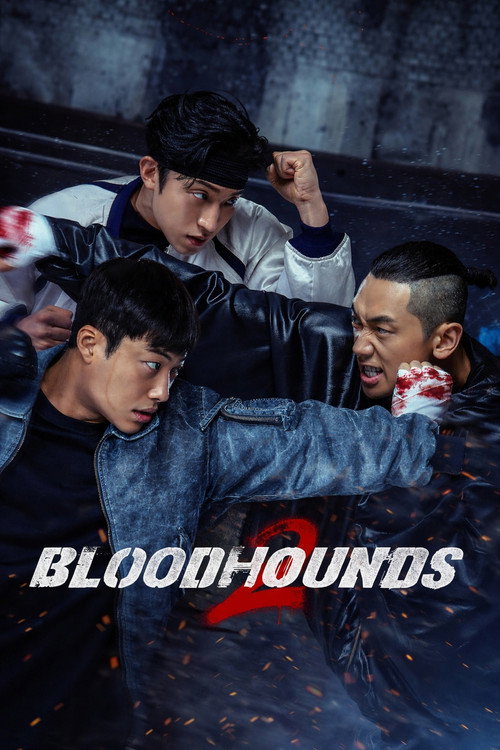
An adrenaline-soaked noir thriller where raw fists cut through cold neon shadows, blending relentless brutality with an unwavering warmth of brotherhood as two young boxers fight to keep their humanity unbruised against predators.
Bloodhounds

Bloodhounds

사냥개들

"Their Biggest Fight is Not in The Ring."

09 June 2023 — 03 April 2026 South Korea 2 season 15 episode Ended 8.5 (769)

Cast: Woo Do-hwan, Lee Sang-yi, Huh Joon-ho, Park Sung-woong, Rain

Drama Crime Action & Adventure Brotherhood & Chosen Family Systemic Greed vs. Honest Labor The Cost of Justice & Vigilantism Physical Discipline as Emotional Armor Exploitation of Human Vulnerability

Overview

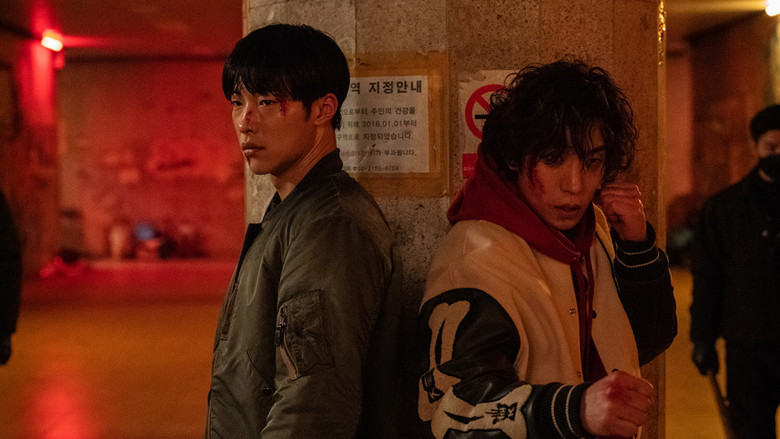
Bloodhounds is a high-octane South Korean crime action series created, written, and directed by Jason Kim (Kim Joo-hwan), based on the Naver webtoon by Jeong Chan. The series spans two seasons and 15 episodes, following Kim Geon-woo, an earnest rookie boxing champion, and Hong Woo-jin, a charismatic former marine and southpaw fighter, who are bound by boxing honor and a shared moral code.

Across its multi-season arc, the duo transforms from idealistic young athletes into relentless protectors of the helpless. Their struggle begins against a vicious loan shark network preying on small-business owners during the COVID-19 pandemic and later expands internationally against an underground dark-web combat league fueled by cryptocurrency and corruption.

Grounded in authentic, bone-crunching boxing choreography rather than weapons or extravagant martial arts, the show balances dark, visceral violence with genuine heart and humor, exploring how friendship and discipline serve as armor against systemic cruelty.
Core Meaning

At its core, Bloodhounds serves as a moral testament to human integrity in a world driven by parasitic greed. By contrasting the pure, honest labor of physical boxing discipline with the predatory violence of illegal finance and dark-web exploitation, the series argues that true strength is defined by moral restraint and a willingness to protect others rather than physical dominance or financial wealth.

Thematic DNA

Brotherhood & Chosen Family 30%
Systemic Greed vs. Honest Labor 25%
The Cost of Justice & Vigilantism 20%
Physical Discipline as Emotional Armor 15%
Exploitation of Human Vulnerability 10%

Brotherhood & Chosen Family

Revealed through the bond between Geon-woo and Woo-jin as they evolve from ring rivals to inseparable brothers sharing training, meals, and life-and-death burdens, eventually transitioning into a coach-fighter relationship in Season 2.

Systemic Greed vs. Honest Labor

Exposed by contrasting predatory wealth accumulation—such as loan sharking in Season 1 and dark-web cryptocurrency fighting in Season 2—against the sweat-equity discipline of boxing, where protagonists value human life above monetary gain.

The Cost of Justice & Vigilantism

Demonstrated as legal systems and law enforcement fail to protect vulnerable citizens, forcing the leads into vigilantism that exacts a severe personal toll, including debilitating injuries, loss of mentors, and emotional trauma.

Physical Discipline as Emotional Armor

Shown through boxing serving as both a literal combat tool and a metaphor for resilience, where rigorous conditioning and the "heart of a boxer" allow the heroes to process grief and channel pain into strength.

Exploitation of Human Vulnerability

Highlighted as antagonists systematically target the desperate, including financially cornered small-business owners during the pandemic in Season 1 and disgraced fighters in Season 2.

Character Analysis

Kim Geon-woo

Woo Do-hwan

Archetype: Hero / Moral Anchor Key Trait: Unshakable politeness, physical fortitude, and pure moral conviction

Motivation

Protecting his mother, safeguarding his chosen family, and maintaining "the heart of a boxer."

Character Arc

Matures from a polite, naive rookie boxer forced into crime fighting into a WBC world champion who learns to blend orthodox boxing discipline with situational ferocity to protect his loved ones.

Hong Woo-jin

Lee Sang-yi

Archetype: Loyal Companion / Strategist & Coach Key Trait: Agility, quick tactical thinking, and fierce loyalty

Motivation

Standing by Geon-woo and ensuring his brother achieves his full boxing potential.

Character Arc

Transitions from a street-smart former marine boxer into Geon-woo's closest tactical partner, later becoming his dedicated trainer and ringside coach after suffering a career-ending hand injury in Season 2.

All 5 characters and cast

Symbols & Motifs

Boxing Gloves and Hand Wraps

Meaning:

Represent clean, honorable effort, discipline, and mutual respect.

Context:

Used throughout training and legitimate fights to directly contrast against lethal weapons, blood money, and dirty underworld violence.

The Facial Scar

Meaning:

A physical reminder of villainous cruelty and Geon-woo's enduring resilience.

Context:

Received by Geon-woo on his left cheek from Kim Myeong-gil in Season 1, Episode 1.

Cash Bundles and Cryptocurrency

Meaning:

Symbolize corrupting wealth and the modern evolution of human exploitation.

Context:

Physical cash bundles represent loan shark corruption in Season 1, while Bitcoin and dark-web streaming represent digitized dehumanization in Season 2.

The "Bloodhound" Title Motif

Meaning:

Evolves from ruthless debt enforcers to righteous protectors hunting beasts of prey, before taking on an ambiguous political meaning.

Context:

Reclaimed by Geon-woo and Woo-jin during their quest, and later co-opted by state agents in the Season 2 finale to hunt rival syndicates.

The Ring vs. The Underground Cage

Meaning:

Represents the clash between rules, sportsmanship, and fairness versus lawless, survival-of-the-fittest barbarism.

Context:

Contrasted between official WBC boxing rings and illegal combat arenas like Smile Capital's backrooms and the IKFC cages.

Memorable Quotes

마음이 가장 중요해요. 복서의 마음.
— Kim Geon-woo

Context

Spoken in Season 1, Episode 1 during a post-fight conversation with Woo-jin about why he fights.

Meaning

Encapsulates Geon-woo's philosophy that boxing is defined by honor and purity rather than violence or money.

돈 때문에 약한 사람 괴롭히면 양아치지, 우리는 복서입니다.
— Kim Geon-woo

Context

Spoken in Season 1, Episode 3 when confronting Smile Capital goons collecting illegal debts.

Meaning

Draws a strict moral boundary between legitimate boxers and criminal enforcers.

All 5 quotes

Episode Highlights

Episode 1

S1E1

Establishes the initial boxing tournament meeting between Geon-woo and Woo-jin, followed by Kim Myeong-gil slashing Geon-woo's face after trapping his mother in a fraudulent loan.

Significance:

Serves as the foundational catalyst for the entire series and the partnership between the main leads.

Episode 3

S1E3

Geon-woo and Woo-jin join President Choi's organization and uncover the vast extent of Smile Capital's illegal lending network.

Significance:

Cements the partnership between Geon-woo and Woo-jin as they unite with President Choi's team.

Episode 6

S1E6

Kim Myeong-gil executes a night raid on President Choi's mansion, killing President Choi and severely injuring Woo-jin.

Significance:

Marks a major turning point, forcing the duo into hiding to undergo intense physical training for vengeance.

Episode 8

S1E8

Geon-woo and Woo-jin confront Kim Myeong-gil at the docks as he attempts to flee to Vietnam with 80 billion won in gold bars.

Significance:

Serves as the Season 1 climax where the villains are defeated, gold is recovered, and President Choi's charitable legacy is fulfilled.

Episode #2.1

S2E1

Shows Geon-woo winning the WBC championship with Woo-jin as his official coach, while introducing Im Baek-jeong and the dark-web IKFC league.

Significance:

Establishes the post-time-jump narrative trajectory and introduces the central threats of Season 2.

Episode #2.5

S2E5

Im Baek-jeong escalates his campaign by breaking Woo-jin's hand and threatening Geon-woo's mother.

Significance:

Reaches a peak emotional tension that forces Geon-woo to abandon his rules and enter the IKFC ring.

Episode #2.7

S2E7

Features a brutal 2-on-2 battle in an abandoned industrial complex where Geon-woo defeats Baek-jeong, ending with NIS agents intercepting Baek-jeong.

Significance:

Concludes the series by resolving the threat while delivering a twist that transforms the antagonist into a state-controlled operative.

Philosophical Questions

Can pure moral integrity survive in a deeply corrupted economic system?

Explored through Geon-woo's persistent effort to maintain politeness, honor, and "a boxer's heart" despite being targeted by sociopathic predators.

Where is the line between righteous self-defense and destructive vengeance?

Examined in both seasons as the protagonists are pushed beyond legal boundaries when their loved ones and mentors suffer brutal attacks.

Is human life inherently valuable, or merely a commodity defined by market forces?

Contrasted through President Choi's belief in zero-interest humanitarian aid versus villains like Myeong-gil and Baek-jeong who treat people as financial assets or livestock.

Alternative Interpretations

The series can be interpreted through several distinct analytical lenses:

Full ending explanation

Cultural Impact

Bloodhounds captured South Korea's real-life economic struggles with predatory private money lending during the pandemic in Season 1, while Season 2 addressed societal anxieties regarding dark-web sports gambling, illegal combat leagues, and unregulated cryptocurrency. Upon its Season 1 release in June 2023, the show reached #1 on Netflix's Non-English TV chart globally within six days and was praised for establishing a benchmark in Korean practical action choreography. Returning in April 2026, Season 2 solidified Bloodhounds as one of Netflix's premier Korean action franchises alongside Squid Game and All of Us Are Dead.

Audience Reception

Season 1: Highly positive overall, with strong praise for the physical chemistry between Woo Do-hwan and Lee Sang-yi, realistic boxing choreography, and satisfying revenge arc. Critical notes focused on pacing and narrative adjustments in Episodes 7 and 8 caused by the unexpected removal of Kim Sae-ron's character.

Season 2: Generally strong reception, highlighted by Rain's menacing villain performance and elevated combat sequences. However, feedback was polarized regarding plot complexity, as some viewers felt the shift toward dark-web international syndicates detached the show from the intimate warmth of Season 1.

Interesting Facts

  • Actress Kim Sae-ron was involved in a DUI incident during Season 1 filming in May 2022, prompting a one-month production halt and a complete rewrite of the final 80 script pages to remove her character from Episodes 7 and 8.
  • Woo Do-hwan gained 10–13 kg of muscle to accurately portray a professional boxer, eating up to four meals per day.
  • Lee Sang-yi trained extensively to fight as a southpaw (left-handed) and maintained a strict diet of brown rice and chicken breast.
  • Pop icon Rain (Jung Ji-hoon) took on his very first villainous role in his 28-year career as Im Baek-jeong in Season 2.
  • Director Jason Kim avoided wire work and digital shortcuts to deliver authentic practical boxing action.
  • Season 1 incorporated the real-world COVID-19 pandemic as a backdrop, showing empty streets and small-business bankruptcies.
  • Season 2 premiered in April 2026, nearly three years after Season 1's June 2023 release.

Easter Eggs

Park Seo-joon Cameo in Season 2 Finale

Park Seo-joon appears as NIS Agent Sin-hyeong, referencing his prior lead roles in Director Jason Kim's films Midnight Runners and The Divine Fury.

2PM's Chansung Role

Hwang Chansung plays elite fighter Tae-geom, creating a fight scene against Lee Sang-yi that pits two prominent figures from the K-pop era against each other.

Nod to Midnight Runners Buddy Dynamic

The physical synergy and playful banter between Geon-woo and Woo-jin pay homage to Director Jason Kim's hit action-comedy film Midnight Runners.

Choi Si-won's Chaebol Subversion

Choi Si-won plays third-generation chaebol Hong Min-beom, who evolves from an arrogant heir into a loyal ally, poking fun at standard K-drama chaebol tropes.

Frequently Asked Questions

Explore More About This Movie

Dive deeper into specific aspects of the movie with our detailed analysis pages

Comments (0)

Leave a comment

No comments yet. Be the first to share your thoughts!

Similar Movies