Full spoilers follow.
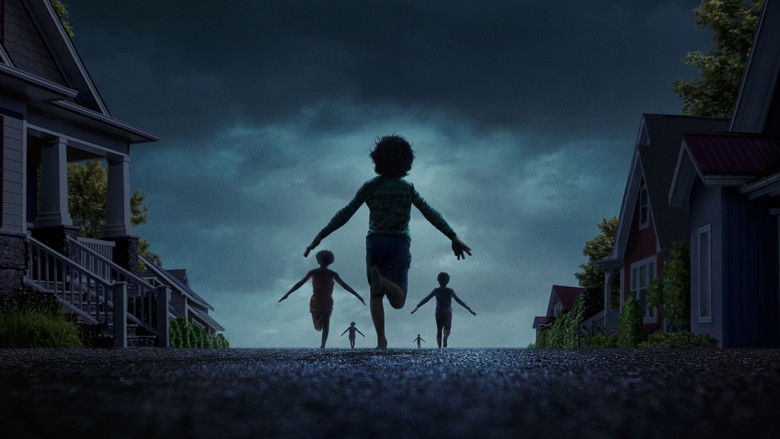
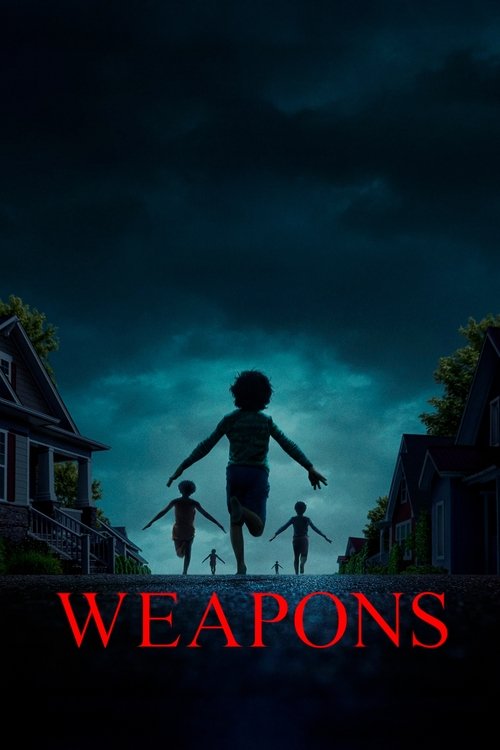
The event. At 2:17 a.m., seventeen children from Justine Gandy's third-grade class simultaneously get out of bed, leave their homes and run into the darkness with their arms trailing behind them like aeroplane wings. Only Alex Lilly, from the same class, stays. The film then spends five chapters withholding the cause while the town tears itself apart looking for one.
The solution. Alex's mother invited a distant, homeless relative into the family home: Gladys (Amy Madigan), presented to Alex as his aunt. Gladys is a witch. She immediately bewitched Alex's parents, compelling them into self-harm — using their bodies as hostages to force Alex's compliance. Under that leash, Alex was made to collect a personal belonging from each of his classmates. Gladys used those objects to perform the summoning that pulled the children out of their beds at 2:17 and drew them to the house, where she has kept them locked in the basement, feeding off their vitality to sustain herself.
Why the structure matters. The six chapters — Justine, Archer, Paul, James, Marcus, Alex — are not just a stylistic flourish; they are the mechanism of the mystery. Each character holds one fragment and misreads it. Justine appears guilty from the outside and is not. Archer's obsessive father-investigation is correct that a secret exists and wrong about who holds it. Paul, the police officer, is compromised and prioritises concealing his own misconduct. James, the addict and burglar whom the town has rendered invisible, physically encounters the truth precisely because nobody is watching him — and his testimony is worthless to everyone who matters. Marcus, the principal, embodies institutional self-protection. Only Alex's chapter, arriving last, supplies the cause, and it recontextualises every image the previous five chapters filed away as inexplicable.
The climax. Gladys's control ultimately breaks in the direction of her own victims: the children she has been draining are turned loose on her, and the film's iconic image of small bodies running with outstretched arms recurs at the end — but with the predator, not the innocent, on the receiving end. It is the film's one moment of pure catharsis, and Cregger immediately undercuts it.
The ending and what it means. Gladys is destroyed, and almost nothing is repaired. As the closing voiceover explains, only some of the children speak again after what was done to them. Alex gets his parents back, but they are so damaged that they must be institutionalised, and he is placed with another aunt — a devastating final rhyme, since 'another aunt' is exactly how this began. Maybrook looks, from the street, unchanged. Everything inside it is broken.
The hidden meaning that lands only in retrospect. The title is not about the branches or the folk magic. Cregger has said the real weapons are fear, grief and denial — and once you know the solution, the first five chapters replay as a catalogue of people being used as instruments against each other. Alex is a weapon aimed at his own classmates. The town is a weapon aimed at an innocent teacher. Grief is the weapon aimed at Archer. Institutional cowardice is the weapon aimed at everyone. Gladys is simply the only character honest about what she's doing. The film's refusal to explain why this class, this night, this hour is deliberate: catastrophe has no motive worth understanding, only an aftermath.
Behind the ending. The closing narration was not in Cregger's original cut — he wanted to end on a child's face with no explanation at all, and added the voiceover after audiences resisted. A darker alternate ending also exists. A confirmed prequel about Gladys's origins is intended, in Cregger's words, to expand the mystery rather than resolve it.