Skip to content
While You Were Sleeping
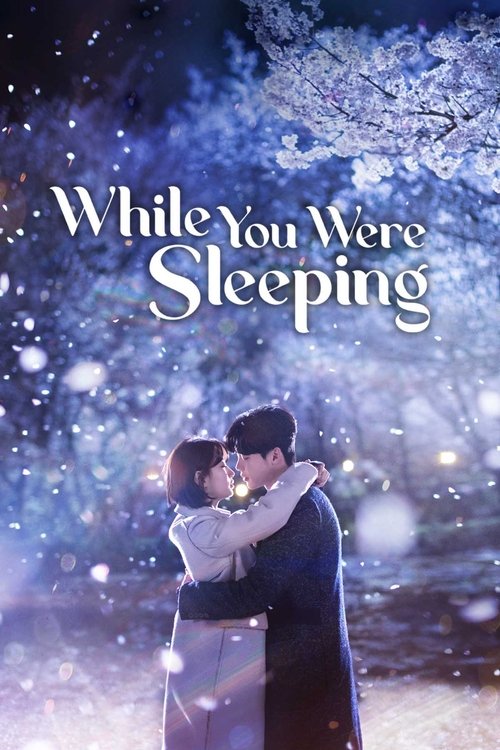
Under a canopy of falling snow and drifting cherry blossoms, a legal fantasy romance intertwines deep melancholic grief with tender hope, as fragile dreams ripple across the reflective glass of fateful choices.
While You Were Sleeping

While You Were Sleeping

당신이 잠든 사이에

"That future, that time, that fate, can it be changed?"

27 September 2017 — 16 November 2017 South Korea 1 season 32 episode Ended 8.4 (157)

Cast: Suzy, Lee Jong-suk, Jung Hae-in, Lee Sang-yeob, Hwang Young-hee

Drama Sci-Fi & Fantasy Free Will vs. Predestination Legal Integrity and the Pursuit of Truth Interconnectedness and the Ripple Effect of Compassion Trauma, Guilt, and Healing Noble Sacrifice and Duty

Overview

While You Were Sleeping (당신이 잠든 사이에) is a 16-episode South Korean television series (originally broadcast in 32 half-hour segments) that seamlessly merges supernatural fantasy, courtroom legal drama, and romance. The story follows Nam Hong-joo, a passionate field journalist who possesses the distressing ability to foresee catastrophic future events and deaths in her sleep, yet remains powerless to prevent them on her own. Her isolated existence changes when Jeong Jae-chan, a socially awkward rookie prosecutor, moves in across the street. When Jae-chan experiences a prophetic nightmare detailing Hong-joo’s tragic death, he takes an erratic leap of faith by intentionally crashing his car to alter the sequence of events. This decisive action disrupts the predetermined flow of time, saving Hong-joo and binding their fates together.

As their lives intertwine, they discover that saving someone from death creates a domino effect: the person saved acquires the ability to dream of their savior's future. Soon, patrol officer Han Woo-tak—who was also rescued during Jae-chan's car crash—begins receiving premonitions about Jae-chan. Together, the trio forms an informal investigative pact to anticipate crimes, alter tragic outcomes, and expose truth within the justice system. Across their journey, they face complex legal cases, systemic corruption, and personal trauma, primarily pitted against Lee Yoo-beom, a ruthless defense attorney who manipulates evidence for personal triumph.

Through courtroom battles and evolving romantic trust, the series explores how small acts of moral courage can rewrite devastating tomorrows. The overall story arc traces the characters' growth from fearful individuals haunted by visions into proactive champions of justice who learn to face grief, accept responsibility, and trust in the power of human choice.
Core Meaning

Through While You Were Sleeping, writer Park Hye-ryun and director Oh Chung-hwan communicate that destiny is not an unchangeable sentence, but a flexible trajectory shaped by moral choice, empathy, and accountability. The premonitory dreams serve as a metaphor for human foresight, intuition, and conscience. The creators emphasize the "butterfly effect" of human kindness: choosing to save or support another person creates a cascading network of protection and mutual salvation.

Furthermore, the series offers a profound critique of procedural justice. It asserts that the law should never be a cold tool for personal ambition or technical convenience, but a living instrument meant to ensure that "justice rolls down like waters". True redemption and peace come not from denying past mistakes or avoiding pain, but from confronting trauma with brief self-reproach followed by enduring remembrance and righteous action.

Thematic DNA

Free Will vs. Predestination 30%
Legal Integrity and the Pursuit of Truth 25%
Interconnectedness and the Ripple Effect of Compassion 20%
Trauma, Guilt, and Healing 15%
Noble Sacrifice and Duty 10%

Free Will vs. Predestination

The series begins with the overwhelming dread that nightmare premonitions are absolute. However, once Jae-chan alters the first accident, the narrative establishes that time can flow down new tributaries when individuals act courageously. Throughout the show, the characters test the boundaries of predetermination, learning that while dreams reveal potential danger, human agency determines the ultimate resolution.

Legal Integrity and the Pursuit of Truth

The narrative contrasts prosecutor Jae-chan’s meticulous, truth-seeking methodology with attorney Lee Yoo-beom’s corrupt, win-at-all-costs manipulation of evidence. As the legal cases grow increasingly high-stakes—ranging from domestic violence to organ donation ethics and serial murder—the show examines the moral weight carried by officers of the court and the legal duty to protect the innocent over securing career victories.

Interconnectedness and the Ripple Effect of Compassion

The dream-sharing phenomenon operates on a clear law of causality: saving a life grants the survivor visions of their savior’s future. This mechanism physically manifests the philosophical concept that our fates are inextricably linked. The theme expands from a localized trio to encompass a broader network of past traumas, proving that past acts of mercy return to protect people in their darkest hours.

Trauma, Guilt, and Healing

Both Jae-chan and Hong-joo carry deep childhood scars stemming from the tragic deaths of their fathers caused by a runaway soldier. Rather than letting grief paralyze them, their relationship provides mutual emotional refuge. The show illustrates that guilt should be acknowledged briefly to foster maturity, rather than allowed to consume one's identity.

Noble Sacrifice and Duty

True integrity requires personal cost. This theme peaks during the climax when secondary characters voluntarily relinquish career, status, or safety—such as Woo-tak exposing his color blindness in court or Chief Choi facing his foretold fate—to guarantee that truth prevails.

Character Analysis

Jeong Jae-chan

Lee Jong-suk

Archetype: Idealistic Hero / Reluctant Crusader Key Trait: Resolute moral compass masked by goofy, socially awkward charm

Motivation

Shifts from self-preservation and avoiding trouble to an unyielding commitment to protecting innocents and ensuring judicial justice.

Character Arc

Starts as an unmotivated, socially clumsy rookie prosecutor eager to avoid burdensome cases. Through his connection with Hong-joo and his prophetic dreams, he grows into a fearless legal officer willing to stand up against institutional pressure and risk his life to uphold truth.

Nam Hong-joo

Bae Suzy

Archetype: Crusading Heroine / Reluctant Prophet Key Trait: Empathetic, stubborn, and doggedly persistent

Motivation

Evolves from passive fear of her fatal visions to active, brave pursuit of journalistic truth and mutual protection.

Character Arc

Begins isolated and traumatized by helpless premonitions, having taken a leave of absence from her journalism career out of fear. Upon meeting Jae-chan and altering the future, she regains her courage, returns to SBC news, and uses her reporting skills to expose injustice alongside the prosecution.

All 5 characters and cast

Symbols & Motifs

Rain and Umbrellas (Red, Green, Yellow)

Meaning:

Umbrellas symbolize protection, hidden secrets, and emotional intimacy.

Context:

The green umbrella specifically acts as a recurring harbinger of impending danger during murder cases, while the distinction between umbrella colors becomes a pivotal evidence point highlighting Han Woo-tak's secret color blindness.

Cherry Blossoms and Falling Snow

Meaning:

Snow and cherry blossom petals mark moments where dream premonitions bleed into reality.

Context:

Snow accompanies the initial fate-altering car crash and the revelation of shared trust, whereas cherry blossoms frame romantic premonitions, symbolizing hope, transience, and new beginnings.

Rolling Paper Bits

Meaning:

Symbolizes his repressed guilty conscience, internal anxiety, and moral decay masking a slick exterior.

Context:

A character habit of attorney Lee Yoo-beom, who neurotically rolls up small strips of paper whenever he fabricates evidence or conceals a lie.

Notepads & Post-it Notes

Meaning:

Represent human memory, accountability, and the conscious effort to transform elusive sleep visions into actionable real-world intervention.

Context:

Hong-joo's wall of sticky notes and dream journals represent human memory, accountability, and the conscious effort to transform elusive sleep visions into actionable real-world intervention.

The Green Corgi (Robin)

Meaning:

Represents warmth, domestic comfort, and the loyal, selfless companionship shared among the "Three Flying Dragons".

Context:

Woo-tak's dog represents warmth, domestic comfort, and the loyal, selfless companionship shared among the team.

Memorable Quotes

자책은 짧게, 대신 잊지는 말고.
— Jeong Jae-chan

Context

Episode 13–14 (16-episode format: Episode 7 / 32-episode format: Ep 13–14). Jae-chan comforts Hong-joo in a park when she breaks down in tears, blaming herself for Woo-tak getting stabbed. Chief Choi repeats these exact words back to Jae-chan before dying in Episode 31–32 (Episode 16).

Meaning

The fundamental thesis of the series regarding emotional recovery, ethics, and processing grief.

난 당신 믿어요. 나니까, 당신 믿을 수 있어.
— Nam Hong-joo

Context

Episode 2 (16-episode format: Ep 1 / 32-episode format: Ep 2). In the middle of a snowstorm, after Jae-chan crashes his car into Yoo-beom's to prevent Hong-joo's framed death, Jae-chan despairs that no one will believe his absurd dream explanation. Hong-joo embraces him and utters these words.

Meaning

Establishes absolute emotional trust and validates Jae-chan’s miraculous intervention.

All 5 quotes

Episode Highlights

While You Were Sleeping

S1E1

Jae-chan dreams of Hong-joo being framed by Lee Yoo-beom for a fatal car crash, driving her to suicide. Jae-chan intentionally rams his car into Yoo-beom’s vehicle during a snowstorm, saving Hong-joo, her mother, and officer Han Woo-tak.

Significance:

Alters fate for the first time, establishes the dream-sharing bond, and kicks off the entire narrative arc.

A Few Good Men

S1E2

Introduces domestic violence case involving high school pianist Park So-yoon's father. Jae-chan's younger brother Seung-won becomes involved. Jae-chan and Hong-joo work together using dreams to successfully prosecute the abuser.

Significance:

Proves that Jae-chan and Hong-joo must collaborate to alter outcomes and introduces Han Woo-tak into the dream loop.

Don't Believe Her

S1E4

Features the iconic visual dream sequence where Jae-chan dreams of kissing Hong-joo under a canopy of falling cherry blossoms. In reality, Jae-chan hesitates, blurring romantic expectation with premonition.

Significance:

Solidifies the romantic tension and explores how premonitions can influence conscious real-life decisions.

A Secret That Can't Be Told

S1E7

Han Woo-tak is critically stabbed while investigating a suspect. Devastated by guilt, Hong-joo cries in a park, where Jae-chan comforts her with the thesis quote on brief self-reproach.

Significance:

Deepens emotional bonds, establishes the series' central philosophical message on guilt, and hints at Woo-tak's unspoken sacrifice.

Boy Meets Girl

S1E10

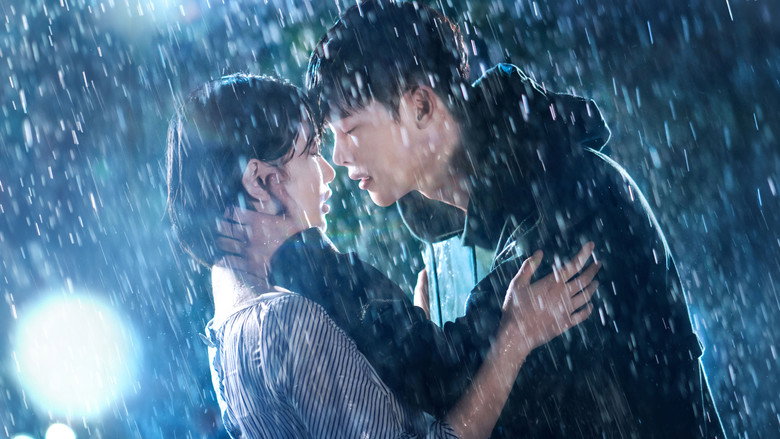
Jae-chan and Hong-joo fully connect their childhood memories, realizing they met 13 years ago as "Chestnut" and "Little Boy" at their fathers' joint funeral. They share a double-shot kiss in the rain.

Significance:

Resolves past childhood trauma and transforms their partnership into an explicit romantic relationship.

Die Hard

S1E12

A brain-dead victim’s family agrees to organ donation, complicating the murder charges against an abusive professor. Jae-chan orchestrates simultaneous organ transplantation and autopsy, delivering his speech on justice.

Significance:

Marks Jae-chan's peak growth as a prosecutor and secures a landmark legal victory against systemic abuse.

Cat's Cradle

S1E14

Hong-joo’s long-feared dream of being poisoned in the rain under a green umbrella comes to pass at the hands of Ha Joo-an (the IV serial killer) and Lee Yoo-beom. Jae-chan rushes to save her.

Significance:

The narrative's darkest crisis point, setting up the final legal and physical confrontation.

Goodbye, My Friend

S1E16

Chief Choi is run down by Yoo-beom and dies in Jae-chan's arms. In court, Woo-tak reveals his color blindness to authenticate umbrella evidence, sacrificing his police career. Yoo-beom is sentenced to life imprisonment.

Significance:

Resolves all major character arcs, fulfills long-term dream foreshadowing, and provides emotional closure.

Philosophical Questions

Does foreknowledge of tragedy grant a moral obligation to interfere with the present?

The show explores the ethics of altering timelines, showing that intervening without full understanding can create unintended consequences.

Is legal procedure synonymous with moral justice?

Through legal battles, the series asks whether adhering to technical statutory rules fulfills societal duty when doing so allows guilty individuals to go free.

What is the true function of guilt in human redemption?

The narrative explores whether lingering regret serves a moral purpose or if healing requires channeling remorse into constructive action.

Alternative Interpretations

Absolute Determinism vs. Dynamic Agency: Critics and viewers often debate whether time in the series is genuinely malleable or merely rerouted. One reading suggests that changing a nightmare only alters how an event occurs rather than preventing the underlying fate entirely, pointing to recurring life-threatening situations faced by the characters. A more optimistic reading argues that human choic...

Full ending explanation

Cultural Impact

Aired on SBS in autumn 2017, While You Were Sleeping dominated its Wednesday-Thursday timeslot, consistently achieving peak television ratings of 10–11%. The show solidified South Korea's mid-2010s television trend of blending procedural legal/prosecutorial drama with supernatural fantasy.

The series cemented Lee Jong-suk's reputation as a reliable lead for high-concept fantasy-legal dramas. It also served as a major career breakout for Jung Hae-in, whose portrayal of Han Woo-tak sparked widespread "second lead syndrome" across domestic and international audiences. Although some critics felt its middle legal cases were slightly episodic compared to Park Hye-ryun's earlier works (I Can Hear Your Voice), the show remains highly regarded as a comfort classic of late 2010s K-drama.

Audience Reception

Praised Elements:

  • Explosive Pilot Hook: Episode 1's fate-altering car crash is widely cited as one of the best premiere episodes in modern K-drama.
  • Lead Trio Dynamics: The warm, non-toxic chemistry between the "Three Flying Dragons" (Lee Jong-suk, Bae Suzy, Jung Hae-in) was universally celebrated.
  • Kim Won-hae's Performance: Chief Choi's late-game reveal and emotional performance received widespread critical acclaim.

Criticisms & Controversies:

  • Episodic Pacing in Middle Chapters: Some viewers found the middle legal cases somewhat formulaic compared to the main thriller plot.
  • One-Dimensional Antagonist: A portion of critics felt Lee Yoo-beom's character devolved into a somewhat stereotypical villain toward the finale without sufficient exploration of his inner motivations.

Overall Verdict: Widely regarded as an entertaining, comforting, and visually polished legal fantasy drama that balances romance, humor, and courtroom suspense.

Interesting Facts

  • Filming took place entirely between February 2017 and July 2017 before airing as a 100% pre-produced drama, allowing extensive post-production, polished CGI, and seamless dream-sequence editing.
  • The drama marked the third collaboration between writer Park Hye-ryun and lead actor Lee Jong-suk, following I Can Hear Your Voice (2013) and Pinocchio (2014).
  • Bae Suzy cut her long hair short for the first time since her 2010 entertainment debut to capture the practical personality of field reporter Nam Hong-joo.
  • Both lead actors sang original tracks for the drama's official soundtrack: Suzy sang 'I Love You Boy' and 'Words I Want To Hear', while Lee Jong-suk sang 'Come To Me' and 'Do You Know'.
  • Director Oh Chung-hwan went on to direct major hits including Hotel Del Luna (2019) and reunited with writer Park Hye-ryun for Start-Up (2020).

Easter Eggs

Kim So-hyun & Shin Jae-ha Re-pairing

Kim So-hyun (playing pianist Park So-yoon) and Shin Jae-ha (playing Jae-chan's brother) previously starred together as rival piano prodigies in the 2016 3-episode drama Page Turner, also written by Park Hye-ryun.

Lee Sung-kyung & Yoon Kyun-sang Cameo

In Episodes 21–22, Lee Sung-kyung and Yoon Kyun-sang make a cameo as an overly affectionate couple in matching pink outfits who interrupt Jae-chan and Hong-joo's date. Both actors are close friends of Lee Jong-suk (Yoon Kyun-sang played his older brother in Pinocchio).

"W: Two Worlds" References

Actor Kang Ki-young (who starred with Lee Jong-suk in W) makes a cameo as a corrupt chicken restaurant owner. Additionally, Jae-chan drives a red car similar to the red sports car used in W.

Cinematic Episode Titles

Every chapter title in the series is named after a famous movie (e.g., While You Were Sleeping, A Few Good Men, Don't Believe Her, Cat's Cradle, 12 Angry Men).

Frequently Asked Questions

Explore More About This Movie

Dive deeper into specific aspects of the movie with our detailed analysis pages

Comments (0)

Leave a comment

No comments yet. Be the first to share your thoughts!

Similar Movies