Skip to content
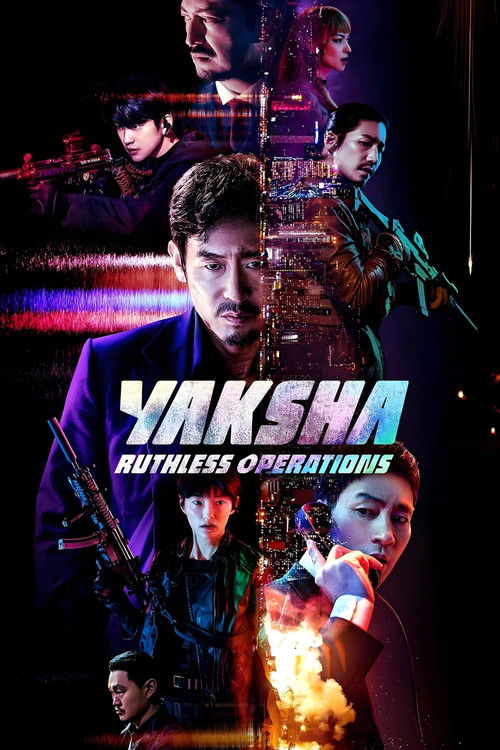
Yaksha: Ruthless Operations
A cold, neon-streaked spy thriller where rulebooks burn in the back alleys of Shenyang, and one ruthless man's shadow keeps growing into the monster its enemies whisper about.
Yaksha: Ruthless Operations

Yaksha: Ruthless Operations

야차

"The battle of spies begins."

08 April 2022 South Korea 125 min 6.6 (264)

Director: Na Hyun

Cast: Sul Kyung-gu, Park Hae-soo, Hiroyuki Ikeuchi, Yang Dong-geun, Lee El

Crime Action Thriller Law vs. Ruthless Pragmatism Redemption and Proving Oneself Shadow Wars and Geopolitics Monstrosity as Identity Trust and Loyalty Among Spies

Overview

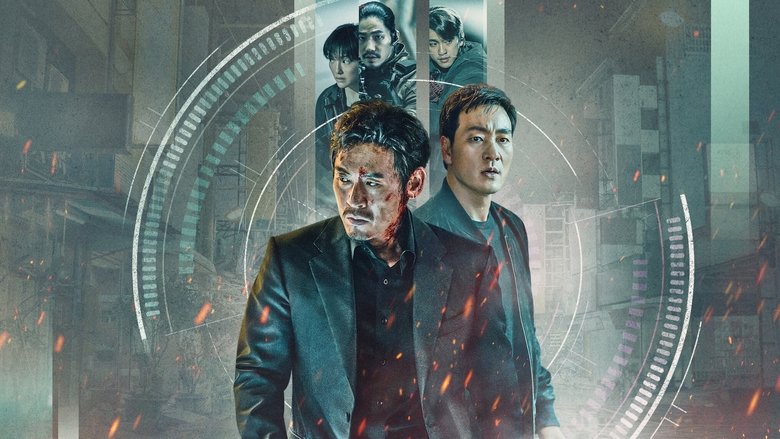
Yaksha: Ruthless Operations (야차) is a 2022 South Korean spy action film directed by Na Hyun and released worldwide on Netflix on April 8, 2022. It is set in Shenyang, China, a city the film treats as a crowded crossroads where intelligence services quietly fight each other.

Han Ji-hoon (Park Hae-soo) is a prosecutor with the Seoul Central District Prosecutors' Office. After his case against Lee Chan-young, chairman of Sangin Group, falls apart, he is demoted to the legal support office of the National Intelligence Service. He is then sent to Shenyang to review the black-ops team run by Ji Kang-in (Sul Kyung-gu), a notorious leader known as "Yaksha." Ji-hoon sees the job as a chance to prove himself.

Once he lands, the audit quickly turns into something else. Ji-hoon ends up caught in a live war between rival spies, and his belief in doing things by the book runs straight into Kang-in's philosophy of winning at any cost.


Core Meaning

The film's central tension is legality versus effectiveness. Reviewers describe it as a debate between doing things "by the book" and doing whatever it takes to stop the bad guys, even when ethical lines blur. By putting a demoted, principled prosecutor inside a lawless black-ops unit, Na Hyun asks what accountability can mean in a world where states fight in the shadows. The film doesn't really settle the question. It suggests that each side needs the other: ruthlessness without oversight becomes monstrous, and oversight without any grip on reality stops being relevant.

Thematic DNA

Law vs. Ruthless Pragmatism 30%
Redemption and Proving Oneself 20%
Shadow Wars and Geopolitics 20%
Monstrosity as Identity 15%
Trust and Loyalty Among Spies 15%

Law vs. Ruthless Pragmatism

This debate carries the film. Ji-hoon, a prosecutor, comes to audit Kang-in's black-ops team, and their clashing methods drive both the story and the drama.

Redemption and Proving Oneself

Ji-hoon is demoted after his failed case against the Sangin Group chairman and treats the Shenyang assignment as a chance to show what he can do. His career wound shapes his choices.

Shadow Wars and Geopolitics

Shenyang is shown as a battleground where several intelligence agencies clash in secret. It gives a sense of the hidden conflicts that run alongside official diplomacy.

Monstrosity as Identity

Kang-in's nickname, "Yaksha," a demon-guardian figure, frames him as a man who has deliberately become a monster in order to guard something larger than himself.

Trust and Loyalty Among Spies

In a world of espionage, alliances keep shifting. Both the team and the outsider auditor have to decide whom to trust as the spy war escalates.

Character Analysis

Ji Kang-in ("Yaksha")

Sul Kyung-gu

Archetype: Antihero Key Trait: Ruthless pragmatism

Motivation

Winning the shadow war in Shenyang by any means necessary.

Character Arc

A notorious black-ops leader whose methods are under scrutiny. Through the film he proves how effective, and how brutal, his approach is, and in the climax he finally kills his rival Ozawa.

Han Ji-hoon

Park Hae-soo

Archetype: Idealist / Fish out of water Key Trait: By-the-book integrity

Motivation

To prove his capability and recover from his professional setback.

Character Arc

A prosecutor demoted after a botched case, sent to audit Yaksha's team. He starts out committed to procedure and gets pulled into the spy war, where his principles are tested.

All 3 characters and cast

Symbols & Motifs

The name "Yaksha"

Meaning:

In Buddhist and Hindu lore, a yaksha is a fierce spirit that can be both a demon and a guardian. The name captures Kang-in's double role as protector and monster.

Context:

It is Kang-in's nickname and the film's title, signaling his fearsome reputation in the Shenyang spy world.

Shenyang

Meaning:

A neutral-seeming city that stands for a gray zone, where no nation's law fully applies and every agency fights for itself.

Context:

The whole operation is based there, and the film calls it the site of an ongoing war between spies.

The audit / review

Meaning:

Stands for institutional oversight and the attempt to hold covert power accountable.

Context:

This is Ji-hoon's official mission: to review the black-ops team's espionage operations.

Philosophical Questions

Can the ends justify the means in national security?

The film's core debate between Ji-hoon's procedure and Kang-in's ruthless methods tests whether results can excuse crossing ethical lines.

Who watches the watchmen?

Ji-hoon's audit mission asks whether covert operations can ever really be held accountable, and what happens to the person who tries.

Must one become a monster to fight monsters?

Kang-in's "Yaksha" persona suggests that protecting others in a brutal world may require becoming brutal yourself.

How It Ends

Alternative Interpretations

The ending is ambiguous, and critics read the mid-credits coda as setting up a possible sequel. One reading treats the finale as a vindication of Yaksha's ruthlessness: the rules could not have won this war. Another sees it as a warning: a system that depends on "monsters" keeps making more of them, and the open ending suggests the cycle continues. A third reading focuses on Ji-hoon. His experience can be seen as corrupting or as maturing him, depending on whether one thinks his ideals were naïve or necessary.

Full ending explanation

Cultural Impact

The film was one of Netflix's 2022 Korean original features. It arrived when Korean content had huge global reach and Park Hae-soo was newly famous worldwide after Squid Game. It belongs to the Korean spy-thriller tradition of stories about intelligence agencies working in regional hotspots. Its lasting impact has been modest: critics mostly praised its action and criticized its convoluted plot. The mid-credits coda, which sets up a possible franchise, shows how streaming platforms try to build ongoing IP from standalone films.

Audience Reception

Reception was mixed. The film holds a 6.3 rating on IMDb. Reviewers praised the high-octane opening action sequence, its "spectacular shots," and the strong lead cast. The main criticism was a plot that was too convoluted for no reason. Ready Steady Cut called it a "bumpy" action thriller that "spoils the fun with its heavy handed execution." The overall verdict: an entertaining, well-cast action film for genre fans, held back by an overcomplicated story.

Interesting Facts

  • The film was directed by Na Hyun (also romanized Na Hyeon).
  • Principal photography seems to have begun around the end of 2019 and wrapped in the first half of 2020.
  • Filming took place in Taiwan and South Korea, with second-unit shooting in Shenyang, China.
  • The story is set in Shenyang, China.
  • The film was released worldwide on Netflix on April 8, 2022.
  • The Korean original title is 야차 (Yacha), meaning 'Yaksha.'
  • Japanese actor Hiroyuki Ikeuchi appears in the main cast alongside Sul Kyung-gu, Park Hae-soo, Yang Dong-geun and Lee El.

Frequently Asked Questions

Explore More About This Movie

Dive deeper into specific aspects of the movie with our detailed analysis pages

Comments (0)

Leave a comment

No comments yet. Be the first to share your thoughts!

Similar Movies