Skip to content
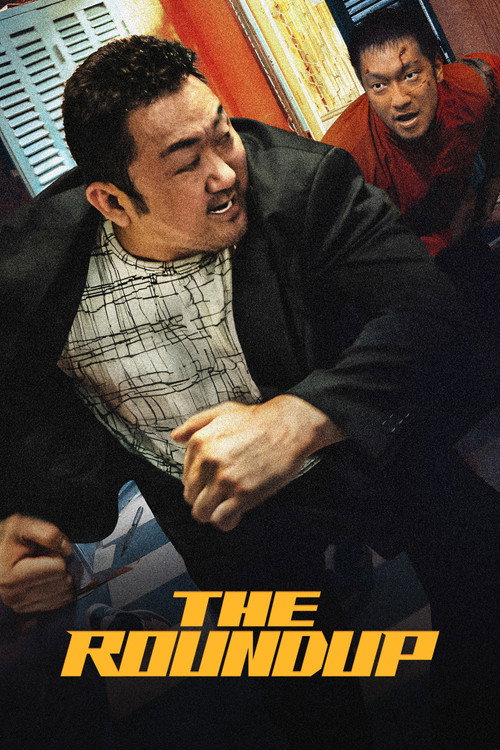
The Roundup
Bathed in humid tropical sweat and bruised by bone-shattering impacts, this relentless crime thriller unleashes a cathartic storm of raw adrenaline, where an unstoppable iron fist collides with pure, untamed savagery.
The Roundup

The Roundup

범죄도시 2

"The Beast Cop Is Back!"

18 May 2022 South Korea 106 min 7.3 (448)

Director: Lee Sang-yong

Cast: Don Lee, Son Seok-koo, Choi Gwi-hwa, Park Ji-hwan, Heo Dong-won

Crime Action Thriller Adventure Unyielding Retributive Justice vs. Systemic Incompetence Greed and Nihilistic Brutality Brotherhood and Police Solidarity Vulnerability of Citizens Abroad Underworld Opportunism and Survival
Budget: $7,600,000
Box Office: $101,166,707

Overview

Four years after the Garibong-dong cleanup operation in The Outlaws (2017), Detective Ma Seok-do and Captain Jeon Il-man from the Geumcheon Police Station’s Major Crimes Squad travel to Ho Chi Minh City, Vietnam. Their official assignment is seemingly routine: extradite a fugitive Korean petty criminal who voluntarily surrendered to the local consulate.

However, Detective Ma’s sharp instincts quickly reveal that the fugitive did not hand himself in out of remorse, but out of sheer terror. He is fleeing Kang Hae-sang, a vicious, psychopathic extortionist who hunts, kidnaps, and brutally murders wealthy South Korean tourists and businessmen across Southeast Asia.

Disregarding local diplomatic boundaries and red tape, Detective Ma launches an unauthorized investigation into Kang's bloody enterprise. When Kang Hae-sang escapes back to South Korea to collect a massive ransom and settle scores, Ma and his unit pursue him through the streets of Seoul in an explosive cross-border manhunt.
Core Meaning

Director Lee Sang-yong uses The Roundup to deliver a visceral message about justice, evil, and institutional protection. The film suggests that when predatory, hyper-violent crime exploits legal loopholes and international jurisdictional borders, uncompromising moral strength and human solidarity must step in to protect the vulnerable.

Beyond its high-octane action-comedy shell, the film champions an idealized pop-hero fantasy: no matter how terrifying, volatile, or evasive evil becomes, it will ultimately be met with swift, unyielding, and satisfying physical retribution.

Thematic DNA

Unyielding Retributive Justice vs. Systemic Incompetence 35%
Greed and Nihilistic Brutality 25%
Brotherhood and Police Solidarity 20%
Vulnerability of Citizens Abroad 10%
Underworld Opportunism and Survival 10%

Unyielding Retributive Justice vs. Systemic Incompetence

Revealed through Ma Seok-do’s willingness to break diplomatic rules and police protocol. The formal legal system is shown as slow and bound by red tape, whereas Ma represents direct, moral justice that guarantees safety when official institutions fail.

Greed and Nihilistic Brutality

Embodied by Kang Hae-sang, whose crimes lack complex ideology or tragic backstory. He is driven purely by reckless avarice, treating human lives as disposable commodities.

Brotherhood and Police Solidarity

Expressed through the banter, loyalty, and teamwork within the Geumcheon Major Crimes Squad. Captain Jeon Il-man may complain constantly, but he stands firmly behind his team when lives are on the line.

Vulnerability of Citizens Abroad

Highlighted by Kang's targeting of South Koreans in Southeast Asia. It reflects anxieties over globalized crime operating in legal "grey zones" beyond domestic police protection.

Underworld Opportunism and Survival

Personified by Jang Yi-soo, an ex-gangster trying to run an illegal business, who is continually forced to assist law enforcement to survive both the cops and deadly mobsters.

Character Analysis

Ma Seok-do

Don Lee / Ma Dong-seok

Archetype: Hero / "Beast Cop" Key Trait: Overwhelming physical power paired with deadpan comedic timing.

Motivation

Protecting citizens and physically crushing violent offenders.

Character Arc

Static superhero archetype whose unwavering moral compass and protective instincts deepen as the scale of violence increases.

Kang Hae-sang

Son Suk-ku

Archetype: Main Villain / Psychopathic Monster Key Trait: Ferocious ruthlessness, explosive speed, and lethal proficiency with bladed weapons.

Motivation

Unbridled financial greed and lethal revenge against anyone who threatens his money.

Character Arc

Evolves from a predatory foreign extortionist into a desperate, furious force of nature raging through Seoul after being hunted.

All 4 characters and cast

Symbols & Motifs

The "Room of Truth" (진실의 방)

Meaning:

Symbolizes extrajudicial police coercion transformed into comedic catharsis.

Context:

Used when Ma Seok-do covers interrogation room cameras with a helmet or towel before physically forcing suspects to confess.

The Machete / Short Blade

Meaning:

Symbolizes Kang Hae-sang's unrefined savagery.

Context:

Unlike Ma's bare hands, Kang’s heavy blades represent unpredictable, cold-blooded violence.

The Bare Fist

Meaning:

Symbolizes Ma Seok-do's absolute moral authority.

Context:

Amplified by thunderous sound effects, his punches serve as an unstoppable wall against criminal chaos.

The Public Bus

Meaning:

Symbolizes civil order invaded by underworld violence.

Context:

The climax takes place inside a trapped municipal bus in Seoul, turning an everyday public space into an arena for final judgment.

Ransom Suitcases / Duffel Bags

Meaning:

Symbolize the corrupting power of wealth.

Context:

Money containers drive the villain's motives, trigger mercenary ambushes, and cause endless betrayals.

Memorable Quotes

너 납치된 거야.
— Kang Hae-sang

Context

Spoken casually inside an SUV before abducting a victim.

Meaning

It became the movie's most viral line, epitomizing Kang’s terrifyingly nonchalant attitude toward violent crime.

죽을 것 같으면 벨 눌러.
— Ma Seok-do

Context

Spoken on the trapped bus right before pulverizing Kang Hae-sang.

Meaning

Showcases Ma's absolute confidence and dark comedic flair.

All 5 quotes

Philosophical Questions

Is stepping outside legal boundaries justified when the legal system fails to protect human life?

Explored through Ma Seok-do's willingness to disregard international diplomatic boundaries and police protocol to stop a ruthless killer.

Can retributive physical violence be morally pure when used strictly to shield the innocent?

Explored through the framing of Ma Seok-do's overwhelming physical power as a necessary, cathartic shield against violent predatory crime.

Is extreme human evil the result of societal breakdown or pure, inherent greed?

Explored through Kang Hae-sang, whose brutal actions stem entirely from unbridled financial greed without any complex ideology or tragic backstory.

Alternative Interpretations

Institutional Satire: Viewers interpret the film as a critique of international diplomacy and bureaucratic red tape, arguing that formal law enforcement often fails victims when hindered by strict legal jurisdiction.

Full ending explanation

Cultural Impact

Arriving after two years of devastated theater attendance, The Roundup served as a landmark event in South Korean pop culture, proving that local audiences were ready to return to theaters for high-energy entertainment.

The plot tapped into public fear surrounding real news reports of South Korean tourists and workers being targeted by foreign-based Korean crime syndicates in Southeast Asia.

Its historic commercial success solidified The Roundup as a multi-film franchise, establishing Ma Seok-do as South Korea’s definitive modern action icon.

Audience Reception

Praised Aspects: Ma Dong-seok’s magnetic screen presence and heavy-hitting punch choreography; Son Suk-ku's terrifying performance as Kang Hae-sang; hilarious deadpan dialogue; fast pacing.

Main Criticisms: Formulaic plot structure closely echoing the original film; minimal character depth for secondary villains; graphic knife violence pushing age-rating limits.

Overall Verdict: Acclaimed as a crowd-pleasing action-comedy hit that equaled or exceeded its predecessor.

Interesting Facts

  • Due to COVID-19 border shutdowns in early 2020, all scenes set in Vietnam featuring actors were shot 100% on sets built in South Korea, with background b-roll shot separately in Vietnam and merged using CGI.
  • Actor Son Suk-ku gained 10 kg of muscle and underwent extensive tanning to portray the battle-hardened villain Kang Hae-sang.
  • The Roundup was the first Korean film to surpass 10 million moviegoers after the pandemic, earning over 12.69 million admissions ($101M USD).
  • In addition to starring, Don Lee produced the film through Big Punch Pictures, directly shaping the screenplay, casting, and fight choreography.
  • The character of Detective Ma Seok-do and the plot involving hunting Korean fugitives abroad are based on real-life cases handled by veteran Korean detective Lieutenant Yoon Seok-ho.

Easter Eggs

Reference to Jang Chen (The Outlaws)

Jang Yi-soo claiming to be "Jang Chen of Harbin" directly references the villain who originally wiped out his gang in the 2017 film.

Homage to 80s/90s Buddy Cop Tropes

The dynamic between loose-cannon Ma Seok-do and his anxious chief Jeon Il-man is a deliberate throwback to classic Hollywood franchises like Lethal Weapon.

The "Room of Truth" Legacy

Obscuring CCTV cameras before interrogating suspects is a signature running gag carried over from the first film.

Frequently Asked Questions

Explore More About This Movie

Dive deeper into specific aspects of the movie with our detailed analysis pages

Comments (0)

Leave a comment

No comments yet. Be the first to share your thoughts!

Similar Movies