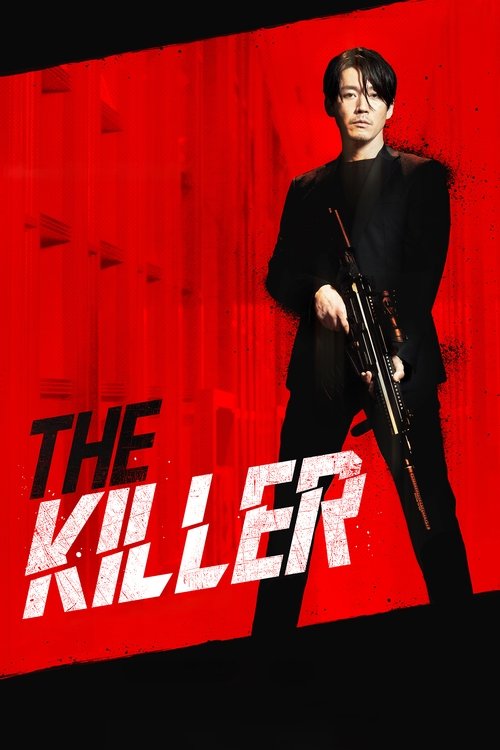
The Killer
더 킬러: 죽어도 되는 아이
"Mission: save the girl."
Overview
Bang Ui-gang is a legendary, retired hitman who has settled into a comfortable, wealthy life with his beloved wife. His peaceful existence is interrupted when his wife goes on a vacation to Jeju Island and asks him to look after her friend's 17-year-old daughter, Kim Yoon-ji. Though reluctant, he agrees, expecting a quiet few weeks.
However, the rebellious Yoon-ji quickly gets entangled with a dangerous crowd of juvenile delinquents, which ultimately leads to her being kidnapped by a sophisticated human trafficking ring. Bound by his promise to his wife and a growing, unexpected paternal instinct, Ui-gang steps back into the criminal underworld.
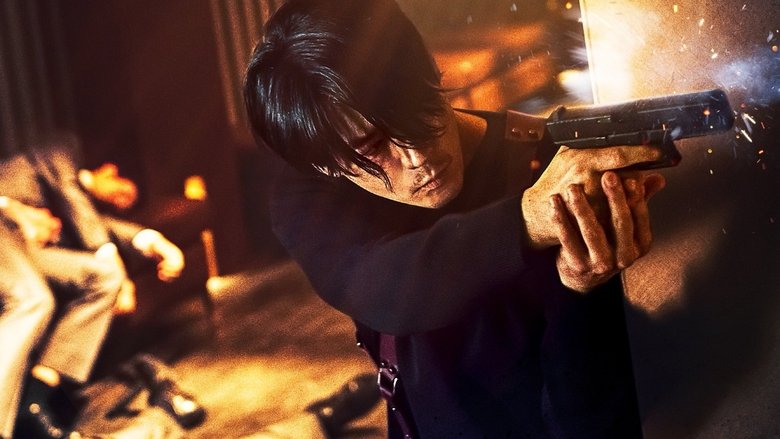
Armed with an arsenal of weapons and his lethal hand-to-hand combat skills, Ui-gang leaves a trail of bodies in his wake. As he digs deeper to find Yoon-ji, he uncovers a vast conspiracy that reaches the highest levels of law enforcement and high society, forcing him to dismantle the entire operation.
Core Meaning
At its core, The Killer explores the paradoxical nature of righteous violence and the lengths one will go to protect the innocent. Director Choi Jae-hoon juxtaposes the cold, detached professionalism of a hitman with the deeply human instinct to protect a vulnerable child.
The film serves as a harsh critique of societal corruption, suggesting that the true monsters are not the self-admitted killers of the underworld, but the high-ranking politicians, judges, and trusted guardians who exploit the youth for profit. Ui-gang's violent rampage is framed as a necessary cleansing force in a morally bankrupt world.
Thematic DNA
RedemptionandPaternalInstinct
Thefilmdelvesintohowamandefinedbytakinglivesfindsarenewedsenseofpurposeinsavingone[1.2]. Ui-gang's character arc is driven by his shift from reluctant babysitter to a fiercely protective father figure, showing humanity beneath a stoic exterior.
The Hypocrisy of High Society
Through its villains, the narrative exposes systemic corruption. The trafficking ring is protected by police detectives and headed by a Chief Justice, highlighting how the elite exploit the vulnerable while hiding behind a veil of respectability.
Moral Ambiguity of Violence
The movie forces the audience to root for a protagonist who kills with chilling ease and even smiles while executing people. It questions whether extreme brutality can be justified when aimed at undeniably evil targets.
Found Family vs. Biological Betrayal
The story contrasts the genuine care Ui-gang develops for Yoon-ji with the ultimate betrayal by her own stepmother, who sold her out to the traffickers. It emphasizes that loyalty and protection define true family.
Character Analysis
BangUi-gang
JangHyuk
Motivation
Initially motivated by a desire not to disappoint his beloved wife, his motivation evolves into a deep-seated need to protect Yoon-ji and punish those who exploited her.
Character Arc
Startingasanapathetic, retiredhitmanwhoonlywantstoresearchtaxlawinpeace, hetransformsintoanunstoppable, protectiveforce, allowinghimselftogenuinelycarefortheteenagerhewasforcedtobabysit[1.2].
Kim Yoon-ji
Lee Seo-young
Motivation
Seeking independence and escaping the loneliness of her neglected upbringing.
Character Arc
She begins as a rebellious, dismissive teenager looking for trouble, but as she faces the horrors of the criminal underworld, she recognizes Ui-gang as her true protector and drops her childish shell.
Yuri
Bruce Khan
Motivation
Professional duty as a hired assassin and enforcer for the human trafficking syndicate.
Character Arc
He serves as a static, looming physical threat throughout the film, acting as the main obstacle Ui-gang must overcome in his rescue mission.
Symbols & Motifs
TheCoffeeCup
ItsymbolizesUi-gang'scasual, unfazedattitudetowardviolenceandhisconnectiontonormallife[2.1].
During intense confrontations, Ui-gang is frequently seen holding a takeout coffee cup in one hand while shooting adversaries with the other, blending domestic routine with deadly combat.
The Wallet and Tracker
This represents Ui-gang's quiet but genuine protective instinct, hiding his care beneath an aloof exterior.
Early in the film, he secretly slips cash and a GPS tracking device into Yoon-ji's wallet, which ultimately allows him to locate her when she is kidnapped.
The Wife's Request
A symbol of Ui-gang's tether to humanity and redemption.
His entire bloody crusade is initially driven solely by a simple promise made to his wife to ensure the girl's safety, serving as his primary moral compass.
Memorable Quotes
I became curious about her pain. But I could never find out. Only her warmth remained on my hand.
— Bang Ui-gang
Context:
Used as an internal reflection by Ui-gang, juxtaposing his violent actions with his internal thoughts.
Meaning:
This quote reveals the hidden emotional depth of a seemingly emotionless killer, highlighting his empathy [2.1].
First one to talk lives.
— Bang Ui-gang
Context:
Spoken when confronting low-level thugs to quickly extract information regarding Yoon-ji's whereabouts.
Meaning:
Demonstrates his ruthless, pragmatic approach to interrogation and his absolute dominance over his enemies.
I hate... being lonely.
— Kim Yoon-ji
Context:
A quiet moment of emotional confession that bridges the gap between the rebellious teen and the stoic hitman.
Meaning:
Highlights the profound vulnerability of the teenager, which ultimately draws the protective instinct out of Ui-gang.
Philosophical Questions
Can extreme violence be morally justified if used to protect the innocent?
The film constantly challenges the audience to root for a protagonist who commits unspeakable acts of brutality with a smile [1.3]. It asks whether the noble end of saving a young girl justifies the horrific means of mass slaughter and ruthless execution.
Who is the true monster in a corrupt society?
By contrasting Ui-gang, a self-aware and honest hitman, with a respected Judge and a seemingly caring stepmother who secretly run a human trafficking ring, the film deeply questions societal definitions of morality, legality, and monstrosity.
Alternative Interpretations
While widely viewed as a straightforward, adrenaline-fueled action thriller, some critics interpret the film as a dark psychological portrait of Ui-gang. In this reading, Ui-gang is a deeply damaged individual who uses Yoon-ji's kidnapping merely as a convenient excuse to indulge his repressed psychopathic urge to kill. His casual demeanor—sipping coffee while slaughtering dozens of men—suggests he feels no real moral burden, making him a predator unleashed upon other predators rather than a noble hero.
Another analytical lens views the film as a harsh sociopolitical critique of modern capitalist South Korea. The narrative literally shows the youth being commodified and sold by the older generation. The revelation that high-ranking elites, including a judge, and Yoon-ji's own stepmother are the architects behind the trafficking ring underscores a pessimistic worldview where the 'respectable' upper class is inherently exploitative and corrupt.
Cultural Impact
The Killer (2022) arrived during a global boom in highly stylized, neon-soaked 'gun-fu' cinema, heavily drawing from the massive footprints of the John Wick franchise and Korean action classics like The Man from Nowhere. By capitalizing on South Korea's reputation for visceral, top-tier action choreography, the film further cemented Jang Hyuk's status as one of Asia's premier action stars.
While it was acknowledged that the film did not reinvent the narrative wheel of the 'reluctant hitman babysitter' subgenre, it was lauded by action aficionados for its kinetic, faux one-take sequences and the seamless integration of close-quarters martial arts systems like Kali, Arnis, and Judo. Critically, it received mixed reviews; reviewers praised the spectacular stunt work but noted the storyline was somewhat bare-bones. Nevertheless, its success on international streaming and home video platforms proved the continued global appetite for unapologetically brutal Korean action cinema.
Audience Reception
Audiences overwhelmingly praised The Killer for its relentless, fluid action choreography and Jang Hyuk's charismatic, magnetic performance. The dynamic fight scenes, particularly those utilizing confined spaces like elevators and hallways, were frequently highlighted as the film's strongest assets, satisfying fans of hard-R action movies.
Conversely, the main points of criticism centered around the film's paper-thin plot, which many viewers found highly derivative of other movies in the genre, such as Taken or John Wick. The lack of emotional depth and the invincibility of the main character occasionally stripped the film of dramatic tension. Despite these narrative shortcomings, the overall verdict from action enthusiasts was highly positive, celebrating the film as a thoroughly entertaining, visually stylish popcorn thriller.
Interesting Facts
- Lead actor Jang Hyuk not only starred in the film but also served as the action designer, helping choreograph many of the fight scenes [2.4].
- Jang Hyuk is highly trained in martial arts, holding real-world experience in Jeet Kune Do, Taekwondo, and professional boxing.
- Lee Seo-young, who plays the kidnapped teenager Yoon-ji, is also known as 'Anne', a member of the K-pop girl group GWSN.
- The film reunites director Choi Jae-hoon and actor Jang Hyuk, who previously collaborated on the 2020 period action film 'The Swordsman'.
- The movie is an adaptation of a popular Korean web novel titled 'The Kid Deserves to Die' written by Bang Jin-ho.
Easter Eggs
Directreferenceto'TheManfromNowhere'
Duringthefilm, charactersmakeadirectverbalreferencetothe2010KoreanactionclassicTheManfromNowhere[1.1]. This acts as a meta-acknowledgment of the genre, winking at the clear inspiration that the earlier film had on this movie's 'lone wolf protecting a young girl' storyline.
⚠️ Spoiler Analysis
Click to reveal detailed analysis with spoilers
Frequently Asked Questions
Explore More About This Movie
Dive deeper into specific aspects of the movie with our detailed analysis pages
Comments (0)
No comments yet. Be the first to share your thoughts!