Skip to content
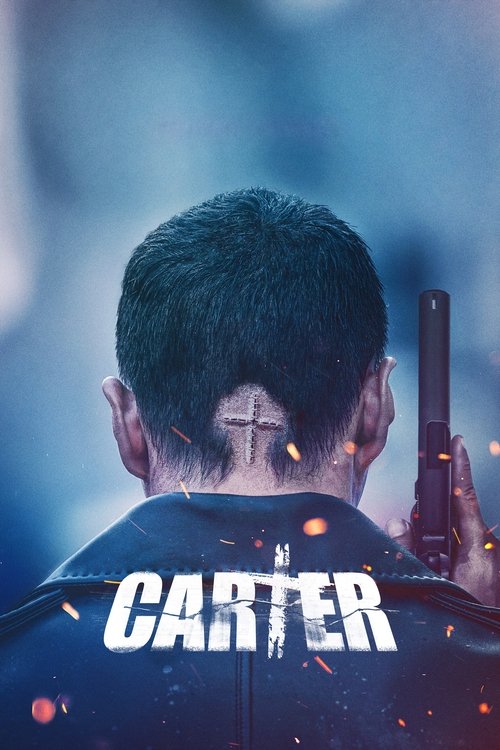
Carter
In a visceral storm of breathless adrenaline, this single-take action thriller plunges viewers into a hyper-kinetic vortex of disorientation, instinctual survival, and raw physical spectacle.
Carter

Carter

카터

"No memory. One mission."

05 August 2022 South Korea 132 min 6.0 (431)

Director: Jung Byung-gil

Cast: Joo Won, Lee Sung-jae, Jeong So-ri, Do Yeong-seo, Camilla Belle

Crime Action Thriller Loss of Identity and Memory Manipulation Paternal Instinct and Biological Bond Geopolitical Exploitation and Bio-Political Power Technological Coercion and Bodily Autonomy The Illusion of Choice in Continuous Chaos

Overview

Set against the backdrop of a catastrophic pandemic originating from the Korean Demilitarized Zone (DMZ), Carter unfolds in a world where an infectious virus transforms victims into rabid, hyper-violent creatures within thirteen days. A man awakens face-down in a blood-soaked motel room in Seoul with complete amnesia, a freshly stitched cross-shaped scar on the back of his head, and a group of heavily armed CIA agents demanding the whereabouts of Dr. Jung Byung-ho—a bioscientist who developed an antibody cure using his infected daughter, Jung Ha-na.

Before the CIA can execute him, a mysterious female voice speaks directly into his head through an implanted earpiece, calling him "Carter" and informing him that he must follow her precise instructions to survive. With a lethal explosive device secretly planted inside his tooth, Carter is forced into an immediate, high-stakes sprint across South and North Korea. His mission is to locate young Ha-na and safely deliver her to a North Korean medical facility to synthesize a cure, while fighting off waves of mobsters, rogue military forces, and international intelligence operatives.

As Carter navigates a non-stop gauntlet of motorcycle chases, skydiving dogfights, and explosive train battles, he must uncover who he truly is and whether the voices guiding him are allies or orchestrators of his demise. The narrative unfolds in simulated real-time, pulling the audience into an unbroken, breathless journey where every second is a battle between memory and extinction.
Core Meaning

At its core, director Jung Byung-gil’s Carter is an uncompromising experiment in cinema as pure physical spectacle and sensory immersion, pushing technical boundaries by creating an unbroken, real-time single take that merges video game language, extreme sports, and stunt performance.

Underneath its hyper-violent exterior, the film explores human identity stripped of memory, questioning whether a person’s fundamental morality, protective instincts, and capacity for love persist when their past is erased by geopolitical puppet masters. Although Carter becomes an empty vessel weaponized by conflicting intelligence agencies, his body instinctively reacts to protect the innocent and fight for family. The film ultimately suggests that while memories can be surgically deleted and manipulated, human empathy and paternal devotion are encoded deeper than memory itself.

Thematic DNA

Loss of Identity and Memory Manipulation 30%
Paternal Instinct and Biological Bond 25%
Geopolitical Exploitation and Bio-Political Power 20%
Technological Coercion and Bodily Autonomy 15%
The Illusion of Choice in Continuous Chaos 10%

Loss of Identity and Memory Manipulation

Carter awakens as a total blank slate, forced to rely on external voices to define his name, purpose, and loyalty. His identity is constantly reshuffled by rival factions—the CIA labels him a traitorous operative, North Korean intelligence claims he is a defected spy, and his own body bears surgical scars of mental violation, showing how memory loss leaves individuals vulnerable to total ideological control.

Paternal Instinct and Biological Bond

Despite having no conscious memory of his past or family, Carter’s primary driver throughout the film is the instinctual urge to protect children—first young Ha-na, the carrier of the antibody, and later his own infected daughter. This paternal bond serves as the ultimate moral compass anchoring him amidst geopolitical deception.

Geopolitical Exploitation and Bio-Political Power

The DMZ virus and its cure are not merely medical crises; they are bargaining chips in a ruthless geopolitical chess game involving South Korea, North Korea, and the United States CIA. The film highlights how human life and scientific breakthroughs are co-opted by military coups and state superpowers seeking total political hegemony.

Technological Coercion and Bodily Autonomy

Through the cross-shaped head scar, the internal earpiece, and the tooth bomb, Carter’s body is literally transformed into a remotely controlled weapon. His bodily autonomy is hijacked by institutional powers, symbolizing the complete subjugation of the individual under state intelligence apparatuses.

The Illusion of Choice in Continuous Chaos

The real-time, pseudo-single-take visual format enforces an inescapable momentum where neither Carter nor the audience has time to stop, reflect, or deliberate. This structural device reinforces the theme that individuals trapped within crisis scenarios are deprived of genuine free choice, forced to react perpetually to immediate threats.

Character Analysis

Carter Lee / Michael Bane

Joo Won

Archetype: The Amnesiac Hero / Engineered Weapon Key Trait: Exceptional tactical combat instincts, superhuman endurance, and deep paternal devotion.

Motivation

Surviving immediate violence, protecting Ha-na, and discovering his true past.

Character Arc

Begins as an empty vessel reacting blindly to orders; evolves into a determined father fighting to protect his family and reclaim his stolen identity.

Han Jung-hee

Jeong So-ri

Archetype: The Shadowy Guide / Devoted Partner Key Trait: Calm composure under extreme pressure, strategic intelligence, and unshakable loyalty.

Motivation

Reuniting her fractured family and curing her infected daughter.

Character Arc

Initially presents as a detached North Korean Labor Party operative giving strict radio orders; revealed to be Carter’s wife who risked everything to guide him and save their sick child.

All 4 characters and cast

Symbols & Motifs

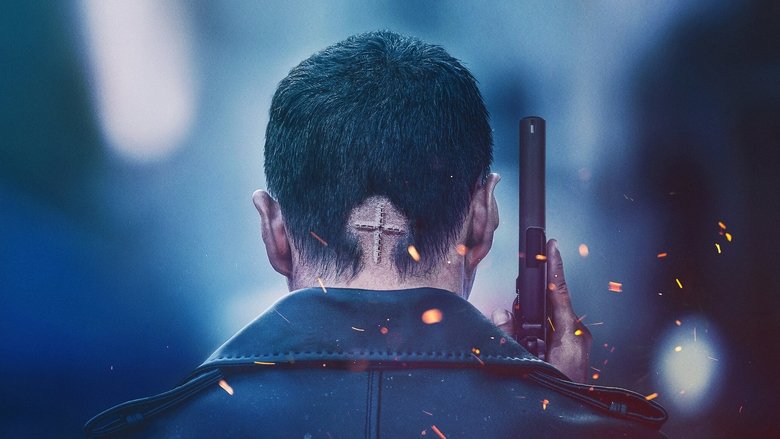
The Cross-Shaped Scar (Head)

Meaning:

Represents the literal violation of Carter's mind and memory, serving as a visual mark of his status as an engineered weapon and symbolizing the heavy metaphorical cross he carries.

Context:

Located on the back of Carter's head, revealed when he awakens in the motel room with complete amnesia.

The Tooth Bomb

Meaning:

Represents absolute coercion and existential threat, symbolizing how state powers strip away free speech and bodily agency through the threat of immediate annihilation.

Context:

Implanted directly into Carter's jaw by those controlling his mission.

The Voice in the Ear (Earpiece)

Meaning:

Acts as Carter's external conscience and puppet master, symbolizing the blurred line between divine guidance and surveillance control.

Context:

An implanted earpiece through which Han Jung-hee delivers disembodied, omniscient instructions throughout his escape and journey.

Jung Ha-na (The Antibody Child)

Meaning:

Symbolizes fragile hope for humanity's future and serves as the innocent bridge between hostile nations.

Context:

The daughter of bioscientist Dr. Jung Byung-ho and the only human carrying natural immunity to the DMZ virus.

The Unbroken Camera / Drone (The "Oner" Motif)

Meaning:

Functions as an omnipresent panoptic eye, symbolizing the claustrophobic nature of modern surveillance culture and the relentless, unstoppable march of time.

Context:

Used continuously throughout the movie to present a simulated real-time, single-take action experience.

Memorable Quotes

당신의 이름은 카터입니다. 모두가 살고 싶다면 나를 믿으세요.
— Han Jung-hee

Context

Spoken at the beginning via the earpiece when Carter wakes up surrounded by CIA guns in a motel room.

Meaning

Establishes the protagonist’s assigned identity, sets the narrative premise, and enforces immediate forced trust.

입 안에 폭탄이 들어있습니다. 지시를 따르지 않으면 터집니다.
— Han Jung-hee

Context

Delivered shortly after Carter escapes the motel room.

Meaning

Establishes the absolute coercion driving the protagonist and underscores his complete lack of agency.

All 4 quotes

Philosophical Questions

Is human identity defined by memory or by action?

The film asks whether a person whose memories have been wiped remains the same individual, demonstrating that Carter's innate moral code and physical reflexes define him more than his forgotten past.

Does love exist as a biological memory?

It examines whether deep emotional connections—such as paternal love—are stored in muscle memory and neurology beyond conscious recall.

At what point does state security infringe upon human dignity?

By implanting bombs and earpieces into Carter's body, the film questions the ethics of state intelligence agencies turning citizens into disposable, remotely controlled weapons.

Alternative Interpretations

Literal Spy Thriller & Cliffhanger: The narrative events occur exactly as depicted. Carter retrieves his memories, cures his daughter, and escapes toward China with his family. However, the unexpected bomb explosion on the railway bridge at the final second represents a grim cliffhanger indicating that geopolitical forces will never allow them to live in peace.

Full ending explanation

Cultural Impact

Released in August 2022 following global COVID-19 lockdowns, Carter tapped into widespread post-pandemic anxiety, combining it with North-South Korean geopolitical dynamics and cold-war spy tropes.

Capitalizing on the international surge in Korean content driven by Squid Game, Carter debuted as the #1 non-English film globally on Netflix, accumulating over 27.3 million viewing hours in its first three days.

The film represents an extreme push in long-take action cinema, building upon techniques used in 1917, Extraction, and John Wick. Notably, John Wick: Chapter 3 director Chad Stahelski previously acknowledged borrowing Jung Byung-gil's motorcycle action concepts from The Villainess.

Audience Reception

Carter received highly polarizing reactions from audiences and critics alike. Praised elements included Joo Won's phenomenal physical commitment and stunt performance, audacious FPV drone camera work, and relentless kinetic pacing.

Conversely, criticism targeted erratic camera spinning that caused motion sickness, unconvincing CGI stitching in daylight, a convoluted screenplay with thin character development, and stilted English dialogue from minor western supporting actors.

Ultimately, while celebrated by hardcore action aficionados as an experimental masterpiece of stunt choreography, it was panned by mainstream critics and casual viewers, holding a 35% rating on Rotten Tomatoes.

Interesting Facts

  • Actor Joo Won gained roughly 7 kg (15 lbs) of muscle mass, underwent four months of intense stunt and martial arts training, shaved his head, and spent hours in makeup for his role.
  • Joo Won personally performed a vast majority of the high-risk action sequences, including real motorcycle combat, truck-to-truck jumps, and hanging from flying aircraft.
  • Director Jung Byung-gil utilized custom Lightweight First-Person View (FPV) racing drones operated by world-class drone pilots to fly through narrow spaces and combat scenes.
  • The early bathhouse action sequence involved nearly 100 stunt performers wielding sickles and blades on a wet set, filmed in a seemingly seamless continuous take.
  • The skydiving combat scene was filmed using actual skydiving stunt professionals jumping out of planes with helmet-mounted cameras, blended into CGI environment plates.
  • Produced with a massive budget of approximately 30 billion South Korean Won (~$23 million USD), largely allocated toward drone tech development, digital stitching, and vehicle destruction.

Easter Eggs

Direct Homage to The Villainess (2017)

Director Jung Byung-gil includes direct visual nods to his previous action film, most notably the opening multi-person melee combat and high-speed motorcycle blade fights.

Hollywood Cameos (Mike Colter & Camilla Belle)

American actor Mike Colter appears as CIA Agent Smith and Camilla Belle plays CIA Agent Agnes, providing international scale to the spy conspiracy.

Director Name Wordplay

The bioscientist character Dr. Jung Byung-ho shares his name phonetically with director Jung Byung-gil and co-writer/producer Jung Byeong-sik.

Video Game Logic & Hardcore Henry References

The camera placement, real-time objective updates, and third-person perspective closely mirror video game visual aesthetics as well as Ilya Naishuller’s first-person action film Hardcore Henry.

Frequently Asked Questions

Explore More About This Movie

Dive deeper into specific aspects of the movie with our detailed analysis pages

Comments (0)

Leave a comment

No comments yet. Be the first to share your thoughts!

Similar Movies