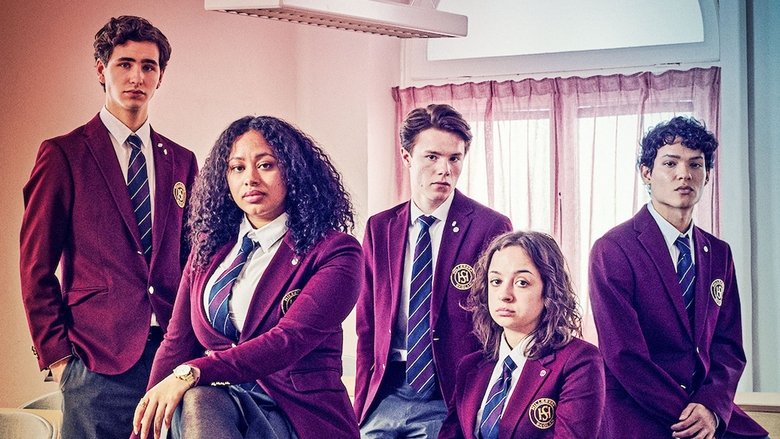
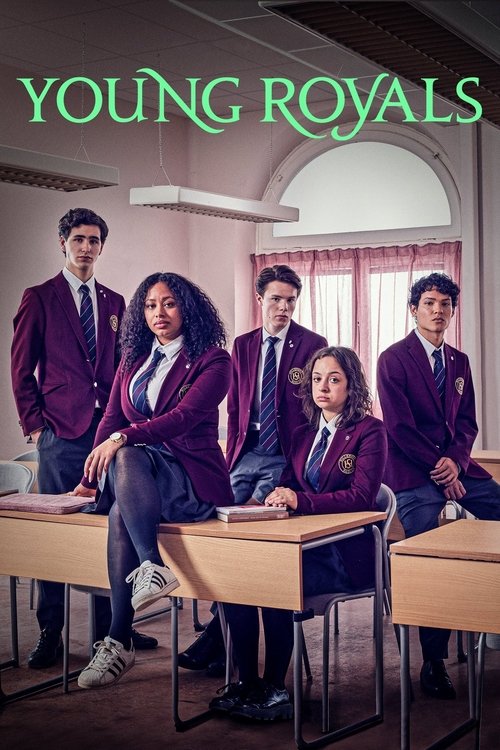
Young Royals
A tender, anxious romance, unfolding like a fragile bloom against the cold stone walls of royal tradition and duty.
Young Royals

Young Royals

"Love or duty?"

01 July 2021 — 18 March 2024 Sweden 3 season 18 episode Ended ⭐ 8.5 (1,153)
Cast: Edvin Ryding, Omar Rudberg, Malte Gårdinger, Frida Argento, Nikita Uggla
Drama
Duty vs. Love/Freedom Authenticity and Identity Class and Privilege Tradition vs. Modernity

Overview

"Young Royals" chronicles the tumultuous journey of Prince Wilhelm of Sweden after he is enrolled in the prestigious Hillerska boarding school. Stripped of his familiar surroundings, Wilhelm begins to explore his true identity, leading to an unexpected and intense romance with a fellow student, Simon Eriksson, a scholarship day-student from a different social class. Across three seasons, the series follows their relationship as it is tested by the immense pressures of royal duty, public scrutiny, and the schemes of their classmates. After the tragic death of his older brother, Wilhelm becomes the Crown Prince, forcing him to confront an impossible choice between love and the crown. The series explores the conflict between personal freedom and institutional tradition, navigating themes of love, loyalty, mental health, and the struggle for authenticity in a world of rigid expectations.

The narrative intensifies as their secret relationship is exposed by a leaked video, an act orchestrated by Wilhelm's own cousin, August. This betrayal creates a deep rift, forcing Wilhelm to publicly deny his involvement, which devastates Simon. The subsequent seasons delve into the emotional fallout, as Wilhelm attempts to seek revenge and win back Simon's trust while grappling with his newfound responsibilities and crippling anxiety. The series culminates in Wilhelm's ultimate decision about his future, challenging the very foundations of the monarchy and choosing a path of personal happiness over inherited duty.


Core Meaning

The core meaning of "Young Royals" is an exploration of the conflict between authenticity and tradition, and the revolutionary power of choosing love over duty. Creator Lisa Ambjörn conceptualized the series to question how societal roles, such as social class, gender, and in this case, royalty, affect life choices and personal freedom. The series posits that true liberation comes from dismantling inherited expectations and having the courage to define one's own path. Wilhelm's journey is not just about his sexuality; it's about using his personal awakening to question the archaic structures he was born into. Ultimately, the story champions the idea that love, in its purest form, can be a catalyst for profound personal and even institutional change, suggesting that happiness lies in the freedom to be oneself, unburdened by the weight of a crown.

Thematic DNA

Duty vs. Love/Freedom 35%
Authenticity and Identity 30%
Class and Privilege 25%
Tradition vs. Modernity 10%

Duty vs. Love/Freedom

This is the central conflict driving the entire series. Initially, Prince Wilhelm struggles with the minor duties of a second-in-line prince, but his romance with Simon forces him to confront the immense weight of royal expectation. After his brother's death, this theme becomes critical. Wilhelm is torn between his genuine love for Simon and the constitutional, historical, and familial duty to become king and produce a traditional heir. The series finale revolves around his ultimate choice, where he abdicates the throne not just for Simon, but for his own freedom and mental well-being, concluding that the institution has brought his family nothing but unhappiness.

Authenticity and Identity

"Young Royals" is fundamentally a coming-of-age story about finding and accepting one's true self. Wilhelm's journey is one of self-discovery, moving from a repressed, anxious teenager to a young man who publicly accepts his sexuality and makes monumental life choices for his own happiness. Simon, in contrast, is already comfortable with his identity and refuses to be anyone's secret, providing a moral anchor for Wilhelm. The theme is also explored through other characters like Felice, who learns to value genuine friendship over social climbing, and Sara, whose struggle for belonging leads her to make choices that betray her authentic self.

Class and Privilege

The series starkly contrasts the immense privilege of Hillerska's elite students with the working-class life of Simon and his family. This class divide is a constant source of tension in Wilhelm and Simon's relationship, from August's condescension to the Royal Court's impossible demands on Simon. The show explores how wealth and status provide a shield from consequences, as seen when August's crimes are nearly covered up. It critiques the inherited power and outdated traditions of the monarchy and aristocracy, questioning their place in a modern society.

Tradition vs. Modernity

Hillerska and the monarchy itself are bastions of tradition, with rigid rules, secret societies, and centuries-old expectations. Wilhelm's relationship with Simon represents a modern challenge to this old world. The series questions the value of these traditions, revealing many to be harmful, exclusionary, and built on hypocrisy, such as the homophobic hazing rituals his sainted brother Erik took part in. Wilhelm's final decision to abdicate is the ultimate rejection of tradition in favor of a modern, personal definition of life and happiness.

Character Analysis

Prince Wilhelm ("Wille")

Edvin Ryding

Archetype: The Reluctant Hero
Key Trait: Sensitive

Motivation

Initially motivated by a desire to escape the spotlight and experience a normal teenage life, his motivation shifts to protecting his relationship with Simon. After being forced to deny Simon, his motivation becomes a complex mix of love, guilt, and a desperate need to reclaim his own identity. Ultimately, his driving force becomes the pursuit of a life where he can be truly happy and free, for his own sake.

Character Arc

Wilhelm begins Season 1 as a troubled, second-in-line prince burdened by anxiety and a desire for normalcy. His love for Simon awakens a desire for an authentic life, but the sudden death of his brother forces him into the role of Crown Prince, creating a devastating internal conflict. In Season 2, consumed by grief and heartbreak, he attempts to use his newfound power for revenge against August but learns that this path is self-destructive. His arc culminates in Season 3, where he moves past his anger, confronts the hypocrisies of the monarchy, and makes the revolutionary decision to abdicate the throne, choosing freedom and love over his birthright.

Simon Eriksson

Omar Rudberg

Archetype: The Moral Compass / The Outsider
Key Trait: Principled

Motivation

Simon is motivated by a strong sense of justice, loyalty to his family, and a desire for a relationship built on honesty and mutual respect. He consistently pushes back against the injustices of the class system at Hillerska. While he loves Wilhelm deeply, his primary motivation is to protect his own integrity and well-being, refusing to be diminished or hidden by the Royal Court.

Character Arc

Simon starts the series as a confident, openly gay, working-class student who is unimpressed by the monarchy. He falls genuinely in love with Wilhelm but maintains a strong sense of self-worth, refusing to be Wilhelm's secret when their relationship is exposed. Across the seasons, he grapples with the consequences of being involved with the crown, facing intense public scrutiny and pressure. His arc involves learning to navigate this new reality without compromising his principles. In the end, he realizes he cannot sacrifice his own freedom for the institution, prompting Wilhelm's final decision.

August of Årnäs

Malte Gårdinger

Archetype: The Antagonist / The Fallen Noble
Key Trait: Insecure

Motivation

August is driven by a desperate need to maintain his social standing and uphold the traditions he believes define his worth. His family has lost its wealth, so his entire identity is tied to his proximity to the crown and his status at Hillerska. His actions, including his betrayal of Wilhelm, stem from a place of deep insecurity and a fear of becoming irrelevant.

Character Arc

August is introduced as the entitled, manipulative prefect and Wilhelm's second cousin. His obsession with status and tradition, coupled with his family's financial ruin, drives him to desperate measures, including leaking the video of Wilhelm and Simon. His arc is one of slow, painful reckoning. In Seasons 2 and 3, he is forced to confront the consequences of his actions. While he never fully redeems himself, he shows moments of remorse and vulnerability, particularly in his relationship with Sara and his confrontation with Wilhelm about their shared family trauma. He ends the series as the potential, albeit flawed, next-in-line to the throne.

Sara Eriksson

Frida Argento

Archetype: The Aspirant
Key Trait: Yearning

Motivation

Sara is motivated by a powerful desire to belong and escape her life in Bjärstad, which she perceives as limiting. She is drawn to the structure, status, and perceived glamour of Hillerska and its students. Her actions are driven by a deep-seated insecurity and a belief that she needs to change who she is to be accepted and loved.

Character Arc

Simon's sister, Sara, who has Asperger's and ADHD, begins the series desperate to fit in with the wealthy students of Hillerska. This desire for acceptance and a different life leads her to betray Simon by keeping August's secret and entering into a relationship with him. Her arc is about the consequences of this choice. In Season 3, she is ostracized for eventually reporting August to the police and works to rebuild trust with her brother and Felice. She ultimately rejects August and the world of privilege he represents, choosing to prioritize herself and her genuine relationships.

Felice Ehrencrona

Nikita Uggla

Archetype: The Ally
Key Trait: Loyal

Motivation

Initially, Felice is motivated by the desire to meet her mother's expectations and maintain her high social standing. However, her core motivation evolves into a genuine desire for authentic friendships. She is driven by loyalty and a growing sense of right and wrong, consistently choosing to support Wilhelm and, eventually, forgive Sara, demonstrating her capacity for empathy and personal growth.

Character Arc

Felice starts as a member of the popular elite, seemingly focused on gaining Wilhelm's affection and upholding her family's "modern nobility" status. However, her character arc is one of growing self-awareness and integrity. She quickly moves past her crush and becomes Wilhelm's most loyal confidant and a true friend to Sara. She learns to push back against her mother's social-climbing ambitions and the toxic environment of the school. By the end of the series, she is a fierce advocate for her friends, choosing loyalty and honesty over popularity.

Symbols & Motifs

The Horse

Meaning:

Horses, particularly Sara's beloved horse Rousseau, symbolize a desire for freedom, connection, and an escape from social pressures. For Sara, riding is a space where her neurodivergence is not a hindrance and where she feels in control. Her difficult decision to sell Rousseau represents the sacrifices she makes to fit into the world of Hillerska.

Context:

Sara's relationship with Rousseau is a significant subplot throughout the first two seasons. The stables are a sanctuary for her. August's gift of a new horse is a manipulative gesture that ties her to his world of privilege and secrecy, ultimately leading to conflict.

Hillerska Boarding School

Meaning:

Hillerska symbolizes the institution of the elite, a microcosm of the rigid, hierarchical world of tradition, privilege, and secrets that Wilhelm is expected to lead. It is a place of both opportunity and immense pressure, where social status dictates everything and outdated codes of conduct are enforced.

Context:

The school is the primary setting for the series. Its hallowed halls, secret societies, and grand events are the backdrop against which the central conflicts of love versus duty and authenticity versus tradition play out. The school facing closure in season 3 mirrors the monarchy's own crisis of relevance.

The Color Purple

Meaning:

Purple is traditionally associated with royalty, power, and wealth. In "Young Royals," it is frequently used to symbolize the pressures and constraints of Wilhelm's royal life. The purple hoodie he wears is often seen as a subtle nod to this, a piece of his royal identity he can't fully escape even in casual moments.

Context:

The color appears in lighting, clothing, and school branding. For instance, the lighting during Wilhelm and Simon's first intimate moments is tinged with purple, visually representing the collision of Wilhelm's royal world with his personal desires.

Fish and Frogs

Meaning:

In a key scene, Simon explains that some fish can change their gender, a metaphor for fluidity and the idea that one is not necessarily locked into the role they are born with. Frogs, which Wilhelm is seen observing, are symbols of transformation and metamorphosis, mirroring his own profound personal changes throughout the series.

Context:

The fish metaphor is used in Season 1 when Wilhelm and Simon are getting to know each other by the lake, providing an early hint at the series' themes of identity and breaking free from predetermined roles. Wilhelm's fascination with frogs appears at moments of quiet contemplation, underscoring his internal evolution.

Memorable Quotes

All the people are fake... but I like you. And that is not fake.

— Prince Wilhelm

Context:

Spoken in Season 1, Episode 2, while Wilhelm and Simon are getting to know each other during a movie night at Hillerska. It's a pivotal moment of vulnerability for Wilhelm.

Meaning:

This quote, spoken early in their relationship, establishes the core of Wilhelm and Simon's connection. In a world Wilhelm perceives as entirely artificial and performative, Simon represents authenticity and a genuine emotional anchor. It's his first truly honest admission of his feelings.

We haven't done anything wrong.

— Simon Eriksson

Context:

Said in Season 1, Episode 6, as Simon comforts Wilhelm, who is panicking about the repercussions of their intimate video being leaked.

Meaning:

This line is a powerful affirmation of their love in the face of societal judgment and the scandal caused by the leaked video. Simon asserts that their relationship is not shameful, and the problem lies with the prejudice of the world around them, not with their feelings for each other. It encapsulates the show's message about queer love and acceptance.

It was me in the video that leaked last term, the one with me and Simon.

— Prince Wilhelm

Context:

Delivered during a speech at Hillerska's 120th anniversary celebration in the finale of Season 2, Episode 6, stunning the Royal Family and the student body.

Meaning:

This is Wilhelm's public confession and a monumental turning point for his character. After a season of denial and internal turmoil, he reclaims the narrative and publicly acknowledges his relationship with Simon. It is his first major step towards choosing authenticity over duty, setting the stage for the final season.

I love you.

— Prince Wilhelm & Simon Eriksson

Context:

This phrase is exchanged in several key moments, most notably in the finales of Season 1, Season 2, and Season 3, each time carrying a different weight and significance.

Meaning:

The exchange of "I love you" acts as a powerful barometer for their relationship's status. Wilhelm first says it at the end of Season 1, but Simon, hurt by his denial, cannot say it back. Simon finally reciprocates at the end of Season 2 after Wilhelm's public confession. Their final exchange in the series finale, after Wilhelm has abdicated, signifies that their love has finally triumphed over all obstacles.

I don't want to be king. Or Crown Prince... I did it for my own sake.

— Prince Wilhelm

Context:

Spoken in the series finale, Season 3, Episode 6, immediately after Wilhelm has told his parents he is renouncing the throne. He says this to Simon to assure him their future is built on his own choice, not a sacrifice.

Meaning:

This is the ultimate resolution of Wilhelm's character arc. When he finally abdicates, he makes it clear to Simon that the decision was not just a romantic gesture but a profound act of self-preservation and personal liberation. It signifies his full embrace of an authentic life, independent of his birthright.

Episode Highlights

Episode 1

S1E1

Prince Wilhelm arrives at Hillerska after a public scandal. He is introduced to the school's rigid traditions and social hierarchy. The episode establishes the central characters and the stark class differences. Most importantly, it features the first meeting between Wilhelm and Simon during the choir practice, where an immediate and palpable connection is formed.

Significance:

This episode perfectly sets the stage for the entire series. It establishes Wilhelm's inner turmoil, his desire for escape, and introduces the central romance that will challenge his world. The 'meet-cute' between Wilhelm and Simon is foundational to their entire story.

Episode 4

S1E4

A tragic event changes Wilhelm's life forever: he learns his older brother, Crown Prince Erik, has died in a car accident. Wilhelm is instantly thrust into the role of Crown Prince, the next in line to the throne. The immense weight of this new reality immediately threatens his burgeoning, secret relationship with Simon.

Significance:

This is the series' most significant plot twist. It dramatically raises the stakes of Wilhelm's internal conflict, transforming his romance with Simon from a personal discovery into a potential constitutional crisis. His path is no longer his own, setting up the primary conflict for the rest of the series.

Episode 6

S1E6

In the aftermath of their intimate video being leaked by August, the Queen pressures Wilhelm to issue a statement denying his involvement. He complies, devastating Simon. In the final scene, as he leaves for Christmas break, Wilhelm publicly embraces Simon and whispers "I love you," but Simon, betrayed, does not reciprocate.

Significance:

This episode establishes the deep wound and breach of trust that will define their relationship in Season 2. Wilhelm's choice to obey his mother over his heart sets up his subsequent journey of regret and redemption. The heartbreaking final scene left audiences in suspense, solidifying the show's emotional impact.

Episode 6

S2E6

During a speech for Hillerska's anniversary, Wilhelm goes off-script. In front of his mother, the press, and the entire school, he admits that it was him in the leaked video with Simon. This public confession is a shocking act of defiance and a declaration of his feelings.

Significance:

A climactic turning point for the entire series. Wilhelm reclaims his narrative and takes a stand for his own truth and his love for Simon. This act of bravery heals the rift between them and sets the stage for them to explore a public relationship, while also creating a massive crisis for the monarchy.

Episode 5

S3E5

The pressures of being the Crown Prince's official partner become too much for Simon. After being scrutinized and controlled by the Royal Court, he tells Wilhelm that while he loves him, he cannot be a part of that world. The two share a heartbreaking breakup, seemingly choosing to end their relationship for good.

Significance:

This episode presents the final, seemingly insurmountable obstacle for the couple. It clarifies that the problem isn't their love for each other, but the institution of the monarchy itself. It forces Wilhelm to realize that he cannot have both love and the crown, directly leading to his momentous decision in the finale.

Episode 6

S3E6

The series finale. After a heartfelt graduation day apology from his mother, Wilhelm calmly informs his parents that he is abdicating the throne. He then chases after Simon's car, confesses what he has done, and reaffirms that he did it for himself. They reunite with a kiss, finally free to be together, and drive off with Sara and Felice.

Significance:

This episode provides a definitive and emotionally satisfying conclusion to the series. It resolves the central 'love vs. duty' conflict in a powerful and conclusive way. Wilhelm's choice is framed as an act of self-actualization, bringing his character arc full circle and delivering on the series' core themes of love, freedom, and authenticity.

Philosophical Questions

To what extent are we defined by the roles we are born into?

"Young Royals" intensely explores the question of predetermined identity versus chosen identity. Wilhelm is born a prince, a role that comes with a non-negotiable set of duties and expectations that dictate his entire life. The series uses his journey to ask whether birthright and tradition should supersede personal freedom and happiness. His struggle against the "golden cage" of royalty suggests that true selfhood can only be achieved by actively questioning and, if necessary, rejecting the roles society assigns to us. The finale, where he renounces the throne, provides a clear answer: one's authentic self is more valuable than any inherited title.

Can love truly conquer all, especially institutional power and tradition?

The series uses the romance between Wilhelm and Simon as a case study for this classic question. Their love is constantly tested not by personal failings, but by the immense, impersonal forces of the monarchy, class hierarchy, and public opinion. For two seasons, it appears that these institutions are insurmountable, forcing them apart. However, the story ultimately argues that love can be a revolutionary force powerful enough to dismantle personal and even systemic barriers. Wilhelm's love for Simon gives him the courage to see the flaws in the institution he represents and ultimately to leave it, suggesting love's power lies not in changing the institution, but in liberating individuals from it.

Alternative Interpretations

While the ending is widely seen as a happy and liberating triumph of love, some interpretations view it with a more cynical or bittersweet lens. One perspective is that Wilhelm's abdication, while romantic, is an idealistic and perhaps naive solution to a complex systemic problem. It could be argued that by stepping away, he abandons the opportunity to reform the monarchy from within, leaving the institution in the hands of the more traditional and morally ambiguous August. This reading suggests that his personal happiness comes at the cost of his potential public influence.

Another interpretation focuses on the immense and perhaps unfair burden placed on Simon. Some viewers argue that Simon is repeatedly forced to endure public scrutiny, threats, and emotional turmoil due to his relationship with Wilhelm. From this viewpoint, the ending might not be a simple fairytale. Instead, it marks the beginning of a different set of challenges, as Wilhelm, having only ever known a life of immense privilege, must now adjust to a 'normal' life, a transition that could bring its own set of strains to their relationship away from the structured environment of Hillerska.

Cultural Impact

"Young Royals" achieved significant cultural impact, particularly within the LGBTQ+ community and among young adult audiences worldwide. Its success was largely attributed to its authentic portrayal of teenage life and queer romance. Unlike many American teen dramas, the show cast age-appropriate actors who looked like real teenagers, complete with acne and awkwardness, which resonated deeply with viewers. The series was lauded for presenting a queer relationship where the central conflict was not the characters' sexuality itself, but rather the external pressures of class and royal duty. This approach was seen as a refreshing and progressive step for LGBTQ+ representation on screen.

The show garnered a massive and passionate online fanbase, which propelled it to global popularity. Critics and audiences praised the palpable chemistry between leads Edvin Ryding and Omar Rudberg and the nuanced exploration of themes like mental health (specifically Wilhelm's anxiety), neurodiversity (through Sara's character), and class struggle. It was frequently compared favorably to other LGBTQ+ teen shows like "Heartstopper" and traditional teen dramas like "Elite" and "Gossip Girl," but was noted for its grounded, emotionally resonant tone. The series has been credited with giving courage to young people to come out and for making them feel seen and understood. Its legacy is one of raising the bar for authentic representation in teen television, proving that stories centered on queer characters can have universal appeal and profound emotional depth.

Audience Reception

"Young Royals" received overwhelmingly positive reactions from audiences, quickly amassing a large and dedicated global fanbase upon its release in 2021. It holds a 99% average audience score on Rotten Tomatoes. Viewers widely praised the series for its authentic and relatable portrayal of teenagers, frequently highlighting the age-appropriate casting and the realistic depiction of skin textures and adolescent awkwardness. The central romance between Wilhelm and Simon was the main draw for most fans, who lauded the powerful on-screen chemistry between actors Edvin Ryding and Omar Rudberg.

Across all three seasons, the audience's emotional investment remained high. The first season was celebrated for its tender and heartfelt depiction of first love. The second season was praised for its deeper exploration of the emotional consequences of the scandal, focusing on Wilhelm's grief and anger. The third and final season was met with both anticipation and sadness, with the finale being widely hailed as a deeply satisfying and emotionally cathartic conclusion that stayed true to the characters. While there was little significant criticism, some viewers found certain subplots, such as those involving the other students, less engaging than the central romance. Overall, the audience verdict was that "Young Royals" was a groundbreaking and essential piece of queer teen television.

Interesting Facts

  • The series was created by Lisa Ambjörn, Lars Beckung, and Camilla Holter.
  • To ensure authenticity, the show was praised for casting actual teenagers in the teenage roles, showing realistic skin with blemishes, which was a departure from many other teen dramas.
  • The scenes at the fictional Hillerska school were primarily filmed at Kaggeholms gård, a manor in Stockholm County, while the royal palace scenes were filmed at Stora Sundby Castle.
  • Lead actors Edvin Ryding (Wilhelm) and Omar Rudberg (Simon) re-recorded their own lines for the English-dubbed version of the show.
  • Omar Rudberg, who plays Simon, is a successful singer in real life, having been a member of the boyband FO&O. This experience lent authenticity to his character's musical talents.
  • Edvin Ryding created a personal music playlist for Wilhelm to help him get into the character's darker state of mind, especially for Season 2.
  • The powerful on-screen chemistry between Edvin Ryding and Omar Rudberg was evident from their very first screen test together, which made the casting decision straightforward for the creators.

⚠️ Spoiler Analysis

Click to reveal detailed analysis with spoilers

Frequently Asked Questions

Explore More About This Movie

Dive deeper into specific aspects of the movie with our detailed analysis pages

Comments (0)

Leave a comment

No comments yet. Be the first to share your thoughts!