My Life as a Zucchini
Ma vie de courgette
"SOMETIMES WE CRY BECAUSE WE'RE HAPPY."
Overview
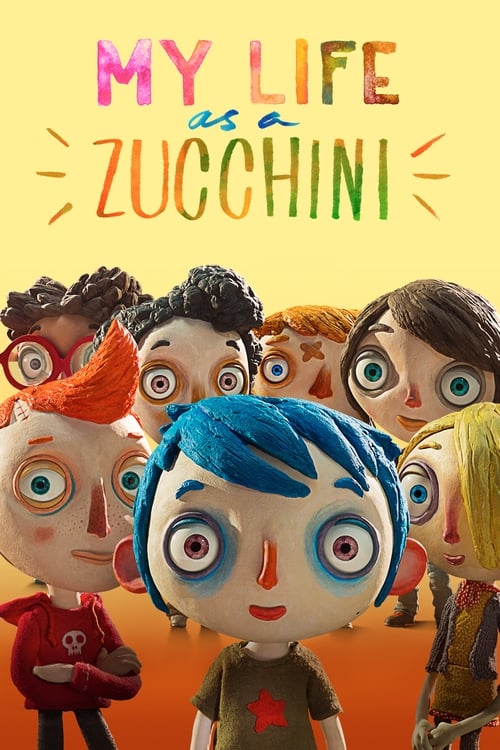
My Life as a Zucchini (originally Ma vie de Courgette) is a poignant stop-motion animated film that follows the journey of a nine-year-old boy named Icare, who insists on being called "Zucchini." After the accidental death of his alcoholic, neglectful mother, Zucchini is taken by a kindly police officer named Raymond to an orphanage called Les Fontaines. Initially isolated and bullied by the group's leader, Simon, Zucchini soon discovers that every child in the home carries their own heavy burden of trauma, from parental deportation and mental illness to abuse.
As Zucchini begins to adapt, he forms deep bonds with his fellow orphans, finding a sense of belonging he never knew was possible. The arrival of a new girl, Camille, brings further change as Zucchini experiences the stirrings of first love and learns to protect those he cares about. The film delicately balances the harsh realities of their backgrounds with moments of genuine joy, humor, and hope, ultimately exploring what it truly means to belong to a family—whether born into it or chosen along the way.
Core Meaning
The core meaning of the film lies in the resilience of the human spirit and the transformative power of found family. Director Claude Barras and screenwriter Céline Sciamma aimed to depict childhood not as a sanitized fantasy, but as a period of profound emotional intelligence where children must often navigate adult failures. The film suggests that while trauma may break a child's world, the solidarity found in shared experience and the presence of even a single empathetic adult can pave the way for healing and a meaningful future.
Thematic DNA
Childhood Trauma and Resilience
The film unflinchingly addresses themes of neglect, alcoholism, and abuse. It shows how the characters use imaginative coping mechanisms and solidarity to process their pasts and find the strength to continue growing.
Found Family
The orphanage is not a place of despair but a sanctuary where children create their own kinship structures. The bond between the kids and their relationship with Officer Raymond redefine family as a matter of love and choice rather than blood.
Solidarity and Empathy
Through Simon’s transition from bully to protector, the film reveals how shared suffering can lead to deep empathy. The children support one another through legal battles and emotional crises, proving that they are stronger together.
Grief and Acceptance
Zucchini’s journey is one of coming to terms with guilt and loss. His attachment to mementos of his parents shows the complexity of loving someone who was also a source of pain.
Character Analysis
Icare (Zucchini)
Gaspard Schlatter
Motivation
To honor his mother's memory while finding a place where he is truly loved and safe.
Character Arc
Transitions from a guilt-ridden, isolated boy to a child who accepts his past and finds a future filled with love and a new father figure.
Simon
Paulin Jaccoud
Motivation
To maintain order and solidarity among the children who have "nobody left to love them."
Character Arc
Starts as a defensive bully who tests newcomers, but evolves into the emotional anchor of the group who facilitates Camille and Zucchini's adoption at his own emotional expense.
Raymond
Michel Vuillermoz
Motivation
To provide the kindness and stability he feels these children deserve, filling a void in his own life.
Character Arc
A lonely police officer who finds personal redemption and a new sense of purpose by becoming a foster parent to Zucchini and Camille.
Camille
Sixtine Murat
Motivation
To escape her aunt's control and find a life where her past doesn't define her.
Character Arc
After witnessing a horrific murder-suicide, she finds safety and affection with Zucchini, eventually escaping her abusive aunt's greed.
Symbols & Motifs
The Kite
Symbolizes hope and the idealized father. Zucchini decorates it with a superhero, representing the father who abandoned him but whom he still yearns to believe was a hero.
Zucchini keeps the kite as one of his few possessions. At the end, he adds a photo of his new friends to it, showing his shift from longing for the past to embracing the present.
The Beer Can
Represents the legacy of his mother's alcoholism and the tragic accident. It is both a source of trauma and a literal memento of his mother's presence.
Zucchini carries an empty beer can to the orphanage. Later, he refashions a beer can into a toy boat for Camille, symbolizing the transformation of his pain into something helpful and kind.
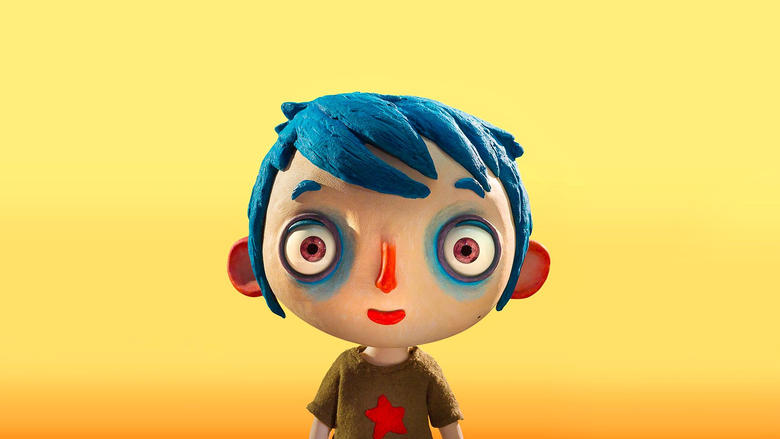
Oversized Eyes
Symbolize vulnerability and emotional depth. They act as windows to the children's internal worlds, capturing the sheer scale of their feelings.
The puppet designs emphasize the eyes (60% of the animation work was focused there), making every blink and gaze a vital part of the storytelling.
Memorable Quotes
On est tous pareils, y a plus personne pour nous aimer.
— Simon
Context:
Simon says this to Zucchini early on to explain why the children at the home are so close yet so defensive.
Meaning:
This quote serves as the thematic heartbeat of the film, acknowledging the children's shared abandonment and the bond it creates.
C'est ma maman qui m'appelait comme ça.
— Zucchini
Context:
Zucchini tells Raymond and the orphanage staff that he prefers the name "Zucchini" over his real name, Icare.
Meaning:
Highlights his complex loyalty to his mother. Despite her abuse, the nickname is a precious link to his origins.
Philosophical Questions
Does identity belong to the person or their past?
The film explores this through Zucchini's nickname. By choosing to keep the name his abusive mother gave him, he is reclaiming his past on his own terms rather than letting it be erased.
Is family a biological destiny or a moral choice?
The film argues for the latter, showing that biological parents can be sources of destruction, while strangers can provide the unconditional love required for a family.
Alternative Interpretations
While primarily seen as a story of hope, some critics interpret the film as a critique of the social welfare system, highlighting how luck plays a massive role in a child's fate. Another reading focuses on the unreliable narrator aspect; because Zucchini is a child, the 'accidental' nature of his mother's death and the superhero image of his father might be psychological shields he has constructed to survive the guilt and trauma of his reality. Some also view the film as a modern Dickensian tale, using the orphanage as a microcosm of a society that marginalizes the vulnerable.
Cultural Impact
My Life as a Zucchini had a significant impact on the landscape of European animation by proving that stop-motion can be used to tell mature, social-realist stories for a family audience. It moved away from the 'Disney formula' of villains and magic, focusing instead on internal emotional landscapes. Its critical success at Cannes and the Oscars brought international attention to Swiss-French animation and solidified the status of Céline Sciamma as a master of youth-centric narratives. It remains a benchmark for how to discuss difficult topics like foster care and parental loss with children without being patronizing or overly sentimental.
Audience Reception
Audiences and critics alike met the film with universal acclaim, resulting in a 99% score on Rotten Tomatoes. Reviewers praised its 'lack of sugar-coating' and its ability to be deeply moving without being manipulative. Common points of praise included the expressive animation, the script's 'Ken Loach for kids' vibe, and the lack of a traditional villain (except for Camille's aunt). Some parents initially found the opening death scene shocking, but most appreciated the film's honesty in addressing real-world issues.
Interesting Facts
- The film is based on the 2002 novel 'Autobiographie d'une Courgette' by Gilles Paris.
- Céline Sciamma, director of 'Portrait of a Lady on Fire', wrote the screenplay, bringing her expertise in coming-of-age stories.
- The production used 54 handcrafted puppets, each about 25cm tall, made of latex foam, silicone, and resin.
- It took nearly 10 months to complete the stop-motion filming, with animators producing only about 30 seconds of footage per day.
- The film was nominated for Best Animated Feature at the 89th Academy Awards and won two César Awards.
- Director Claude Barras cited the works of Tim Burton and Czech animator Jiří Trnka as major visual influences.
- The characters have intentionally large eyes because Barras believed it allowed audiences to project their own emotions more easily onto the puppets.
Easter Eggs
The name Icare (Icarus)
Refers to the Greek myth of the boy who flew too close to the sun. In the film, it symbolizes the boy's dangerous home life and his eventual attempt to 'fly' toward a better future via his kite.
Camille's Marksmanship
In the carnival scene, Camille is a crack shot. This is a subtle, dark callback to her backstory; her father was a hunter who killed her mother and himself.
Manet Lighting
The director intentionally used lighting techniques in scenes (like the school bus) that mimic the Impressionist style of Édouard Manet, adding a layer of high-art realism to the animation.
⚠️ Spoiler Analysis
Click to reveal detailed analysis with spoilers
Frequently Asked Questions
Explore More About This Movie
Dive deeper into specific aspects of the movie with our detailed analysis pages
Comments (0)
No comments yet. Be the first to share your thoughts!