Skip to content
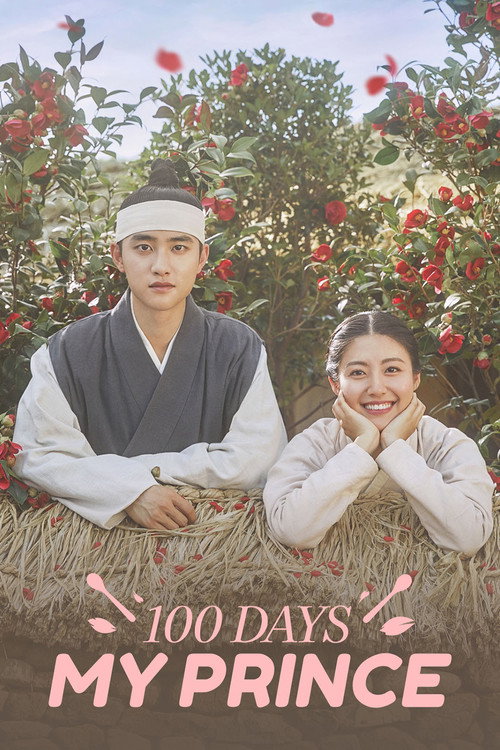
100 Days My Prince
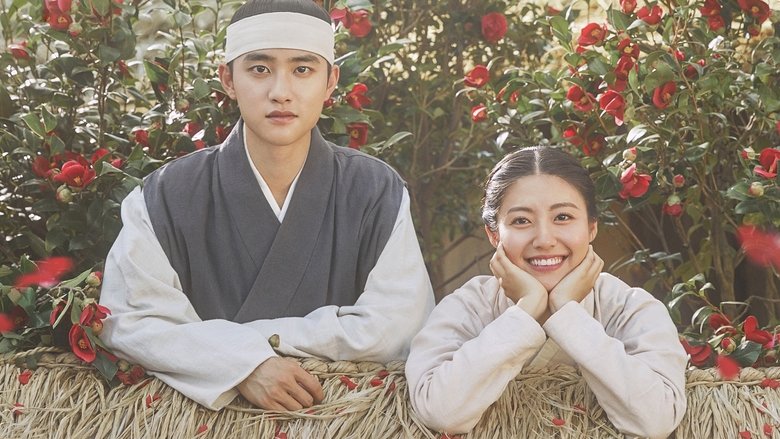
A poignant fusion sageuk tracing a fractured soul's journey toward healing, where a lost amnesiac crown prince discovers enduring love and tenderness under a humble thatched roof.
100 Days My Prince

100 Days My Prince

백일의 낭군님

"I will marry you someday."

10 September 2018 — 30 October 2018 South Korea 1 season 16 episode Ended 7.9 (175)

Cast: Doh Kyung-soo, Nam Ji-hyun, Cho Seong-ha, Cho Han-cheul, Oh Yeon-ah

Drama Comedy Mystery Identity and the Deconstruction of Hierarchy Healing Childhood Trauma and Recovering Lost Time Royal Duty vs. Individual Autonomy Political Corruption, Collusion, and Tyranny Found Family and Village Solidarity

Overview

100 Days My Prince is a 16-episode South Korean historical romantic comedy and political drama that begins sixteen years in the past when a bloody coup orchestrated by a ruthless high minister places a puppet king on the Joseon throne. The king's young nephew, Lee Yul, is unwillingly elevated to Crown Prince while his childhood love, the noble girl Yoon Yi-seo, is stripped of her family and forced to disappear into hiding under the alias Hong-shim in the modest village of Songjoo.

Years later, Crown Prince Lee Yul has matured into a cynical, cold, and exacting young royal isolated within an adversarial court. When severe drought strikes the kingdom, palace astrologers and political rivals blame the disaster on celestial disharmony caused by the prince's refusal to consummate his politically arranged marriage. In irritated defiance, Yul issues an imperial decree mandating that all unmarried men and women in the realm wed immediately to restore cosmic balance. Soon after, while traveling to a rain ritual, Yul survives an assassination ambush in the mountains but suffers severe head trauma and total amnesia.

Unconscious and stripped of his royal robes, Yul is found by Hong-shim's adoptive father and given the identity of 'Won-deuk'—a fictional betrothed Hong-shim concocted to evade punishment under Yul's own marriage mandate. The amnesiac prince and the practical, headstrong peasant woman enter into a forced marriage of convenience. As Won-deuk struggles hilariously and endearingly with village labor while retaining his aristocratic haughtiness, the two form a deep, genuine bond over one hundred days, even as palace conspiracies threaten to engulf them both.

Core Meaning

At its core, the series is an exploration of human identity stripped of social status, prestige, and institutional duty. It conveys that true nobility and worth are rooted in empathy, authentic connection, and moral integrity rather than inherited royal bloodlines or bureaucratic power. By inverting a Crown Prince into an inept peasant, the narrative demonstrates how artificial social hierarchies isolate human beings from genuine life and happiness, while illustrating that confronting historical trauma and breaking cycles of political vengeance is the only path toward legitimate leadership and peace.

Thematic DNA

Identity and the Deconstruction of Hierarchy 30%
Healing Childhood Trauma and Recovering Lost Time 25%
Royal Duty vs. Individual Autonomy 20%
Political Corruption, Collusion, and Tyranny 15%
Found Family and Village Solidarity 10%

Identity and the Deconstruction of Hierarchy

Explores who a person becomes when stripped of names, titles, and lineage. As Crown Prince Lee Yul, the protagonist is cold, isolated, and feared; as the clueless peasant Won-deuk, initially mocked as 'useless', he discovers sincere affection, empathy for ordinary labor, and emotional vulnerability.

Healing Childhood Trauma and Recovering Lost Time

Both Yul and Yi-seo were frozen in time on the night of the bloody coup that destroyed their families. Their 100 days of union represent a symbolic space outside linear time where both reclaim their repressed inner innocence and love after sixteen years of living under false or burdened identities.

Royal Duty vs. Individual Autonomy

Drives the second half of the narrative as Yul faces the tension between personal desire and sovereign duty, balancing his deep love for Hong-shim with the obligation to eradicate court corruption and protect the kingdom from impending war.

Political Corruption, Collusion, and Tyranny

Illustrated through Left State Councillor Kim Cha-eon's machinations, critiquing unchecked ambition and ministers who exploit royal authority and commoners alike for dynastic dominance, turning royal lineage into a puppet theatre.

Found Family and Village Solidarity

Songjoo village's communal warmth contrasts sharply with the lethal paranoia of the royal palace, underscoring how unconditional mutual aid among commoners sustains human dignity in oppressive times.

Character Analysis

Crown Prince Lee Yul / Na Won-deuk

Doh Kyung-soo (D.O.)

Archetype: The Displaced Prince / Wounded Hero Key Trait: Unflinching dignity and dry, razor-sharp wit.

Motivation

Initially emotional detachment and survival; evolves into defending Hong-shim and transforming Joseon into a just kingdom.

Character Arc

Begins as a cold, traumatized Crown Prince. After losing his memory, he transforms into 'Won-deuk', learning compassion, labor, and true love, before finally integrating Won-deuk's humanity with his royal authority to restore justice to Joseon.

Yoon Yi-seo / Hong-shim

Nam Ji-hyun

Archetype: The Hidden Noble / Resourceful Heroine Key Trait: Practical ingenuity, emotional courage, and stubborn loyalty.

Motivation

Locating her separated older brother and securing safety and survival for herself and her adoptive father.

Character Arc

Witnessed her father's slaughter during the coup and grew into a resilient head of a village problem-solving agency. She softens her defensive exterior through her marriage to Won-deuk, eventually reclaiming her noble heritage without sacrificing personal autonomy.

All 5 characters and cast

Symbols & Motifs

Falling Cherry Blossoms (Beotkkot)

Meaning:

Symbolizes ephemeral beauty, enduring first love, and the renewal of spring after winter's devastation.

Context:

Frames Yul's childhood declaration of love to Yi-seo, recurs at moments of adult romantic revelation, and completes the series in the final proposal epilogue.

The Silk Shoes (Kkot-sin)

Meaning:

Represents dignity, promises, and courtly noble origins.

Context:

Won-deuk buys embroidered silk shoes for Hong-shim while she is living in poverty, signaling that he perceives her innate grace and noble heart regardless of her peasant disguise.

The Droplet of Rain vs. Prolonged Drought

Meaning:

Functions as a cosmic metaphor and emotional indicator of balance restored, divine cleansing, and the breaking of emotional stagnation.

Context:

The kingdom's severe drought mirrors the loveless palace life and emotional drought of Yul, with rain arriving as emotional and narrative stagnation breaks.

The Royal Diary / Written Record

Meaning:

Symbolizes historical truth, justice, and enduring memory against political deceit.

Context:

Yul's hidden court journal serves as a key plot mechanism, preserving the reality of Kim Cha-eon's treason and his unbroken bond with Yi-seo.

The Dandelion and Wildflower Bouquets

Meaning:

Symbolizes simple, uncorrupted, and lasting affection born of sincere labor rather than inherited royal wealth.

Context:

Contrasted against opulent court jewels, Won-deuk crafts and gifts wildflowers and rustic hairpins to Hong-shim in Songjoo village.

Memorable Quotes

나만 불편한가?
— Crown Prince Lee Yul / Won-deuk

Context

First spoken in Episode 1 and recurring throughout his time in Songjoo village.

Meaning

Highlights his ingrained aristocratic posture and dry disdain, which slip out reflexively even after total memory loss when facing peasant absurdities.

나는 꽃잎이 떨어지는 날 혼인을 할 것이다. 너와.
— Young Lee Yul

Context

Delivered during the Episode 1 childhood flashback beneath blossoming cherry trees.

Meaning

The foundational childhood promise anchoring Yul's romantic consciousness across sixteen years, explaining his persistent refusal to consummate his royal marriage.

All 4 quotes

Episode Highlights

The Coup and the Royal Decree

S1E1

Establishes the bloody rebellion sixteen years prior, the trauma dividing Yul and Yi-seo, court friction in adulthood, and Yul's decree forcing all singles to wed.

Significance:

Sets up the entire political conflict, the tragic backstory, and the narrative catalyst for the village storyline.

Ambush in the Rain and the Birth of Won-deuk

S1E2

Depicts the assassination ambush during Yul's rain ritual journey, guard Dong-joo's sacrificial clothes swap, Yul's head injury and memory loss, and his rescue in Songjoo.

Significance:

Initiates the core premise by stripping the Crown Prince of his royal status and transforming him into the peasant Won-deuk.

A Nobleman in Mud: Won-deuk's Adaptation

S1E5

Focuses on Won-deuk's comedic struggle with manual labor and money alongside his elite calligraphy and martial reflexes.

Significance:

Serves as the comedic peak highlighting the sharp contrast between aristocratic conditioning and peasant survival.

Shadows of the Past

S1E8

Won-deuk exhibits instinctual martial prowess in combat while his feelings for Hong-shim deepen as assassins track him down.

Significance:

Bridges the comedic rustic life with impending political danger as Yul's true past begins catching up to him.

The Prince Reclaimed

S1E12

Kim Cha-eon tracks down Won-deuk and forcefully returns him to the palace, separating him from Hong-shim without his memories restored.

Significance:

Ends the 100-day rustic idyll and thrusts Yul back into the lethal court environment.

The Secret Journal and Restored Memory

S1E14

Yul recovers his hidden diary, restoring his full memory of the treasonous plot and realizing Hong-shim is Yoon Yi-seo.

Significance:

Shifts the narrative into active counter-offensive as Yul pieces together the truth to dismantle Kim Cha-eon's faction.

The Hundredth Day and the Falling Petals

S1E16

Yul defeats Kim Cha-eon in a final military showdown, restores Yi-seo's family name, and proposes to her under cherry blossoms in Songjoo.

Significance:

Resolves all major political conspiracies and provides emotional closure by uniting the lovers.

Philosophical Questions

What constitutes the self when social identity, rank, and memory are eradicated?

Examined through Yul's transition into Won-deuk, exploring whether core morality, dignity, and capacity to love exist independently of social conditioning and royal lineage.

Can a ruler genuinely govern people they have never lived among?

Explored through Yul's political growth, showing that true sovereign wisdom requires direct experience of commoners' economic hardships, heavy taxes, and daily labor.

Is absolute truth always superior to protective illusions?

Illustrated through Hong-shim's adoptive father fabricating Won-deuk's identity to save Hong-shim, and Yul living in peaceful ignorance away from his traumatic royal past.

Alternative Interpretations

Several critical perspectives surround the drama's narrative structure:

Full ending explanation

Cultural Impact

Aired during the height of fusion sageuk popularity, 100 Days My Prince distinguished itself by shifting narrative focus from claustrophobic royal halls to a warm pastoral setting. The series established Doh Kyung-soo as a formidable dramatic leading actor and provided critical early mainstream visibility for Kim Seon-ho and Han So-hee before their subsequent global breakout roles, proving that pastoral romance blended with political tension could achieve record-breaking Monday-Tuesday cable ratings.

Audience Reception

The series received widespread critical and commercial acclaim, particularly for the charismatic performances and comedic timing of Doh Kyung-soo and Nam Ji-hyun, alongside strong tonal balance between lighthearted village life and suspenseful court politics. Minor criticisms focused on familiar K-drama tropes like amnesia and childhood first love, occasional pacing slowdowns during the political exposition of Episodes 13–15, and an abrupt final confrontation with the primary antagonist.

Interesting Facts

  • Broadcast on cable network tvN, the finale scored a nationwide rating of 14.412% (AGB Nielsen), making it one of the highest-rated dramas in Korean cable television history.
  • The drama marked the first traditional/fusion sageuk lead role for idol-actor Doh Kyung-soo (EXO's D.O.), who earned wide critical praise for his vocal tone and dignified posture.
  • The series was largely pre-produced, with filming commencing in April 2018 following the first script reading in March 2018 and wrapping prior to the final broadcast run.
  • Upon surpassing 10% in viewership ratings, the cast fulfilled a ratings promise by dancing to EXO's hit song 'Growl', taught by Doh Kyung-soo.
  • The picturesque rural village scenes of Songjoo were filmed across prominent historical locations in Korea, including the Korean Folk Village in Yongin and traditional open sets in Mungyeong.
  • Doh Kyung-soo's EXO groupmate Chen contributed the emotional main ballad theme 'Cherry Blossom Love Song' (벚꽃연가) to the official soundtrack.

Easter Eggs

EXO Choreography Allusion

Won-deuk's comically clumsy folk dancing during village festivities playfully references Doh Kyung-soo's real-life status as a premier K-pop dancer and vocalist in EXO.

Folklore Homages to Secret Royal Inspectors

The premise of a prince incognito among commoners pays tribute to classic Korean folk legends of King Sukjong and the Joseon secret royal inspectors (Amhaeng-eosa).

The 'Won-deuk-i' Useless Son-in-Law Archetype

Won-deuk's label as a useless dependent plays on traditional Korean comedic folk tales regarding foolish sons-in-law (Babo Sawi).

Veteran Actor Cameos

Features special appearances by veteran actors such as Ahn Suk-hwan to add comedic texture to the provincial magistrate's office.

Frequently Asked Questions

Explore More About This Movie

Dive deeper into specific aspects of the movie with our detailed analysis pages

Comments (0)

Leave a comment

No comments yet. Be the first to share your thoughts!

Similar Movies