Skip to content
A Korean Odyssey
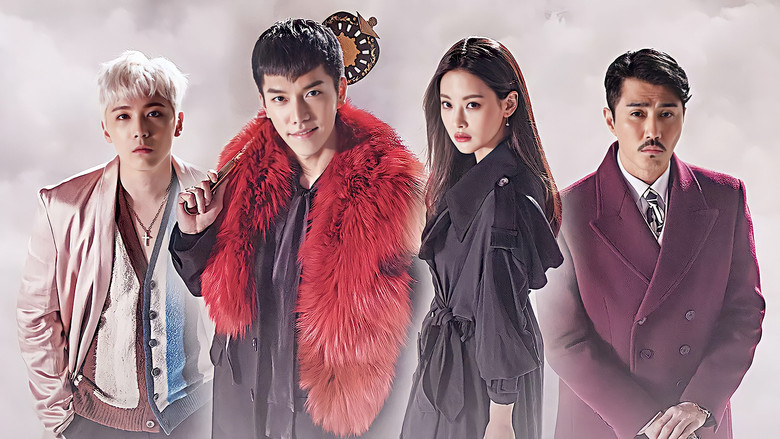
A modern urban dark fantasy drenched in neon grit and melancholic romance, where an immortal deity tears his chest open under lotus blossoms to keep a mortal heart beating.
A Korean Odyssey

A Korean Odyssey

화유기

"I want just one bite"

23 December 2017 — 04 March 2018 South Korea 1 season 20 episode Ended 8.1 (312)

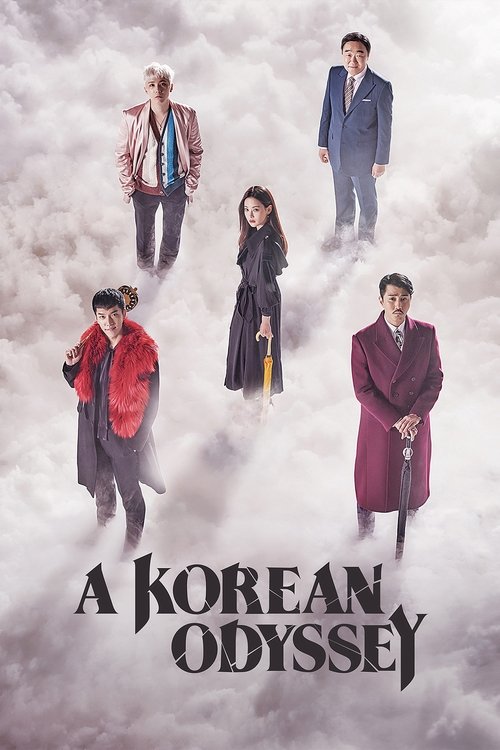
Cast: Lee Seung-gi, Cha Seung-won, Oh Yeon-seo, Lee Hong-gi, Jang Kwang

Drama Sci-Fi & Fantasy Comedy Mystery Destiny vs. Free Will and Divine Manipulation Love Transcending Coercion Moral Ambition, Karma, and Atonement Human Corruption vs. Supernatural Innocence Found Family and Comedic Camaraderie

Overview

A Korean Odyssey (Korean: 화유기; Hwayugi) is a 20-episode contemporary fantasy-romance drama created and written by the celebrated screenwriting duo the Hong Sisters (Hong Jung-eun and Hong Mi-ran). Reinterpreting the 16th-century Chinese literary classic Journey to the West (Xiyouji), the series relocates mythical deities, immortals, and demons into 21st-century Seoul, where they navigate the complexities of modern capitalism, celebrity culture, and impending supernatural doom.

The overarching narrative centers on Jin Seon-mi, a woman born with the gift/curse of seeing spirits whose blood carries the sacred scent of the lotus—marking her as the modern reincarnation of Sam-jang (the monk Xuanzang). After inadvertently freeing the exiled, arrogant Great Sage Son Oh-gong (Sun Wukong) during childhood, she encounters him again decades later. To protect herself from demons hungering for her flesh and to enlist Oh-gong's unmatched martial power in fending off malevolent spirits, Seon-mi binds him using the magical artifact Geumganggo. Rather than constricting his skull as the classic circlet did, this modern bracelet fastens around his wrist and forcefully tethers his heart, compelling him to love and protect Seon-mi against his initial will.

Alongside Woo Ma-wang (the Bull Demon King, operating as the head of Lucifer Entertainment) and a colorful retinue of supernatural entities, Seon-mi and Oh-gong confront an escalating series of malevolent spirits spawned by human greed, jealousy, and corruption. The episodic exorcisms build toward an apocalyptic convergence involving malevolent priestesses, dark political megalomaniacs, and the prophetic arrival of a world-ending catastrophe.

Core Meaning

At its core, A Korean Odyssey explores the transcendent nature of choice versus predestination and the transformative power of sacrificial love. The creators utilize ancient mythological archetypes to critique modern human vice (greed, vanity, power-hunger) while examining whether love born out of artificial coercion (the Geumganggo) can evolve into authentic, self-sacrificing devotion that defies heavenly decree. The ultimate message asserts that true devotion is not an accident of divine will, but an active, persistent choice to stand by another—even into the depths of the underworld.

Thematic DNA

Destiny vs. Free Will and Divine Manipulation 30%
Love Transcending Coercion 25%
Moral Ambition, Karma, and Atonement 20%
Human Corruption vs. Supernatural Innocence 15%
Found Family and Comedic Camaraderie 10%

Destiny vs. Free Will and Divine Manipulation

The narrative challenges celestial bureaucracy. Heaven designates Sam-jang as a sacrificial vessel to absorb evil and tasks Son Oh-gong with slaying her. Throughout the series, both characters resist heaven's cold algorithmic calculus, proving that mortal emotion and moral will outweigh preordained cosmic sacrifice.

Love Transcending Coercion

Beginning as a magical shackle causing involuntary romantic compulsion, Oh-gong's feelings gradually separate from the artifact's magic. The theme interrogates what constitutes genuine love: even when the bracelet is dormant or removed, the emotional reality forged through shared vulnerability remains absolute.

Moral Ambition, Karma, and Atonement

Represented primarily through Woo Ma-wang's quest to attain Buddhahood/deity status to relieve his beloved Princess Iron Fan (Na Chal-nyeo) from her eternal karmic punishment. The show dissects how ambition can start self-servingly and mature into selfless burden-bearing.

Human Corruption vs. Supernatural Innocence

While demons are traditionally feared, the series demonstrates that the true monsters are corrupt humans (such as Kang Dae-sung) whose greed and lack of empathy manifest real-world horrors, often contrasted with innocent supernatural beings like the zombie Jin Bu-ja.

Found Family and Comedic Camaraderie

The bickering household of disparate demons (a monkey, a bull, a pig, a water demon, and a zombie) evolves from an uneasy alliance of self-interest into a fiercely loyal surrogate family.

Character Analysis

Son Oh-gong

Lee Seung-gi

Archetype: The Rebellious Antihero Key Trait: Audacious & Fierce

Motivation

Initially seeks to regain his deity rank and consume Sam-jang for power; evolves into protecting Seon-mi and ensuring her soul's peace at any personal cost.

Character Arc

Begins as a selfish, hedonistic, and volatile rogue deity imprisoned for defying heaven. Leashed by the Geumganggo, his cynical rebellion softens into fierce protective devotion. By the end of the series, he willingly accepts mortal suffering and challenges the cosmos itself to rewrite his beloved's fate.

Jin Seon-mi / Sam-jang

Oh Yeon-seo

Archetype: The Chosen Savior/Martyr Key Trait: Resilient & Empathetic

Motivation

Yearns for human connection and normalcy; matures into an active protector of humanity who chooses her death on her own terms.

Character Arc

A lonely, ostracized real estate CEO who uses her sight of spirits to exorcise haunted properties. Her arc develops from seeking a mundane, ordinary existence to accepting the monumental burden of Sam-jang with agency and courage.

All 5 characters and cast

Symbols & Motifs

The Geumganggo (금강고 - The Magic Bracelet)

Meaning:

Symbolizes the double-edged nature of love—simultaneously an agonizing constraint and a liberating catalyst for empathy.

Context:

A modernization of Sun Wukong's golden headache fillet placed on Oh-gong’s wrist, contracting his heart with excruciating pain whenever Seon-mi suffers or is in distress.

Lotus Flower Scent / Sam-jang's Blood

Meaning:

Symbolizes pure spiritual sanctity and self-sacrifice, functioning as both an irresistible bait for malevolence and a beacon of redemption.

Context:

Emitted whenever Seon-mi bleeds, filling the air with a sweet lotus fragrance that draws demons from across the entire city.

The Death Bell (Saryeong 死령) vs. Fate Bell (Cheonnyeong 天령)

Meaning:

Embodies the illusion of romance versus the harsh reality of cosmic tragedy, signaling a tragic fate where one destined individual must die at the hand of the other.

Context:

A black bell that rings when two destined individuals meet; Seon-mi initially mistakes it for the bell of heavenly soulmates (Cheonnyeong).

The Yellow Umbrella with Talismans

Meaning:

Serves as a visual shield representing her isolation and childhood trauma before finding safety in companionship.

Context:

Carried by both young and adult Jin Seon-mi to ward off spirits.

The Wine Cellar / Sureumdong (수렴동 - Water Curtain Cave)

Meaning:

Represents his hedonistic detachment from the mortal world, which he eventually abandons when he embraces his love for Seon-mi.

Context:

Oh-gong’s private sanctuary filled with precious liquor.

Memorable Quotes

나 너 사랑해. 왜냐하면… 너한테 반했거든. 금강고 때문에.
— Son Oh-gong

Context

Delivered by Son Oh-gong to Jin Seon-mi in Episode 4.

Meaning

Oh-gong’s recurring, mocking declaration of love that establishes the central dilemma—bluntly confessing absolute adoration while attributing it entirely to the bracelet's magical compulsion.

네가 부르면 언제 어디서든 나타나서 널 지켜줄게.
— Son Oh-gong

Context

The original verbal covenant made to young Jin Seon-mi in the forest in Episode 1 and repeated throughout the series.

Meaning

Forms the spine of their dynamic, evolving from a broken childhood promise to an unbreakable vow.

All 5 quotes

Episode Highlights

The Broken Contract

S1E1

Young Jin Seon-mi releases Son Oh-gong from the Five Elements Mountain prison, but he betrays her by stealing the memory of his name to avoid his protective contract. Twenty-five years later, their paths cross again in modern Seoul.

Significance:

Establishes the mythological premise, character stakes, and the foundational betrayal that drives the first act.

The Geumganggo Bound

S1E4

Seon-mi successfully activates the Geumganggo with a kiss, instantly shackling Oh-gong’s heart to her emotional well-being.

Significance:

Shifts the dynamic from mutual hostility to forced intimacy, establishing the central romantic premise.

The 1930s Film Illusion

S1E7

Seon-mi and Ma-wang get trapped inside an enchanted antique film reel depicting 1930s Japanese-occupied Joseon. Oh-gong realizes the depth of his anxiety when he cannot immediately reach her.

Significance:

Widely praised as one of the series' visually striking set pieces; marks the transition of Oh-gong’s feelings from artificial duty to instinctual panic.

The Library of Memories & Winter Stasis

S1E10

General Frost freezes the Geumganggo, rendering its magical hold completely inert; despite this, Oh-gong still rescues and protects Seon-mi.

Significance:

A major narrative turning point providing conclusive proof that Oh-gong’s love has surpassed the bracelet’s compulsion.

The Ringing of the Saryeong

S1E15

Seon-mi discovers that the bell she heard ringing was not the heavenly chime of lovers (Cheonnyeong) but the death omen (Saryeong).

Significance:

Shatters the romantic security of the leads, establishing that their fate is mutually destructive.

The Rise of the Evil Priestess

S1E18

The ancient priestess Ah Sa-nyeo, possessing the rotting body of Bu-ja, manipulates Kang Dae-sung to summon the apocalyptic Black Dragon.

Significance:

Transitions the series into its high-stakes climax and sets the tragic machinery of Sam-jang’s sacrificial duty in motion.

The Sacrifice of Sam-jang

S1E19

Seon-mi steps forward to fulfill her destiny to prevent calamity but is mortally wounded by Kang Dae-sung, dying in Oh-gong’s arms. Enraged, Oh-gong battles and destroys the Black Dragon alone.

Significance:

The emotional and narrative climax of the series, subverting heaven’s mandate through personal sacrifice.

Descent into the Netherworld

S1E20

Recovering from trauma and fragmented memories, Oh-gong removes the Geumganggo on his own—proving his love was entirely genuine. He retrieves his magical staff and drives his sports car into the underworld to rescue Seon-mi.

Significance:

Resolves character arcs, concludes Ma-wang’s quest, and delivers an open-ended, mythic romance finale.

Philosophical Questions

Can love born of artificial constraint ever be considered authentic?

The series examines whether emotional bonds forged under external pressure and magical coercion can develop true moral validity, autonomy, and genuine vulnerability.

Is divine destiny inherently just, or is it merely cosmic authoritarianism?

Heaven’s willingness to sacrifice Sam-jang for the greater good questions utilitarian cosmic morality versus the intrinsic value of an individual mortal soul.

What truly distinguishes a monster from a human?

Explored through human antagonists committing atrocious acts out of pure greed and vanity, contrasted against demons who display honor, grief, and sacrificial loyalty.

Alternative Interpretations

The series and its ending can be viewed through several distinct analytical lenses:

Full ending explanation

Cultural Impact

A Korean Odyssey adapted the pan-Asian myth of Sun Wukong into modern Hallyu culture. Rather than portraying a literal Buddhist pilgrimage to India, the narrative reframed the journey into an emotional pilgrimage through Seoul's capitalist landscape, paving the way for romanticized mythic antiheroes on cable networks like tvN.

While the series maintained strong domestic cable viewership and broke premiere records for tvN in its target demographic, its severe production controversies served as a major watershed moment for the South Korean entertainment industry. It sparked intense public scrutiny and legislative debates regarding labor conditions, live-shooting practices, and overtime limits for production crews.

Audience Reception

Critical and audience reception for A Korean Odyssey highlighted several distinct strengths and weaknesses:

  • Strengths & Praise: Critics and viewers widely lauded the electrifying comedic and emotional chemistry between lead actors Lee Seung-gi and Cha Seung-won. The Hong Sisters received praise for their imaginative modernization of classic Chinese folklore into contemporary urban archetypes.
  • Criticisms: The drama faced criticism for uneven pacing across its 20 episodes, repetitive narrative misunderstandings concerning the Geumganggo, and noticeably rushed CGI visual effects during the final battle against the Black Dragon.
  • Verdict: It remains remembered as a flawed yet wildly entertaining and emotionally resonant urban fantasy drama that became a staple of late-2010s K-drama pop culture.

Interesting Facts

  • During the airing of Episode 2 on December 24, 2017, unedited footage with stunt wires and unfinished green-screen backdrops was broadcast, leading to emergency commercials and an abrupt mid-episode shutoff.
  • Production was temporarily halted after a staff member fell over 3 meters while installing a chandelier during early morning hours, suffering severe spinal and pelvic fractures.
  • To salvage the grueling post-production and live-shooting schedule, tvN dispatched two additional seasoned directors—Kim Jung-hyun and Kim Byung-soo—to assist lead director Park Hong-kyun.
  • The drama marked Lee Seung-gi’s highly anticipated return to television after being discharged from mandatory military service on October 31, 2017.
  • The role of Son Oh-gong was originally offered to Park Bo-gum, who declined the part.
  • Actress Choo Ja-hyun was initially cast as Na Chal-nyeo (Princess Iron Fan) but stepped down due to pregnancy and was replaced by Kim Ji-soo.
  • The drama served as a major reunion for the Hong Sisters with several past collaborators: Cha Seung-won (The Greatest Love), Lee Seung-gi (My Girlfriend Is a Gumiho), and Lee Hong-gi (You're Beautiful).

Easter Eggs

Cameo by Jang Keun-suk in Episode 3

Jang Keun-suk appeared as a Peacock Demon (Gong-jak), referencing his real-life close friendship with Lee Hong-gi and his past starring role in the Hong Sisters’ hit drama You're Beautiful.

Cameo by Kim Ji-soo as Na Chal-nyeo

Portrayed Princess Iron Fan, Ma-wang’s doomed lover across hundreds of tragic reincarnations.

Lucifer Entertainment as a K-Pop Agency Parody

Ma-wang’s entertainment agency parodies major real-world K-pop conglomerates (like YG and SM), humorously depicting that top idol charisma stems from literal demonic glamour.

The Monkey King Plush Doll (Son Yuk-gong)

Oh-gong gifts Seon-mi a plush monkey doll that becomes a vessel for his presence and serves as a recurring merchandise running gag.

The Greatest Love Homage

Cha Seung-won’s character incorporates mannerisms, comedic cadence, and inflated narcissism directly referencing his iconic character Dokko Jin from the Hong Sisters' 2011 drama The Greatest Love.

Frequently Asked Questions

Explore More About This Movie

Dive deeper into specific aspects of the movie with our detailed analysis pages

Comments (0)

Leave a comment

No comments yet. Be the first to share your thoughts!

Similar Movies