20th Century Girl
A bittersweet, nostalgic romance that captures the golden haze of first love through the grainy lens of a 90s camcorder.
20th Century Girl

20th Century Girl

20세기 소녀

"A first love pov story."

06 October 2022 South Korea 119 min ⭐ 8.2 (767)
Director: Bang Woo-ri
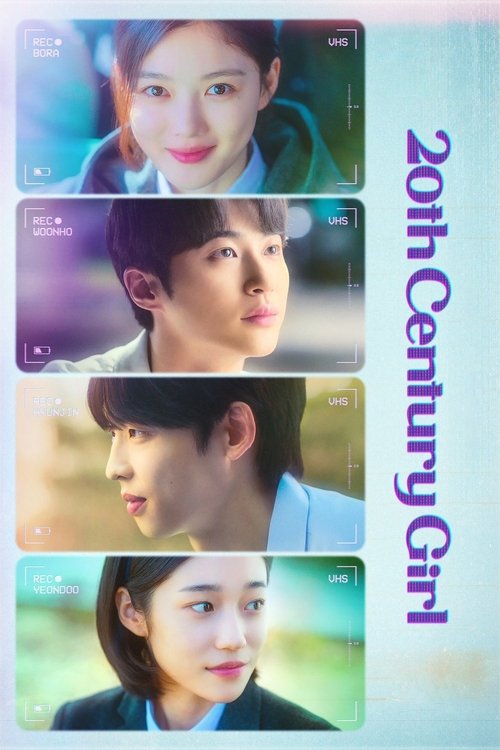
Cast: Kim You-jung, Byeon Woo-seok, Park Jung-woo, Roh Yoon-seo, Kim Sung-kyung
Drama Romance
First Love and Youthful Innocence Friendship vs. Romance Memory and Nostalgia Communication and Misunderstanding
Budget: $119

Overview

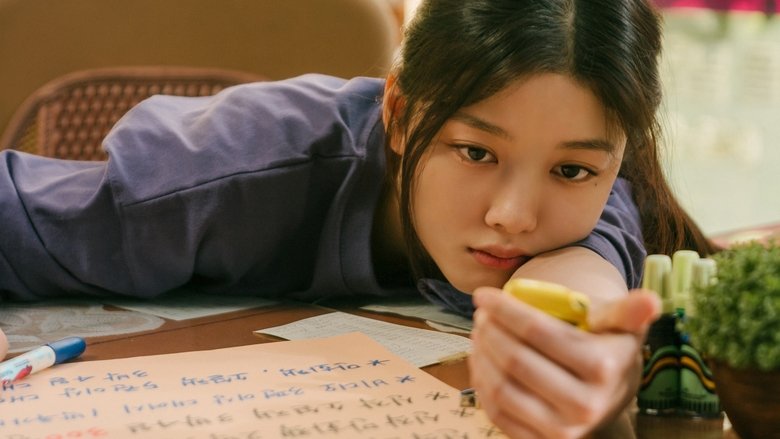
Set in 1999, "20th Century Girl" follows Na Bo-ra (Kim You-jung), a bright and loyal 17-year-old high school student. Her best friend, Yeon-du (Roh Yoon-seo), who is about to travel to the U.S. for heart surgery, confesses she has fallen head over heels for a boy named Baek Hyun-jin (Park Jung-woo). To ease her friend's mind, Bo-ra promises to observe Hyun-jin and report back everything she learns about him via email.

In her mission to get close to Hyun-jin, Bo-ra befriends his best friend, the quiet and observant Poong Woon-ho (Byeon Woo-seok). As Bo-ra meticulously documents Hyun-jin's habits, she finds herself drawn into her own heart-fluttering first love story with Woon-ho. The film beautifully captures the confusion, excitement, and poignant moments of teenage relationships, complicated by mistaken identities and the heartfelt bonds of friendship, all against the backdrop of the turn of the millennium.


Core Meaning

The core meaning of "20th Century Girl" revolves around the idea that first love, in its purity and intensity, leaves an indelible mark on one's life, shaping who they become even if it ends in heartbreak. Director Bang Woo-ri wanted to explore how first loves are sentimental precisely because they often don't work out, representing a period of youth that will never return. The film suggests that even though time moves on and life changes, the memories of that formative love remain, preserved and cherished. It's a poignant message about the beauty of fleeting moments and the bittersweet nature of looking back at a past that can never be reclaimed, but which continues to define the present.

Thematic DNA

First Love and Youthful Innocence 35%
Friendship vs. Romance 30%
Memory and Nostalgia 25%
Communication and Misunderstanding 10%

First Love and Youthful Innocence

The film is a quintessential exploration of first love, capturing its exhilarating highs and devastating lows. It portrays the awkwardness, the misunderstandings, and the all-consuming passion that characterizes teenage romance. The narrative emphasizes how these first romantic feelings are intertwined with the journey of self-discovery and growing up at the end of the 20th century.

Friendship vs. Romance

A central conflict in the film is the classic dilemma of choosing between loyalty to a best friend and personal romantic feelings. Bo-ra's initial mission is purely for her friend Yeon-du, but her developing feelings for Woon-ho create a heart-wrenching internal and external conflict. The film poignantly explores the depth of female friendship, with Yeon-du ultimately stating that Bo-ra is more important to her than any crush, highlighting the sacrifices made for cherished bonds.

Memory and Nostalgia

Set in 1999, the film is steeped in nostalgia for the pre-digital era of payphones, pagers, and VHS tapes. The narrative itself is a flashback, framed by the adult Bo-ra rediscovering these memories. This structure underscores the theme that the past is not just a series of events, but a collection of feelings and sensory details that shape our identity. The film acts as a time capsule, exploring how we idealize and remember the past, especially the intensity of our youth.

Communication and Misunderstanding

Many of the plot's complications arise from miscommunication and mistaken identities. The initial mix-up of Woon-ho for Hyun-jin sets the entire story in motion. Later, the inability of the characters to communicate their true feelings honestly—due to loyalty, fear, or circumstance—leads to heartache and missed opportunities. The reliance on emails and the eventual, unexplained silence from Woon-ho highlight the fragility of communication across distances.

Character Analysis

Na Bo-ra

Kim You-jung

Archetype: The Loyal Friend / The Everygirl
Key Trait: Loyal and Determined

Motivation

Initially, her sole motivation is to gather information about Baek Hyun-jin for her best friend, Yeon-du. This later shifts to navigating her own burgeoning feelings for Poong Woon-ho while trying not to betray her friend's trust.

Character Arc

Bo-ra begins as a fiercely loyal friend, willing to put her best friend's happiness above all else. Her journey is one of awakening, as she unexpectedly discovers her own first love. She evolves from a proxy observer to the protagonist of her own romance, learning to navigate the complex emotions of love, guilt, and loyalty. Her arc culminates in a bittersweet adulthood where she must reconcile the beautiful memory of her first love with its tragic end, finding a way to cherish the past without being permanently trapped by it.

Poong Woon-ho

Byeon Woo-seok

Archetype: The Quiet Observer / The Tragic Hero
Key Trait: Gentle and Perceptive

Motivation

His primary motivation becomes his love for Bo-ra. He is driven by a desire to connect with her, share his world (through his camera), and eventually return to her from New Zealand.

Character Arc

Woon-ho starts as a quiet, kind, and somewhat mysterious figure. Through his interactions with Bo-ra and his passion for filmmaking, his gentle and deeply caring nature is revealed. He falls for Bo-ra's vibrant personality but is caught in the misunderstanding involving his friend. His arc is one of quiet devotion and unspoken feelings, which he ultimately confesses before his departure. Tragically, his story ends off-screen, turning him into a poignant memory and the timeless "20th Century Boy" for Bo-ra.

Baek Hyun-jin

Park Jung-woo

Archetype: The Popular Jock / The Misunderstood Target
Key Trait: Confident but Loyal

Motivation

At first, he is motivated by typical teenage interests, but his motivation shifts to winning Bo-ra's affection. When he realizes her heart lies elsewhere, his motivation becomes supporting his friends' happiness.

Character Arc

Hyun-jin is initially perceived as the classic popular, slightly arrogant high school boy, the target of Bo-ra's investigation. However, his character develops as he shows a softer, more genuine side, eventually falling for Bo-ra's unique personality himself. His arc is about moving from the object of a crush to a supportive friend, ultimately helping Bo-ra and Woon-ho connect and valuing their friendships over his own romantic feelings.

Kim Yeon-du

Roh Yoon-seo

Archetype: The Damsel in Distress / The Catalyst
Key Trait: Romantic and Selfless

Motivation

Her initial motivation is her crush on the boy she believes is Baek Hyun-jin. This later changes to a desire to see her best friend, Bo-ra, be happy, even if it means giving up on her own crush.

Character Arc

Yeon-du serves as the catalyst for the entire plot. She begins as the lovestruck friend with a serious heart condition, whose request sets everything in motion. Upon her return, she inadvertently creates the central conflict by revealing the mistaken identity. Her arc is one of maturity; she recognizes the depth of Bo-ra's feelings and prioritizes their friendship above her own crush, ultimately encouraging Bo-ra to pursue her love. Her character demonstrates that true friendship involves sacrifice and selflessness.

Symbols & Motifs

Video Tapes and Camcorders

Meaning:

The camcorder symbolizes the act of preserving memory and seeing the world through a specific, loving perspective. It represents Woon-ho's desire to capture fleeting moments and hold onto them forever. For Bo-ra, the tapes become a tangible link to her past and her only way to receive Woon-ho's final, unspoken message, immortalizing their love story.

Context:

Woon-ho is a member of the broadcasting club and is frequently seen with his camcorder. The film opens and closes with videotapes—the first prompts Bo-ra's memory, and the final one, made by Woon-ho for her, reveals the depth of his feelings and provides a heartbreaking sense of closure.

Train Station

Meaning:

The train station is a classic symbol of farewell, separation, and the divergence of paths. In many films, farewells at train stations signify a permanent parting. In "20th Century Girl," it is the location of Bo-ra and Woon-ho's emotional confession and last goodbye, a poignant and bittersweet climax to their time together before he leaves for New Zealand, which tragically becomes their final in-person meeting.

Context:

After Yeon-du encourages her, Bo-ra rushes to the train station to catch Woon-ho just before his departure. They confess their mutual love for each other on the platform, promising to wait and keep in touch, a promise that fate ultimately breaks.

Payphones and Beepers

Meaning:

These objects represent the technological landscape of the 1990s and symbolize a mode of communication that required more effort, patience, and waiting. Unlike the instant communication of the 21st century, these devices created a sense of distance and longing, amplifying the emotional weight of every message sent and received, and making Woon-ho's eventual silence even more profound.

Context:

Throughout the film, characters use payphones to make important calls and beepers (pagers) to send numeric messages. Bo-ra's diligent efforts to learn about Hyun-jin involve observing his pager number and other analog details, grounding the story firmly in its time period.

Memorable Quotes

보고 싶다. 21세기의 네가.

— Poong Woon-ho

Context:

This is the final line Bo-ra hears from Woon-ho, spoken in a video he recorded for her before his death. The adult Bo-ra watches this years later at the art exhibition organized by his brother, finally understanding the depth of his feelings and the tragedy that separated them.

Meaning:

Translation: "I want to see you. The 21st-century you." This quote, delivered in Woon-ho's final video message, encapsulates the central theme of love, time, and loss. It's a heartbreaking expression of his hope for a future with Bo-ra that he never gets to see, solidifying their story as one tragically confined to the 20th century.

나는 네가 제일 소중해.

— Kim Yeon-du

Context:

Yeon-du says this after discovering that both she and Bo-ra have feelings for Woon-ho. Seeing Bo-ra's heartbreak and willingness to sacrifice her own feelings, Yeon-du tearfully confesses that she is willing to give up her crush a hundred times over because their friendship means more.

Meaning:

Translation: "You are the most precious person to me." This line is the emotional climax of the friendship theme. Yeon-du says this to Bo-ra, asserting that their bond is more important than any romantic entanglement. It showcases a profound maturity and selflessness, resolving the central love triangle by prioritizing platonic love.

Philosophical Questions

Does the idealization of first love prevent us from finding happiness in the present?

The film explores this through the adult Na Bo-ra, who, even two decades later, has not fully moved on from her relationship with Woon-ho. The discovery of his death provides closure but also reinforces the monumental impact he had on her life. The film raises the question of whether holding onto such a powerful, idealized memory is a beautiful tribute or a barrier to forming new, meaningful relationships. It suggests that while such loves shape us, the process of understanding and contextualizing them is a lifelong journey.

How do our memories of the past shape our present identity?

The entire film is structured as an extended memory, triggered by a videotape. This framing device suggests that our present self is a culmination of past experiences, particularly the emotionally charged ones from our youth. Bo-ra's identity as an adult is intrinsically linked to her experiences in 1999. The film posits that nostalgia is not just a fond remembrance, but an active force that informs our emotions, decisions, and how we perceive the world long after the events have passed.

Alternative Interpretations

While the film's ending is tragic, an alternative interpretation focuses on its necessity for preserving the purity of first love. Some viewers and critics argue that by having Woon-ho pass away, the film immortalizes their relationship at its peak. Their love story is never tainted by the potential mundane conflicts or a simple drifting apart that often happens with time. It remains a perfect, albeit heartbreaking, memory. This interpretation aligns with a tradition in Korean romance films where tragic ends serve to heighten the beauty and fleeting nature of the love story. Another reading could focus on the title itself: Bo-ra is forever a "20th Century Girl" because her emotional development in love is frozen in that time. Woon-ho's death prevents her from moving into a "21st Century" love, leaving her symbolically suspended in the memory of her youth.

Cultural Impact

"20th Century Girl" tapped into a significant wave of 90s and Y2K nostalgia prevalent in South Korean media, similar to popular dramas like "Twenty-Five Twenty-One". Its release on Netflix allowed it to reach a global audience, where it performed strongly, debuting at number 2 on the platform's global non-English film chart within three days of its release. The film was praised for its authentic portrayal of the era, from fashion and technology to the overall atmosphere, resonating with those who grew up in that period and introducing a bygone era to younger viewers. While adhering to some classic Korean romance tropes, critics noted its heartfelt execution and emotional depth. Director Bang Woo-ri also mentioned she was inspired by classic youth films like "Cinema Paradiso" and wanted to create a distinctly Korean story within that genre, as she felt that most youth films she watched were Japanese or Taiwanese.

Audience Reception

Audience reception for "20th Century Girl" was largely positive, though emotionally divided, particularly regarding the ending. Many viewers praised the film for its heartwarming and nostalgic portrayal of the 1990s, the compelling chemistry between the leads Kim You-jung and Byeon Woo-seok, and its beautiful cinematography. It was often described as a sweet, funny, and adorable teen romance for its first three-quarters. However, the sudden tragic twist in the final act was highly controversial. A significant portion of the audience expressed frustration and heartbreak over the sad ending, feeling it was an unnecessarily cruel turn after investing in the couple's love story. Conversely, another segment of the audience defended the ending as poignant and realistic, arguing that it elevated the film beyond a simple rom-com and reinforced the bittersweet theme that first loves are beautiful because they are often fleeting and tragic.

Interesting Facts

  • The story is semi-autobiographical, inspired by director Bang Woo-ri's own experience of keeping an "exchange diary" with a friend in which she observed her friend's crush.
  • The director chose the year 1999 because it was a transitional period at the cusp of the new millennium, with a mix of analog (pagers) and early digital (internet) technology, reflecting the main character's own state of transition during puberty.
  • To achieve a realistic drunk performance, actress Kim You-jung actually consumed alcohol before filming the scene where Bo-ra gets intoxicated.
  • The flashback scenes set in 1999 were intentionally shot with a brighter, more colorful, and hazy aesthetic to evoke a dreamlike, nostalgic quality, as if viewed through the filter of memory.
  • The film features several notable cameos, including actor Ryu Seung-ryong (from "Miracle in Cell No. 7") as the voice of Woon-ho's father, and Gong Myung as Bo-ra's awkward blind date.
  • Actress Han Hyo-joo, who plays the adult Na Bo-ra, intentionally did not watch the final video message from Woon-ho before filming her reaction scene, allowing for a more genuine and emotional performance.

⚠️ Spoiler Analysis

Click to reveal detailed analysis with spoilers

Frequently Asked Questions

Explore More About This Movie

Dive deeper into specific aspects of the movie with our detailed analysis pages

Comments (0)

Leave a comment

No comments yet. Be the first to share your thoughts!