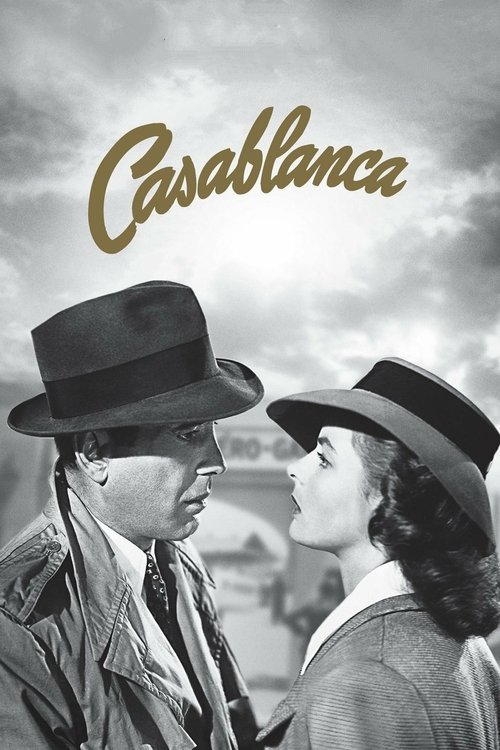
Casablanca
A noir-tinged romantic drama where desperate choices and rekindled love flicker against the shadowy backdrop of wartime uncertainty, like a solitary match illuminating the fog of war.
Casablanca

Casablanca

"They had a date with fate in Casablanca!"

15 January 1943 United States of America 103 min ⭐ 8.2 (5,745)
Director: Michael Curtiz
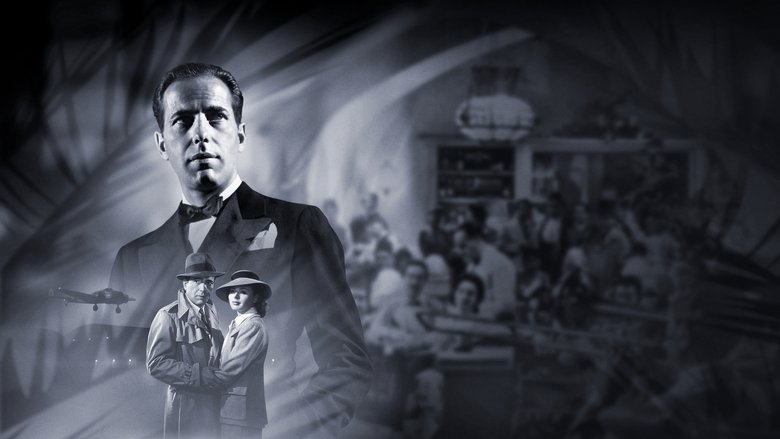
Cast: Humphrey Bogart, Ingrid Bergman, Paul Henreid, Claude Rains, Conrad Veidt
Drama Romance
Sacrifice and Idealism The Conflict Between Love and Duty Neutrality and Commitment
Budget: $878,000
Box Office: $10,462,500

Overview

Set during World War II, "Casablanca" centers on Rick Blaine (Humphrey Bogart), a cynical American expatriate running an upscale nightclub and gambling den in the Vichy-controlled Moroccan city of Casablanca. The city is a temporary haven for refugees seeking to escape to the neutral United States. Rick professes to be neutral in all matters, famously stating, "I stick my neck out for nobody."

Rick's world is turned upside down when his former lover, Ilsa Lund (Ingrid Bergman), walks into his club. She is accompanied by her husband, Victor Laszlo (Paul Henreid), a celebrated Czech Resistance leader who has escaped a Nazi concentration camp. They are in Casablanca seeking letters of transit that will allow them to escape to America and continue their fight against the Nazis. Complicating matters, Rick is in possession of two such letters.

Rick is faced with a difficult choice: help the woman who broke his heart and her heroic husband escape, or try to win her back. This personal dilemma is set against a backdrop of political intrigue, with the ruthless German Major Strasser (Conrad Veidt) determined to prevent Laszlo's escape and the morally ambiguous French Captain Renault (Claude Rains) playing all sides.
Core Meaning

The core meaning of "Casablanca" revolves around the themes of sacrifice, idealism, and the conflict between personal desires and the greater good. Director Michael Curtiz, along with the screenwriters, crafts a narrative that explores the journey from cynicism to commitment. Rick Blaine's character arc embodies the central message of the film: in times of great moral crisis, neutrality is not a viable option, and personal sacrifices are necessary for the triumph of freedom and justice. The film suggests that even a world-weary and heartbroken individual can rediscover their idealism and make a profound difference. Ultimately, "Casablanca" is a story about choosing a noble cause over personal happiness, a message that resonated deeply with audiences during World War II and continues to be relevant today.

Thematic DNA

Sacrifice and Idealism 40%
The Conflict Between Love and Duty 35%
Neutrality and Commitment 25%

Sacrifice and Idealism

The theme of sacrifice is central to "Casablanca," culminating in Rick's decision to give up his love for Ilsa for the greater good of the war effort. His transformation from a cynical, self-interested individual to a self-sacrificing hero is the film's primary narrative arc. This theme is also embodied by Victor Laszlo, who consistently prioritizes his fight against the Nazis over his own safety. Ilsa, too, makes sacrifices, torn between her love for Rick and her duty to Victor and his cause. The film argues that in the face of tyranny, personal desires must be subordinated to a higher purpose.

The Conflict Between Love and Duty

"Casablanca" is renowned for its poignant exploration of the conflict between love and duty. The central love triangle between Rick, Ilsa, and Victor places this theme at the forefront of the story. Ilsa is torn between her passionate love for Rick and her sense of loyalty and duty to her husband and his vital work for the Resistance. Rick, in turn, must choose between rekindling his romance with Ilsa and fulfilling his duty to help the Allied cause by ensuring Laszlo's escape. The film's enduring power lies in its depiction of this heart-wrenching dilemma, where the characters' personal happiness is in direct opposition to their moral and political obligations.

Neutrality and Commitment

The film uses Rick's initial stance of neutrality as an allegory for America's isolationism in the early years of World War II. Rick's famous line, "I stick my neck out for nobody," encapsulates this position. However, as the narrative unfolds, the film argues that neutrality is an untenable position in the face of evil. The events in Casablanca force Rick to abandon his cynicism and take a stand. His decision to help Victor and Ilsa escape represents a commitment to the fight against fascism, mirroring the United States' eventual entry into the war.

Character Analysis

Rick Blaine

Humphrey Bogart

Archetype: Anti-hero
Key Trait: Cynical Idealist

Motivation

Initially, Rick is motivated by self-preservation and a desire to protect himself from further emotional pain. As the story progresses, his love for Ilsa and his reawakened sense of right and wrong become his primary motivators, leading him to help her and Victor escape.

Character Arc

Rick begins the film as a cynical and detached nightclub owner, determined to remain neutral in the conflicts surrounding him. The arrival of Ilsa forces him to confront his painful past and his buried idealism. Throughout the film, he evolves from a man who "sticks his neck out for nobody" to a heroic figure who sacrifices his own happiness for a greater cause. His journey is one of rediscovering his moral compass and committing to the fight against tyranny.

Ilsa Lund

Ingrid Bergman

Archetype: The Torn Lover
Key Trait: Conflicted

Motivation

Ilsa's primary motivation is to ensure the safety of her husband, Victor Laszlo, so he can continue his important work for the Resistance. However, she is also driven by her unresolved love for Rick and her desire for personal happiness, creating a deep internal conflict.

Character Arc

Ilsa's arc is one of navigating an impossible emotional and moral conflict. She is torn between her enduring love for Rick and her loyalty and commitment to her husband, Victor Laszlo, and his noble cause. She arrives in Casablanca hoping to secure passage for Victor, but her reunion with Rick reopens old wounds and forces her to confront her true feelings. Ultimately, she is prepared to sacrifice her own desires for the sake of the greater good, a decision that is ultimately made for her by Rick.

Victor Laszlo

Paul Henreid

Archetype: The Idealistic Hero
Key Trait: Principled

Motivation

Victor's motivation is singular and unwavering: to fight against the Nazi regime and inspire others to do the same. He is driven by a deep sense of patriotism and a commitment to freedom and justice.

Character Arc

Victor Laszlo's character remains steadfast throughout the film. He is an unwavering symbol of the resistance against Nazism. He is courageous, principled, and dedicated to his cause, even in the face of great personal danger. His arc is less about personal change and more about his impact on those around him, particularly Rick. He represents the moral and political ideals that Rick ultimately embraces.

Captain Louis Renault

Claude Rains

Archetype: The Lovable Rogue
Key Trait: Opportunistic

Motivation

Renault is primarily motivated by pragmatism and self-preservation. He collaborates with the Nazis to maintain his position of power in Casablanca. However, his friendship with Rick and his underlying sense of decency ultimately lead him to act against his own immediate interests.

Character Arc

Captain Renault begins as a corrupt and opportunistic Vichy official, looking out for his own self-interest. He maintains a cynical and witty friendship with Rick. However, by the end of the film, inspired by Rick's sacrifice, he chooses a side. His decision to help Rick escape and his famous line, "Louis, I think this is the beginning of a beautiful friendship," signifies his own moral transformation and commitment to the Allied cause.

Symbols & Motifs

Rick's Café Américain

Meaning:

Rick's Café Américain symbolizes a crossroads of cultures and ideologies, a microcosm of the world in turmoil. It is a place of both refuge and danger for the displaced people of Europe. The café also represents a state of limbo, a place where people are stuck waiting for their fates to be decided. For Rick, it is a self-imposed prison where he hides from his past and the political turmoil of the world.

Context:

The entire film is set in and around Rick's café. It is the central meeting place for all the main characters: refugees, Vichy officials, and Nazis. The physical space of the café, with its shadows and hidden corners, reflects the moral ambiguity of its patrons and the uncertain times.

The Letters of Transit

Meaning:

The letters of transit symbolize freedom and escape. They are the tangible hope for a new life away from the war and oppression in Europe. The immense value placed on these documents highlights the desperation of the refugees in Casablanca. For the characters, possessing the letters means holding the power over life and death.

Context:

The letters of transit are the central MacGuffin of the film's plot. They are obtained by Ugarte through the murder of two German couriers and entrusted to Rick for safekeeping. The desire to possess these letters drives the actions of many characters, particularly Ilsa and Victor Laszlo, and places Rick in a position of power.

Sam's Piano and "As Time Goes By"

Meaning:

Sam's piano and the song "As Time Goes By" symbolize the past and the enduring power of memory and love. The song is a direct link to Rick and Ilsa's romantic past in Paris. For Rick, the song represents both the happiness he once had and the pain of his heartbreak. The melody serves as a recurring motif that triggers memories and emotions, underscoring the idea that while time moves on, the fundamental feelings of love and loss remain.

Context:

Ilsa asks Sam to play "As Time Goes By" upon her arrival at Rick's, which leads to her and Rick's dramatic reunion. Rick has forbidden the song from being played, showing his attempt to suppress his past. The song is played at several key moments throughout the film, often during flashbacks to Rick and Ilsa's time in Paris, highlighting the contrast between their past happiness and their current predicament.

Memorable Quotes

Here's looking at you, kid.

— Rick Blaine

Context:

Rick says this line to Ilsa at several key moments, most famously at the airport as he is sending her away with Victor Laszlo. It is his final, loving goodbye.

Meaning:

This iconic line is a tender and personal expression of Rick's enduring love for Ilsa. It's a phrase he uses both in their happy past in Paris and in their final, heartbreaking farewell. The line encapsulates their shared history and the depth of his feelings, making his sacrifice all the more poignant. It is a bittersweet acknowledgment of their past and the future they cannot have together.

We'll always have Paris.

— Rick Blaine

Context:

Rick says this to Ilsa at the airport to comfort her as he explains why she must leave with Victor. He is letting her know that he will never forget their time together.

Meaning:

This quote signifies Rick's acceptance of their situation and his recognition that their past love will always be a cherished memory, even if they cannot have a future together. It's a way of saying that what they shared was real and meaningful and can never be taken away, providing a measure of comfort in their tragic separation.

Of all the gin joints in all the towns in all the world, she walks into mine.

— Rick Blaine

Context:

Rick says this to Sam late at night in his café after seeing Ilsa for the first time. He is drunk and overwhelmed by the return of his past love.

Meaning:

This line perfectly captures Rick's shock, bitterness, and sense of cruel fate upon seeing Ilsa again after so many years. It highlights the improbability of their reunion and the emotional turmoil it immediately causes him. The quote conveys his feeling that their meeting is not just a coincidence but a destined and painful event.

Louis, I think this is the beginning of a beautiful friendship.

— Rick Blaine

Context:

Rick says this to Captain Renault as they walk away into the fog at the airport after Ilsa and Victor's plane has departed and Rick has killed Major Strasser.

Meaning:

This is the film's final line and it signifies a shift in both Rick and Captain Renault's characters. It marks their joint commitment to the fight against the Nazis and their newfound alliance based on shared ideals rather than cynical self-interest. It provides an optimistic and hopeful conclusion to the film, suggesting that new purpose can be found even in the midst of loss and sacrifice.

Philosophical Questions

Is it ever justifiable to sacrifice personal happiness for a greater good?

"Casablanca" explores this question through its central love triangle. Rick's ultimate decision to let Ilsa go with Victor, despite his deep love for her, is a profound act of self-sacrifice for the anti-fascist cause. The film argues that in the context of a world at war with tyranny, the needs of the many, and the fight for freedom, outweigh the desires of a few individuals. Victor Laszlo's character embodies this philosophy from the beginning, consistently putting his life on the line for his beliefs. The film's emotional weight comes from the genuine pain of this sacrifice, suggesting that while it is a noble choice, it is also a deeply difficult one.

Can one truly remain neutral in the face of injustice?

The film uses Rick's character arc to argue that neutrality is ultimately a moral failing when confronted with evil. His initial detachment and cynicism are portrayed as a defense mechanism born from heartbreak. However, the events of the film, particularly the presence of the idealistic Victor Laszlo and the oppressive Major Strasser, force him to confront the reality of the Nazi threat. The film suggests that to not take a side is to implicitly support the oppressor. Rick's transformation into an active participant in the fight for freedom is presented as a moral awakening and a necessary step towards redemption.

Alternative Interpretations

One of the most prominent alternative interpretations of "Casablanca" is the political allegory reading, where Rick Blaine is seen as a personification of the United States. In this interpretation, Rick's initial cynical neutrality and his gin joint, where people from all nations converge, represent America's isolationist stance before entering World War II. His eventual decision to "stick his neck out" for Victor Laszlo and the Allied cause mirrors the U.S.'s entry into the war. The name "Casablanca" itself, meaning "White House" in Spanish, is sometimes cited as further evidence for this interpretation.

Another reading focuses on the film as a modern myth. The characters can be seen as archetypes: Rick as the cynical hero who rediscovers his purpose, Ilsa as the conflicted lover, Laszlo as the noble idealist, and Renault as the trickster who ultimately chooses the side of good. The setting of Casablanca, a place of transit and uncertainty, can be viewed as a kind of purgatory where moral choices must be made. The film's enduring appeal, in this view, comes from its ability to tap into these timeless narrative structures.

Cultural Impact

"Casablanca" was released during World War II and its themes of sacrifice and commitment to a cause resonated strongly with wartime audiences. The film has been interpreted as a powerful piece of propaganda, encouraging American intervention in the war by dramatizing the heroism of the European resistance. Rick's journey from isolationism to activism was seen as a metaphor for the United States' own journey into the global conflict.

The film was an immediate success, winning the Academy Award for Best Picture, Best Director for Michael Curtiz, and Best Adapted Screenplay. Its reputation has only grown over time, and it consistently ranks as one of the greatest films ever made. The characters of Rick and Ilsa, as portrayed by Humphrey Bogart and Ingrid Bergman, have become cinematic icons, and the film's memorable lines have become a part of the cultural lexicon.

"Casablanca" has had a lasting influence on cinema, with many subsequent films borrowing its themes, characters, and plot elements. It has been parodied and paid homage to in numerous works, including the Marx Brothers' "A Night in Casablanca" and Woody Allen's "Play It Again, Sam." The film's blend of romance, drama, and political intrigue, along with its timeless story of love and sacrifice, has ensured its enduring popularity and cultural significance.

Audience Reception

Upon its release, "Casablanca" was a box office success and was well-received by critics, earning eight Academy Award nominations and winning three, including Best Picture. Over the decades, its reputation has grown immensely, and it is now widely regarded by audiences and critics as one of the greatest films of all time. Audiences have consistently praised the film's compelling story, the sharp and witty dialogue, and the unforgettable performances by the cast, particularly the chemistry between Humphrey Bogart and Ingrid Bergman. The film's blend of romance, suspense, and patriotism has given it a timeless appeal. While there is little in the way of criticism for the film, some modern viewers might find certain aspects of its gender politics, particularly Ilsa's relative lack of agency in the final decision, to be dated. However, the overwhelming consensus is that "Casablanca" is a masterpiece of classical Hollywood cinema.

Interesting Facts

  • The film is based on an unproduced play called "Everybody Comes to Rick's" by Murray Burnett and Joan Alison.
  • The famous line "Play it again, Sam" is a misquotation. Ilsa actually says, "Play it, Sam. Play 'As Time Goes By,'" and Rick says, "You played it for her, you can play it for me."
  • The script was written as the film was being shot, and the actors, including Ingrid Bergman, did not know how the film would end until the final scenes were filmed.
  • Dooley Wilson, the actor who played Sam, was a drummer and could not actually play the piano. He mimicked the hand movements while a professional pianist played off-screen.
  • Many of the actors who played the Nazis were, in fact, German Jews who had fled the Nazi regime in their home country.
  • The iconic airport scene was filmed on a soundstage, and the airplane in the background was a cardboard cutout. Forced perspective was used to make it look real.
  • Humphrey Bogart was shorter than Ingrid Bergman, so he had to stand on blocks or sit on cushions in some of their scenes together to appear taller.
  • The release of the film was rushed to coincide with the Allied invasion of North Africa and the capture of Casablanca in November 1942.

⚠️ Spoiler Analysis

Click to reveal detailed analysis with spoilers

Frequently Asked Questions

Explore More About This Movie

Dive deeper into specific aspects of the movie with our detailed analysis pages

Comments (0)

Leave a comment

No comments yet. Be the first to share your thoughts!