Skip to content
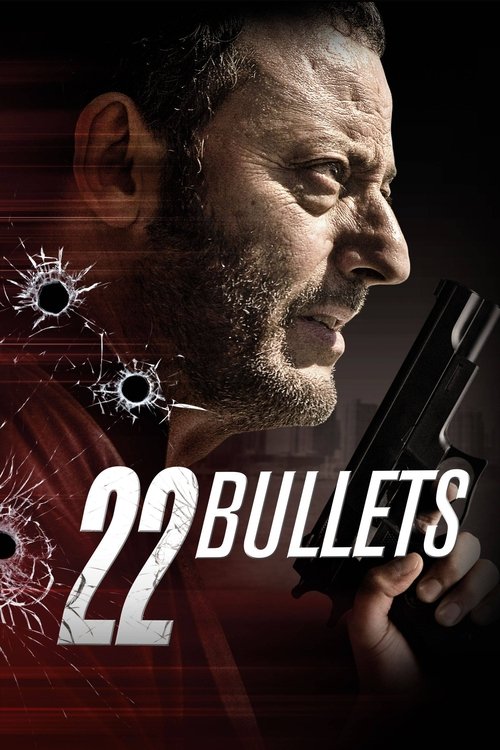
22 Bullets
A sun-scorched Marseilles neo-noir pulsating with operatic grief and relentless vengeance, where a blood-soaked phantom rises from twenty-two bullet wounds to sever the decaying bonds of brotherhood.
22 Bullets

22 Bullets

L'Immortel

"The revenge of the Professional."

23 March 2010 France 117 min 6.7 (1,368)

Director: Richard Berry

Cast: Jean Reno, Kad Merad, Marina Foïs, Jean-Pierre Darroussin, JoeyStarr

Drama Crime Thriller Retribution vs. Moral Redemption The Decay of Honor and Brotherhood The Inescapability of Past Karma Grief, Loss, and Systemic Justice
Budget: $24,000,000

Overview

22 Bullets (L'Immortel) is a French crime-action thriller directed by Richard Berry and produced under Luc Besson’s EuropaCorp banner. Set in the criminal underworld of Marseille, the film follows Charly Matteï (Jean Reno), a seasoned former mob boss who has severed all ties with his criminal past to live a quiet, idyllic life dedicated to his wife and two young children. Three years into his peaceful retirement, having yielded control of the empire to his lifelong friend and associate Tony Zacchia (Kad Merad), Matteï is ambushed by an eight-man masked hit squad in an underground parking garage at Marseille's Old Port.

Pumped with twenty-two bullets and left for dead, Matteï miraculously survives the execution attempt against all medical odds, though he is left physically impaired with a paralyzed right arm. While police investigator Marie Goldman (Marina Foïs)—a widowed detective struggling with personal grief and institutional apathy—attempts to unravel the case, Matteï initially tries to resist the call of bloodshed to protect the fragile peace he promised his family.

However, when the conspirators escalate their ruthlessness and target his loyal associates and family, Matteï is pulled back into the violent underworld. Re-emerging as "The Immortal," he begins a systematic, personal manhunt across Provence to identify and eliminate the masked hitmen one by one, culminating in an inevitable clash against the betrayal at the core of his former syndicate.

Core Meaning

The central thesis of 22 Bullets is that violence is an indelible stain that defies true retirement or clean escape: "spilled blood never dries." Director Richard Berry explores the moral breakdown of traditional underworld codes, contrasting the archaic mafia honor system (characterized by personal loyalty, boundaries, and open-faced confrontation) against modern criminal depravity driven by unbridled greed, narcotics trafficking, and cowardly deceit.

The film conveys that true redemption cannot be passively claimed merely by walking away; it demands confronting the moral debt of past sins. Matteï's survival is treated less as a scientific miracle and more as a karmic reckoning, forcing him to dismantle the criminal enterprise he helped build in order to guarantee absolute safety for the next generation.

Thematic DNA

Retribution vs. Moral Redemption 35%
The Decay of Honor and Brotherhood 25%
The Inescapability of Past Karma 20%
Grief, Loss, and Systemic Justice 20%

Retribution vs. Moral Redemption

The primary narrative engine is Matteï’s struggle between seeking Christian-style forgiveness/peace and delivering Old Testament retributive justice. Even when avenging himself, Matteï adheres to a self-imposed ethical boundary—targeting only the guilty and refusing to disguise his face.

The Decay of Honor and Brotherhood

Through flashbacks to a trio of young blood-brothers taking an oath, the film examines the corruption of lifelong friendship. Zacchia's descent into drug trafficking and paranoia represents the modern gangster's abandonment of sacred codes in favor of ruthless profit.

The Inescapability of Past Karma

The twenty-two bullets represent Matteï’s past refusing to stay buried. His physical disabilities serve as a permanent physical reminder that criminal origins cannot be wiped away without consequence.

Grief, Loss, and Systemic Justice

Parallel to Matteï’s vigilantism is Detective Marie Goldman’s battle with alcohol and systemic neglect. Her storyline highlights the shortcomings of lawful justice, illustrating how both sides of the law are consumed by unresolved loss.

Character Analysis

Charly Matteï

Jean Reno

Archetype: The Reformed Antihero / Reluctant Avenger Key Trait: Stoic, methodical, unyielding honor.

Motivation

Protecting his family and punishing the betrayal of underworld codes.

Character Arc

Shifts from peaceful, retired family man to vengeful phantom, finally securing genuine closure by ending the cycle.

Tony Zacchia

Kad Merad

Archetype: The Treacherous Usurper / Narcissist Kingpin Key Trait: Unhinged temper, volatile narcissism, physical tics.

Motivation

Maintaining total criminal control and eliminating any threat to his supremacy.

Character Arc

Deteriorates from powerful underworld lord into a paranoid, stuttering sociopath consumed by fear of "The Immortal".

All 5 characters and cast

Symbols & Motifs

The 22 Bullets

Meaning:

Symbolize both the mortal weight of Matteï’s past sins and his near-mythic resilience. The physical extraction of bullets and the remaining lead fragments represent unresolved guilt and karmic scars.

Context:

Introduced during the opening assassination attempt in the parking garage and highlighted during emergency medical surgery and ongoing recovery.

The Paralyzed Right Hand / Cane

Meaning:

Symbolizes the permanent mutilation of Matteï's violent past. Forced to become left-handed, his physical handicap embodies his forced rebirth and vulnerability.

Context:

Visualized throughout Matteï's daily life post-surgery, shaping his physical posture, movement, and fighting style.

Classical Opera Arias (Lucia di Lammermoor, Tosca)

Meaning:

Underscores the grand tragedy, theatrical melodrama, and inevitable fate awaiting tragic heroes and villains alike.

Context:

Recurring throughout the soundtrack during pivotal, violent, and reflective narrative moments.

The Ski Masks / Hoods (Cagoules)

Meaning:

Represent cowardice, moral degeneracy, and the death of traditional underworld respect. Matteï explicitly rebukes his attackers for hiding behind masks, viewing masked murder as contemptible.

Context:

Worn by the eight-man hit squad during the opening ambush and contrasted against Matteï's uncovered face during his retaliatory confrontations.

The Childhood Blood Oath

Meaning:

Symbolizes innocence corrupted by power and the tragic failure of sacred vows.

Context:

Shown in flashbacks featuring the three young friends (Matteï, Zacchia, and Beaudinard) binding themselves together.

Memorable Quotes

« Charly Matteï, et je suis venu te tuer. À visage découvert. C'est une question de respect. Je veux que tu saches qui te tue. Pourquoi tu meurs. On ne tue pas cagoulé. Ça, c'est un meurtre. Tu ne signes pas le message ! »
— Charly Matteï

Context

Delivered by Reno to one of his ambushers during his retaliatory campaign.

Meaning

Encapsulates Matteï's code by distinguishing between honorable underworld executions and cowardly assassinations.

« Je vais tous vous tuer, les uns après les autres. Mais pas tout de suite. Je veux que tu penses à ce que tu as fait, nuit et jour. Demande pardon à ta femme et à tes enfants... Tu ne seras plus jamais en sécurité tant que je serai vivant. »
— Charly Matteï

Context

Spoken by Matteï when leaving one of his would-be assassins alive temporarily.

Meaning

Flips the predator-prey dynamic by inflicting psychological torture through impending dread.

All 4 quotes

Philosophical Questions

Can a violent man ever truly achieve redemption and peace?

The film examines whether stepping away from crime absolves moral liability, concluding that karmic debts must be actively settled before peace can be earned.

Does a "moral code" within organized crime legitimize illicit acts?

By contrasting Matteï's code of honor against Zacchia's nihilistic cruelty, the narrative investigates whether underworld ethics are a genuine virtue or merely self-justifying rationalization.

When lawful institutions fail, is vigilante justice justifiable?

Through Detective Goldman's tolerance of Matteï's actions, the film questions the boundaries of institutional justice when confronted with unchecked corruption.

Alternative Interpretations

The film invites multiple critical and symbolic readings:

Full ending explanation

Cultural Impact

22 Bullets emerged during a prominent resurgence of high-budget French neo-noirs in the late 2000s and early 2010s, alongside films like Mesrine (2008) and EuropaCorp’s Taken franchise. Supported by Luc Besson's studio model, the film combined traditional French polar realism with glossy, Hollywood-style action pacing and kinetic editing.

The film captures the specific mythology of Marseille—a historic Mediterranean port city long romanticized and scrutinized for organized crime, clan rivalries, and the historical "French Connection." Upon release, French and international audiences praised Reno’s commanding performance, turning the film into a modest box-office success ($21.7 million worldwide on a $20 million budget) and cementing its status as a staple modern European revenge thriller.

Audience Reception

Aggregated reception and critical consensus highlight several defining aspects of the film:

  • Praises: Jean Reno’s charismatic, gravelly performance and screen presence; Kad Merad’s unexpected, chilling turn against type as a volatile mob boss; the explosive, visceral opening assassination sequence in the parking lot; high production values, atmospheric Marseille locations, and dynamic cinematography.
  • Criticisms: Familiar revenge tropes and structural resemblances to Hollywood genre formulas; sudden tonal shifts between graphic brutality and sentimental family melodrama; hyper-kinetic editing in select action sequences that occasionally detracted from realism.
  • Overall Verdict: A sleek, violent, and highly entertaining neo-noir revenge thriller anchored by strong acting performances and stylish direction.

Interesting Facts

  • The film is based on the 2007 novel L'Immortel by Franz-Olivier Giesbert, which fictionalizes the life of real-life Marseille crime boss Jacques 'Jacky Le Mat' Imbert, who survived being shot 22 times on February 1, 1977 in Cassis.
  • Jean Reno initiated the collaboration with director Richard Berry, who searched for a fitting dramatic vehicle with gravitas for Reno before finding Giesbert's novel.
  • Kad Merad, widely known for French comedic blockbusters like Welcome to the Sticks, was cast against type in his first major villainous dramatic role to make his sudden bursts of sociopathic violence more unsettling.
  • Director Richard Berry spent weeks conducting discreet research in Marseille, meeting former underworld figures and local contacts in cafes to incorporate authentic gangland texture into the script.
  • Principal photography began on February 23, 2009, shooting on location across Marseille, Avignon, and Paris over an eight-week span.
  • The soundtrack was composed by Klaus Badelt, fusing classical orchestral themes and famous operatic selections with high-intensity action cues.

Easter Eggs

Cameo by the Director

Richard Berry cameos as Aurelio Rampal / police associate figure, continuing his long-standing presence in the French policier genre.

Homage to French Gangster Cinema (La Balance)

Berry's gritty depiction of Marseille pays tribute to classic French crime cinema from the 1980s, in which Berry himself had starred.

Opera References (Donizetti & Puccini)

The opera passages played during key scenes—including Lucia di Lammermoor—mirror the bloody tragedies on screen, foreshadowing family betrayals and fatal downfalls.

Rap Icon Casting

The casting of JoeyStarr (frontman of seminal French hip-hop group Suprême NTM) links the film’s underworld narrative to contemporary French banlieue culture and modern street grit.

Frequently Asked Questions

Explore More About This Movie

Dive deeper into specific aspects of the movie with our detailed analysis pages

Comments (0)

Leave a comment

No comments yet. Be the first to share your thoughts!

Similar Movies