Skip to content
The Yellow Sea
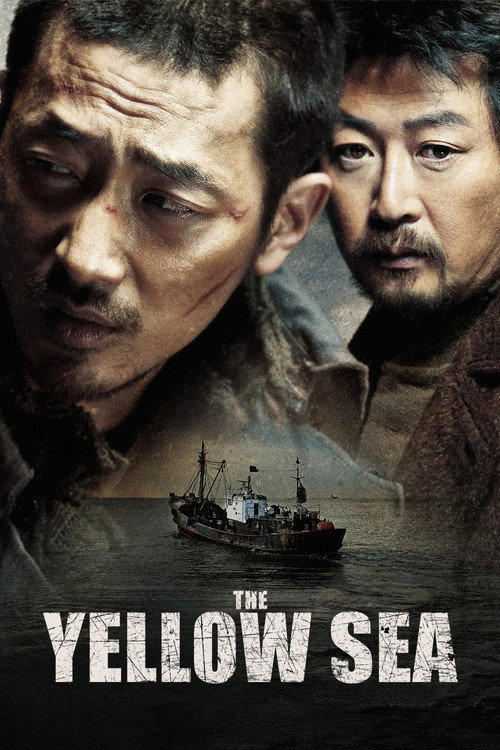
Drenched in freezing grime and visceral nihilism, The Yellow Sea captures a man's desperate, feral struggle for survival across borders, resembling a wounded stray dog sprinting through an unending labyrinth of butcher knives.
The Yellow Sea

The Yellow Sea

황해

"The only thing he must not have crossed."

22 December 2010 South Korea 156 min 7.3 (602)

Director: Na Hong-jin

Cast: Ha Jung-woo, Kim Yun-seok, Cho Seong-ha, Lee Cheol-min, Kwak Do-won

Drama Crime Thriller Diaspora, Alienation, and Joseonjok Identity Socioeconomic Desperation and Exploitation Obsessive Love, Betrayal, and Paranoia Primal Brutality and Nihilistic Survival
Budget: $8,170,000
Box Office: $15,789,762

Overview

Set in the frigid border city of Yanji in China's Yanbian Korean Autonomous Prefecture, the narrative centers on Gu-nam, an ethnic Korean (Joseonjok) taxi driver suffocating under crushing gambling debts. Tormented by the absence of his wife—who migrated to South Korea for work and has ceased contact—Gu-nam lives a destitute, alcohol-fueled existence on the edge of collapse.

Desperation forces him to accept an insidious proposition from a local mob boss and underworld dog broker, Myun Jung-hak. In exchange for wiping out his financial obligations, Gu-nam must illegally cross the Yellow Sea into Seoul, assassinate a targeted businessman, and return with a severed thumb as proof of death. Gu-nam sees the mission not only as a financial lifeline, but as his only opportunity to locate his missing wife.

Upon arriving in Seoul after a grueling sea transit, Gu-nam meticulously surveils his target while combing through the city's grim alleyways in search of clues about his wife. However, the moment he moves in to execute the hit, a catastrophic chain of unexpected violent interventions erupts, leaving him framed, abandoned, and pursued relentlessly by both the South Korean police and rival syndicate underworlds.


Core Meaning

Director Na Hong-jin explores the primal commodification and isolation of marginalized human beings caught within ruthless geopolitical and economic systems. The core message portrays modern capitalism and diaspora as an unforgiving ecosystem where disenfranchised individuals (Joseonjok) are treated as expendable beasts of burden. When human ties are severed by poverty, distance, and paranoia, society descends into a state of feral self-destruction where every participant is consumed by greed and violent impulse.

Thematic DNA

Diaspora, Alienation, and Joseonjok Identity 30%
Socioeconomic Desperation and Exploitation 25%
Obsessive Love, Betrayal, and Paranoia 25%
Primal Brutality and Nihilistic Survival 20%

Diaspora, Alienation, and Joseonjok Identity

The film examines the liminal existence of the Joseonjok—ethnic Koreans who belong neither entirely to China nor to South Korea. Disowned and exploited as cheap, disposable labor or criminal pawns, their displacement is rendered as both a physical and spiritual exile.

Socioeconomic Desperation and Exploitation

Poverty acts as the driving catalyst of the narrative. Gu-nam’s initial descent into contract killing is not born of innate malice, but of suffocating debt and financial entrapment. The wealthy figures manipulate the desperate underclass into slaughtering one another from behind closed doors.

Obsessive Love, Betrayal, and Paranoia

Gu-nam’s subconscious is plagued by recurring nightmares of his wife's infidelity. This emotional agony mirrors the thematic web of marital infidelities that secretly triggered the film's entire chain of assassinations, revealing how domestic intimacy turns into lethal destruction.

Primal Brutality and Nihilistic Survival

Stripping away modern civilizational decorum, characters battle with hatchets, knives, and blunt bones. Survival becomes animalistic; human beings fight with the instinctual, unrelenting ferocity of rabid dogs.

Character Analysis

Gu-nam

Ha Jung-woo

Archetype: Tragic Antihero / Reluctant Fugitive Key Trait: Unyielding physical resilience, melancholy, and stoicism.

Motivation

To clear his suffocating debts and locate his estranged wife in Seoul.

Character Arc

Starts as a beaten-down, indebted taxi driver in Yanji, devolves into a desperate hunter in Seoul, and finally fights through pure instinct to salvage dignity and uncover the truth behind his betrayal.

Myun Jung-hak

Kim Yun-seok

Archetype: Ruthless Force of Nature / Mob Boss Key Trait: Primal ferocity, pragmatism, and unflinching brutality.

Motivation

Sheer monetary profit and ruthless self-preservation.

Character Arc

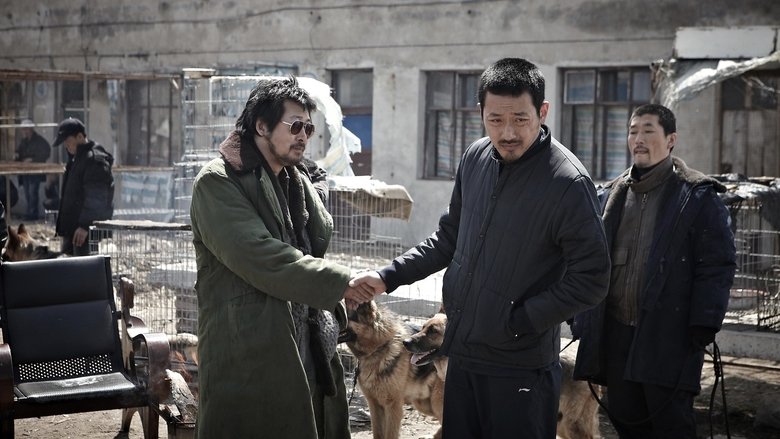
Operates initially out of a squalid dog-butchering den in Yanbian before traveling to Seoul to hunt down his enemies with monstrous, unstoppable ferocity.

All 3 characters and cast

Symbols & Motifs

The Yellow Sea (황해 / 黃海)

Meaning:

A vast, murky border separating mainland China and the Korean peninsula that echoes the ancient mythological concept of Hwangcheon (黃泉, the Yellow Springs)—the river crossing into the realm of the dead from which travelers rarely return.

Context:

Used as the geographical transit route Gu-nam crosses to reach South Korea and later where his corpse and the urn are discarded by the boatman.

The Rabid Dog Story

Meaning:

Foreshadows the contagious savagery, moral infection, and cannibalistic, predatory violence that consumes the characters.

Context:

Delivered during Gu-nam's opening childhood voiceover narration about a beloved rabid dog that was buried and subsequently dug up and eaten by villagers.

The Severed Thumb

Meaning:

Represents the grim reduction of human life to sheer transaction, proof of task, and physical token.

Context:

Demanded by Myun-ga as physical proof of Professor Kim Seung-hyun's death, which Gu-nam carries through the streets of Seoul.

The Ox Bone

Meaning:

Highlights the primal, slaughterhouse-like reality of the underworld and the raw reduction of violence to animal instinct.

Context:

Wielded by Myun-ga as an improvised, lethal bludgeon during a vicious mob assault.

The Train and Urn

Meaning:

Symbolizes an agonizing journey toward reconciliation that only manifests in death or dreamlike liminality.

Context:

Appears in the ending as Gu-nam carries the putative ashes of his wife on a boat, juxtaposed with the vision of his wife stepping onto a train platform.

Memorable Quotes

개한테 물려 광견병에 걸렸다. 결국 우리는 그 개를 묻어버렸다. 하지만 그날 밤, 어른들이 그 개를 파내어 먹어치웠다.
— Gu-nam

Context

Gu-nam's opening voiceover narration recounting a childhood memory.

Meaning

Establishes the bleak Darwinian atmosphere of Yanji, framing themes of moral infection, survival, and animalistic predation.

사람 죽이는 거 일도 아니야.
— Myun Jung-hak

Context

Spoken to Gu-nam during his initial recruitment for the contract killing.

Meaning

Demonstrates Myun-ga's complete, sociopathic indifference to human life and the ease with which he executes lethal violence.

All 4 quotes

Philosophical Questions

What defines human identity when nation, culture, and community reject you?

The narrative questions the value of nationality and cultural heritage when marginalized diaspora populations are exploited and abandoned by both their ancestral homeland and their country of residence.

Is morality sustainable under crushing economic subjugation?

Gu-nam's journey examines whether ethical decisions remain possible when an individual is reduced to absolute poverty and primal biological survival.

How does irrational jealousy warp objective reality?

The parallel suspicions of Gu-nam and Tae-won demonstrate how unchecked paranoia can trigger catastrophic spirals of violence predicated on misunderstandings and illusions.

Alternative Interpretations

The Hallucination / Dying Dream Reading: The final scene showing Gu-nam's wife stepping off a train in Yanji features ethereal lighting and ambient water sounds, leading many to interpret it as Gu-nam's comforting dying fantasy as he bleeds out at sea.

Full ending explanation

Cultural Impact

The film brought significant attention to the marginalized Joseonjok community along China's northeastern frontier, shedding light on their socio-economic vulnerability and the mutual prejudices existing between mainland Koreans and ethnic Korean migrants. After premiering in the Un Certain Regard section at the 2011 Cannes Film Festival, it earned international critical acclaim for its kinetic choreography and pacing, drawing comparisons to directors Park Chan-wook and Michael Mann, while its intense violence and complex plotting sparked debate among domestic audiences.

Audience Reception

The Yellow Sea received universal praise from critics and audiences for its exceptional car chase sequences, bone-crunching action choreography, atmospheric cinematography by Lee Sung-je, and raw lead performances by Ha Jung-woo and Kim Yun-seok. However, some viewers found the multi-faction plotting convoluted and the extended runtime exhausting. Ultimately, it is regarded as a modern South Korean neo-noir classic that pushed the boundaries of visceral genre cinema.

Interesting Facts

  • The Yellow Sea was one of the earliest South Korean feature films to receive direct investment from Fox International Productions (20th Century Fox).
  • Director Na Hong-jin reunited with his lead actors from The Chaser (2008) but inverted their roles: Ha Jung-woo became the hunted protagonist and Kim Yun-seok portrayed the antagonist pursuer.
  • Ha Jung-woo and Kim Yun-seok spent months learning the Yanbian Joseonjok dialect and Mandarin Chinese for their roles.
  • Ha Jung-woo lost significant weight and underwent rigorous physical conditioning to embody the impoverished taxi driver.
  • Principal photography lasted nearly a year, filming on location in Yanji, China, and across South Korea under extreme winter conditions.
  • Despite focusing heavily on organized crime, the film features an almost complete absence of firearms, relying instead on hatchets, knives, clubs, and vehicles.

Easter Eggs

Four-Act Chapter Structure

The film is formally split into four distinct chapters—The Taxi Driver, The Killer, Joseonjok, and The Yellow Sea—mirroring Gu-nam's descent from personal misery into expansive underworld warfare.

Homage to Martin Scorsese's Taxi Driver (1976)

Gu-nam’s occupation as a cab driver, his green military jacket, brooding isolation, and urban alienation directly reference Travis Bickle.

The Yellow Springs Mythos (Hwangcheon)

The color palette and sea voyages reference East Asian mythological underworld imagery where crossing yellow, murky waters signifies traversing into the realm of the dead.

Frequently Asked Questions

Explore More About This Movie

Dive deeper into specific aspects of the movie with our detailed analysis pages

Comments (0)

Leave a comment

No comments yet. Be the first to share your thoughts!

Similar Movies