Skip to content
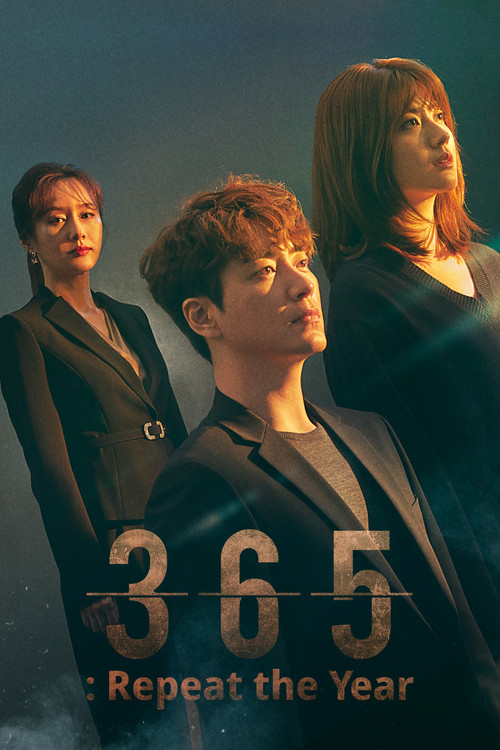
365: Repeat the Year
Enveloped in a chilling neo-noir haze, desperate souls sprint across a crumbling hourglass only to find that rewriting yesterday awakens a sharper guillotine.
365: Repeat the Year

365: Repeat the Year

365 : 운명을 거스르는 1년

23 March 2020 — 28 April 2020 South Korea 1 season 24 episode Ended 7.5 (165)

Cast: Lee Jun-hyuk, Nam Ji-hyun, Kim Ji-soo, Yang Dong-geun, Lee Shi-a

Drama Mystery The Hubris of Altering Fate vs. Inevitability Guilt, Regret, and the Illusion of a "Do-Over" Blind Trust and the Masks of Complicity Meaningful Solidarity vs. Isolation

Overview

365: Repeat the Year (365: 운명을 거스르는 1년) is a South Korean fantasy crime-thriller produced by HB Entertainment and broadcast by MBC in 2020. Directed by Kim Kyung-hee and penned by screenwriters Lee Seo-yun and Lee Soo-kyung, the drama adapts the conceptual framework of the 2004 Japanese novel Repeat by Kurumi Inui. The narrative centers on an enigmatic invitation extended to ten ordinary individuals who are offered the opportunity of a lifetime: to "reset" their lives by traveling back in time exactly 365 days, retaining every memory of the year that has already passed.

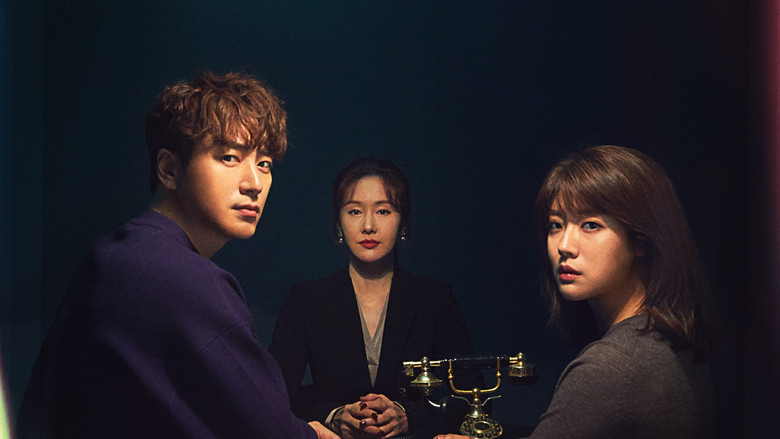
Among the participants—dubbed "resetters"—are Ji Hyung-joo (Lee Jun-hyuk), an instinct-driven violent crimes detective grieving the brutal murder of his senior colleague, and Shin Ga-hyun (Nam Ji-hyun), a successful yet burnt-out thriller webtoon artist who lost the use of her legs in a devastating hit-and-run accident. Both seize the reset to erase their life-altering traumas. At first, the gambit seems miraculous: Hyung-joo saves his partner, Ga-hyun prevents her collision, and others win lotteries or escape toxic relationships. However, the initial euphoria curdles almost immediately when members of the group begin dying in horrific, unnatural circumstances in the precise order of an invisible countdown.

As mutual suspicion poisons the group and their enigmatic guide, psychiatrist Lee Shin (Kim Ji-soo), withholds vital truths, Hyung-joo and Ga-hyun forge a tenacious investigative partnership. Digging into the personal pasts of the resetters, they discover a labyrinth of hidden entanglements and realize that their temporal leap was not a benevolent gift of redemption, but rather the opening move in a sinister game of survival against a shadowy predator.

Core Meaning

At its core, 365: Repeat the Year interrogates humanity's universal obsession with the "undo button". The series argues that life’s pain, grief, and mistakes cannot simply be excised through supernatural shortcuts without incurring unforeseen moral and cosmic collateral. When individuals obsess over erasing past pain, they become blind to the systemic connections between people, inadvertently opening doors to darker tragedies.

Ultimately, the series presents the message that true destiny is not an inflexible script dictated by time, nor is it an entitlement to be greedily rewritten. Rather, fate is shaped by human agency, conscience, and the willingness to take responsibility for the present moment. True redemption comes not from circumventing trauma, but from confronting truth and choosing empathy over self-preservation, even when doing so demands sacrifice.

Thematic DNA

The Hubris of Altering Fate vs. Inevitability 30%
Guilt, Regret, and the Illusion of a "Do-Over" 25%
Blind Trust and the Masks of Complicity 25%
Meaningful Solidarity vs. Isolation 20%

The Hubris of Altering Fate vs. Inevitability

The narrative tests whether human beings can outmaneuver destiny. Every participant accepts the reset believing they can engineer a flawless reality. However, every altered choice triggers a domino effect of unintended consequences, suggesting that attempting to manipulate time disrupts the fragile balance of life and death.

Guilt, Regret, and the Illusion of a "Do-Over"

Hyung-joo's survivor guilt and Ga-hyun's lingering self-blame mirror the varied regrets of every resetter. The show deconstructs the fantasy of the do-over, exposing that avoiding an external catastrophe does not fix internal brokenness; without genuine moral growth, individuals simply carry their character flaws into another timeline.

Blind Trust and the Masks of Complicity

A central dramatic engine is the vulnerability created by misplaced trust. Protagonists frequently misjudge who is an ally and who is an executioner. The series explores how warmth, seniority, and mentor figures can cloak sociopathy, forcing characters—and viewers—to confront how readily people disregard warning signs out of longing for safety and validation.

Meaningful Solidarity vs. Isolation

While characters initially treat the reset transactionally to benefit only themselves, survival demands mutual vulnerability. The dynamic between Hyung-joo and Ga-hyun shows that genuine human connection, shared integrity, and self-sacrifice are the only true antidotes to the cyclical horrors of time.

Character Analysis

Ji Hyung-joo

Lee Jun-hyuk

Archetype: The Reluctant Hero / Grieving Protector Key Trait: Deep empathy and sharp investigative instincts paired with emotional vulnerability

Motivation

Initially driven by the selfish desire to undo a personal tragedy, his motivation broadens into solving the serial murders, protecting Ga-hyun, and stopping a calculating monster.

Character Arc

Starting as a traumatized homicide detective paralyzed by survivor guilt over his partner’s death, Hyung-joo jumps at the reset solely to resurrect his fallen mentor. Over the series, he evolves from a reactive, guilt-driven cop into an observant, selfless protector who is willing to shoulder the psychological burden of an entire forgotten timeline alone to ensure justice and safety for others.

Shin Ga-hyun

Nam Ji-hyun

Archetype: The Truth-Seeker / Resilient Survivor Key Trait: Cynical pragmatism, fierce intellect, and deductive analytical skill

Motivation

Evolving from personal physical autonomy to uncovering the truth behind the reset and preventing the deaths of innocent people.

Character Arc

Initially portrayed as an irritable, workaholic webtoon writer embittered by the loss of her legs and betrayed by loved ones, she enters the reset solely to regain her physical mobility. As she confronts the unraveling death game, she sheds her misanthropy, becoming a courageous investigator willing to place her life on the line to save Hyung-joo.

All 5 characters and cast

Symbols & Motifs

The Zian Clinic / Liminal Waiting Room

Meaning:

Represents limbo—a transitional, emotionally antiseptic chamber where human beings trade the natural order for an unnatural second chance.

Context:

Used as the pristine, isolated architectural meeting space of Dr. Lee Shin's clinic where candidates assemble to receive instructions and learn the rules of the reset.

The Flower Baskets & Enclosed Cards

Meaning:

Function as modern memento mori and physical embodiments of the inescapable countdown of death, demonstrating that manipulating circumstances does not abolish an appointment with mortality.

Context:

Ornate floral arrangements delivered to the resetters bearing cards marked with the exact impending dates of their deaths.

Ga-hyun’s Wheelchair

Meaning:

An overt physical representation of vulnerability, trauma, and dependency, contrasting restored physical movement with lingering emotional scars to prove true healing requires more than intact limbs.

Context:

Used by Ga-hyun following her original hit-and-run collision, and visibly abandoned when she walks again in the reset timeline.

The Webtoon "Hidden Killer" (히든 킬러)

Meaning:

Acts as a metafictional mirror that blurs the boundary between artistic foresight, psychological profiling, and objective reality.

Context:

Ga-hyun's bestselling comic, whose visual panels depict crimes before they occur or reflect the real murders carried out by the serial killer.

Stolen Souvenirs / Trophy Items

Meaning:

Represents trophy-taking, sociopathic objectification, and the commodification of human life, contrasting sharply with authentic human connection.

Context:

The killer's habit of taking and collecting rings and personal effects from each murder victim.

Maru (The Dog)

Meaning:

A barometer of trust, pure emotional warmth, and unconditional loyalty across differing realities.

Context:

Ga-hyun's pet dog, who frequently acts as the physical and emotional catalyst bridging Ga-hyun and Hyung-joo across differing timelines.

Memorable Quotes

리셋하시겠습니까?
— Dr. Lee Shin

Context

Episode 1. The inciting question delivered over the phone to Hyung-joo, Ga-hyun, and the chosen candidates.

Meaning

Functions as the verbal catalyst for the entire narrative, offering the tempting yet perilous premise of rewinding life.

운명을 바꿀 수 있다고 믿으세요?
— Dr. Lee Shin

Context

Episodes 1–2. Delivered in the cold conference room of the Zian Clinic to the assemblees before explaining the rules of the one-year reset.

Meaning

Challenges the candidates' preconceptions and highlights the central thematic struggle between human hubris and inescapable fate.

All 5 quotes

Episode Highlights

Episodes 1–2 (Pilot / The Offer of the Reset)

S1E1

Establishes Hyung-joo's trauma, Ga-hyun's hit-and-run disability, and introduces Dr. Lee Shin's mysterious proposal to travel back exactly one year.

Significance:

The reset occurs seamlessly within the opening hour, setting a rapid narrative pace and highlighting the immediate high of fixing past mistakes before delivering the first shocking casualty during the temporal crossing.

Episodes 3–4 (The Linked Traumas)

S1E2

Ga-hyun discovers that the hit-and-run driver who crippled her in the previous timeline was actually fellow resetter Seo Yeon-soo.

Significance:

Shatters the illusion of random selection, revealing that the travelers' lives were already deeply entangled and forging a permanent investigative alliance between Ga-hyun and Hyung-joo.

Episodes 9–10 (The Flower Baskets & Death Dates)

S1E5

Hyung-joo and Ga-hyun uncover that each dead resetter received a flower basket containing an identical card announcing their impending death date.

Significance:

Shifts the genre from an accidental survival game into a structured, premeditated serial homicide investigation.

Episodes 15–16 (The Reveal of the Dead Timeline)

S1E8

Lee Shin reappears after months of hiding and delivers the bombshell that in the original timeline, all selected resetters were already dead.

Significance:

Completely upends the premise of the drama: the resetters were not living people given a gift who suddenly died, but deceased individuals resurrected into a survival trial.

Episodes 17–18 (The Net Tightens / Bae Jung-tae's Murder)

S1E9

Shady fixer Bae Jung-tae is assassinated in his own apartment, and Hyung-joo recovers data establishing that all victims died inside his police jurisdiction.

Significance:

Exposes that the killer is an insider with intimate access to police procedures and case files.

Episodes 21–22 (Unmasking Detective Park Sun-ho)

S1E11

Hyung-joo's revered sunbae and partner, Park Sun-ho, is revealed as the sadistic serial predator.

Significance:

Hyung-joo suffers total psychological collapse as he realizes his initial reset was the catalyst that unleashed Sun-ho to slaughter the other resetters.

Episodes 23–24 (The Climax, Sacrifice, and Final Reset)

S1E12

Ga-hyun takes the fatal strike meant for Hyung-joo. Hyung-joo captures Sun-ho, discovers the truth behind Lee Shin and Hwang No-sub, and executes a final, solitary reset to arrest Sun-ho before any murders happen.

Significance:

Resolves the time loop, cleanses the timeline of blood, and resets the relationship between Hyung-joo and Ga-hyun on fresh ground.

Philosophical Questions

If all future events are known, does free will truly exist?

The series challenges whether knowledge of the future grants autonomy or simply traps human beings in a panic of predetermined reactions.

Does erasing a trauma also erase the moral wisdom gained from surviving it?

By undoing the hit-and-run, Ga-hyun temporarily reverted to her self-centered mindset, posing the uncomfortable question of whether suffering is an integral catalyst for human empathy.

Is it ethical to alter a timeline if saving one life costs the life of another?

Hyung-joo’s choice to save Sun-ho inadvertently unleashed a serial killer onto ten innocent souls, presenting a stark real-world version of the philosophical Trolley Problem.

Alternative Interpretations

The Deterministic / Cosmic Balance Interpretation: The universe enforces a strict conservation of mortality. Because the resetters were already destined to die in their original timelines, time itself "corrected" the anomaly. Park Sun-ho and the reset mechanism were not random accidents, but cosmic instruments designed to bring their life expectancies back to zero.

Full ending explanation

Cultural Impact

Premiering in March 2020 during the early stages of the global COVID-19 pandemic, 365: Repeat the Year captured a collective cultural anxiety: the acute desire to turn back the calendar and erase catastrophic global disruptions.

Within South Korean broadcasting, the drama represented MBC's pivot toward compact, 12-to-24-episode genre series to rival cable powerhouses like tvN and OCN. Despite modest domestic television ratings of 4% to 5% caused by late-night time slot constraints, the series attained widespread critical acclaim and a dedicated cult following domestically and on platforms like Viki and KOCOWA. In retrospective discussions of South Korean fantasy-thrillers, it is routinely cited alongside Signal and Kairos as a high watermark for airtight, plothole-free time-travel storytelling.

Audience Reception

365: Repeat the Year maintains an 8.5 to 9.0/10 rating across international drama databases, where it is celebrated as an underrated gem. Forums like Reddit, Dramabeans, and MyDramaList widely praised the drama for having one of the most consistently engaging scripts in K-drama thriller history, completely devoid of the mid-series narrative drag common in 16-episode dramas.

The acting received strong acclaim: Lee Jun-hyuk was lauded for stepping outside his villainous typecasting to play an earnest hero, Nam Ji-hyun earned praise for her mature, sharp-witted performance, and Lee Sung-wook’s chilling turn from warm colleague to cold-blooded killer was highlighted as a masterclass in psychological subtlety. While some viewers critiqued secondary resetters as mechanistic plot devices for murder puzzles and a minor segment lamented the absence of explicit lead romance, the majority commended the production for keeping the emotional stakes grounded, logically sound, and tightly resolved.

Interesting Facts

  • While based on Kurumi Inui's 2004 novel Repeat, the Korean production completely restructured the plot, transforming melodramatic jealousy and pulp romance into a tight police-procedural mystery thriller focusing on a serial murder investigation.
  • MBC aired the drama in a 24-episode format (two 35-minute episodes per night across 12 broadcast slots) to comply with mid-episode commercial break regulations in Korean terrestrial television, though streaming releases package it as 12 full-hour episodes.
  • Prior to playing Ji Hyung-joo, Lee Jun-hyuk was widely recognized for playing morally compromised, slick characters (such as Seo Dong-jae in tvN's Stranger / Forest of Secrets), making this role a celebrated heroic turn as a warm male lead.
  • At the 2020 MBC Drama Awards, Lee Jun-hyuk won the Top Excellence Award for an Actor in a Monday-Tuesday Drama, Nam Ji-hyun won the Top Excellence Award for an Actress in a Monday-Tuesday Drama, and Lee Sung-wook won Best Supporting Actor.
  • The drama avoided live-shooting traps common in K-dramas; its detailed script was largely completed in advance, enabling the production team to plant intricate visual and narrative foreshadowing in early episodes that paid off in the finale.

Easter Eggs

Foreshadowing via "Hidden Killer" Panels

The panels of Ga-hyun’s webtoon depicted in early episodes subtly outline the exact crime scenes and murder methodologies later deployed by Park Sun-ho, serving as early visual clues for observant viewers.

The Significance of the Title

The literal Korean title, 365: One Year Against Destiny (365: 운명을 거스르는 1년), references the classical Greek concept of hubris against ananke (fate/necessity), emphasizing that defying the 365-day natural cycle incurs fatal blowback.

Dr. Lee Shin’s Daughter’s Music Box

The repetitive lullaby melody from the music box in Lee Shin’s home loops endlessly, echoing Lee Shin's cyclical, loop-bound existence.

Subversion of the K-Drama Romance Trope

The show deliberately undercuts standard romantic plot formulas; despite the chemistry between Lee Jun-hyuk and Nam Ji-hyun, the narrative preserves their relationship as deep emotional partners in survival, avoiding forced romance.

Frequently Asked Questions

Explore More About This Movie

Dive deeper into specific aspects of the movie with our detailed analysis pages

Comments (0)

Leave a comment

No comments yet. Be the first to share your thoughts!

Similar Movies