Skip to content
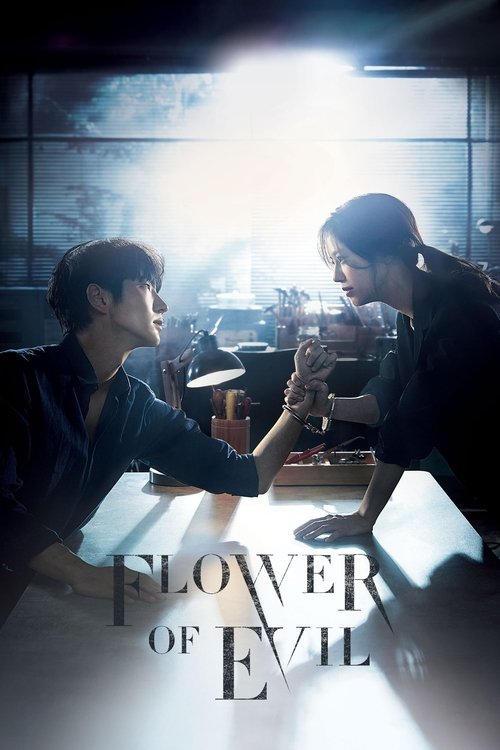
Flower of Evil
A chilling romantic thriller steeped in psychological suspense and bittersweet melancholy, Flower of Evil unfolds like a delicate white bloom taking root in contaminated soil—fragile, fiercely guarded, and fighting toward the light through fractures of deception.
Flower of Evil

Flower of Evil

악의 꽃

"Some truths can ruin a life in a single moment."

29 July 2020 — 23 September 2020 South Korea 1 season 16 episode Ended 8.3 (600)

Cast: Lee Joon-gi, Moon Chae-won, Jang Hee-jin, Seo Hyun-woo, Jung Seo-yeon

Drama Crime Mystery The Nature of Identity & Learned Inhumanity vs. Real Empathy Perception, Stigma, and Societal Prejudgment Love, Unconditional Trust, and Betrayal Generational Trauma, Guilt, and Moral Accountability

Overview

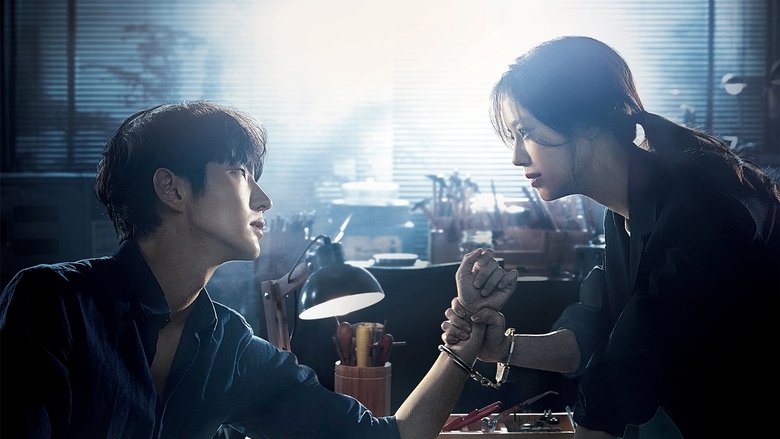
Flower of Evil is a high-stakes psychological melodrama and crime thriller centered on Baek Hee-sung, a gentle metalsmith who appears to live a picture-perfect domestic life with his homicide detective wife, Cha Ji-won, and their young daughter, Eun-ha. Beneath this warm facade lies a fabricated identity: Hee-sung is actually Do Hyun-soo, the fugitive son of notorious serial killer Do Min-seok. Having spent his life believing himself to be an unfeeling monster stigmatized by society and pursued for past violence, he constructs an elaborate domestic disguise simply to experience a safe existence.

The delicate equilibrium shatters when Cha Ji-won and her investigative unit begin reopening cold cases and copycat murders linked to the Yeonju serial killings. As clues increasingly point toward her own household, Ji-won is caught in an agonized tug-of-war between her analytical duty as a police officer and her unwavering emotional bond as a wife and mother. Simultaneously, Hyun-soo is forced into a dangerous game of cat-and-mouse, desperate to protect his family and clear his name without destroying the only love he has ever known.

Across its 16-episode run, the narrative broadens beyond a marital suspense tale into an exploration of guilt, complicity, and trauma. As hidden conspirators emerge from the shadows and long-buried truths about Hyun-soo's tragic past are exposed, the drama examines whether a man conditioned by trauma to believe he lacks empathy can overcome the sins of his lineage and learn to embrace his humanity.

Core Meaning

The central thesis of Flower of Evil is that human morality and the capacity to love are not predestined by biology, trauma, or societal branding, but are shaped by personal choice, empathy, and acceptance. As Director Kim Cheol-kyu noted, every individual carries a seed of evil, but how that seed is nurtured determines who they become. The series critiques the cruelty of social prejudice—demonstrating how a community's rush to label an emotionally dysregulated child as a psychopath can nearly manufacture a monster—while celebrating the restorative power of unconditional trust to heal profound psychological trauma.

Thematic DNA

The Nature of Identity & Learned Inhumanity vs. Real Empathy 30%
Perception, Stigma, and Societal Prejudgment 25%
Love, Unconditional Trust, and Betrayal 25%
Generational Trauma, Guilt, and Moral Accountability 20%

The Nature of Identity & Learned Inhumanity vs. Real Empathy

Hyun-soo spends his entire life gaslighted by his abusive father, peers, and shamans into believing he suffers from antisocial personality disorder and cannot feel emotion. He relies on video tutorials to mimic basic human facial expressions. Throughout the drama, his instinctive sacrifices for his family prove that his emotional numbness was an armor against trauma rather than an innate moral deficiency.

Perception, Stigma, and Societal Prejudgment

The show constantly challenges the audience's and the characters' tendency to equate odd behavior or a criminal lineage with inherent criminality. Society condemned Hyun-soo solely because he was the son of a serial killer, forcing him underground, while the actual, wealthy killer hid in plain sight behind a veneer of respectability.

Love, Unconditional Trust, and Betrayal

The romantic core explores the vulnerability required to love. Ji-won must endure the devastation of discovering that her marriage is built on lies, yet her emotional intuition consistently challenges hard forensic evidence. Love is portrayed not as a passive state of happiness, but as an active, courageous choice to stand beside someone in their darkest hour.

Generational Trauma, Guilt, and Moral Accountability

The narrative deconstructs the burden placed on children by the crimes of their parents. Both Hyun-soo and his sister Hae-soo carry profound guilt and self-destructive impulses due to their father's monstrous legacy, illustrating how unresolved family trauma ripples across decades until confronted directly.

Character Analysis

Do Hyun-soo / False Baek Hee-sung

Lee Joon-gi

Archetype: Misunderstood Antihero / Tragic Protector Key Trait: Hyper-vigilant stoicism masking profound loyalty and emotional depth

Motivation

To preserve his family's peace and remain hidden from his traumatic past; evolves into clearing his name and accepting himself.

Character Arc

Hyun-soo begins as a fugitive hiding behind a stolen identity, convinced he is an unfeeling sociopath who must fake affection. As his past unravels and he is forced to protect Ji-won, he experiences genuine emotional agony and realizes that his devotion to his wife and daughter is real love. Even after losing recent memories from head trauma in the finale, he chooses to rebuild his life and fall in love with Ji-won as his authentic self.

Cha Ji-won

Moon Chae-won

Archetype: Compassionate Investigator / Steadfast Crusader Key Trait: Emotional resilience paired with acute deductive reasoning

Motivation

To uncover objective truth as an officer of the law; evolves into fighting to save her husband's soul and protect their family.

Character Arc

Ji-won starts as an intuitive homicide detective and devoted spouse with absolute trust in her husband. When forensic breadcrumbs reveal her husband's real identity, she is shattered by internal conflict. Rather than turning him in blindly, she investigates with rigorous objectivity, sees through the societal misconceptions surrounding him, and becomes his fiercest defender and emotional anchor.

All 5 characters and cast

Symbols & Motifs

The Metal Crafts Workshop

Meaning:

Represents Hyun-soo's deliberate forging of a new identity. Metalworking requires extreme heat, hammering, and patience to transform raw metal into art, mirroring Hyun-soo's painful process of reshaping himself into a caring protector.

Context:

Hyun-soo operates his workshop named Space Where Morning Star Rises beneath his home, creating delicate metal crafts throughout the series.

The Tape Recorder / MP3 Player

Meaning:

Functions as psychic chains, representing the lingering voice of Do Min-seok telling Hyun-soo he is incapable of love and haunting him as auditory hallucinations until he actively breaks free.

Context:

Carried by Hyun-soo containing audio materials and recordings left by his serial killer father.

Mirrors and Practiced Smiles

Meaning:

Signifies Hyun-soo's dissociation from his true self, contrasting his manufactured exterior with the authentic, spontaneous tears and smiles he exhibits when his family is in peril.

Context:

Shown early in the series where Hyun-soo watches video mirror tutorials to practice showing warmth and smiling before interacting with others.

The Wedding Rings

Meaning:

Represents the fragile bridge between the fabricated identity of Baek Hee-sung and genuine emotional commitment, serving as an anchor connecting Hyun-soo to his devotion to Ji-won.

Context:

Worn by Ji-won and Hyun-soo, remaining a physical symbol of their bond even when his identity is exposed.

Rain and Water

Meaning:

Used as a motif of near-death, exposure, and emotional rebirth that cleanses away facades and lays bare raw, unvarnished truths.

Context:

Appears during life-or-death scenes, including Hyun-soo nearly drowning in an indoor pool and intense confrontations in the pouring rain.

Memorable Quotes

난 너한테만 좋은 사람이고 싶어.
— Do Hyun-soo

Context

Spoken to Cha Ji-won in Episode 5 when she comforts him.

Meaning

Captures Hyun-soo's belief that while he might be defective to the rest of the world, his devotion to Ji-won is his one defining purpose.

사랑은 간사한 거다. 다 해결해 줄 것처럼 굴지만, 결국엔 널 배신해.
— Do Min-seok (Hallucination)

Context

Auditory hallucination tormenting Hyun-soo in Episode 9.

Meaning

Hyun-soo's father's voice haunts him whenever he lets down his guard, crystallizing the cynical worldview Hyun-soo must actively overcome to embrace Ji-won's love.

All 4 quotes

Episode Highlights

Episode 1

S1E1

Establishes the contrast between the tender domestic warmth of the Baek family and the chilling realization that Hee-sung is living under an assumed name.

Significance:

Sets the psychological cat-and-mouse dynamic and premise into motion.

Episode 5

S1E5

Features a life-and-death standoff at a warehouse where Hyun-soo is nearly drowned by taxi driver Park Kyung-choon before Ji-won saves him with CPR.

Significance:

As Hyun-soo drifts between life and death, his suppressed memories reveal his emotional vulnerability and deep attachment to Ji-won.

Episode 8

S1E8

Ji-won confirms Hyun-soo's true identity through forensic and investigative work but intentionally hides her knowledge from him.

Significance:

Initiates a heartbreaking phase where Ji-won tests his sincerity while Hyun-soo desperately tries to maintain his disguise.

Episode 9

S1E9

Hyun-soo joins forces with Ji-won and Reporter Kim Moo-jin to set a trap for the human trafficking ring connected to his father's accomplice.

Significance:

Shifts the narrative momentum from passive concealment to proactive pursuit of the truth.

Episode 11

S1E11

Ji-won confronts Hyun-soo with the full truth about his past and identity, leading to Hyun-soo weeping and acknowledging his love for her.

Significance:

Serves as the emotional climax of the series, shattering Hyun-soo's belief that he lacks human empathy.

Episode 15

S1E15

A high-tension showdown on the cliff and Baek family estate where the real Baek Hee-sung attempts to shoot Ji-won.

Significance:

Hyun-soo leaps into the bullet's path to shield Ji-won, sustaining a traumatic head injury that culminates the physical threat of the antagonist.

Episode 16

S1E16

Hyun-soo survives the gunshot with retrograde amnesia covering the past 14 years, forcing him to rediscover his identity and feelings.

Significance:

Concludes the series arc by having Hyun-soo consciously choose to return to Ji-won and Eun-ha to build a future based on truth.

Philosophical Questions

Is evil born or bred?

The series contrasts the true psychopathy of the real Baek Hee-sung with Do Hyun-soo, demonstrating that an individual subjected to demonic parenting and social demonization can still choose goodness if met with genuine empathy.

Can a relationship built on a foundational lie contain genuine truth?

The drama asks whether the feelings Hyun-soo experienced during his 14-year marriage were authentic, concluding that true emotional acts exist independently of legal identities and fabricated origins.

How complicit is society in creating its own monsters?

Through the flashbacks in Gagyeong Village, the series examines how village elders, classmates, and authorities scapegoated Hyun-soo, driving him into criminality through collective prejudice.

Alternative Interpretations

Interpretations of the series center on two primary discussions:

Full ending explanation

Cultural Impact

Flower of Evil aired on tvN during the summer of 2020, a year marked by heightened global interest in nuanced Korean genre storytelling. The series distinguished itself from standard procedurals by fusing high-octane investigative mystery with intense melodrama, demonstrating that a thriller could maintain emotional intimacy without sacrificing narrative stakes.

The show received widespread critical acclaim both domestically and internationally, culminating in international remakes such as India's Duranga (ZEE5) and the Philippines' Flower of Evil (ABS-CBN/Viu). Its success underscored a shift in K-drama crime narratives away from straightforward whodunits toward complex psychological character studies exploring mental health, gaslighting, and the consequences of mob justice.

Audience Reception

Flower of Evil enjoyed steady ratings growth, concluding on its series-high nationwide viewership of 5.7% on tvN. Critics and audiences universally praised the intense chemistry and raw emotional depth delivered by Lee Joon-gi and Moon Chae-won, with particular acclaim directed at Lee's nuanced facial acting. Kim Ji-hoon's villainous turn was widely cited as a career breakthrough.

While minor criticism was aimed at occasional procedural contrivances and the sudden late-game amnesia plotline, the consensus remains that Flower of Evil is one of the tightest, most emotionally resonant thriller dramas produced in modern Korean television.

Interesting Facts

  • Lee Joon-gi and Moon Chae-won previously starred together in the 2017 South Korean television adaptation of Criminal Minds.
  • Director Kim Cheol-kyu won the Best Director (TV) award at the prestigious 57th Baeksang Arts Awards in 2021 for his direction of the series.
  • Filming took place during the hot Korean summer and intense monsoon season of 2020 while adhering to strict safety protocols due to the COVID-19 pandemic.
  • Actor Kim Ji-hoon underwent a drastic physical transformation by growing out long hair and altering his vocal delivery to play the psychopathic antagonist, departing from his typical gentle lead roles.
  • Lee Joon-gi performed his own physical stunt work throughout the series, including dangling from balconies and undergoing extended submerged underwater filming in Episode 5.

Easter Eggs

The Workshop's Name

Hyun-soo's metalcraft shop is named after the Greek myth of Hephaestus, the god of metallurgy and craftsmanship who was cast out and despised for his perceived ugliness, directly paralleling Hyun-soo's outcast status and physical/emotional scars.

Baudelaire's Literary Link

The Korean title 악의 꽃 shares its exact title with Charles Baudelaire's 1857 poetry collection Les Fleurs du mal (The Flowers of Evil), subtly echoing themes of finding beauty, redemption, and love amidst decadence, crime, and moral decay.

The Chinese Character Metaphor

The Chinese characters for morning star and metalsmithing are visually woven into the workshop's signage, signaling to careful viewers that Hyun-soo's true nature brings light out of the dark night.

Frequently Asked Questions

Explore More About This Movie

Dive deeper into specific aspects of the movie with our detailed analysis pages

Comments (0)

Leave a comment

No comments yet. Be the first to share your thoughts!

Similar Movies